A Beginner’s Guide to Replacing a Failed Golf Cart Motor
Prove the motor has really failed with five quick tests, then find the exact replacement: the same Navitas AC motor for a converted cart, or the AC kit that replaces a dead stock DC motor.
- Test before you buy. A flat pack, a bad solenoid, a speed sensor or a stripped spline causes most “dead motor” carts. Five quick checks settle it.
- What drives the cart picks the part, not the badge. Read the controller label first.
- Already on Navitas? Buy the bare Navitas motor with the same kW, spline count and brake. The controller and cables stay.
- Stock DC motor dead? We do not sell DC motors. The replacement is the AC kit for your controller label, which brings a new motor and controller together.
- Count the splines and look for a brake. 10 or 19 teeth, brake or no brake: those two checks pick the row.
The cart hums, smells hot or will not pull, and someone has told you the motor is gone. Maybe it is. Here is the 30-second answer to golf cart motor replacement: run the five tests below first, because most carts that will not go have a cheaper fault; if the motor fails them, read the controller label and find your cart in the tables. If your cart already runs Navitas you buy the same Navitas motor by kW, spline and brake. If a stock DC motor has died you buy the AC kit for your controller label. Every row says why it fits and whether you need anything else.
- What This Guide Helps You Do
- Is It Really the Motor? Symptoms That Do and Do Not Point to It
- Confirm the Motor Has Failed: Five Tests Before You Buy
- Quick Picks: Replacement Motors for the Most Common Carts
- Golf Cart Motor Replacement: Three Kinds of Dead Motor
- Club Car on Navitas AC: 10-Tooth Motors
- E-Z-GO, Yamaha and STAR EV on Navitas AC: 19-Tooth Motors
- Yamaha Drive2 AC, ICON, Advanced EV and E-Z-GO RXV: Carts With a Motor Brake
- E-Z-GO With a Dead DC Motor: TXT, Medalist and Utility Carts
- Club Car With a Dead DC Motor: DS, Precedent, Villager and Carryall
- Yamaha, STAR EV and Columbia With a Dead DC Motor
- 4kW, 5kW or 7.5kW: Choosing the Motor Rating
- What Else to Check and Order to Finish the Job
- Six Mistakes That Waste a Replacement Motor
- Still Not Sure? Three Quick Checks
- Frequently Asked Questions
What This Guide Helps You Do
A golf cart motor is the most expensive part to replace by guesswork, and most motors that get blamed are fine. This guide does two jobs, in this order. First it helps you prove the motor has really failed, with the tests Navitas and our repair guides use. Then it shows you exactly what to buy for your cart: the same Navitas AC motor if your cart already runs a Navitas system, or the AC conversion kit that replaces a dead stock DC motor and its controller in one job.
You need three facts before you start:
- What drives the cart now. Lift the seat and read the controller label. A Navitas TAC2 or TAC3 label means the cart already runs Navitas AC. A Curtis, Moric, Sevcon or GE label means a stock DC system; a Toyota NEOs, Curtis 1206AC or Danaher label means a stock AC system.
- The spline count and the brake. Count the teeth on the shaft or coupler where the motor meets the rear axle: Navitas motors come in 10-tooth and 19-tooth versions. Then look at the far end of the motor for a brake unit with its own wires.
- The motor rating. On a Navitas cart the kit name or the motor label gives 4kW, 5kW or 7.5kW. On a stock cart, note whether the motor has four terminals (DC) or three phase cables (AC).
Run the checks in the next two sections first. When they point at the motor, jump to your cart:
- Club Car on Navitas AC
- E-Z-GO, Yamaha and STAR EV on Navitas AC
- Drive2 AC, ICON, Advanced EV and RXV
- E-Z-GO with a dead DC motor
- Club Car with a dead DC motor
- Yamaha, STAR EV and Columbia DC
How to read the tables: Your cart describes what drives the cart today, with the controller in bold and the spline and brake where they matter. Your goal names the kind of replacement, Buy this links the part, Why this one explains the fit, and What else you need lists anything extra. A cart with two sensible choices gets two rows.
Is It Really the Motor? Symptoms That Do and Do Not Point to It
Motors do wear out: brushes wear down on DC motors, bearings go noisy, and windings cook when a motor is worked hard on a sagging pack. But the motor sits at the end of a long chain, and a fault anywhere in that chain looks the same from the driver’s seat. Our motor test guide puts it plainly: most carts that will not move have a healthy motor.
| What the cart does | Usually the motor? | More often it is | Test it with |
|---|---|---|---|
| Nothing at all, no click | Rarely | A flat pack, the key switch, the run/tow switch or a pedal switch | Key switch test, troubleshooter |
| Solenoid clicks, motor does not turn | Sometimes | Solenoid contacts, a loose main cable, the controller | Solenoid test, then test 5 |
| Motor spins or hums, cart does not move | No | A stripped input spline, the transaxle, an axle or a hub | Motor spins, cart will not move |
| Capped at a crawl, about 8 to 9 mph | No | The speed sensor on the motor, a cheap part | Speed sensor limp mode test |
| Whine or grind that rises with speed | Sometimes | Motor bearings, or the rear end | Bearing or rear end diagnosis |
| Motor runs hot, cart slows on hills | Sometimes | Worn brushes, tight bearings, pack voltage sag under load | Motor overheating diagnosis |
| E-Z-GO RXV locked and will not roll | Rarely | The motor brake doing its job on a cart with no power | RXV motor brake test |
| Burnt smell from the motor, smoke, terminals melted | Often | Check the cable lugs too: a loose terminal can cook the lug and the stud | Tests 4 and 5 |
Still guessing? Start the golf cart troubleshooter with your symptom; it narrows the cause before you pick up a meter.
Confirm the Motor Has Failed: Five Tests Before You Buy
Work through these in order with a digital multimeter. Every test either clears the motor or condemns it. Before touching any terminal, key off, run/tow switch in tow, and take off rings and watches.
- Rule out the supply side. Charge the pack and make sure its terminals are clean and tight, the run/tow switch is in run and the solenoid clicks when you press the pedal. A silent solenoid means the fault is before the motor. Navitas lists discharged batteries as the first cause of a cart that runs slower than normal, and our four terminal solenoid test covers the click.
- Watch what the motor does. Raise the drive wheels safely and press the pedal. If the motor spins and the wheels do not, the motor has passed a live test and the fault is in the spline or transaxle; our motor spins guide finds it. Also push the cart in neutral: Navitas says to check that the brakes release properly and the cart is easy to push before blaming the motor.
- Read the fault code. On a Navitas TAC2 the codes that involve the motor are 1-5 (motor too hot), 3-3 (motor over current), and 4-8, 4-9 and 4-12 (speed encoder). On a stock cart, look the code up: E-Z-GO RXV, Club Car Onward, Yamaha Drive2, ICON or Star EV. A stutter with no code on a Navitas cart is usually wiring: Navitas says to check the motor cables go U to U, V to V and W to W, and that the speed sensor wires are not crossed.
- Test the sensors before the motor. They are cheap and they fail more often than windings. On stock DC carts, the speed sensor roll-away test and the Precedent speed sensor test settle it. On a Navitas cart with a 4-8, 4-9 or 4-12 code, follow the Navitas procedure: key off and cart in tow, unplug the 4 pin encoder connector at the motor, then in run with the key on you should read about 5V, 3V, 3V and 0V on its wires. In the app’s diagnostics page, bridge a 3V wire to the 0V wire with a paper clip: if the encoder input switches from high to low, the controller side works and the sensor may be at fault. For code 1-5, let the motor cool, reseat the temperature sensor plug, check the app is set for the right sensor, and measure the sensor side of the plug: about 600 ohms is a KTY84, about 1000 ohms a PT1000.
- Test the motor itself. On a DC motor, isolate it completely (pack disconnected, controller discharged, every cable off the motor), then check continuity through the armature and field pairs and check that no terminal has continuity to bare metal on the case. An open winding or any continuity to the case means a failed motor; our motor test and armature continuity guide walk both. Worn brushes are a repair, not a new motor: see brush wear. On a Navitas AC motor with code 3-3, Navitas says to check the U, V and W cables are not shorted to ground; the app shows each phase voltage, and each should read around half the battery voltage. Disconnect the phases at the controller and check again. A phase shorted to the case points at the motor; a 4-7 code that stays with U, V and W disconnected points at the controller instead.
If your cart passed tests 1 to 4 and failed test 5, the motor is the part to replace. If it failed an earlier test, fix that first: a new motor behind a bad solenoid, a stripped spline or a dead speed sensor will not drive either. A Navitas controller that failed its own checks has its own guide: replacing a failed golf cart controller.
Quick Picks: Replacement Motors for the Most Common Carts
Tests done and the motor is dead? Here are the replacements for the setups we see most often. The cart sections further down give the reasoning and every other option.
| Cart and dead motor | Replace it with | Also an option |
|---|---|---|
| Club Car on a Navitas TAC2, 10-tooth motor, no brake | Navitas 4kW 10-tooth or Navitas 5kW 10-tooth, the same kW as the old motor | On a TAC3: the 7.5kW 10-tooth plus the TAC motor adapter |
| E-Z-GO TXT, Yamaha G29 or STAR EV on a Navitas TAC2, 19-tooth motor | Navitas 4kW 19-tooth or Navitas 5kW 19-tooth, the same kW as the old motor | On a TAC3: the 7.5kW 19-tooth plus the TAC motor adapter |
| Yamaha Drive2 AC already on a Navitas TAC2 | Navitas 4kW 19-tooth with brake | None needed |
| ICON or Advanced EV already on a Navitas TAC2 | Navitas 5kW 10-tooth with brake | None needed |
| E-Z-GO TXT 48V, stock DC motor dead, Curtis 1206HB | Navitas TAC2 AC kit for TXT 48V or Alltrax AC1 650A 5.5kW kit for TXT 48V | TAC3 850A 7.5kW kit or the Eco Battery AC kit |
| Club Car DS or Precedent, stock DC motor dead, Curtis 1510 or 1515 | Navitas TAC2 AC kit for DS and Precedent IQ or Alltrax AC1 650A 5.5kW kit for Precedent, Tempo and Onward | Precedent only: the TAC3 850A 7.5kW kit |
| Yamaha G29 Drive, stock DC motor dead, 26 pin Moric | Navitas TAC2 4kW AC kit for G29 Drive | TAC3 850A 7.5kW kit |
Golf Cart Motor Replacement: Three Kinds of Dead Motor
What you buy depends on what drives the cart now, not on the badge. There are three situations, and each has its own answer.
A Navitas AC motor has died
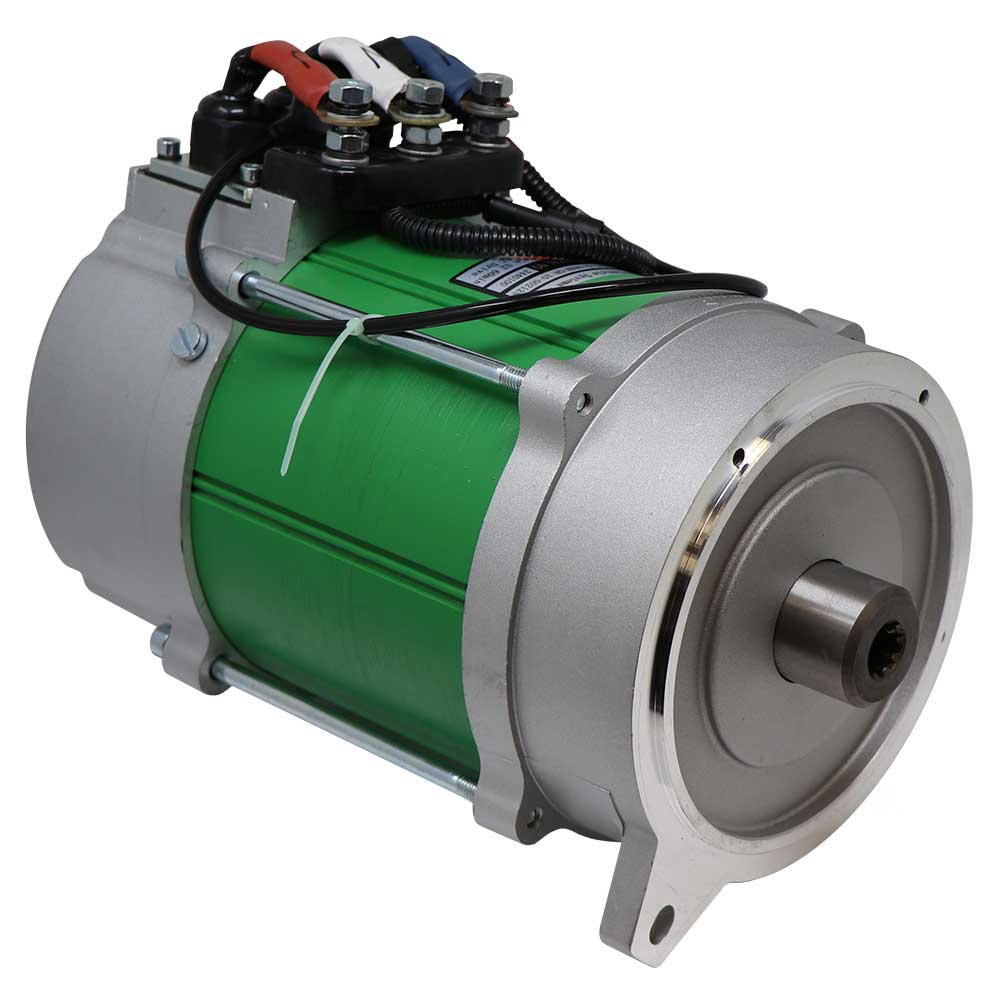
The cart was converted with a Navitas TAC2 or TAC3 kit. Buy the bare Navitas motor with the same kW, spline and brake as the old one. The controller, phase cables and sensor cable on the cart stay.
A stock DC motor has died
Series or sepex motors on E-Z-GO TXT, Club Car DS and Precedent, Yamaha G29 and similar carts. We do not sell DC motors or rebuilds. What we sell is the AC conversion kit for your controller label, which replaces the dead motor and the stock controller together.
A factory AC motor has died
Yamaha Drive2 AC, ICON and Advanced EV motors have a brake built in. Our brake motors fit these carts once they run a Navitas TAC2. On the stock controller, and on the E-Z-GO RXV, S4 and L6, we have no motor to offer.
Bare AC motors need their matching controller family
Every motor we list is an AC induction motor that runs only on its matching Navitas TAC or Alltrax AC1 system. It cannot be wired to a stock Curtis, Moric or NEOs controller. On a stock cart, buy the matching complete kit.
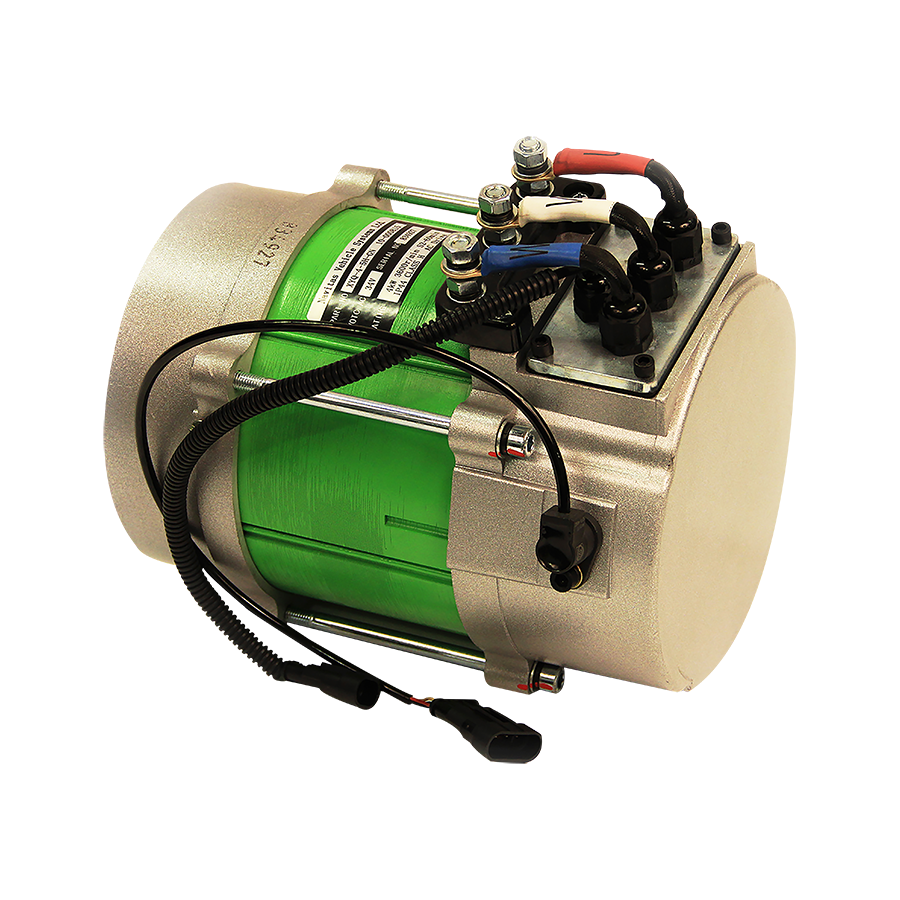
Three things decide which Navitas motor fits, and the listings say so: the controller family (TAC2 for the 4kW and 5kW motors, TAC3 for the 7.5kW), the spline count (10-tooth for Club Car, ICON and Advanced EV; 19-tooth for E-Z-GO, Yamaha and STAR EV), and whether the cart needs a motor brake. Navitas names the 4kW and 5kW motors by the last digits of the part number: MAC815 is 10-000815, the Club Car 4kW, and so on. Its manual lists the 815 and 823 motors in the TAC2 Club Car IQ kit and the 816 and 822 motors in the TAC2 TXT kit.
If you are weighing a new motor against a whole new drive, our motor sizing guide explains kW and torque, and the conversion kit guide walks every kit cart by cart. Or let the AC conversion kit finder match the conversion kit to your cart in a few taps.
Parts note: A typical Case 2 replacement: the TAC2 kit for a Club Car DS or Precedent replaces a dead DC motor and the Curtis 1510 or 1515 in one job. See the TAC2 Club Car IQ kit
Club Car on Navitas AC: 10-Tooth Motors
If your Club Car already runs a Navitas TAC2, the replacement is the 10-tooth motor with the same rating as the one that failed. Our TAC2 Club Car kits fit a 4kW motor on the DS, because the 5kW motor is too long for the DS frame, 4kW or 5kW on the Precedent, and 5kW on the Villager and Carryall. A 5kW motor on a TAC2 is paired with a controller built for it, so keep the rating you have.
If it runs a Navitas TAC3, it has the 7.5kW motor from a TAC3 kit, listed for Precedent frames only. The 7.5kW motor runs only on a TAC3 and needs the Navitas TAC motor adapter, sold separately. None of these motors has a brake, so they are not for any Club Car that needs one.
| Your cart | Your goal | Buy this | Why this one | What else you need |
|---|---|---|---|---|
| Club Car DS, Precedent or other Club Car on a Navitas TAC2, 4kW motor, 10-tooth, no brake | Same Navitas motor, like for like | Navitas 4kW AC motor, 10-tooth (MAC815, 10-000815) | Listed for Club Car 10-tooth gearboxes with no motor brake on a TAC2. The 4kW motor in the Navitas TAC2 Club Car IQ kit. | Nothing if the phase cables and speed sensor cable on the cart are sound. Both are sold on their own. |
| Club Car Precedent, Villager, Carryall or other non-DS Club Car on a Navitas TAC2, 5kW motor, 10-tooth, no brake | Same Navitas motor, like for like | Navitas 5kW AC motor, 10-tooth (MAC823, 10-000823) | The 5kW version of the same motor, for the carts with room for it. Not for the DS frame. | Nothing if the phase cables and speed sensor cable on the cart are sound. Both are sold on their own. |
| Club Car Precedent on a Navitas TAC3, 7.5kW motor, 10-tooth | Same Navitas motor, like for like | Navitas 7.5kW AC motor, 10-tooth (10-002125) | The 7.5kW motor size from our TAC3 850A kit for Club Car IQ and Excel. TAC3 only; the listing excludes TAC2 systems. | The Navitas TAC motor adapter, which the listing says is required and sold separately. |
A Club Car with a dead factory AC motor (Precedent, Tempo and Onward AC) is not covered: we do not list a motor for those carts. Our Precedent speed sensor guide and DS hill power diagnosis cover the faults most often mistaken for a dead motor.
Club Car on Alltrax AC1
| Your cart | Your goal | Buy this | Why this one | What else you need |
|---|---|---|---|---|
| Club Car on a matching Alltrax AC1 system, 10-tooth spline, no brake | Replace the same AC motor | Alltrax 5.5kW AC motor for Club Car, 10 tooth | The bare 10-tooth motor for the documented Club Car AC1 application. | A compatible Alltrax AC1 controller and its matching sensor cable. It is not for a stock DC controller. |
E-Z-GO, Yamaha and STAR EV on Navitas AC: 19-Tooth Motors
If your E-Z-GO TXT, Yamaha G29 or STAR EV already runs a Navitas TAC2, the replacement is the 19-tooth motor with the same rating. The Navitas manual puts the 4kW 10-000816 and the 5kW 10-000822 in its TAC2 TXT kit and the 4kW 10-000816 in its TAC2 G29 kit, and our STAR EV kit listing names its 19-tooth motor. Count the teeth before you order: our 19 vs 21 spline guide shows how, and why the helical gear inside the differential is not the number you want.
If it runs a Navitas TAC3, it has the 7.5kW 19-tooth motor from our TAC3 TXT or G29 kit, which needs the TAC motor adapter. None of these three motors is for the E-Z-GO RXV or any other cart with a motor brake.
| Your cart | Your goal | Buy this | Why this one | What else you need |
|---|---|---|---|---|
| E-Z-GO TXT, Yamaha G29 Drive or STAR EV on a Navitas TAC2, 4kW motor, 19-tooth, no brake | Same Navitas motor, like for like | Navitas 4kW AC motor, 19-tooth (MAC816, 10-000816) | Listed for E-Z-GO, Yamaha and STAR EV 19-tooth gearboxes with no motor brake on a TAC2. The 4kW motor in the Navitas TAC2 TXT and G29 kits. | Nothing if the phase cables and speed sensor cable on the cart are sound. Both are sold on their own. |
| E-Z-GO TXT, Yamaha G29 Drive or STAR EV on a Navitas TAC2, 5kW motor, 19-tooth, no brake | Same Navitas motor, like for like | Navitas 5kW AC motor, 19-tooth (MAC822, 10-000822) | The 5kW version of the same motor, and the size in our TAC2 STAR EV kits. | Nothing if the phase cables and speed sensor cable on the cart are sound. Both are sold on their own. |
| E-Z-GO TXT 48V or Yamaha G29 Drive or Drive2 on a Navitas TAC3, 7.5kW motor, 19-tooth | Same Navitas motor, like for like | Navitas 7.5kW AC motor, 19-tooth (10-000952) | The 7.5kW motor size from our TAC3 850A TXT and G29 kits. TAC3 only. | The Navitas TAC motor adapter, required and sold separately. |
An E-Z-GO MPT, Workhorse or other utility cart on our Navitas ITS kit, or a Columbia Par Car, Kandi or Denago on Navitas: the motor listings do not name these carts, so we do not offer a bare motor for them. If your make and spline count do not match a row on this page, we do not list that motor.
E-Z-GO TXT on Alltrax AC1
| Your cart | Your goal | Buy this | Why this one | What else you need |
|---|---|---|---|---|
| E-Z-GO TXT on a matching Alltrax AC1 system, 19-tooth spline, no brake | Replace the same AC motor | Alltrax 5.5kW AC motor for E-Z-GO, 19 tooth | The bare 19-tooth motor for the documented TXT AC1 application. | A compatible Alltrax AC1 controller and its matching sensor cable. It is not for an RXV or a stock DC controller. |
Yamaha Drive2 AC, ICON, Advanced EV and E-Z-GO RXV: Carts With a Motor Brake
If your Yamaha Drive2 AC (YDRE2) already runs a Navitas TAC2, for example after our Drive2 AC controller kit replaced its Toyota NEOs controller, the replacement is the 4kW 19-tooth motor with the electronic parking brake built in. If your ICON or Advanced EV already runs a Navitas TAC2, after one of our ICON kits, it is the 5kW 10-tooth motor with brake.
If the cart is still on its stock controller, neither motor is listed for it: both need a Navitas TAC2. An E-Z-GO RXV, S4 or L6 has its own motor and brake, and no motor we sell fits it; our RXV motor brake guide covers the brake faults that look like a dead motor. Navitas also makes brake motors we do not list (the 3kW MAC987 and 4kW MAC979 10-tooth, and the 5kW MAC972 19-tooth).
| Your cart | Your goal | Buy this | Why this one | What else you need |
|---|---|---|---|---|
| Yamaha Drive2 AC (YDRE2) on a Navitas TAC2, for example our Drive2 AC controller kit | New Navitas motor, the TAC2 stays | Navitas 4kW AC motor, 19-tooth with brake (MAC976, 10-000976) | Listed for the Drive2 with an electronic motor brake on a TAC2. 19-tooth, brake included. The listing excludes E-Z-GO carts. | Nothing listed. The motor reuses the Navitas TAC2 already on the cart. |
| ICON or Advanced EV on a Navitas TAC2, for example our ICON kit or the CAN kits 440A and 600A | New Navitas motor, the TAC2 stays | Navitas 5kW AC motor, 10-tooth with brake (MAC977, 10-000977) | Listed for ICON and Advanced EV motor brake carts on a TAC2. 10-tooth, brake included. The listing excludes Club Car. | Nothing listed. The motor reuses the Navitas TAC2 already on the cart. |
More on these carts: ICON won’t move, Advanced EV won’t move and RXV motor brake test.
E-Z-GO With a Dead DC Motor: TXT, Medalist and Utility Carts
If your E-Z-GO is stock and the DC motor has failed, we do not sell a DC replacement motor. What we sell is an AC kit that replaces the motor and the controller in one job, chosen by the controller label. A 48V TXT has a Curtis 1206HB; a TXT ELiTE with the factory Samsung lithium pack has a Curtis 1206HBC; MPT and Workhorse utility carts have a Curtis 1268 ITS or 1264. The Eco Battery kit covers any DC drive TXT or Medalist.
A like for like DC motor, new or rebuilt, from a motor shop or the cart dealer is the other route, and the cheaper one on a cart you do not want to change. Series motor E-Z-GOs outside the TXT and Medalist, and carts you want to keep original, go that way.
| Your cart | Your goal | Buy this | Why this one | What else you need |
|---|---|---|---|---|
| TXT 48V, stock Curtis 1206HB | Convert to AC | Navitas TAC2 AC kit for TXT 48V, 440A 4kW or 600A 5kW | Brings a Navitas 4kW or 5kW 19-tooth AC motor in place of the dead one, with the TAC2 that runs it. Sizing is in the TXT section of the conversion kit guide. | Nothing. The kit brings the AC motor, controller, cabling and programmer. |
| TXT 48V, stock Curtis 1206HB | Most torque we sell (AC) | Navitas TAC3 850A 7.5kW kit for TXT 48V | Brings the 7.5kW AC motor and the 850A TAC3 that drives it, the largest motor we offer for a TXT. | Nothing. It programs from the phone app; an OTF programmer is optional. |
| TXT ELiTE, factory Samsung lithium, stock Curtis 1206HBC | Convert to AC | Navitas TAC2 600A 5kW kit for TXT ELiTE | An ELiTE takes this kit only. It pairs a 5kW AC motor with a 600A TAC2 built for the ELiTE wiring. | Nothing. The kit brings the AC motor, controller, cabling and programmer. |
| Any DC drive TXT or Medalist, 2 to 6 passenger | Convert to AC | Eco Battery AC kit for Medalist and TXT, 350A 4kW to 600A 5kW | Eco Battery pairs a 4kW or 5kW AC motor with its own controller, for standard and extended wheelbase carts. | Nothing. Controller, AC motor and a preassembled harness come together. |
| 48V MPT, Workhorse or Textron utility, stock Curtis 1268 ITS or 1264 | Convert to AC | Navitas TAC2 440A 4kW kit, the 440A 4kW CAN kit or the 600A 5kW CAN kit | All three bring a new AC motor and are listed for this stock controller. The 5kW motor suits a cart that hauls up grades. | Nothing. The kit brings the AC motor, controller, cabling and programmer. |
For TXT symptoms, read TXT no power but the solenoid clicks. The series vs sepex guide shows which motor type your cart has.
Club Car With a Dead DC Motor: DS, Precedent, Villager and Carryall
If your Club Car is stock and the DC motor has failed, the AC kit is picked by the controller label and the frame. A Curtis 1510 or 1515 means the IQ or Excel system on a DS or Precedent. A Curtis 1520 or 1268 non-ITS is common on Villagers and Carryalls. A silver GE controller is Regen II (PowerDrive 2). On a DS, choose a 4kW option: the 5kW motor is too long for the DS frame and the 7.5kW kit is listed for Precedent frames only. The Eco Battery kits are matched by model, year and passenger count instead.
| Your cart | Your goal | Buy this | Why this one | What else you need |
|---|---|---|---|---|
| DS or Precedent, 48V, stock Curtis 1510 or 1515 | Convert to AC | Navitas TAC2 AC kit for DS and Precedent IQ, or the CAN kits 440A 4kW and 600A 4kW | Each brings a 10-tooth AC motor. A DS takes the 4kW motor only; a Precedent can also take the 600A 5kW option. Details in the conversion kit guide. | Nothing. The kit brings the AC motor, controller, cabling and programmer. |
| Precedent only, 48V, stock Curtis 1510 or 1515 | Most torque we sell (AC) | Navitas TAC3 850A 7.5kW kit for Club Car IQ and Excel | Brings the 7.5kW motor, our largest, with an 850A TAC3. Precedent frames only. | Nothing. It programs from the phone app; an OTF programmer is optional. |
| DS or Villager, pre-2004, non-lifted, DC drive | Convert to AC | Eco Battery AC kit for DS and Villager pre-2004, 350A 4kW or 450A 4kW | Pick a 4kW motor option on a non-lifted DS; the 4kW motor clears that frame. | Nothing. Controller, AC motor and a preassembled harness come together. |
| Precedent IQ, 2004 to 2008, DC drive | Convert to AC | Eco Battery AC kit for Precedent IQ 2004 to 2008, 350A 4kW to 600A 5kW | Matched to 2004 to 2008 Precedent IQ carts, with 4kW and 5kW motor options. | Nothing. Controller, AC motor and a preassembled harness come together. |
| Precedent, Tempo or Onward, 2009 on, DC drive | Convert to AC | Eco Battery AC kit for Club Car 2009+, 350A 4kW to 600A 5kW | Covers Precedent, Tempo and Onward from 2009, lifted or not, with 4kW and 5kW motor options. | Nothing. Controller, AC motor and a preassembled harness come together. |
| Precedent IQ 6-passenger, 2004 to 2008 | Convert to AC | Eco Battery AC kit for IQ 6-passenger, 350A 4kW, 450A 5kW or 600A 5kW | A longer harness for the extended 6-passenger IQ chassis, with a 4kW or 5kW motor. | Nothing. Controller, AC motor and a preassembled harness come together. |
| Precedent 6-passenger, 2009 on, DC drive | Convert to AC | Eco Battery AC kit for 6-passenger 2009+, 350A 4kW to 600A 5kW | Made for the extended 6-passenger Precedent from 2009, with a 4kW or 5kW motor. | Nothing. Controller, AC motor and a preassembled harness come together. |
| Transporter or Villager 6-passenger, pre-2004, DC drive | Convert to AC | Eco Battery AC kit for 6-passenger pre-2004, 350A 4kW to 600A 5kW | For the extended pre-2004 6-passenger chassis, with a 4kW or 5kW motor. | Nothing. Controller, AC motor and a preassembled harness come together. |
| Villager or Carryall, 48V, stock Curtis 1520 or 1268 non-ITS | Convert to AC | Navitas TAC2 600A 5kW kit for Villager and Carryall | Brings a 5kW 10-tooth motor, which these longer frames have room for. | Nothing. The kit brings the AC motor, controller, cabling and programmer. |
| DS with a stock Regen II (PowerDrive 2), 48V | Convert to AC | Navitas TAC2 600A 4kW kit for Regen II | Brings a 4kW motor, short enough for the DS frame. | Nothing. The kit brings the AC motor, controller, cabling and programmer. |
| Club Car with a stock Regen II, 48V, not a DS | Convert to AC | Navitas TAC2 600A 5kW kit for Regen II, or the 4kW version | Brings a 5kW motor for the longer Club Car frames; the 4kW kit fits them too. | Nothing. The kit brings the AC motor, controller, cabling and programmer. |
For Club Car symptoms, see DS motor whining and DS loses power uphill. Our motor interchangeability guide explains why a DS and a Precedent motor are not always swaps.
Yamaha, STAR EV and Columbia With a Dead DC Motor
If your Yamaha G29 Drive is stock with a 26 pin Moric controller, a dead DC motor is replaced by a Navitas AC kit, 4kW on a TAC2 or 7.5kW on a TAC3. A Drive2 DC takes the TAC3 kit only. Other 2 to 4 passenger Yamaha DC carts have the Eco Battery kit. A 48V STAR EV Classic with a Curtis 1268 non-ITS has two TAC2 kits, and a 48V Columbia Par Car with a Sevcon Millipak has one.
We have no AC kit for a 36V STAR EV Classic or for 24V and 36V Columbias, so a new or rebuilt DC motor is the route there.
| Your cart | Your goal | Buy this | Why this one | What else you need |
|---|---|---|---|---|
| G29 Drive, 48V, stock Moric 26 pin | Convert to AC | Navitas TAC2 4kW AC kit for G29 Drive, 440A or 600A | Brings a 4kW 19-tooth AC motor for the 26 pin G29 Drive. Not listed for the Drive2. | Nothing. The kit brings the AC motor, controller, cabling and programmer. |
| G29 Drive or Drive2 DC, 48V, stock Moric 26 pin | Most torque we sell (AC) | Navitas TAC3 850A 7.5kW kit for G29 Drive and Drive2 | Brings the 7.5kW motor and an 850A TAC3. The only AC kit we list for a Drive2 DC. | Nothing. It programs from the phone app; an OTF programmer is optional. |
| Yamaha 2 to 4 passenger cart, DC drive | Convert to AC | Eco Battery AC kit for Yamaha, 350A 4kW to 600A 5kW | Eco Battery kit for Yamaha 2 to 4 passenger DC carts, with 4kW and 5kW motor options. | Nothing. Controller, AC motor and a preassembled harness come together. |
| STAR EV 48V Classic, stock Curtis 1268 non-ITS | Convert to AC | Navitas TAC2 600A 5kW kit for Star EV or the CAN version | Both bring a 5kW AC motor and are built for this controller. STAR EV only. | Nothing. The kit brings the AC motor, controller, cabling and programmer. |
| Columbia Par Car CVG or CPC, 48V, stock Sevcon Millipak | Convert to AC | Navitas TAC2 600A 4kW AC kit for Columbia Par Car | Brings a 4kW AC motor matched to a 600A TAC2 for these carts. 48V only. | Nothing. The kit brings the AC motor, controller, cabling and programmer. |
For Yamaha symptoms, read G29 won’t go forward or reverse and G29 surging and hesitation. For STAR EV, Star EV won’t move.
4kW, 5kW or 7.5kW: Choosing the Motor Rating
When you replace a Navitas motor, the rating is already decided: buy the same kW. When a stock DC motor has died and you are buying a kit, you choose, and here is how we would.
| Your situation | Choose | Why | Where to check |
|---|---|---|---|
| A Navitas motor has failed | The same kW, spline and brake | Navitas controllers are built for the motor they drive, for example a Club Car IQ 600A controller comes in 4kW and 5kW versions with different part numbers. | The motor label or the kit name |
| Dead DC motor, Club Car DS | 4kW | The 5kW motor is too long for the DS frame, and the 7.5kW kit is not listed for it. | Club Car section |
| Dead DC motor, two riders, flat or gentle ground | 4kW | Plenty for the job, and it asks less of the pack and cables. | Controller amp calculator |
| Dead DC motor, rear seat, lift, bigger tires or regular hills | 5kW with a 600A controller | More motor for a heavier cart or steeper ground. | Conversion kit guide, sizing |
| You want the most torque and the pack is built for it | 7.5kW on the 850A TAC3 | Only on a TAC3, only on Precedent, TXT 48V and Yamaha G29 or Drive2 frames, and the pack, cables, tires and brakes must be up to it. | Motor sizing guide |
A bigger motor does not change top speed on its own; gearing and tire size do. The motor RPM guide shows the maths.
Parts note: A typical Case 1 replacement: the Navitas 5kW 19-tooth motor for E-Z-GO, Yamaha and STAR EV carts already on a TAC2. See the 5kW 19-tooth motor
What Else to Check and Order to Finish the Job
Whatever killed the old motor can kill the new one. These are the things to put right while the cart is apart.
- The splines. Clean the transaxle input and look for rounded or twisted teeth before the new motor goes on. A worn spline strips the new motor’s coupler.
- The phase cables. Look for heat marks and loose lugs. The Navitas TAC phase wire is sold on its own for Navitas AC systems.
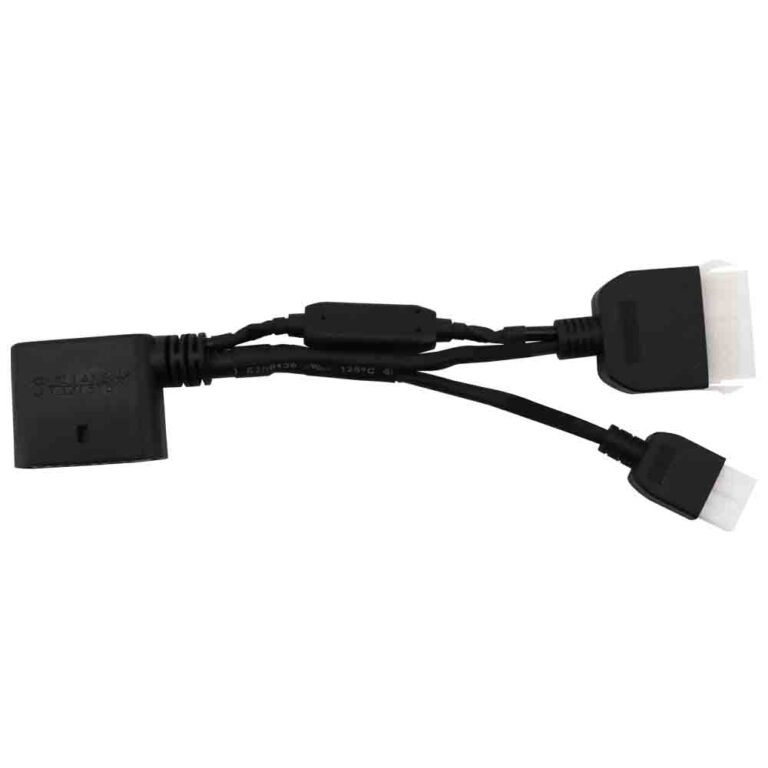
- The speed sensor and temperature cable. If the encoder or temperature test pointed at the cable rather than the motor, the Navitas TAC motor adapter (speed sensor and motor temperature cable) is sold on its own. A 7.5kW motor on a TAC3 needs one regardless.
- Healthy battery cables. Thin cables starve a motor under load; for a cart that gets sluggish after a few minutes, Navitas points at undersized battery cables and calls for 4 AWG. The wire gauge calculator sizes them.
- A controller that tested good. A controller that shorted may have taken the motor with it, or the other way round. Our controller replacement guide has the diode test.
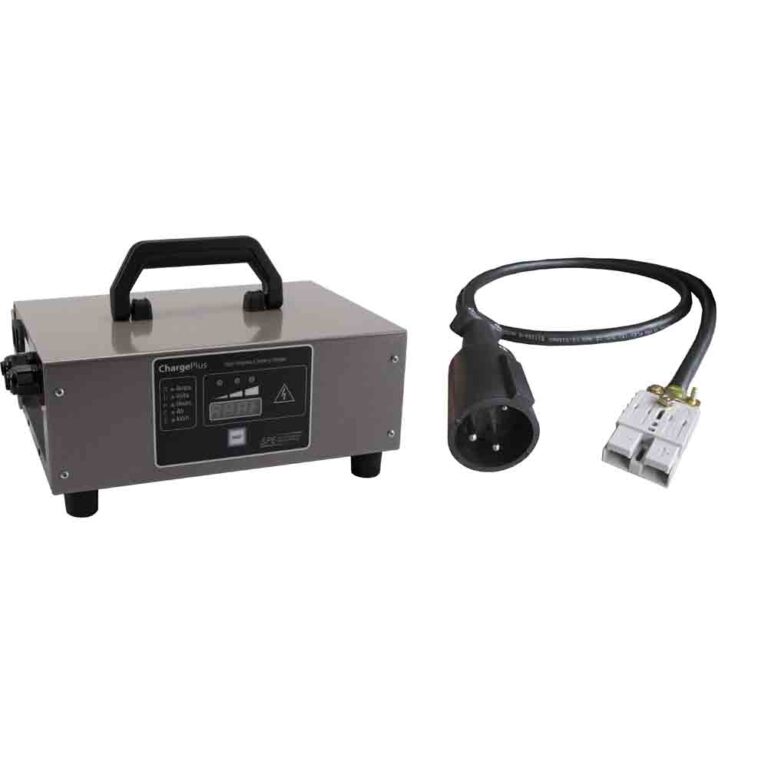
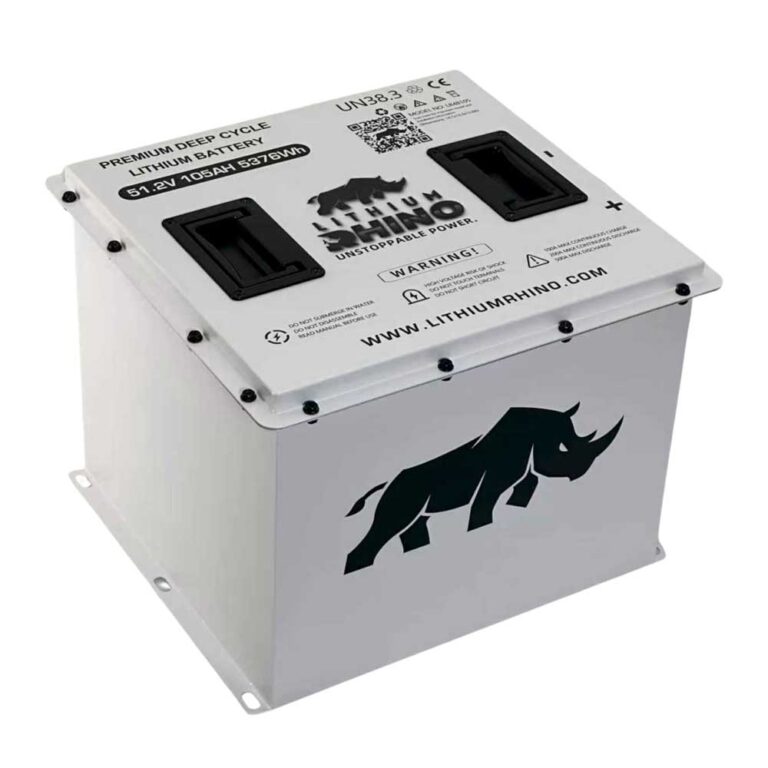
- A healthy pack. A sagging pack makes any motor work hot. Lithium packs are in batteries and ship by freight.
Motor sensor and terminal parts
The speed encoder, terminal bar, boot set and controller terminal hardware are separate service parts. The 222-SSCABLE encoder is documented for Navitas 4kW and 5kW AC motors; it is not presented as a 7.5kW part.
- Navitas AC Motor Speed Encoder Sensor Cable
- Navitas AC Motor Terminal Boot Set of 3
- Navitas AC Motor Plastic Terminal Bar
- Alltrax AC1 5/16-Inch Terminal Bolt Hardware
Six Mistakes That Waste a Replacement Motor
- Buying before testing. Most “dead motor” carts have a flat pack, a bad solenoid, a speed sensor fault or a stripped spline. Run the five tests first.
- Buying a bare Navitas motor for a stock cart. Navitas AC motors run only on a Navitas TAC2 or TAC3. On a stock DC cart, buy the kit for the label.
- Counting the wrong teeth. Count the splines where the motor meets the axle, not the gear inside the differential. 10 and 19 are not interchangeable.
- Changing the kW on a TAC2. The controller is built for the motor it drives. Replace a 4kW with a 4kW and a 5kW with a 5kW.
- Forgetting the brake. Drive2 AC, ICON and Advanced EV need a brake motor; every other cart in this guide needs one without.
- Skipping the adapter on a 7.5kW. The TAC3 7.5kW motor needs the TAC motor adapter, sold separately.
Still Not Sure? Three Quick Checks
Torn between two rows? One of these decides it:
- Read the controller label. A Navitas TAC2 or TAC3 label sends you to a bare motor; any other label sends you to a kit. The label always wins over the year or the body.
- Count the splines. Mark one tooth with a paint pen and count all the way round, then count again the other way. 10 or 19 picks the motor.
- Look at the far end of the motor. A brake unit with its own wires means a brake motor. No brake, no wires: a motor without one.
If the controller label is gone, run the serial through the E-Z-GO, Club Car or Yamaha lookup. The model and year point you to the right section. Navitas motors are non-returnable except under warranty, which is why these three checks are worth the five minutes.
Test the pack, the drivetrain and the sensors before you blame the motor, then buy by what drives the cart. A Navitas cart takes the same kW, spline and brake motor on the same TAC controller; a stock cart with a dead DC motor takes the AC kit for its controller label.
Frequently Asked Questions
What is a golf cart motor?
It is the electric motor bolted to the rear axle that turns battery power into wheel torque. Older and many stock carts use DC motors, either series or separately excited (sepex). Newer carts and Navitas conversions use AC induction motors, which need an AC controller and a speed sensor. The motor drives the axle through a splined shaft, usually 10-tooth or 19-tooth.
How do I know if my golf cart motor is bad?
Rule out the cheaper causes first: charge the pack, test the solenoid, and check whether the motor spins while the wheels do not (a drivetrain fault). Then test the speed sensor. On a DC motor, isolate it and check the windings for continuity and for any continuity to the case. On a Navitas AC motor, check the U, V and W phases are not shorted to ground. An open winding or a short to the case means a failed motor.
How do I know which replacement motor fits my cart?
Read the controller label. If it is a Navitas TAC2 or TAC3, buy the Navitas motor with the same kW, the same spline count (10-tooth for Club Car, ICON and Advanced EV; 19-tooth for E-Z-GO, Yamaha and STAR EV) and a brake only if the old motor had one. If it is a stock controller, find that label in your cart section and buy the AC kit listed for it.
What is the best replacement golf cart motor?
The best replacement is the one that matches what drives the cart. On a cart that already runs Navitas that is the same Navitas AC motor. On a stock DC cart, a Navitas TAC2 AC kit for your controller label is the most complete replacement we sell because the motor and controller are matched. A new or rebuilt DC motor is the cheaper route when you want to keep the cart original.
Does a replacement golf cart motor have to match my pack voltage?
For the Navitas AC motors we sell, the controller sets the system voltage, so the motor listings say controller defined: what matters is a Navitas TAC2 or TAC3 rated for your pack. Our AC kits for stock carts are 48V, apart from the Eco Battery kits, which list 36V to 90V DC systems. A DC motor, new or rebuilt, should match the voltage on the old motor.
Can I replace a golf cart motor myself?
Yes, if you can isolate the pack and support the cart safely. Put the cart in tow, disconnect the pack, let the controller discharge, photograph and label every cable, then unbolt the motor from the axle. Clean and inspect the input splines before the new motor goes on. Navitas recommends motor work by a qualified golf cart technician if you are not comfortable working on a 48V system.
Updated September 2026: every row was checked against our live product data and each Navitas motor is keyed to its controller family, spline count and brake.