
Golf Cart Series vs. Sepex (Shunt) Motors: Hills vs. Speed Guide
Which motor is better, Series or Sepex? We compare torque, speed, and hill-climbing ability of both DC motor types to help you choose the right setup for your terrain.
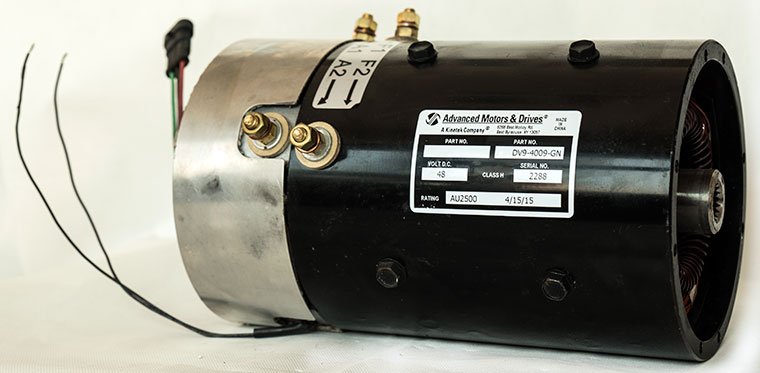
- Series motors win on raw low-speed torque; Sepex motors win on top speed, control, and regenerative braking.
- Check the motor terminals to identify your setup: four large posts means Series, two large plus two small field posts means Sepex.
- Upgrading a Series cart to Sepex-level performance costs roughly $1,350+; a Sepex cart’s stock motor is often already sufficient.
- Match the motor to how you actually drive. Forcing a Series cart to be a speedster, or a Sepex cart to be a mud tractor, usually costs more than buying the right cart from the start.
In the Research Lab, we have dyno-tested both. Series motors are the old-school “tractors” with massive torque, while Sepex motors are the modern “sports cars”: efficient, programmable, and fast.
The Identification Lab
Before debating performance, identify your cart by checking these hardware markers.
1. The “Series” Cart (Beast of Burden)
- F/R switch: a mechanical lever by your right knee, physically pulled for direction.
- Tow/Run: missing. Series carts do not have this switch.
- Motor terminals: four large posts (A1, A2, S1, S2), all wires thick 4- or 6-gauge.
2. The “Sepex” Cart (Smart Cart)
- F/R switch: an electrical rocker button on the dashboard.
- Tow/Run: present under the seat; must be flipped before servicing.
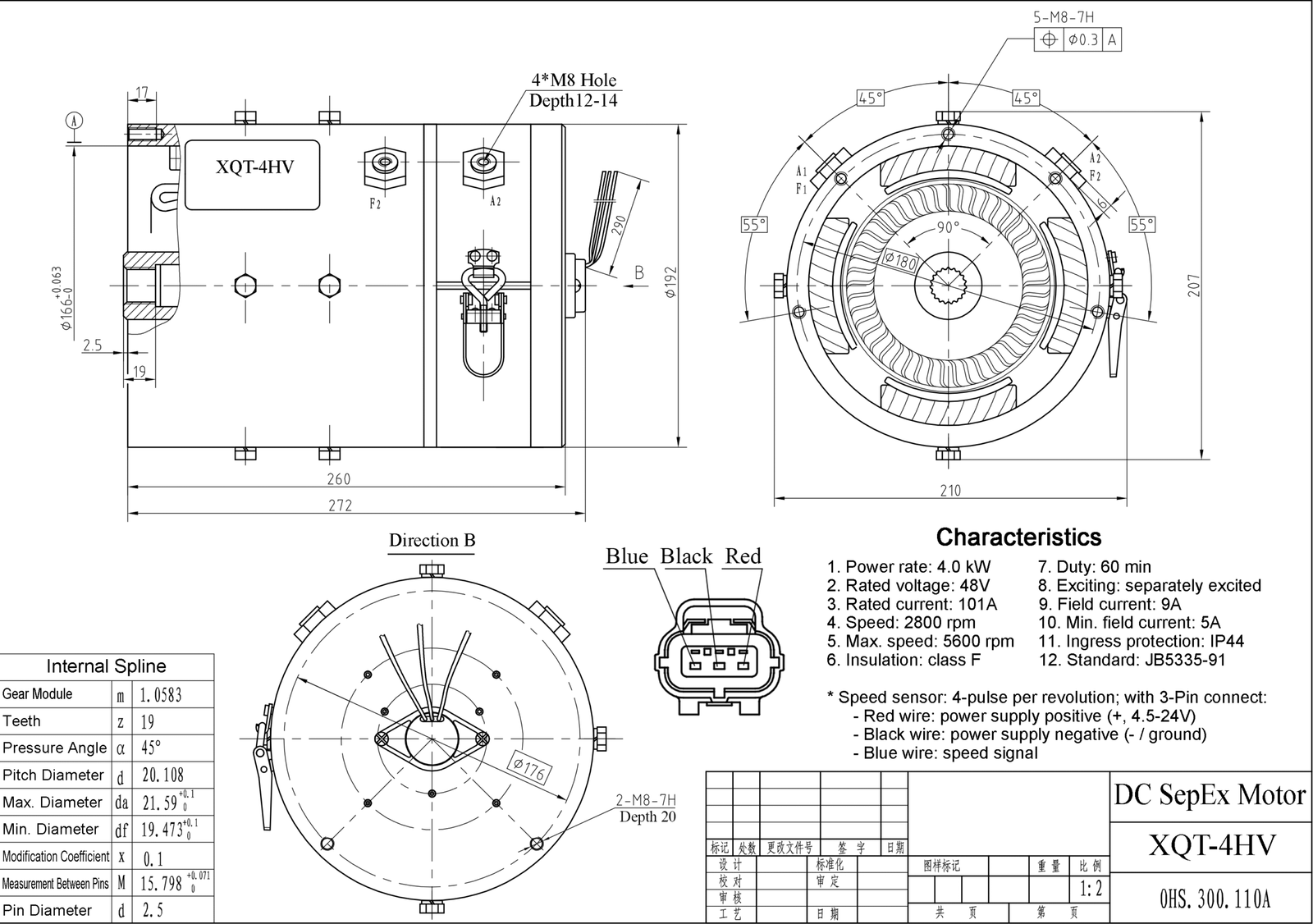
- Motor terminals: two large (A1, A2) and two small (F1, F2) for the field coil.
- Speed sensor: a magnet sensor on the end cap.
Head-to-Head Performance Showdown
Round 1: Hill Climbing (Torque) — Winner: Series
The Series motor is wired so the armature and field coils receive the same high current. Stomp the pedal at 0 MPH and it can dump 400+ amps into the windings instantly. Pull a cart out of a ditch or climb a 30% grade with four passengers, and it won’t be fast, but it will never stall.
Round 2: Top Speed — Winner: Sepex (Shunt)
Sepex motors use “field weakening.” The controller lowers current to the field coil while keeping the armature high, tricking the motor into higher RPM without more voltage. It easily hits 19-22 MPH with a simple code change; Series carts usually top out at 14-16 MPH without re-gearing.
Round 3: Drivability (Control) — Winner: Sepex (Shunt)
- Regenerative braking: slows the cart safely on downhills and recharges the battery.
- Runaway risk: Series carts free-wheel on hills, accelerating dangerously until the brakes are applied.
The Upgrade Path and What It Costs
| Upgrade Component | Series Cost | Sepex Cost |
|---|---|---|
| Motor | $600 (high torque) | $0 (stock is fine) |
| Controller | $500 | $30 – $500 |
| Required extras | $230 (HD F/R & solenoid) | $0 |
| Total est. | ~$1,350+ | ~$500 |
Parts note: The Navitas TSX 3.0 kits we stock cover both series and sepex carts, listed by the controller they replace. See controller kits
Summary Checklist
- The hunter/farmer: a Series cart. Hauling heavy loads through mud requires torque above all.
- The neighborhood cruiser: a Sepex cart. 20-25 MPH speed and regen safety braking are the priority.
- Off-roaders: if you have a Sepex cart for off-roading, upgrade the controller to 500A to compensate for big-tire torque loss.
Which Carts Came With Which Motor
Knowing the factory setup for your model saves guesswork. The Club Car DS built through the mid-2000s and the early Precedent used a Series drivetrain, which is why those carts feel torquey but cap out low. Club Car moved the Precedent to the IQ system, a Sepex setup, around 2008, adding the dashboard rocker for forward and reverse and regenerative braking. E-Z-GO ran Series motors on the older DCS and PDS TXT carts, then introduced the AC-motor RXV in 2008, which behaves like a Sepex in terms of braking and programmability but is actually AC drive. Yamaha kept Series DC on the G19 and G22, then switched the G29 Drive to a more advanced system. If unsure, the terminal count and the presence of a tow/run switch under the seat are the fastest tells: Series carts have four large motor posts and no tow/run switch.
Maintenance Differences You Should Know
The two motor types age differently. Series motors have brushes and a commutator that wear over years of high-current use; pulling the motor to blow out carbon dust and check brush length is a normal 5-to-7-year job on a hard-worked Series cart. Sepex motors also use brushes, but because the field coil draws far less current, they tend to run cooler and cleaner. Both suffer if water gets into the case, a common problem on lifted carts that ford puddles, so keeping the drain plug clear matters. On Sepex and AC carts, a failing speed sensor on the motor end cap will throw error codes and cause erratic power long before the motor itself is worn, so that cheap sensor is always worth checking first when a modern cart acts up.
Heat, Amps, and Why Series Carts Overheat
The single biggest weakness of a Series motor is heat under sustained load. Because the same heavy current flows through both the armature and field windings, climbing a long hill or crawling through deep sand for minutes at a time can cook the windings and even melt solder inside the motor. Series carts are happiest with short bursts of big torque, not marathon full-throttle climbs. Sepex and AC systems manage this far better because the controller limits and shapes current, and regenerative braking sheds speed without the motor free-wheeling. If you routinely tow or climb for long stretches, watch motor temperature and give a Series motor time to cool rather than pushing it until it smells hot.
Making the Right Choice for Your Terrain
Match the motor to the way you actually drive, not the fastest spec on paper. If your world is hunting property, farm chores, hauling, or steep mud, the raw low-end torque of a Series cart is worth the lower top speed and the extra heat management. If you cruise flat neighborhood streets, want 20-plus MPH, and value the safety of regenerative braking on downhills, a Sepex or AC cart is the smarter platform and cheaper to make fast. Trying to force a Series cart to be a speedster, or a Sepex cart to be a mud tractor, usually costs more than simply buying the right cart from the start, which is exactly why identifying your motor before you spend money is step one. If neither stock motor suits the way you drive, the AC conversion kit finder matches a controller kit or a full AC conversion to your cart and your hills.
Series carts are mechanical workhorses for heavy labor. Sepex carts are digital performers for speed and pavement. Choose based on your primary use case to avoid an expensive conversion mistake.
Frequently Asked Questions
How do I tell if my golf cart is Series or Sepex?
The quickest check is the motor and controller wiring. A Series cart usually has two large motor terminals and no separate field-wire pair, while a Sepex cart has armature leads plus smaller field leads that the controller manages separately. Model family helps too, but the motor terminals, controller label, and wiring diagram are better proof than the badge alone.
Which golf cart motor is better for hills?
For slow, heavy pulling, a Series motor can make strong low-speed torque and is simple to upgrade. A Sepex system usually gives better speed control, regenerative braking options, and more tunable hill behavior when paired with the right controller. The better choice depends on terrain, load, controller capacity, gearing, and heat management.
Can I convert a Series cart to Sepex?
Yes, but it is usually a system swap rather than a simple motor swap. A real conversion needs the motor, Sepex-capable controller, wiring harness changes, throttle compatibility checks, solenoid and cable sizing, and often reverse or regen logic changes. For many owners, upgrading the existing Series system is cheaper than converting the drivetrain architecture.
