
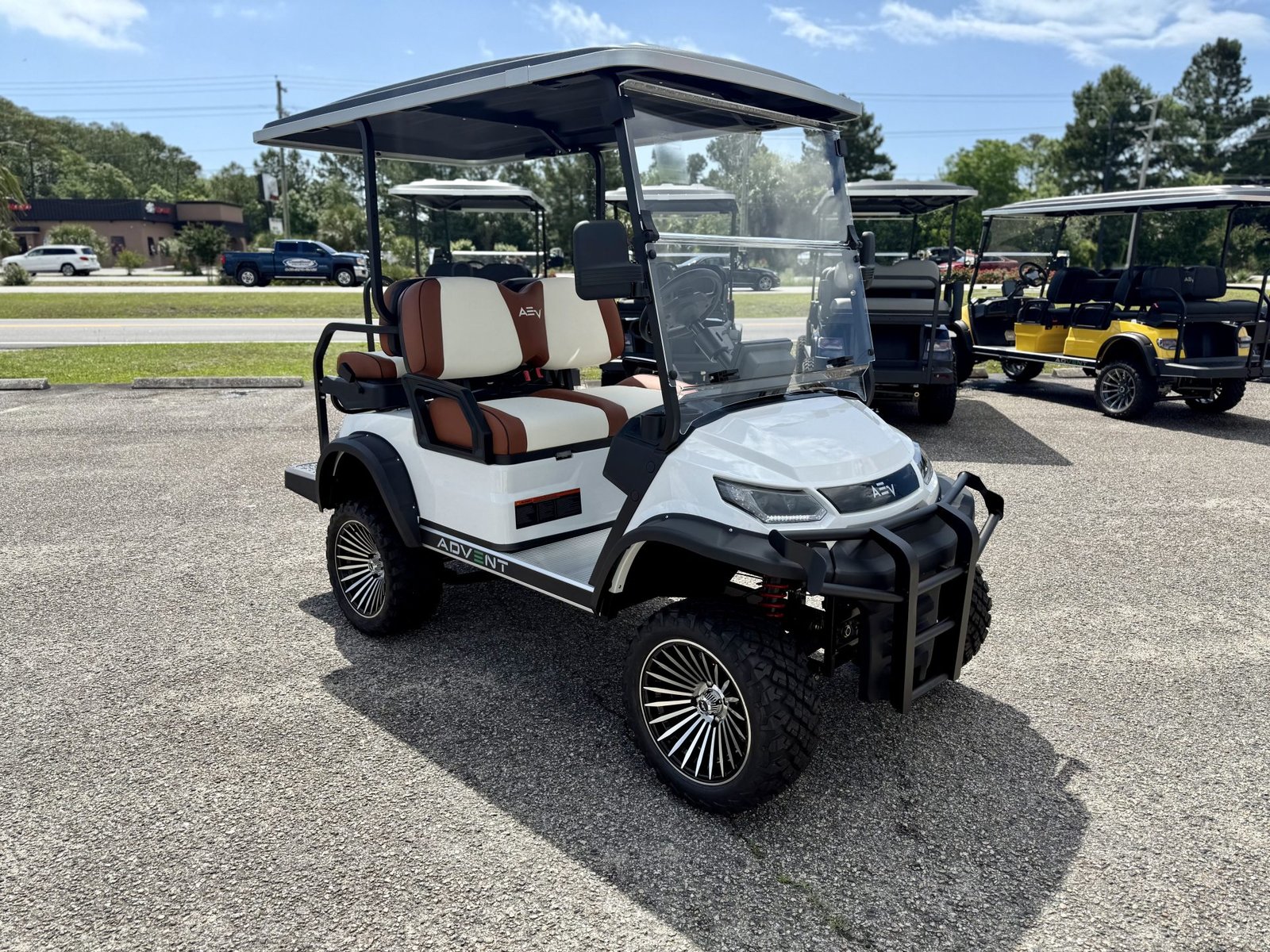
Advanced EV Golf Carts
A value brand in the street-legal lithium field
Advanced EV is a value-focused electric cart brand that entered the US market around 2018, competing in the same affordable street-legal segment as ICON, Evolution and Bintelli. Its carts are built as low-speed vehicles (LSVs) with lithium battery packs and the lights, signals, seatbelts and windshield needed for road use in most states.
The brand keeps things simple: a clean, modern design, lithium power and street-legal equipment at a competitive price. It is one of the lesser-known names in the value segment, but it offers a similar formula to its better-marketed rivals, usually at a lower sticker.
Who it is for
Advanced EV suits the budget-minded buyer who wants a street-legal lithium cart and is shopping the whole field of value brands. It is worth a serious look when you find a well-priced unit with local dealer support nearby.
As with any newer brand, the one thing to confirm before you buy is parts and service availability in your area, since the dealer network is smaller than the big three.
Advanced EV models & value
The Advent series is Advanced EV’s core passenger line, offered in 2, 4 and 6-passenger layouts. Used pricing below reflects aggregated real listings; open any model in the value calculator for a year-by-year breakdown.
Advent 2
Compact street-legal 2-seater
Advent 4
4-passenger, the core seller
Advent 6
Extended 6-seat family layout
Common Advanced EV problems & fixes
Advent complaints usually trace to lithium battery management, charger handshake, controller safety inputs, street-legal accessory wiring, or load-related power limits. Diagnose the exact symptom before buying parts.
Won’t Move
Dash on but no drive: interlock, pedal, solenoid, or controller checks.
Open guide No PowerWon’t Turn On
Dead dash, sleeping BMS, disconnect, fuse, converter, and key feed.
Open guide ChargingWon’t Charge
Charger lights, charge port pins, BMS wake, and pack voltage checks.
Open guide CodesError Codes
Dash warnings for battery, charger, throttle, brake, speed, and heat.
Open guide Limp ModeReduced Speed
Brake input, throttle sensor, speed sensor, heat, and BMS limits.
Open guide BatteryBattery Problems
Lithium BMS sleep, voltage sag, cable heat, charge refusal, storage.
Open guide AlarmsBeeping
Reverse alarm, low-battery beeps, charger warnings, and fault alerts.
Open guide HillsSlow On Hills
Voltage sag, thermal cutback, tire size, brake drag, load power loss.
Open guide All SymptomsFree Troubleshooter
Symptom-first diagnosis across every brand and model.
Launch toolMaintenance, serial & parts
Keeping a lithium Advent healthy
Advanced EV carts are lithium-electric, so there is no battery watering or acid topping like an old lead-acid cart. The care that actually matters is different:
- Keep the battery management system (BMS) awake and healthy: charge before long storage and avoid leaving the pack at very low state of charge for weeks.
- Keep the charge port and pack connections clean and tight: a loose or corroded lug is the most common cause of heat, voltage sag and no-charge faults.
- Have a dealer push any firmware or controller updates if you hit odd fault behavior.
- Run the usual mechanical checks: tire pressure and wear, brakes, suspension bushings and steering play, same as any cart.
Serial, year & parts
Advanced EV serials are usually on a frame plate or under the seat, and the model year is often encoded in the VIN on street-legal units. Our universal what year is my golf cart guide explains how to read them.
The drivetrain uses common electric-cart components, so motors, controllers and chargers often cross-reference with comparable lithium carts, which keeps repairs affordable. Body and trim parts come through the dealer network.
Because the brand is smaller, confirm parts and local support before committing to a used unit. For resale context, the value calculator tracks model-specific market data.