Golf Cart Top Speed by Brand and Model: Reference Guide
Stock golf cart top speed is set by controller programming, gearing, tire size, and legal class, not the badge on the nose. Here are the verified per-model numbers separated cleanly from the broad class ranges.
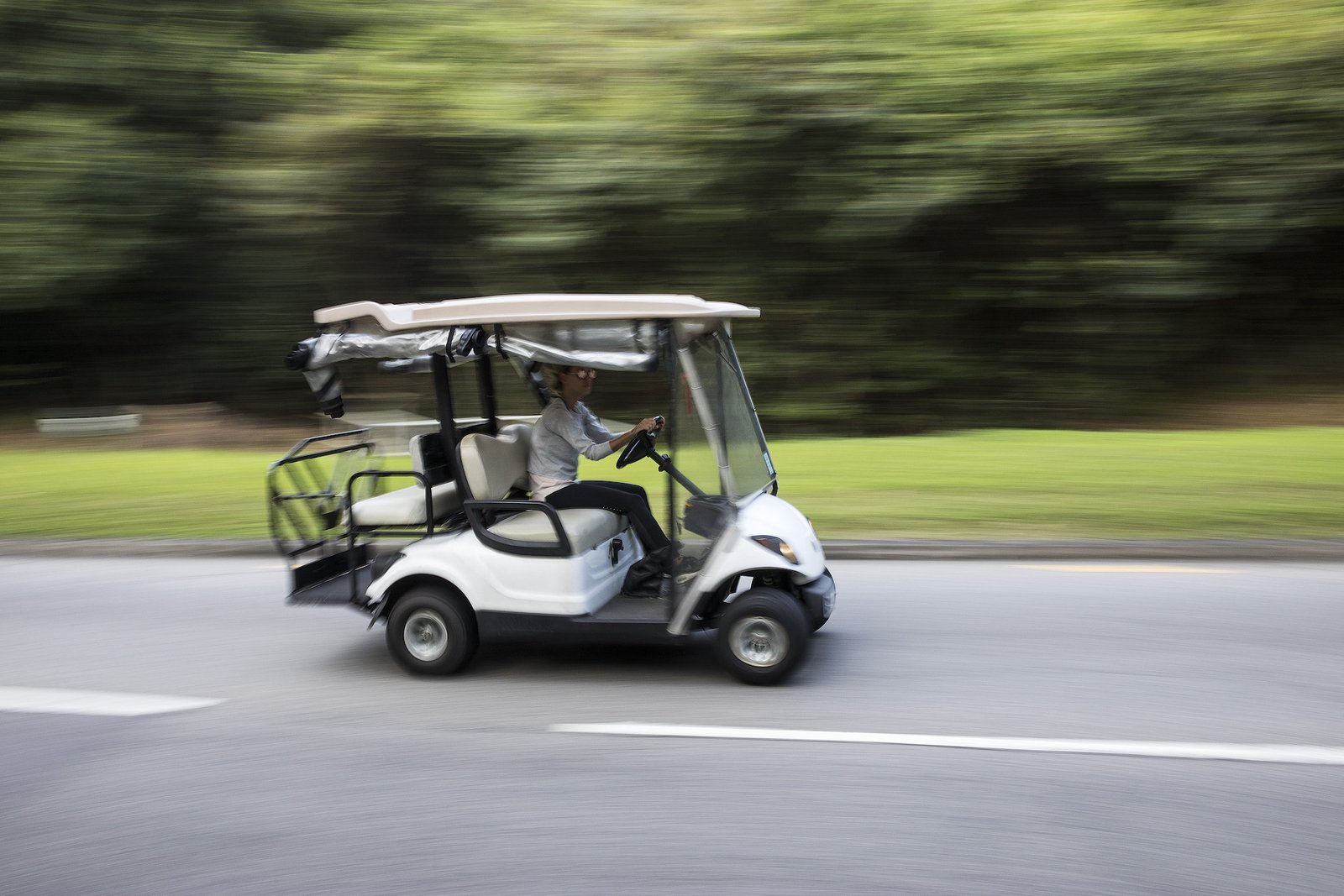
- Standard course and neighborhood carts (older TXT, DS, Precedent, fleet setups) are usually factory-limited to about 12 to 15 mph.
- Verified 25 mph factory LSVs: Club Car Onward LSV, E-Z-GO Liberty LSV, ICON i40/i60, and GEM LSVs.
- Verified 19 mph PTVs: Yamaha Drive2 PTV, Evolution D5 Maverick, and the E-Z-GO Liberty non-LSV trim.
- FMVSS 500 defines LSVs around a 20 to 25 mph window with required brakes, lights, mirrors, VIN, and registration. A cart tuned to 25 mph on private property is not automatically a legal LSV.
- Four things set speed: controller current and speed limit, motor winding or AC drive tune, rear gear ratio, and tire diameter. A lithium pack alone does not raise a programmed speed limit.
Stock golf cart top speed is set by controller programming, tire diameter, gearing, motor type, voltage, and legal class. The badge is only a clue. A Club Car Onward PTV, an Onward LSV, an E-Z-GO Liberty PTV, and a Liberty LSV can all look related, but their verified top-speed numbers and brake equipment are not the same. This page reuses the already-verified figures from the fastest-stock-carts research, then separates verified per-model numbers from broad class ranges.
01: Golf Cart Top Speed, Explained
This page reuses the already-verified figures from the fastest stock golf carts reference, then separates verified per-model numbers from broad class ranges. The manufacturer pages checked for this update show the same pattern: current factory LSVs sit at 25 mph, while many personal transportation vehicles stay around 19 mph. Where a row is a class range rather than a single verified model figure, it says so.
| Brand / Platform | Verified Stock Top Speed | Source Status |
|---|---|---|
| Club Car Onward 4 Passenger LSV | 25 mph | Club Car LSV specifications publish 25 mph high speed on level ground. |
| E-Z-GO Liberty LSV | 25 mph | E-Z-GO Liberty LSV sell sheet publishes 25 mph level-ground speed. |
| ICON i40 and i60 families | 25 mph | ICON owner documentation lists 25 mph max speed for i40/i60 variants. |
| GEM e4 and related GEM LSVs | 25 mph | Verified LSV benchmark from GEM specifications. |
| Yamaha Drive2 PTV | 19 mph | Yamaha’s current Drive2 PTV page lists 19 mph. |
| Evolution D5 Maverick 4 Plus | 19 mph | Evolution’s current D5 Maverick page lists max speed at 19 mph. |
| E-Z-GO Liberty PTV (non-LSV) | Up to 19 mph | E-Z-GO current Liberty specs list up to 19 mph for non-LSV trims. |
| Older fleet carts (TXT, DS, Precedent, course setups) | Usually 12 to 15 mph | Class range only. Verify by model year, controller, and tire size. |
02: How We Compiled This Reference
These values are not copied from random dealer ads. For exact rows, they come from manufacturer specifications or the verified source set in the fastest-stock-carts reference. For broad rows, they are labeled as class ranges because older fleet carts vary by controller, gear set, tire size, condition, and dealer programming. A cart wearing any given badge can differ from these ranges depending on how it is set up.
Federal LSV rules matter here. FMVSS 500 defines low-speed vehicles around the 20 to 25 mph window and required equipment. A cart that can be tuned to 25 mph on private property is not automatically a compliant LSV. Brakes, lights, mirrors, windshield, VIN, labels, and state registration all still apply.
03: Top Speed by Cart Class and Common Platforms
Standard golf carts: most unmodified course and neighborhood carts run 12 to 15 mph, especially older TXT, DS, Precedent, and fleet-limited models. Some PTVs are faster, but do not assume the nameplate proves it.
Personal transportation vehicles: current Yamaha Drive2 PTV and E-Z-GO Liberty non-LSV specs are useful anchors because both live around 19 mph on manufacturer pages. That is quick enough for most communities without pushing into the LSV ceiling.
Factory LSVs: Club Car Onward LSV, E-Z-GO Liberty LSV, the ICON i40/i60 family, and GEM LSVs are the verified 25 mph group. These are the models to study if you need factory street-legal speed instead of a modified course cart.
Value lithium platforms: current Evolution D5 Maverick pages list 19 mph for non-LSV configurations, even though some dealers sell street-legal or local-market versions. Treat Evolution as 19 mph unless the exact model page or a dealer certificate proves the 25 mph LSV build.
04: What Actually Sets Top Speed
Four things decide speed: the controller current and speed limit, the motor winding or AC drive programming, the rear gear ratio, and the tire diameter. Battery voltage and chemistry matter because a weak pack sags under load, but a lithium battery alone does not change the programmed speed limit.
Bigger tires slightly raise effective gearing, so the cart may show more GPS speed at the same motor rpm. The cost is lower wheel torque, more controller heat on hills, worse braking leverage, and more stress on stock suspension. That is why a tire-only change is usually the wrong first speed upgrade.
Parts note: On most electric carts the stock controller is the first thing holding speed back. The Replacement Controller Finder matches the upgrade to the controller your cart has now. Find your controller
05: Can I Make My Cart Faster?
Yes, but treat speed as a system. The common paths are a programmable controller, a speed-wound motor, different gearing, larger tires, or a higher-voltage conversion. Start with how to make a golf cart faster, then use are golf cart speed upgrades worth it to decide whether the cost makes sense.
Any real speed increase should bring matching safety work: better brakes, fresh tires rated for the use, tight steering, good wheel bearings, correct alignment, and a controller tune that protects the motor on hills. If the cart will run on public roads, confirm the legal class before building beyond stock speed.
Match the number to the class, then verify the exact trim. Expect 12 to 15 mph on standard carts, 19 mph on Yamaha Drive2 and Evolution D5 Maverick PTVs, and 25 mph on Club Car Onward LSV, E-Z-GO Liberty LSV, ICON i40/i60, and GEM LSVs. Before you treat any cart as street legal, confirm it meets FMVSS 500 equipment and your state registration rules.
Frequently Asked Questions
How fast does a standard golf cart go?
Most standard course and neighborhood carts are factory-limited to about 12 to 15 mph, especially older TXT, DS, and Precedent fleet models. Many modern PTVs such as the Yamaha Drive2 and E-Z-GO Liberty run closer to 19 mph, while verified factory LSV models like the Club Car Onward LSV, E-Z-GO Liberty LSV, ICON i40/i60, and GEM reach 25 mph.
How can I make my golf cart faster?
The common paths are a programmable controller (more current and a higher speed limit), a speed-wound motor, a gear ratio change, larger tire diameter, or a higher-voltage conversion. A lithium battery by itself does not raise the programmed limit. Whatever you change, upgrade brakes, tires, steering, and alignment to match any real speed gain, and confirm the legal class before running on public roads.
Do bigger tires increase golf cart speed?
Slightly. Larger tires raise effective gearing, so the cart may show more GPS speed at the same motor rpm. But they reduce wheel torque, add controller heat on hills, and worsen braking leverage, so a tire-only change is usually the wrong first upgrade and can strain the motor and controller.
Is a 25 mph golf cart street legal?
Not automatically. FMVSS 500 defines low-speed vehicles around a 20 to 25 mph window, but a legal LSV also needs the required brakes, lights, mirrors, windshield, VIN, and labels, plus state registration. A cart tuned to 25 mph on private property is not the same as a certified factory LSV such as the Club Car Onward LSV or E-Z-GO Liberty LSV.