Golf Cart Regen Braking Explained: Why It Fails and How to Test It
Regenerative braking is what slows an electric cart when you lift off the pedal. When it stops working the cart coasts like a runaway, and when it works too aggressively the wheels lock. Both are diagnosable.
- Regen braking commands generating torque from the drive motor while the cart is moving, returning current toward a pack that can accept it.
- Total loss of regen usually points at the controller, the speed sensor, or the motor field circuit rather than at the mechanical brakes.
- A fully charged pack legitimately reduces regen because there is nowhere for the recovered current to go. That is designed behaviour, not a fault.
- RXV motor-brake release faults can feel like aggressive regen, but the stationary brake and rolling regen paths must be diagnosed separately.
- Never diagnose regen by feel alone. Test the speed sensor signal and the motor circuit before replacing a controller.
Regenerative braking is the single most misunderstood system on a modern electric golf cart. It has no pedal, no cable and no obvious hardware, so when it changes behaviour there is nothing visible to point at. Owners describe it as the cart suddenly coasting too far, or as the wheels grabbing on lift-off, and both complaints get blamed on the mechanical brakes even though the mechanical brakes are usually fine. Understanding what regen actually does electrically makes the diagnosis straightforward, because each failure mode has a distinct and testable cause.
How Regenerative Braking Actually Works
An electric motor and a generator are the same machine running in opposite directions. When the controller feeds current into the motor, the motor produces torque and the cart accelerates. When you lift off the pedal while the cart is still rolling, the wheels are now driving the motor rather than the other way round, and the motor begins generating current instead of consuming it. That generated current has to go somewhere, and pushing it back toward the battery pack takes work. That work is what you feel as braking.
This is why the effect is called regenerative: some of the energy that would otherwise be lost as heat in a friction brake is recovered into the pack. The recovery is real but modest, and it is not the reason manufacturers fit the system. The reason is control. Regen gives smooth, automatic deceleration on hills and lets the cart hold a sensible speed downhill without the driver riding a brake pedal.
The controller decides how much regen to apply and when. It monitors cart speed, pedal position and pack voltage, then modulates the braking current accordingly. Every regen fault is therefore either a bad input to that decision, a controller unable to act on it, or a motor circuit unable to carry the resulting current. That three-way split is the whole diagnostic map.
Why Regen Stops Working
The complaint sounds dramatic: the cart free-wheels down every slope and will not slow when you lift off. On a cart that previously held itself back this feels like a brake failure, and on a steep drive it genuinely is a safety problem. The mechanical brakes still work, but the driver has lost the deceleration they had learned to rely on.
Start with the speed sensor, because the controller cannot apply regen if it does not know the cart is moving. A failed or contaminated sensor commonly produces exactly this symptom alongside reduced power or limp mode, and it is far cheaper than a controller. The same sensor sits at the root of many limp mode complaints, so a cart with both symptoms together is pointing hard at that one part.
Next, consider pack voltage, because there is a legitimate no-fault explanation that catches people out. A pack at full charge cannot absorb much more current, so the controller reduces or suspends regen to avoid overcharging it. A cart that coasts freely for the first few minutes after coming off the charger and then behaves normally is not broken. Recognising this saves a great deal of unnecessary diagnosis.
If the sensor is good and the behaviour persists at all states of charge, attention moves to the motor circuit and the controller itself. Regen current flows through the same high-current path as drive current, so corroded motor terminals, a failing solenoid contact or a damaged field winding can break regen while still allowing the cart to drive. Inspect and load-test that path before condemning the controller, which is the most expensive part in the chain and the least often actually at fault.
When Regen Is Too Aggressive
The opposite complaint is a cart that bites hard when the pedal is released. On an E-Z-GO RXV, first distinguish rolling regenerative deceleration from a motor brake that remains physically applied or will not release at rest. A stationary lock or release problem follows the RXV motor-brake diagnostic; altered deceleration while the cart rolls follows the encoder, controller and battery charge-acceptance path.
Beyond that platform, aggressive regen is often a side effect of a controller change. Aftermarket controllers frequently expose regen strength as a programmable parameter, and a unit installed with someone else profile or a default map can brake far harder than the original. If the behaviour appeared immediately after an upgrade, the settings are the first place to look, not the brakes. This is worth confirming before touching hardware on any controller upgrade.
Tyre and surface conditions matter more than owners expect here too. Regen applies its braking through the driven wheels only, so on wet grass or loose gravel the same regen setting that feels smooth on tarmac can break traction. A cart that only locks up on one surface does not have an electrical fault.
How to Test the Regen System
Testing follows the three-way split from earlier: check the input, then the motor circuit, then the controller. Work with the cart safely supported and the drive wheels clear of the ground, and disconnect the pack before touching any high-current connection.
For the input, test the speed sensor to its manufacturer procedure. Most golf cart speed sensors produce a pulsed output as the magnet passes, and the practical bench check is to confirm a changing signal while the wheel turns rather than to chase an exact figure, since the expected values differ by platform. A sensor that produces nothing while the wheel spins is conclusively bad. A sensor that produces an erratic or intermittent signal is equally bad and much harder to spot, so turn the wheel slowly through a full revolution rather than spinning it once.
For the motor circuit, inspect and clean every high-current terminal between pack, solenoid, controller and motor, then check for voltage drop across each connection under load. Regen current runs the same route as drive current, so a joint that is merely marginal under acceleration can be the thing that breaks regen. A hot terminal after a drive is a reliable tell, and a hot solenoid resistor points at a related switching fault worth ruling out at the same time.
Only after both of those pass is the controller a reasonable suspect. Read any fault codes the cart can display first, because most modern controllers log the reason they disabled regen and that log is faster than any physical test. On carts with a state-of-charge display, a flashing pattern is often a code rather than a battery warning; the RXV meter code guide covers how to read one.
Platform-specific regen tests and limits
Regen complaints become much easier when the cart is identified before the meter comes out. A Club Car IQ-style speed sensor, an E-Z-GO RXV motor encoder and an aftermarket controller do not share one pinout or one expected signal. The following are documented examples, with their limits stated plainly.
| System | Documented observation | What it proves |
|---|---|---|
| Club Car Precedent speed sensor | Push the cart about 3 feet with RUN selected, key OFF and direction in Neutral. The reverse beeper and motor braking should engage | A quick functional screen for speed-sensor input and controller response |
| Club Car Precedent sensor signal | Red supply is 15 to 16V, light-green reference is 4.60 to 4.90V, and the connected output alternates near 0 and 4.85V as the motor turns | Separates missing supply, missing reference and missing pulse output |
| E-Z-GO RXV with the documented OEM diagnostic workflow | Read actual motor speed with the handheld diagnostic and check related faults, including the 5V supply fault | Tests the encoder through controller data without borrowing a Club Car pin test |
| FSIP Curtis 1206AC RXV replacement system | The replacement-controller sheet checks pins 31 and 32 for a 0 to 5V change while a wheel is rotated | Useful only for that retrofit controller and harness, not every RXV |
The Club Car detailed test also gives a useful pulse count: four output pulses per motor armature revolution. A steady high or low output while the motor is turned slowly indicates the controller is not receiving motion information, provided the supply and reference values are correct. On that platform, a logged speed-sensor fault can also limit the cart to roughly half normal top speed. Loss of lift-off braking plus reduced speed is therefore a much stronger sensor clue than regen feel by itself.
Controller settings are product-specific
Aftermarket controllers can deliberately change how much braking occurs, but the names and ranges belong to the product. Curtis model 1226 documentation includes separate Regen Current Limit and Brake Current Limit parameters, both expressed as percentages. That does not make those parameter names or defaults valid for every Curtis controller. Alltrax documents regen adjustment for its XCT ecosystem while noting that its SR series is a series-motor controller without that same regen function. Navitas describes the live OTF regen knob as a TSX function, with the knob requesting 0 to 100 percent of the maximum already set in the app. A Navitas TAC2 AC controller may support programmable regen, but that does not turn the TSX knob instruction into a TAC2 wiring rule.
If the complaint began immediately after a controller installation or app change, export or photograph the current map before changing anything. Check the exact controller model, motor type, pack voltage, maximum battery charge current and tire size. Lowering one parameter at random can hide an encoder fault or create weak downhill control. Restore a known-good vehicle-specific map, make one change at a time and test on level ground before any hill test.
Lithium BMS behavior can imitate a regen fault
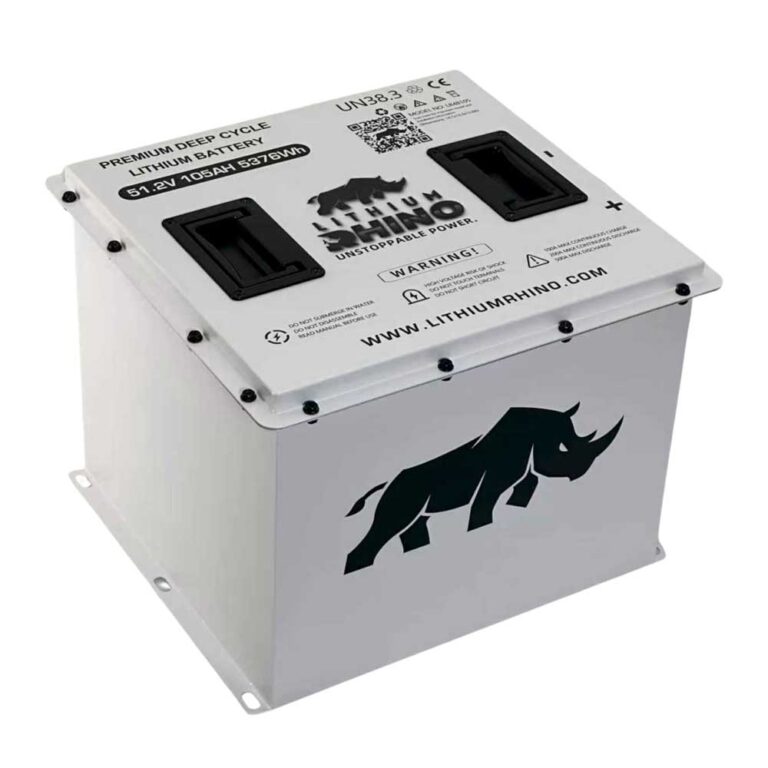
During regenerative braking the controller is charging the battery. A lithium battery management system must be able to accept that current and must have room below its high-voltage limit. Battery manufacturers warn that a BMS not designed for motor backfeed can disconnect during regen, and that a high state of charge can reduce how much regenerated current the pack can safely accept. The driver may feel reduced braking, an abrupt change in deceleration, or a controller fault depending on how that system handles the loss of a charge path.
Do not bypass a BMS or add a dump load based on that symptom. Confirm the battery is approved for the cart and controller, obtain its maximum continuous and peak charge limits, and compare them with the controller configuration. Read BMS event data for cell overvoltage, pack overvoltage, temperature and charge overcurrent. A complaint that occurs only just off the charger and disappears after some energy has been used points toward charge acceptance, while a complaint at every state of charge keeps the sensor, wiring and controller on the list.
A safe diagnostic order
- Verify mechanical service brakes first. Regen is supplemental deceleration and a cart that cannot stop mechanically should not be road-tested.
- Record when the behavior occurs: pedal release, direction change, key-off roll, steep descent, full charge, low charge or only on a loose surface.
- Read controller and BMS faults before cycling power. Clearing a code erases the best clue.
- Run the model-specific speed-sensor or encoder test and verify its supply before replacing the sensor.
- Inspect motor and controller connectors for heat, corrosion and backed-out terminals. Use the service manual before performing insulation or winding tests.
- Check the exact controller map and the battery charge-current limits. Then road-test in a controlled area with a second means of stopping available.
Document the final result with battery state of charge, controller temperature and the same test route used before repair. Regen strength changes with speed, grade, traction and charge acceptance, so a short flat-yard drive is not enough to prove a downhill complaint is gone. Never conduct the first validation on a public road or a steep hill. Use a controlled area, verify the friction brakes again, and increase speed and grade gradually while watching for repeat faults.
Treat regen as an electrical system, not a brake. If the cart has stopped slowing on lift-off, test the speed sensor first and check whether the pack is simply full, because those two account for most complaints and neither requires a controller. If an RXV locks, establish whether the stationary motor brake or rolling regen caused it before changing parts. The controller is the last suspect in both directions, not the first.
Frequently Asked Questions
What is regen braking on a golf cart?
Regenerative braking uses the drive motor as a generator when you lift off the accelerator. The wheels turn the motor, the motor produces current, and pushing that current back toward the battery pack creates resistance that slows the cart. It reduces wear on the mechanical brakes and helps control speed on hills.
Why does my cart coast instead of slowing down?
The most common causes are a failed speed sensor, a fully charged pack that cannot absorb more current, or a break in the high-current motor circuit. A fully charged pack is normal behaviour and resolves once some charge is used. A speed sensor fault often appears alongside reduced power or limp mode.
Can regen braking charge my golf cart battery?
It returns a small amount of energy to the pack, but nowhere near enough to meaningfully extend range or replace charging. The practical benefit is speed control and reduced mechanical brake wear rather than energy recovery.
Why does my RXV grab or lock up when I lift off?
On the EZGO RXV the electronic motor brake is closely tied to how the cart holds and releases speed, so grabbing and lock-up complaints usually trace to that brake or its controller logic rather than to worn friction material. The electronic brake reset procedure is the correct starting point.
Does regen work on a gas golf cart?
No. Regenerative braking requires an electric drive motor that can act as a generator. Gas carts slow through engine braking and their mechanical brakes, which is a different mechanism entirely.