Golf Cart Controller Upgrade: Amps, Solenoid & Cable
How controller amps set torque, how to match the solenoid and cable, and why the published peak-versus-continuous spread on real controllers means the whole drivetrain must be upgraded together.
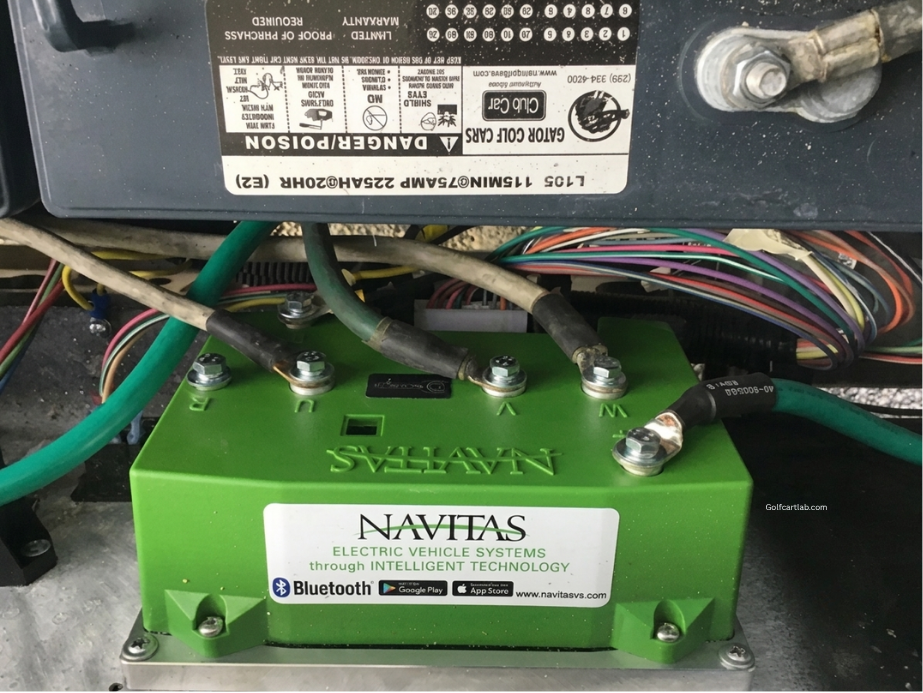
- The controller meters current from the pack to the motor, so its amp rating sets the ceiling on torque and acceleration.
- Peak is not continuous: an Alltrax SR48500 lists 500A peak but only 175A continuous, so match the path to real burst current.
- The solenoid must be rated at or above the controller, and cable heavy enough to avoid voltage drop and heat.
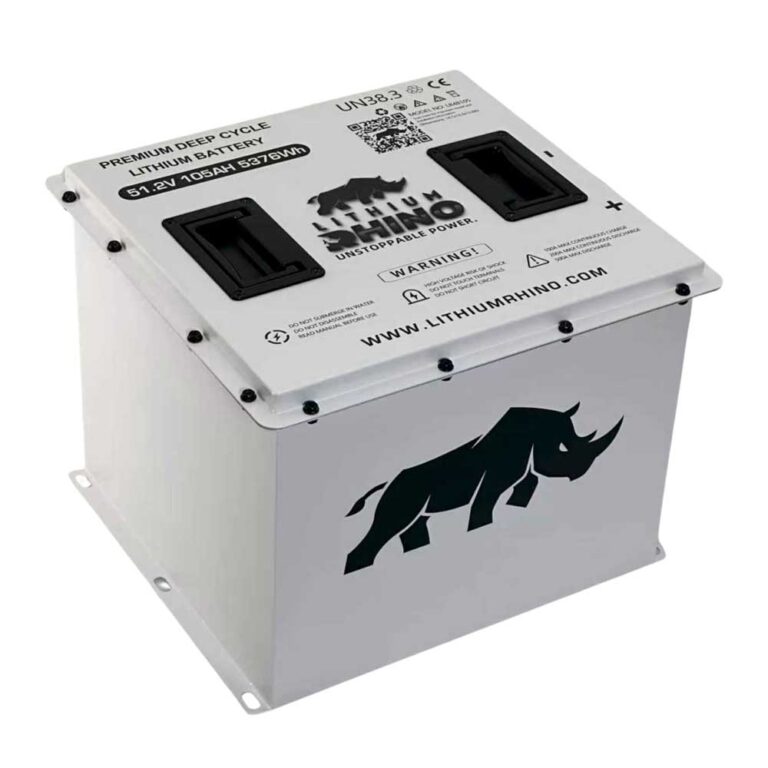
- A sagging lead-acid pack starves a big controller; lithium holds voltage flat and actually feeds the rated peak.
What the controller actually controls
Which controller you can bolt in depends heavily on your cart and drive system. EZGO owners on the older DCS and PDS 36V and 48V systems usually reach for an Alltrax SR or the Navitas 440, while Club Car Precedent and DS owners running the IQ system typically choose a Navitas 600A TSX or an Alltrax XCT sized to their motor. Curtis-based carts often step up from a stock 1268 or 1266 to a higher-amp Curtis unit. The point is that a controller is not universal, so confirm your exact system, whether it is a 2010 EZGO RXV, a 2015 Club Car Precedent, or a series-wound versus SepEx motor, before you spend a dollar, because a controller built for a SepEx motor will not run a series motor and vice versa.
The controller is the brain between the throttle and the motor. It meters how much current flows from the batteries to the motor, so its amp rating sets the ceiling on torque and acceleration. A stock controller is tuned for reliability and battery life, typically in the 225 to 300 amp range. A performance controller allows more current, which is why an upgrade can make a cart leap off the line and pull hills it used to struggle with. To match a controller rating to a solenoid and cable for your goal, use the controller amp calculator. Before you settle on a rating, check controller compatibility for your cart: the finder works from the serial number, the model or the label on the old controller.
Matching controller, solenoid, and cable amps
More amps mean nothing if the rest of the path cannot carry them. The solenoid must be rated for the current the controller will ask from the pack, and the cable must be heavy enough to avoid voltage drop and heat. The table shows sensible matching by goal.
| Goal | Controller Amps | Solenoid | Min Cable |
|---|---|---|---|
| Stock / reliable | 225 to 300 A | 250 A | 4 AWG |
| Mild upgrade | 300 to 400 A | 400 A | 2 AWG |
| High performance | 450 to 600 A | 500 A+ | 1/0 AWG |
The continuous-versus-peak distinction is easier to understand with real controller sheets. Alltrax publishes the spread clearly, and it is wide enough that matching only the headline amp number can mislead a buyer.
| Controller | Published peak | Published short-duration rating | Published continuous | What it means |
|---|---|---|---|---|
| Alltrax SR48500 series controller | 500A, or 575A with Peak Amp Mode | 500A for 2 min, 350A for 5 min | 175A | A 500A label is launch current, not all-day current. |
| Alltrax SR48600 series controller | 600A, or 690A with Peak Amp Mode | 600A for 2 min, 425A for 5 min | 210A | The higher model adds peak torque, but continuous heat capacity is still far lower than 600A. |
| Alltrax XCT48500 shunt controller | 500A, or 570A with Peak Amp Mode | 500A for 2 min and 500A for 5 min | 250A | The XCT sheet gives a stronger sustained rating than the SR48500, but still separates peak from continuous. |
| Navitas TSX3.0 DC controller | Navitas publishes a 600A controller rating and 50A peak field current | No public 2 min / 5 min row found on the product page | No public continuous row found on the product page | Use 600A as the maker’s published controller rating, not a verified continuous rating. |
| Curtis 1268 family | Curtis says drive current limit adjusts up to the model’s full rated current | Model-specific current depends on the exact 1268 part number | No universal continuous row is printed in the public manual | Do not assume every Curtis 1268 cart has the same amp ceiling; read the exact label or parameter sheet. |
The practical rule is to size the current path for the highest current the controller will actually request, then confirm duty cycle. A controller that can burst to 500A for a launch still spends much of a cruise below 100A, but the solenoid, lugs, pack BMS, and battery cables see those short bursts. Size the actual cable for your run length and target voltage drop with the wire gauge calculator.
Parts note: The Navitas TSX 3.0 controller kits we stock come in 440A and 600A versions, listed by cart and by the stock controller they replace. See controller kits
Upgrade the whole drivetrain together
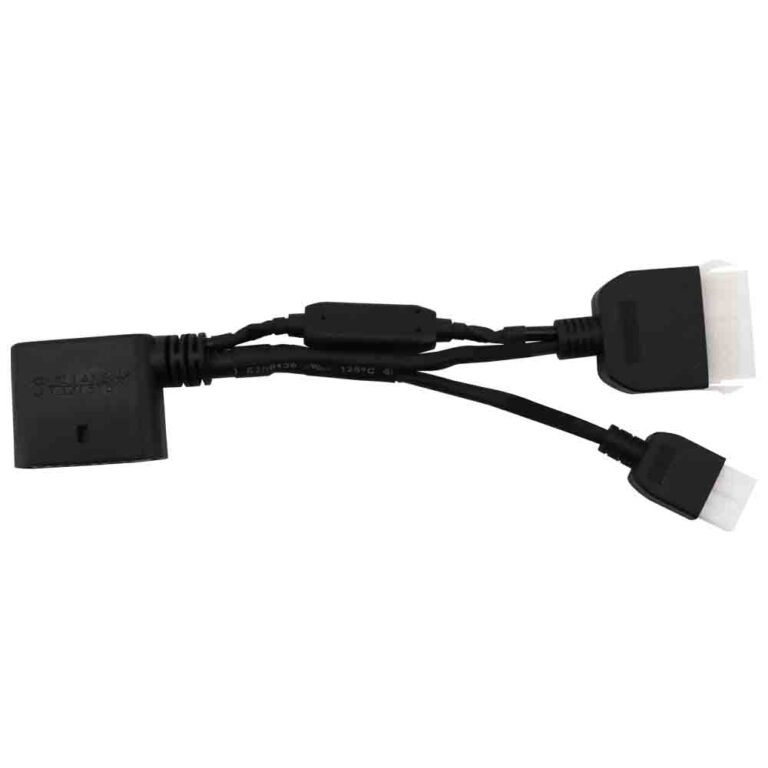
There is one quirk that catches upgraders on Club Car Precedent IQ carts specifically: the factory MCOR throttle sensor and onboard computer expect a stock current profile, and simply swapping in a high-amp aftermarket controller without the matching throttle input can throw fault codes or leave the cart in a limp mode. That is why brands like Navitas sell a plug-and-play kit with its own throttle sensor and Bluetooth programmer for the Precedent rather than a bare controller. On EZGO RXV carts the opposite trap appears, since the RXV integrates the controller and motor communication tightly, so not every aftermarket controller even fits. Check kit compatibility for your exact model year before assuming any high-amp controller will drop in.
A bigger controller exposes the weakest link in the system. Tired lead-acid batteries sag under the extra current and limit the gains, while lithium packs with a capable BMS deliver high current cleanly. The motor must also tolerate the heat that more amps produce, especially older series motors pushed hard. And thin cable on a high-amp controller just makes heat instead of speed. That is why a controller upgrade is really a drivetrain upgrade: batteries, controller, solenoid, cables, and motor working together.
Does a bigger controller add real speed?
Do not overlook the battery pack as the real ceiling here. A 300-amp lead-acid pack that sags to 42 volts under load will never let a 500-amp controller reach its potential, so the controller sits there starved while you wonder where the promised torque went. This is exactly why so many owners pair a controller upgrade with a lithium conversion: a quality LiFePO4 pack holds voltage flat under a heavy current pull, so the controller can actually deliver its rated peak. If you are staying on lead-acid, keep the amp band modest, in the 300 to 400 range, and save the 450-amp-plus builds for a pack that can genuinely feed them.
A controller upgrade mostly adds torque and acceleration; top speed depends more on motor RPM, gearing, and tire diameter. If your goal is a higher top end, combine controller work with gearing or tire changes and check the result on the top speed calculator and tire size calculator. For a broader walkthrough of every way to add speed, see our guide on how to make a golf cart faster. Remember that pushing past 25 mph can change your cart’s legal status, so review the street-legal checklist before chasing big speed. If you are deciding between a controller kit and a full AC conversion, the AC conversion kit finder weighs your load, hills and speed goal and shows the kit that fits your cart.
Parts note: If you pair the controller with lithium, the 48V bundles we stock run from 50Ah to 175Ah. See lithium bundles
The bottom line before you buy a controller
A controller upgrade is one of the most satisfying golf cart modifications because the extra torque is immediately obvious, but it only delivers if the supporting parts can keep up. Decide your performance goal first, let the calculator suggest a matching controller amp band, solenoid rating, and cable gauge, then make sure your batteries and motor can handle the current. Done as a system, the cart accelerates harder, climbs better, and stays cool and reliable. Done piecemeal, you get heat, blown solenoids, and disappointment, so match the whole drivetrain to the new controller from the start.
Frequently Asked Questions
How many amps should my golf cart controller be?
Stock controllers are usually 225 to 300 amps. Mild upgrades run 300 to 400 amps and high-performance builds use 450 to 600 amps or more, but only with a matching solenoid, heavy cable, a capable motor, and a battery pack that can supply the current.
What is the difference between peak and continuous controller amps?
Peak is the short launch current a controller can deliver for a couple of minutes; continuous is what it can sustain all day. The gap is large. An Alltrax SR48500, for example, publishes 500A peak but only about 175A continuous, so sizing the solenoid and cable to the peak matters more than the headline number.
Will a bigger controller make my cart faster?
A properly sized golf cart controller upgrade mainly increases torque and acceleration, and sometimes top speed, but only if the motor, batteries, solenoid, and cables can all handle the extra current. The weakest link sets the real-world result, so upgrade the drivetrain together.
Do I need a new solenoid and cables when I upgrade the controller?
Usually yes. A higher-amp controller asks more current from the pack, so the solenoid should be rated at or above the controller and the cable sized for the run length and target voltage drop. Leaving a stock 200A-class solenoid and thin cable in place creates heat, blown contacts, and lost torque.