Advanced EV Golf Cart Problems: Owner Fault Guide
Many Advanced EV complaints on lithium-equipped carts trace back to the battery system and the electronics that manage it. Knowing what the cart is protecting itself from turns a confusing fault into a short list of checks.
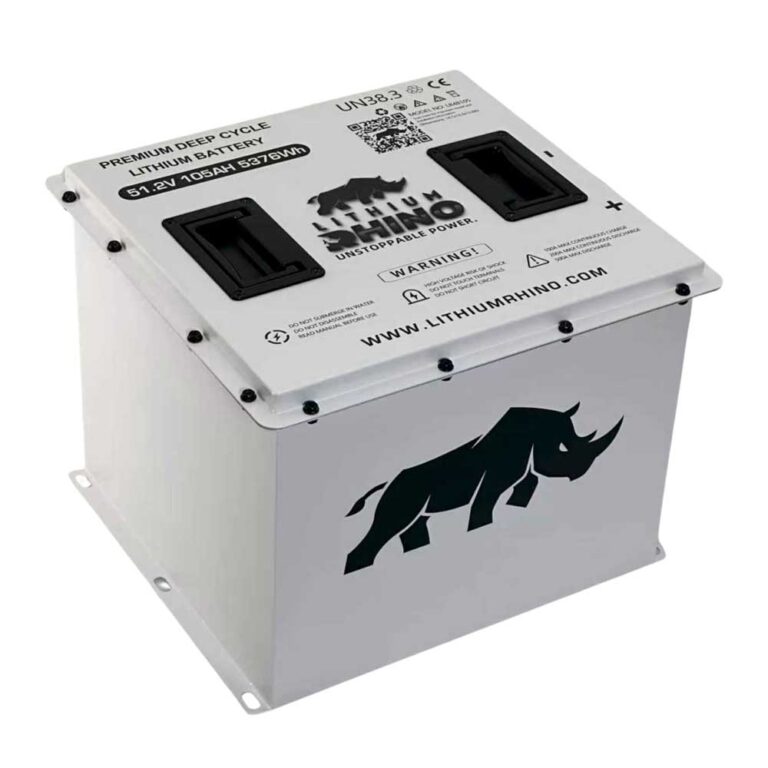
- On a confirmed lithium-equipped Advanced EV cart, the battery management system can shut the cart down deliberately. The official document vault also lists lead-acid wiring, so identify the fitted pack before using the BMS branch.
- Because the BMS protects rather than warns, faults tend to appear suddenly and completely instead of degrading gradually the way lead acid does.
- The same protective shutdown explains most no-power, no-charge and reduced-speed complaints, so identify which one you have before testing anything.
- Error codes and beeping are the cart telling you which protection tripped. Read them before opening anything up.
- Never assume a lithium pack is dead because the cart is silent. Confirm the BMS state first.
Advanced EV documentation covers more than one battery configuration. On a lithium-equipped model, the managed pack shapes many faults, while a lead-acid configuration requires a different diagnostic branch. A lithium pack is managed by a battery management system, a piece of electronics whose job is to shut things down before the cells are damaged. It will disconnect the pack rather than allow a condition it considers unsafe, and it does so without warning and without any of the gradual weakening that lead acid owners learn to read.
The practical consequence is that a great many Advanced EV problems present as a cart that was fine yesterday and is completely unresponsive today. That is alarming, and it is usually not a failure at all. This guide groups the common faults by what the cart is doing, and links through to the full procedure for each one.
Why the Battery Management System Explains Most Faults
A battery management system sits between the lithium cells and the rest of the cart, monitoring cell voltages, current draw and temperature. When any of those moves outside the range the manufacturer set, the BMS opens the connection and the cart loses power. It is a protective device doing exactly what it was fitted to do.
This behaviour is genuinely different from lead acid, and the difference causes most of the confusion. A tired lead acid pack gets slower, loses range and gives you weeks of warning. A lithium pack performs normally right up to the moment the BMS decides to intervene, at which point it can go from full performance to nothing. Owners moving from an older cart interpret that as catastrophic failure, when it is often a temperature limit or a low-cell cutoff that will clear on its own.
Temperature is an important clue on a lithium-equipped cart because the BMS can restrict charging or output outside the fitted pack’s allowed range. No accessible Advanced EV source reviewed published one numeric temperature window for every pack, so use the battery label and exact manual rather than a universal freezing rule.
No Power at All
A completely dead cart, with no dash lights and no response to the key, is the fault most likely to be a BMS shutdown rather than a broken component. Before testing anything, check the obvious external causes: the main disconnect or key switch, the tow and run switch position, and whether the cart has simply been left long enough to self-discharge below the BMS cutoff.
That last one catches people every season. A lithium pack left at a low state of charge for months can drop below the point where the BMS will allow discharge, and the cart then appears completely dead. Depending on the system, a normal charger may not wake it. The full sequence for this fault is in the guide to an Advanced EV cart that will not turn on.
Powers Up but Will Not Move
When the dash lights up but the cart does not respond to the pedal, the pack is delivering power and the fault is downstream in the drive command chain. The usual suspects are the tow and run switch, the direction selector, the pedal sensor, the solenoid and the controller, roughly in that order of likelihood.
The tow and run switch is worth checking first every time, because it costs nothing and it is responsible for a large share of these complaints. In the tow position the controller is out of circuit, so the cart lights up and does nothing. The systematic version of this diagnosis is in the guide to an Advanced EV cart that will not move.
Charging Problems
Charging faults on a lithium cart divide into three: the charger is not receiving or delivering power, the pack is refusing to accept charge, or the two are not communicating. Confirming which one you have prevents the expensive mistake of replacing a pack that was never faulty.
Temperature is the first thing to rule out, because a pack that is too cold or too hot will refuse charge by design. After that, confirm the outlet is live and the charger reports a state, then look at whether the BMS is allowing the connection. A pack sitting in protective shutdown will not accept charge until that state clears. The complete procedure is in the guide to an Advanced EV cart that will not charge, and the pack-side view of the same problem is in the guide to Advanced EV lithium battery and BMS problems.
Reduced Speed and Lost Power
A cart that still drives but has become noticeably slower is usually in a deliberate reduced-power state rather than suffering a mechanical fault. Controllers and battery management systems both implement limp modes, and they engage for specific reasons: low state of charge, a temperature limit at the pack or controller, or a detected fault the system has decided to drive around rather than shut down for.
Because it is deliberate, this fault responds to diagnosis rather than to parts. Establish whether the limit appears when the pack is low, when everything is hot, or all the time, because those three point in completely different directions. The guide to Advanced EV reduced speed and limp mode covers that reasoning in full.
A closely related complaint is a cart that performs acceptably on the flat but loses power on inclines. That is a load-dependent symptom, which points at pack condition under demand or at a connection that cannot carry current, rather than at the controller. It is treated separately in the guide to an Advanced EV cart that is slow or loses power on hills.
Error Codes, Beeping and Blinking
When an Advanced EV cart beeps, blinks or displays a code, it is reporting which protection tripped. That information is the cheapest diagnostic data available and it should be read before anything is dismantled.
Audible and visual warnings often indicate a state rather than a failure, including reverse warning, low state of charge and various fault conditions, and telling those apart saves a great deal of wasted work. The two relevant procedures are the guide to reading Advanced EV error codes and the guide to an Advanced EV cart beeping or blinking.
Preventing the Common Ones
Most of what is on this page is avoidable, and lithium carts reward a small amount of correct habit. Store and charge the cart within the state-of-charge, time, and temperature limits printed for the fitted battery. No universal Advanced EV storage percentage, duration, or charging-temperature number was verified, so record the pack label and follow its manual. Keep connections clean and tight, because a high-resistance connection produces exactly the load-dependent power loss described above.
Finally, resist the urge to diagnose a lithium cart by swapping parts. The BMS is designed to intervene, and a cart that is protecting itself will produce identical symptoms with a brand new controller fitted. Reading the state first is not just faster, it is the only approach that reliably finds the cause.
Identify the System Before Choosing a Fault Branch
- Does the battery bay contain lithium modules or a lead-acid bank? Advanced EV’s official document vault lists wiring documents for both. A BMS diagnosis applies only after lithium is confirmed.
- Is the whole cart dead, or is the dash alive? A completely dead lithium cart can be in pack protection. A live dash moves the search toward permissions, drive inputs, and controller faults.
- Is the complaint charge, motion, speed, hill power, or an alert? Pick that linked child guide and keep the symptom timing, state of charge, temperature, and displayed message together.
- Is this particular vehicle an LSV? Check its VIN label and required road equipment. Do not infer legal status from a body style or the Advanced EV name.
What Official Records Confirm About the Lineup
The official Advanced EV document vault separates Advent, EV1, and AdvLi manuals and includes both lithium and lead-acid wiring documents. NHTSA’s manufacturer record lists model families including Advent, Advent HD, Classic, Low Speed Car, and Low Speed Cargo. Neither source publishes one current pack voltage, chemistry, or motor rating for every model and trim, so the honest table starts with configuration evidence rather than borrowed dealer numbers.
| Family or document group | Official evidence | Pack and motor specification | LSV conclusion |
|---|---|---|---|
| Advent and Advent HD | Named in the NHTSA manufacturer record; Advent manuals and diagrams appear in the official vault. | Model-year and serial specific. No accessible official table reviewed publishes one universal pack or motor value. | The manufacturer record includes LSV production, but a family name alone does not prove a particular cart is road certified. |
| EV1 | An EV1 user manual and EV1 wiring documents are listed in the official vault. | Use the battery label and exact EV1 document. The vault includes configuration-specific material. | Confirm with the vehicle VIN label and compliance equipment. |
| AdvLi | A separate AdvLi user manual is listed in the official vault. | Lithium-specific document family. Exact voltage and motor rating remain serial-specific unless shown on the fitted labels or manual. | Battery chemistry does not establish LSV status. |
| Classic, Low Speed Car, Low Speed Cargo | These names appear in the NHTSA manufacturer record. | No single accessible official pack and motor table was found for all listed models. | NHTSA classifies the manufacturer for low-speed vehicles, but each vehicle still needs its own certification label. |
| Lead-acid configurations | The official vault lists lead-acid wiring diagrams alongside lithium documents. | No BMS branch applies to a conventional lead-acid bank. Test pack voltage, connections, and load behavior using its exact manual. | Chemistry does not establish legal status. |
Temperature, Storage, and BMS Wake Limits
No Advanced EV-specific operating-temperature table, charging-temperature window, storage state-of-charge target, storage duration, or universal BMS reset sequence was accessible in the official sources reviewed. Those values are therefore not supplied here. Follow the battery label and the exact manual from the official vault. Do not borrow a temperature window or reset sequence from another lithium pack brand merely because the nominal voltage looks similar.
At chemistry level, lithium charging is temperature managed and a BMS can block unsafe operation. That principle explains why temperature belongs in the symptom record, but it is not an Advanced EV numeric specification. If the pack refuses a charge in cold conditions, move the cart to the environment allowed by its own battery manual and let pack temperature stabilize. Do not heat the case directly, bypass the BMS, or force charge current into a protected pack.
For storage, record state of charge at shutdown and recheck it on the interval stated by the fitted battery manufacturer. If the official manual cannot be obtained, an Advanced EV dealer should identify it from the labels. A published wake sequence for one battery should never be described as universal. The no-power and battery child guides below own the actual checks once the configuration is known.
The most useful first step is identifying the battery configuration. On a lithium-equipped Advanced EV, the battery management system can shut the cart down on purpose; on a lead-acid cart, use the separate pack-voltage and load-test branch. Read any code, beep or blink pattern before touching hardware, rule out temperature and state of charge before suspecting components, and always confirm the tow and run switch position before diagnosing a no-move or no-charge fault. Above all, do not replace a lithium pack because the cart is silent. Confirm what the BMS is doing first, because a pack in protective shutdown and a failed pack look identical from the driver’s seat.
Frequently Asked Questions
Why did my Advanced EV cart suddenly go completely dead?
On a lithium cart this is usually the battery management system disconnecting the pack to protect it, rather than a component failure. Common triggers are a low state of charge after storage, a temperature outside the allowed range, or a cell falling below its cutoff. Check the switch positions and state of charge before assuming the pack has failed.
Are Advanced EV carts lithium?
Not every documented configuration is lithium. Advanced EV’s official vault lists both lead-acid and lithium wiring material. Identify the battery label and manual family before using lithium BMS diagnostics.
Why is my cart slower than it used to be?
A cart that drives but is noticeably slower is usually in a deliberate reduced-power or limp mode rather than mechanically worn. Establish when the limit appears: only at low charge, only when hot, or all the time. Those three patterns point at different causes, and the cart will normally report a code alongside them.
Can I charge my cart in freezing weather?
Use the charging-temperature limits on the fitted battery label and manual. No universal Advanced EV numeric limit was verified in accessible official sources. If a lithium pack blocks charging when cold, let it stabilize in an allowed environment and do not bypass the BMS.
My cart powers up but won’t move. Where do I start?
Start with the tow and run switch, because in the tow position the controller is out of circuit and the cart will light up and do nothing. If that is correct, work through the direction selector, pedal sensor, solenoid and controller in that order, since the pack is clearly delivering power if the dash is live.