14 Inch Golf Cart Wheels: Worth It vs 12 Inch? (2026)
Going from 12 to 14 inch wheels changes stance, ride, torque, and often forces a lift. Here is the real geometry and cost math so you know what you are trading for the look.
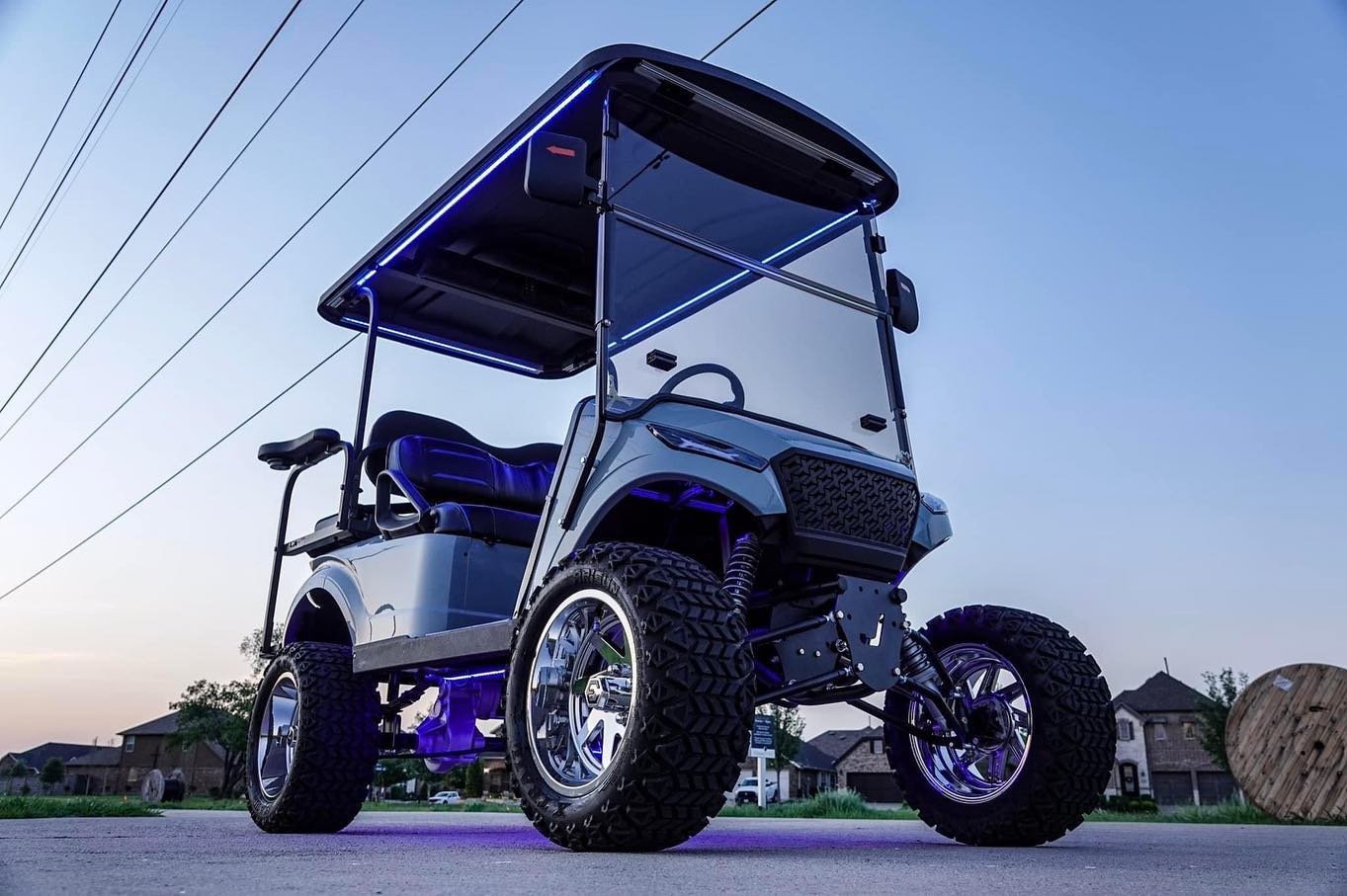
- Bigger wheels usually mean a taller overall tire, which trades low-end torque and a little range for a small top-speed gain and a bolder stance.
- 14 inch setups often require a lift kit for clearance, which adds real cost beyond the wheels and tires.
- 12 inch wheels ride softer, cost less, and keep more low-end torque for hills and loads.
- Match wheel size to the goal: show and all-terrain lean 14 inch, stock and daily use lean 12 inch.
Quick verdict: Stepping up to 14 inch golf cart wheels is worth it mainly for looks and the ability to run taller, more aggressive tires, but it adds cost, can firm up the ride, and slightly dulls low-end torque. Twelve-inch wheels keep the cart cheaper, ride a touch softer, and suit most stock and lightly lifted carts. The honest answer: go 14-inch for a lifted show or all-terrain build, stay 12-inch for a practical daily driver.
01 : What changes between 14 inch and 12 inch wheels
Why does rim diameter alone tell so little? The cart rolls on the tire’s outside diameter, not the wheel diameter. A 12-inch wheel can carry an 18-inch low-profile tire or a 22-inch all-terrain tire. A 14-inch wheel can carry a 19-inch low-profile tire, a 21-inch street radial, or a 23-inch all-terrain tire. Those combinations have completely different gearing and clearance.
| Published combination | Approximate outside diameter | Lift guidance from listing | What changes |
|---|---|---|---|
| 205/30-12 on 12-inch wheel | 18 inches | No lift on the cited GTW combo. | Near-stock gearing with a short sidewall. |
| 205/30-14 on 14-inch wheel | 19 inches | No lift on the cited universal combo, with platform checks still required. | About 5.6 percent taller than the 18-inch example. |
| 225/40-R14 on 14-inch wheel | 21 inches | Minimum 3-inch lift recommended by the cited combo. | More ground clearance and a larger gearing change. |
| 22×11-12 on 12-inch wheel | 22 inches | Minimum 3-inch lift recommended. | More tire sidewall than a similar-height 14-inch setup. |
| 23×10-14 on 14-inch wheel | 23 inches | Minimum 3-inch lift recommended by the cited combo. | Tall all-terrain package with more rubbing and load concerns. |
The correct shopping order is outside diameter first, then tread width, offset, wheel diameter, and style. Use the golf-cart tire-size guide to decode dimensions and the lift-kit and tire-size chart to screen tall combinations. Confirm bolt pattern and lug-seat type as well. Many aftermarket wheels use 4×101.6mm, but Yamaha applications can require different lug nuts.
02 : The real trade-offs of 14 inch wheels
A larger wheel with the same outside tire diameter gives up sidewall height. For example, if both setups are 22 inches tall, the 12-inch wheel leaves about 5 inches of sidewall per side before tread and construction effects, while the 14-inch wheel leaves about 4 inches. The shorter sidewall responds more quickly in steering and usually looks sharper, but it has less air volume and rubber flex to soften small impacts.
A larger outside diameter changes effective gearing. A heavier wheel and tire also adds rotational inertia, which can slow acceleration even when outside diameter stays the same. That is why a 14-inch wheel is not automatically faster, slower, smoother, or rougher. The complete mounted assembly decides.
03 : Ride, torque, and range effects
The theoretical speed relationship is new tire diameter divided by old tire diameter, assuming the motor reaches the same RPM. Moving from an 18-inch tire to a 19-inch tire gives 19 divided by 18, or 1.056. A 14 mph cart would calculate to 14.8 mph. Ground torque moves the other way: 18 divided by 19 equals 0.947, about a 5.3 percent reduction before extra weight and drag.
Moving from 22 inches to 23 inches gives a 4.5 percent theoretical speed increase and about a 4.3 percent ground-torque reduction. If both the 12-inch and 14-inch packages are 22 inches tall, the gearing change is zero. Real speed may rise less because the motor cannot pull the taller effective gear under load. Range can also fall when the new assembly is heavier, wider, more aggressive, or underinflated. The calculations and test logic are expanded in the tire size versus torque-efficiency research guide.
| Change | Likely result | Why |
|---|---|---|
| Same outside diameter, 12 to 14 inch wheel | Similar gearing, firmer impact feel. | Less sidewall flex, no circumference change. |
| 18 to 19 inch outside diameter | About 5.6 percent theoretical speed gain, 5.3 percent torque loss. | Larger rolling radius. |
| 22 to 23 inch outside diameter | About 4.5 percent theoretical speed gain, 4.3 percent torque loss. | Larger rolling radius. |
| Wider or heavier assembly | Slower acceleration and possible range loss. | More inertia, rolling resistance, and aerodynamic drag. |
04 : Are 14 inch wheels worth it for you?
Worth it when the goal is a specific 14-inch style, radial street tire, or tall all-terrain package and the measured clearance supports it. A 205/30-14 package can remain about 19 inches tall and may fit without a lift on some carts. A 23×10-14 package is a different build and normally needs lift, offset, steering, brake, and fender checks.
Stay with 12 inches when ride compliance, tire choice, lower cost, and less rotating weight matter most. The strongest comparison is not 12 versus 14. It is complete package versus complete package: outside diameter, width, construction, weight, offset, load, and price.
05 : The bottom line on 14 inch vs 12 inch wheels
Choosing 14 inch golf cart wheels over 12 inch is mostly a style and capability decision, not a performance upgrade. You gain stance and room for taller tires, you give up a little ride comfort, low-end torque, range, and money. For a lifted build that wants the look and big tires, 14-inch is the right call. For a practical daily driver or a stock cart, 12-inch keeps the ride soft and the cost down. Decide by your build goal and lift, then size the overall tire to clear it.
06 : Fitment and cost to switch wheel sizes
Switching between 12 and 14 inch is not just a wheel swap, it usually means new tires too, since the two sizes do not share fitments. Budget for a full set of four matched wheel-and-tire assemblies; a 14-inch combo set typically runs noticeably more than a comparable 12-inch set because the tires and alloys are larger. Confirm the bolt pattern (most carts use 4×4 inch / 4×101.6mm) and the offset, a deeper offset pushes the tire outward for a wider stance but raises the odds of rubbing the fender or A-arm at full lock, especially on a marginal lift. If you are going 14-inch on a previously stock cart, plan the lift first so the taller overall diameter clears, then choose the tire. Doing it in the right order, lift, then wheel and tire diameter, avoids buying parts twice.
14 inch wheels are worth it for a lifted show or all-terrain build, they sharpen the stance and clear taller tires. 12 inch wheels are the smarter pick for a stock or daily cart: softer ride, lower cost, and more low-end torque. Budget for a lift if you go to 14 inch.
Frequently Asked Questions
Are 14 inch golf cart wheels worth it?
For a lifted show or all-terrain build, yes, they sharpen the stance and allow taller tires. For a stock or daily cart, 12 inch wheels ride softer, cost less, and keep more low-end torque.
Do 14 inch wheels make a golf cart slower?
Slightly in acceleration and hill climbing, because they usually pair with a taller overall tire that trades low-end torque for a small top-speed gain. They can also reduce range a little on electric carts.
Do 14 inch wheels need a lift kit?
Usually yes. The taller overall tire that pairs with a 14 inch wheel often rubs the fender or body at full steering lock without a lift. Always check clearance for your specific cart before assuming a 14 inch setup will bolt on.
Do bigger wheels make a golf cart faster?
Only a little, and mostly on the top end. A taller tire raises the effective gearing, which can add a small amount of top speed but trades away low-end torque, so acceleration and hill climbing get slightly weaker.