E-Z-GO RXV Speed and Hill Upgrade: The Navitas TAC2 Route
The RXV already has an AC motor, so the upgrade is a controller, not a conversion. Danaher, Curtis lead-acid and ELiTE lithium carts each take a different kit.
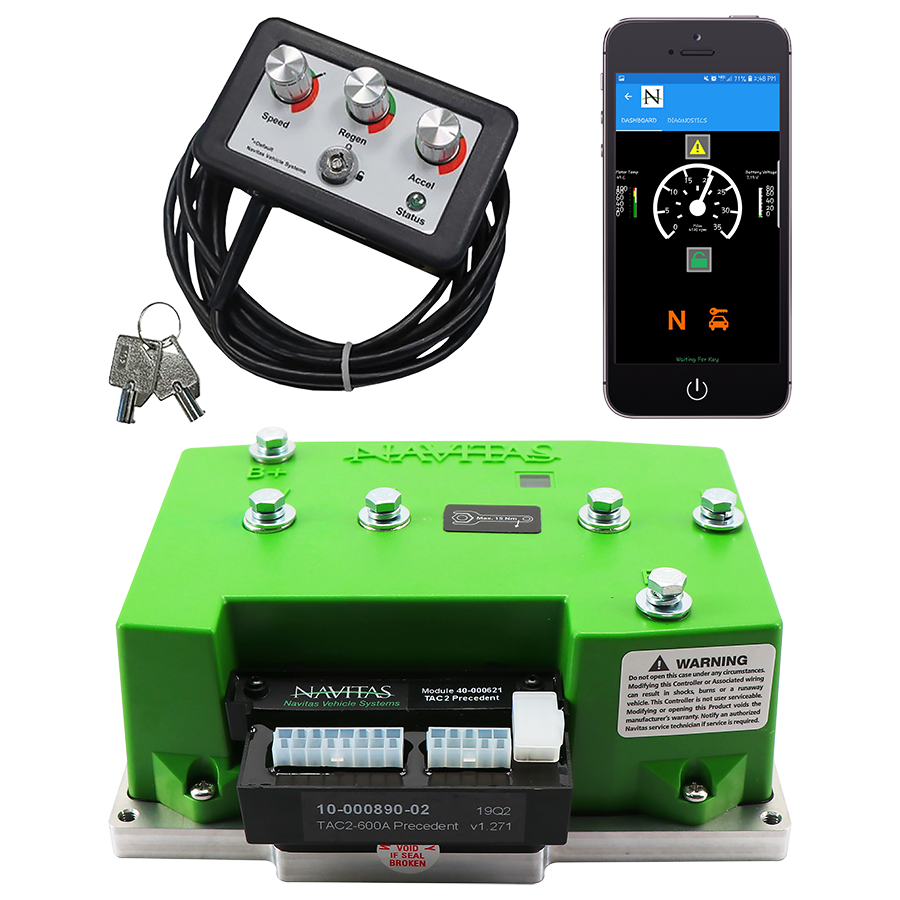
- The RXV is already AC. A Navitas RXV kit replaces the controller and adds its interface parts. There is no motor in the box.
- Three systems, three kits: Danaher (generally 2008 to 2011), Curtis 1206AC lead-acid (2012 on, non ELiTE) and ELiTE with the factory Samsung lithium pack.
- Slow can mean a fault. Limp mode, meter codes and motor-brake drag all feel like a weak cart.
- 440A for normal use, 600A for load. The 600A kits also include the On-The-Fly programmer.
- Controller-only parts are replacements, not a first-time upgrade, because the interface hardware is not included.
Your RXV feels sluggish off the line and loses speed on long grades, even though it already has an AC motor. The short answer: on a healthy 48V RXV the upgrade is a Navitas TAC2 controller kit matched to your stock controller and battery system, in 440A or 600A. There is no motor to replace. This guide shows how to tell the Danaher, Curtis and ELiTE carts apart, what to check before you blame the controller, and which kit matches your labels.
The RXV Is Already AC, So the Upgrade Is Different
An electric E-Z-GO RXV does not follow the TXT upgrade path. The RXV already uses an AC motor. A Navitas RXV kit replaces the stock AC controller and adds the interface parts for that controller family; it does not include a new motor.
That makes the controller label and battery system decisive. The three common routes covered here are an early Danaher RXV, a later lead-acid RXV with Curtis 1206AC, and an RXV ELiTE with the factory Samsung lithium system. They use different kits.
| RXV system | What identifies it | Correct family |
|---|---|---|
| Danaher RXV | Danaher 83A21102A controller, generally 2008 to 2011 | RXV Danaher TAC2 kit |
| Curtis lead-acid RXV | Curtis 1206AC, 48V lead-acid, non ELiTE, generally 2012 and newer | RXV Curtis TAC2 kit |
| RXV ELiTE | Factory Samsung lithium battery and Curtis 1206AC Fleet Lithium controller | RXV ELiTE TAC2 kit |
| Aftermarket lithium conversion | Battery system changed after production | Do not assume it is ELiTE; send the controller and battery labels |
The year is a cross-check, not the final answer. Read the controller and battery labels. An early chassis may have been converted, and a later cart may not have its original controller.
Why does a healthy RXV still slow on a grade if it already has an AC motor? Because the stock controller decides how much current the motor gets and how the cart is allowed to accelerate, and a lead-acid pack sags under that current on a long climb. A programmable replacement controller changes the first part. Battery health decides the second. If your E-Z-GO is a TXT with a DC motor, the route is different: see the E-Z-GO TXT speed upgrade guide. For the general question of whether any controller upgrade pays off, read is a golf cart controller upgrade worth it.
Reduced Speed Can Be a Fault or Safety Response
An RXV that suddenly becomes slow should not be treated as a shopping problem. Its controller, motor brake and battery system can limit operation when a fault is present.
- Read the fault behavior first. Use the RXV reduced-speed and limp-mode guide. Clearing a symptom without fixing its cause can make the fault return.
- Check the state-of-charge display. Flashing patterns may point to a battery or communication problem. See the RXV meter error guide.
- Check the motor brake. Brake drag, lock-up or release trouble can make the cart feel powerless. Follow the RXV motor-brake diagnosis.
- Load-test the battery system and inspect cables. A lead-acid pack can sag under demand. On ELiTE, communication with the factory lithium system is also part of fitment.
- Stop on a no-drive fault. If the cart will not move, use the RXV fault-code guide before replacing the controller.
Only move to a performance controller when the RXV is healthy and its stock configuration is the limitation. This keeps a brake, battery or communication fault from being hidden by a larger controller.
Choose 440A or 600A Around the Real Load
All three live RXV kit families offer 440A and 600A options. The correct family comes from the controller and battery labels; the amp choice comes from how the cart is used.
| Use case | Starting choice | Reasoning |
|---|---|---|
| Two passengers, standard tires, moderate terrain | 440A TAC2 kit | Adds programmable control without sizing for a load the cart does not carry |
| Rear seat, regular passengers or larger tires | 600A TAC2 kit | More current headroom for the added axle load |
| Long or steep grades | 600A after battery, cable and brake checks | The higher rating helps only if the rest of the system can supply it |
| Failed controller with existing kit hardware | Controller-only replacement matched to Danaher or Curtis | A bare controller is not a complete first-time installation kit |
Why the complete kit matters
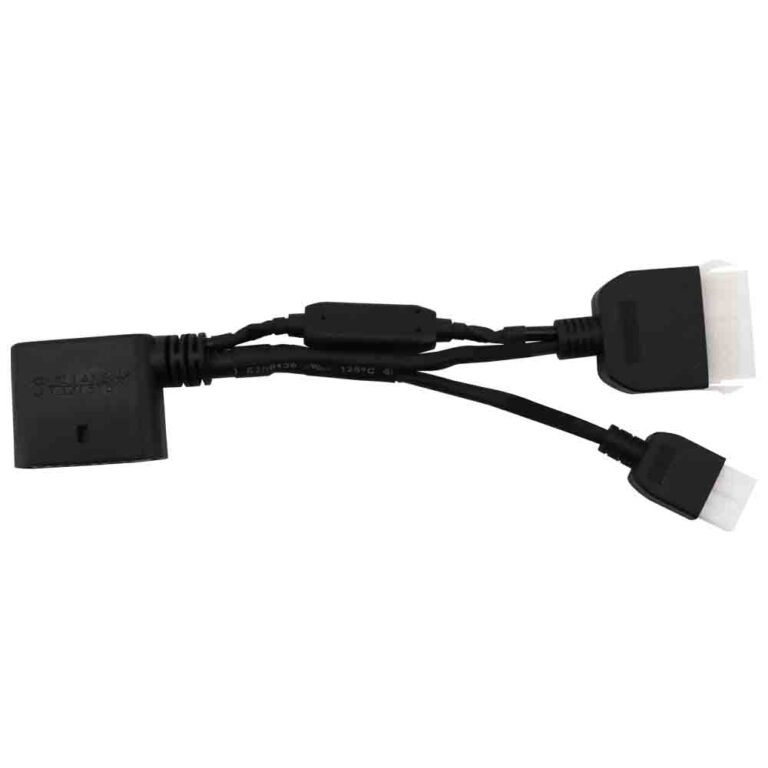
The complete Curtis RXV kit includes the TAC2 controller, RXV module and cable, with the On-The-Fly programmer included in the 600A package. The Danaher RXV kit adds the mounting hardware and wiring used with the RXV23 resistor. The ELiTE kit is specifically listed for the factory Samsung lithium system.
The controller-only products are for a different buying moment. They do not include the motor, mounting hardware or conversion parts. Use one only when the required interface and installation hardware are already present and the part number has been matched.
The controller amp calculator can account for tire size, passenger load and grade. For an RXV, treat its recommendation as sizing guidance after the controller family has been identified. To identify it, match your controller by serial number or label and the finder shows the kit for that RXV. The AC conversion kit finder covers the RXV too: because the motor is already AC, it shows only the AC controller kits that fit.
Parts note: For a lead-acid RXV with the Curtis 1206AC, the TAC2 kit includes the controller, CAN module and RXV cable. See the RXV Curtis TAC2 kit
RXV TAC2 Fitment by Controller and Battery Label
| Label and battery | Complete kit | Controller-only option | Does not fit |
|---|---|---|---|
| Danaher 83A21102A, 48V | RXV Danaher kit, 440A or 600A | Danaher 440A controller only | Curtis or ELiTE wiring |
| Curtis 1206AC, 48V lead-acid, non ELiTE | RXV Curtis kit, 440A or 600A | Curtis 440A or Curtis 600A controller only | Danaher and factory Samsung ELiTE carts |
| Curtis 1206AC Fleet Lithium with factory Samsung battery | RXV ELiTE kit, 440A or 600A | Match the exact ELiTE part number | Lead-acid RXV or aftermarket lithium conversion |
| Unknown label or aftermarket lithium conversion | Send the controller, battery and connector photos | Do not order from year alone | Any assumed ELiTE match |
The Danaher product is listed for the 2008 to 2011 controller platform and includes the RXV23 resistor wiring. The Curtis lead-acid product is listed for 2012 and newer non-ELiTE carts with a Curtis 1206AC. The ELiTE product is only for the factory Samsung lithium system and its Fleet Lithium controller.
Use the E-Z-GO serial lookup to identify model and year, then let the hardware labels make the final fitment decision. Send us the photos when a cart has been converted or repaired with different electronics.
Parts note: Danaher label on an early RXV? This TAC2 kit includes the mounting hardware and RXV23 resistor wiring. See the RXV Danaher TAC2 kit
What Changes During an RXV Controller Upgrade
Curtis lead-acid RXV kit
The 440A package includes the TAC2 controller with Bluetooth, RXV CAN module and RXV cable. The 600A package adds the On-The-Fly programmer. The original AC motor stays in the cart.
Danaher RXV kit
The TAC2 controller and CAN module are paired with the mounting hardware and RXV23 resistor wiring. The 600A package includes the On-The-Fly programmer. This is not interchangeable with the Curtis kit.
RXV ELiTE kit
The controller and module are configured for the factory Samsung lithium system. The 600A package includes the On-The-Fly programmer. An aftermarket lithium battery does not make a cart an ELiTE.
Before the first drive
- Photograph the original controller, cable positions and connector labels.
- Follow the Navitas setup and programming procedure before the cart is driven.
- Confirm motor-brake operation, direction control and regenerative braking in a safe area.
- Set speed and acceleration for the tires, brakes, terrain and local rules, not simply to the maximum available setting.
Frequently Asked Questions
What is the best speed upgrade for an E-Z-GO RXV?
For a healthy 48V RXV, a Navitas TAC2 controller kit matched to the stock controller is the direct upgrade. It keeps the factory AC motor and lets you adjust speed, acceleration and regen from the app.
Which Navitas kit fits a 2008 to 2011 RXV?
Early RXV carts generally use the Danaher 83A21102A controller and take the RXV Danaher kit, which includes wiring for the RXV23 resistor. Confirm it from the controller label, because carts get repaired and converted.
Can I upgrade an RXV ELiTE?
Yes, with the RXV ELiTE kit, which is listed only for carts with the factory Samsung lithium battery and the Curtis 1206AC Fleet Lithium controller. A lead-acid RXV that was converted to an aftermarket lithium pack is not an ELiTE and needs the kit that matches its controller.
Do I need a new motor to make my RXV faster?
No. The RXV already uses an AC motor, and the Navitas RXV kits keep it. The kit replaces the controller and adds the interface module and cabling for your system.
Should I choose 440A or 600A for my RXV?
Choose 440A for two passengers on standard tires and moderate terrain. Choose 600A for a rear seat, larger tires or steep grades. The 600A kits also include the On-The-Fly programmer.
My RXV suddenly got slow. Will a new controller fix it?
Probably not. A sudden change usually means limp mode, a battery or communication fault, or a motor-brake problem. Read the fault behavior and fix the cause first; a controller upgrade is for a healthy cart.
Updated September 2026: controller and battery-system fitment and package contents were checked against our live product data.