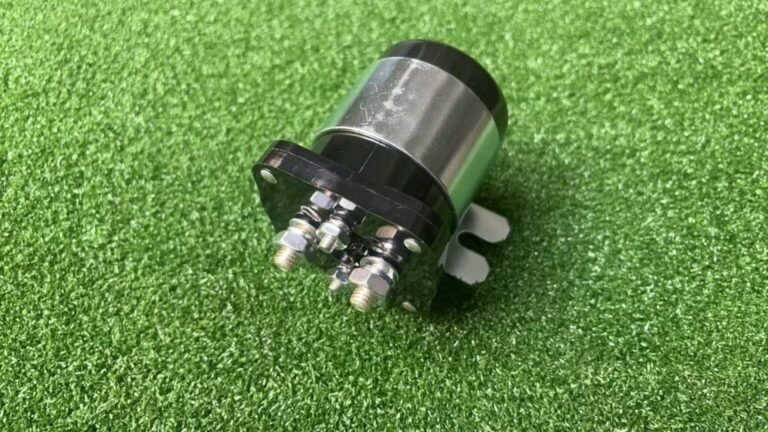
What Does a Stuck Solenoid Sound Like?
Sound is one of the fastest diagnostic tools you have for a golf cart solenoid. Before you grab a multimeter, your ears can already tell you whether the solenoid is healthy, struggling, or completely dead. Each failure mode produces a distinct audio signature. Learning to recognize what a stuck solenoid sounds like helps you diagnose the problem in seconds and decide whether you need a simple fix or a full replacement.
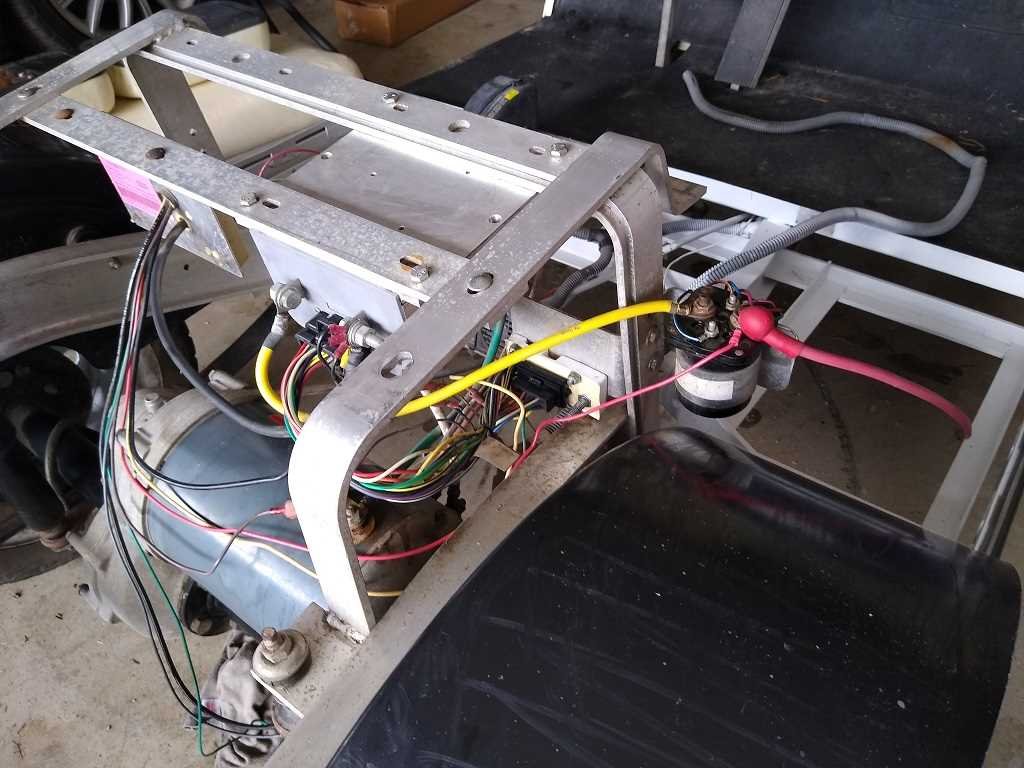
01 : What a Healthy Solenoid Sounds Like
Before diagnosing failures, you need a baseline. A healthy golf cart solenoid produces two distinct sounds during a normal drive cycle:
- Engagement Click (pedal press): A single, loud, sharp metallic click. This is the sound of the copper plunger being pulled down by the magnetic coil, slamming the two main contacts together. It should be decisive and confident, not hesitant or weak. You will feel a slight vibration through the cart frame simultaneously.
- Disengagement Click (pedal release): A slightly softer click as the internal spring pushes the plunger back up, separating the main contacts. This sound is quieter because the spring force is gentler than the magnetic pull force.
If your solenoid produces both of these sounds cleanly, it is mechanically functional. If the cart still does not respond despite clean clicks, the problem is downstream, check the motor controller, cables, or motor itself. Our solenoid clicks but no movement guide covers this exact scenario.
02 : Sound Pattern: Complete Silence
You press the accelerator and hear absolutely nothing from the solenoid. No click, no buzz, no vibration. The cart does not move.
What This Means
Complete silence indicates one of three conditions:
- Dead coil: The internal magnetic winding has broken (open circuit). No current flows through the coil, so no magnetic field is generated and the plunger does not move. Verify by testing coil resistance across the small posts with a multimeter. A reading of OL (open line) confirms a dead coil.
- Seized plunger: The plunger has corroded and is physically stuck inside the bore. The coil is energizing (you may notice the coil area of the housing getting warm), but the plunger cannot overcome the mechanical friction. Tapping the housing with a screwdriver handle sometimes frees a corroded plunger temporarily.
- No activation voltage: The solenoid itself may be perfectly fine, but no voltage is reaching the coil. This points to a failed key switch, broken accelerator microswitch, blown fuse, or on Club Car models, a failed OBC (On-Board Computer).
03 : Sound Pattern: Rapid Chattering or Buzzing
You press the accelerator and hear a rapid “click-click-click-click” or a continuous buzzing vibration from the solenoid. The cart does not move or jerks erratically.
What This Means
Chattering means the coil has enough energy to pull the plunger partway down, but not enough to hold it firmly against the contacts. The plunger bounces between the engaged and disengaged position at high speed, creating the characteristic buzzing sound. The three causes are:
- Low battery pack voltage: If your pack is severely depleted (below 42V on a 48V system), the coil does not receive enough voltage to generate full magnetic pull. Charge your batteries and test again. If the chattering stops after charging, the solenoid is fine, your batteries were the problem. Check individual battery health with our voltage bounce test.
- Shorted coil windings: If internal turns of the coil have shorted together, the coil’s inductance drops and it cannot generate sufficient magnetic force. Coil resistance will read significantly lower than the 20-80 Ohm normal range. Replace the solenoid.
- High-resistance activation wiring: Corroded connectors or undersized wires in the activation circuit cause a voltage drop that robs the coil of its full operating voltage. Clean all connectors in the activation path from key switch to microswitch to solenoid.
04 : Sound Pattern: Single Click, No Movement
The solenoid produces a clean, confident click when you press the accelerator, but the cart does not move at all.
What This Means
A clean click means the coil and plunger are functioning correctly. The problem is either at the contacts inside the solenoid or somewhere downstream in the drive system. The contacts may be so heavily pitted that even though they are physically touching, the effective contact area is too small to pass sufficient current. You can verify by measuring voltage at the motor-side large post while the solenoid is engaged. If you see full pack voltage at the battery-side post but significantly less at the motor-side post, the contacts are failing internally.
Alternatively, the solenoid is passing current just fine and the fault is in the motor controller, the speed sensor, the F/R switch, or the motor itself. Use the controlled bypass test described in our click of death diagnosis guide to isolate the solenoid from the rest of the circuit.
05 : Sound Pattern: No Click, Cart Moves Anyway
You turn the key on and the cart begins to creep or lurch forward without pressing the accelerator. The solenoid makes no activation sound because the contacts are permanently fused together.
This is the most dangerous failure mode. The solenoid’s internal copper contacts have welded shut from repeated arcing. The main circuit is permanently closed. Full battery voltage flows to the motor controller the instant the key is turned on. If the controller is in a ready state, the cart becomes a runaway vehicle.
Immediate action: Turn the key off. If the cart continues to move, disconnect the main positive battery cable immediately. Do not drive the cart. Replace the solenoid and install a precharge resistor and flyback diode to prevent the new unit from welding. For the full emergency protocol, see our welded contacts repair guide.
06 : Quick Sound Reference Chart
Use this chart for rapid field diagnosis:
| Sound | Likely solenoid state | Next action |
|---|---|---|
| One solid click, no movement | The coil and plunger moved, but the main contacts may be burned; a battery, cable, controller, or motor fault can sound the same. | Measure DC voltage across the two large posts while clicked in. Near 0V passes; roughly 0.5 to 1V or more needs investigation, and 2V+ strongly points to bad contacts. |
| Rapid chatter or buzzing | The coil repeatedly pulls in and drops out, usually from low coil voltage, pack sag, or resistance in the activation circuit. A wrong-voltage coil can also chatter. | Charge and load-test the pack, then measure voltage directly across the small posts during the noise. Clean the control connections before replacing the solenoid. |
| Dead silence | No coil command, an open coil, or a seized plunger. Silence alone does not prove the solenoid is bad. | Check the fuse and interlocks, then verify rated activation voltage at the small posts. With power disconnected, compare coil resistance with the part specification. |
| Continuous hum | The coil is energized but the plunger may not be fully seated, or a controller is applying a pulsed hold signal. Heat or vibration makes this abnormal. | Stop if the housing heats quickly. Confirm the stamped coil voltage, measure pull-in voltage, and inspect mounting and plunger operation; replace a contactor that will not seat firmly. |
Frequently Asked Questions
What does a stuck solenoid sound like?
A healthy solenoid gives one firm click. A stuck or failing one is often dead silent, produces rapid chattering or buzzing, or clicks once with no movement. Each pattern points to a different fault.
Why does my solenoid click but the cart does not move?
A single click with no movement usually means the coil is energizing but the contacts are not passing current, pointing to worn or non-closing contacts, or a fault downstream at the controller or motor.
What does rapid chattering or buzzing mean?
Chattering usually means the coil is not getting steady voltage, often from a weak battery pack, corroded connections, or a failing microswitch, so the plunger pulls in and drops out repeatedly.
Is complete silence always the solenoid?
Not always. Silence means the coil never energized, which can be the solenoid coil itself or an upstream fault such as the key switch, microswitch, fuse, or OBC. Confirm with a meter before replacing.