How Do You Fix a Stuck Solenoid?
In most cases a stuck solenoid cannot be repaired; the internal copper contacts are permanently damaged and the entire unit must be replaced. Here is the complete step-by-step replacement protocol.
- A stuck-closed solenoid is dangerous: if the cart creeps with the key off, disconnect the battery immediately and do not drive it.
- A light tap can sometimes free a stuck-open plunger as a temporary emergency fix, but replacement is still required.
- Installing a precharge resistor and flyback diode during replacement prevents the arcing that caused the failure in the first place.
- Total DIY cost is usually under $100, with labor 20-30 minutes for most carts.
Your golf cart solenoid has failed and the cart either will not move or will not stop. Either way, you need to fix the stuck solenoid quickly and correctly. In most cases a stuck solenoid cannot be repaired; the internal copper contacts are permanently damaged and the entire unit must be replaced. This guide gives the complete step-by-step replacement protocol, from safely disconnecting the failed unit to installing proper circuit protection so it does not happen again.
Not sure if your solenoid is actually stuck? Start with the diagnostic guide on what to do when the solenoid clicks but the cart does not move.
Emergency Temporary Fix
Before the proper replacement procedure, here is the emergency temporary fix for a stuck solenoid. This is a field-expedient step only, not a permanent solution.
For a Stuck-Open Solenoid (Cart Will Not Move)
If the plunger is seized from corrosion but the coil is still functional, sometimes it can be freed by tapping the side of the solenoid housing sharply with the handle of a screwdriver or a rubber mallet. The mechanical shock can break the corrosion bond on the plunger bore. Try tapping while a helper turns the key on and presses the accelerator. If the solenoid engages with a solid click after tapping, it will likely work long enough to get the cart back to the garage. Replace it as soon as possible.
For a Stuck-Closed Solenoid (Cart Lurches / Won’t Stop)
This is a dangerous condition. Do not drive the cart. Immediately turn the key off. If the cart continues to creep with the key off, disconnect the main battery positive cable at the battery terminal. The solenoid contacts are welded, and tapping will not fix this. The solenoid must be replaced before the cart is used again. See the full welded contacts emergency guide for the complete safety protocol.
Tools and Parts Needed
- Tools: 10mm and 13mm wrenches (or sockets), a multimeter, wire brush, torque wrench (optional but recommended), and dielectric grease.
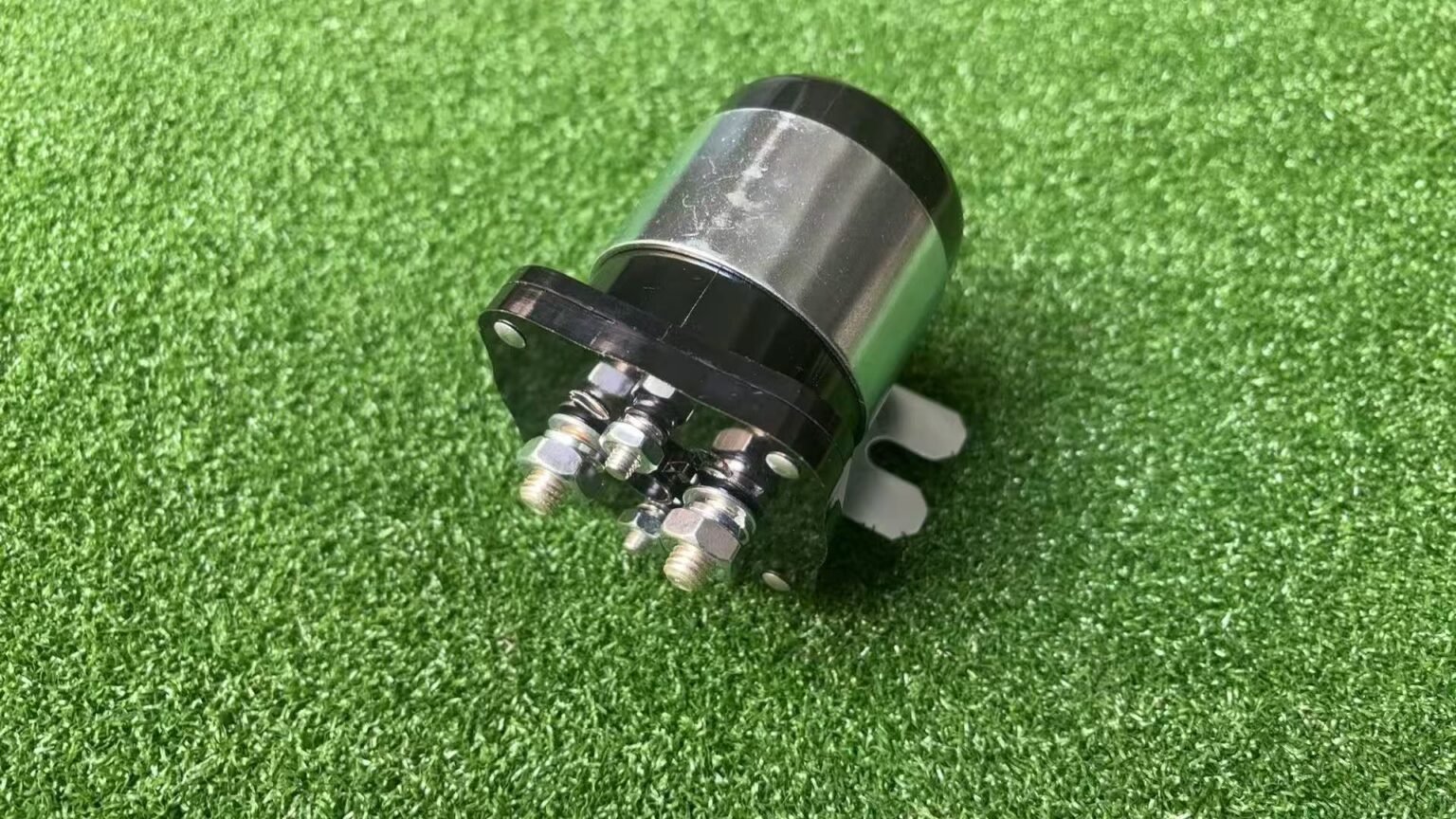
- Replacement solenoid: match your system voltage (36V or 48V) and choose an amperage rating equal to or greater than your controller’s peak output. Standard carts use a 200A solenoid; high-performance builds need a 400-amp heavy-duty solenoid.
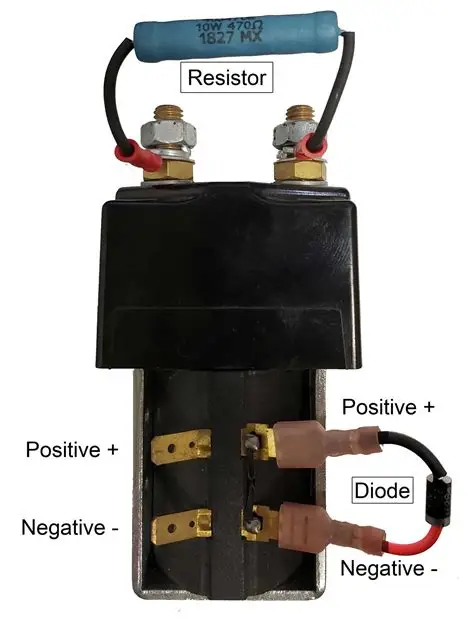
- Precharge resistor: 250 Ohm, 10 Watt ceramic wire-wound for 48V systems; 470 Ohm for 72V systems.
- Flyback diode: 1N5408 (3A, 1000V), a critical protection component. See the diode sizing guide for correct orientation.
Removing the Old Solenoid
- Disconnect the battery pack. Remove the main negative cable first, then the positive. Verify zero voltage at the solenoid posts with a multimeter before touching any wires.
- Photograph the wiring. Before removing any cables, take clear photos of how each wire connects to the solenoid. The four posts are not interchangeable, and reversing the activation wires will short a previously installed diode.
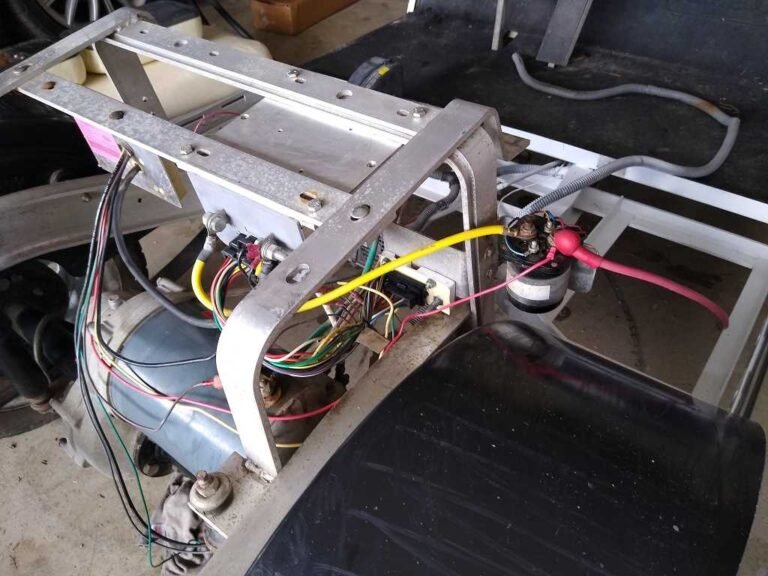
- Remove the cables from the two large posts using a 13mm wrench. Note which cable goes to the battery side (B+) and which goes to the controller/motor side (M-).
- Remove the wires from the two small posts (the activation coil wires). If a flyback diode and precharge resistor are installed, remove them too and inspect their condition.
- Unbolt the solenoid from the mounting bracket. Most are held by two through-bolts or a single mounting flange bolt. Keep the hardware for the new unit.
Installing the New Solenoid
- Mount the new solenoid to the bracket in the same orientation as the old unit, with the large posts accessible and airflow for cooling.
- Connect the precharge resistor across the two large posts first. Bolt one leg under the battery-side nut and the other under the controller-side nut; resistors are not polarity-sensitive.
- Reconnect the main cables to the large posts: battery positive (B+) on the battery-side post, controller/motor cable on the other. Torque the nuts firmly; loose connections are the number one cause of solenoid overheating.
- Install the flyback diode across the two small posts. The end with the silver or white stripe must face the positive activation terminal. Reversing the diode causes an immediate short circuit when the solenoid is energized.
- Reconnect the activation wires to the small posts, referencing the earlier photos. The positive key-switch wire goes to the same post as the diode stripe.
- Apply dielectric grease to all four terminal posts and their nuts to prevent future corrosion.
- Reconnect the battery pack (positive first, then negative). Verify the cart does not lurch forward with the key off, then turn the key on and test the accelerator. The solenoid should engage with a solid click and the cart should respond normally.
Brand-Specific Installation Tips
- EZGO TXT/RXV: the solenoid is located under the rear seat, usually bolted to the motor controller mounting plate. On RXV models, verify the accelerator microswitch is functioning before assuming the solenoid is at fault.
- Club Car DS/Precedent: the OBC (On-Board Computer) controls the solenoid activation ground. If the OBC has failed, it can prevent a brand-new solenoid from engaging. Test OBC function first, or consider a full OBC bypass if converting to a smart charger.
- Yamaha Drive/G29: the activation connector is a modular plug, not ring terminals. When installing the flyback diode, you may need to splice the leads directly into the plug wires using marine-grade heat-shrink butt connectors for a weather-resistant splice.
Cost Breakdown
Fixing a stuck solenoid is one of the most affordable repairs in the golf cart world. Typical parts cost for a DIY replacement:
- Standard 200A solenoid: $25 to $50 for generic, $40 to $80 for OEM brand.
- Heavy-duty 400A contactor (Albright/MZJ-400): $50 to $150 depending on source.
- Precharge resistor + flyback diode: $5 to $10 total.
- Professional shop labor: $50 to $150 for installation if you prefer not to DIY.
If you are considering upgrading other components at the same time, see the OEM vs. aftermarket parts compatibility guide to make sure everything works together.
To fix a stuck solenoid: disconnect the battery pack, remove the old unit, install a voltage- and amperage-matched replacement, add a 250Ω precharge resistor across the large posts, install a 1N5408 flyback diode (stripe to positive) across the small posts, torque all terminals firmly, and apply dielectric grease. Total cost: under $100. Time: 20-30 minutes.
Frequently Asked Questions
How do you fix a stuck solenoid on a golf cart?
Start by making the cart safe, disconnecting the battery pack, and confirming whether the solenoid is stuck electrically or mechanically. Clean and tighten the cable connections, test the small activation circuit, and check continuity across the large posts with the pack disabled. If the contacts stay closed or the case is heat-damaged, replacement is the correct repair.
Can you unstick a stuck solenoid without replacing it?
Sometimes a light tap can free a stuck contact long enough to move the cart out of the way, but it is a temporary emergency step. A solenoid that sticks once has contact damage or internal wear, so it should be tested and usually replaced before normal use resumes.
How much does it cost to fix a stuck solenoid on a golf cart?
A basic stock-style solenoid is often the lower-cost repair, while heavy-duty 200A to 400A contactors and upgraded cable work cost more. Labor depends on access and diagnosis time. The important cost choice is matching voltage, duty rating, and current capacity to the cart instead of buying by price alone.