Repair Guide Archive

Motor and drive logic repair guides

Direction faults, no-drive symptoms, reduced speed, motor tests, controller feed, and drive-system checks for electric carts.

Motor & Drive Logic

Start with these motor and drive guides

A cross-section of the 49 guides in this archive, covering no-drive faults, reduced speed and limp mode, direction switch problems, and motor wear. Use the search above or the filters to narrow by brand or symptom.

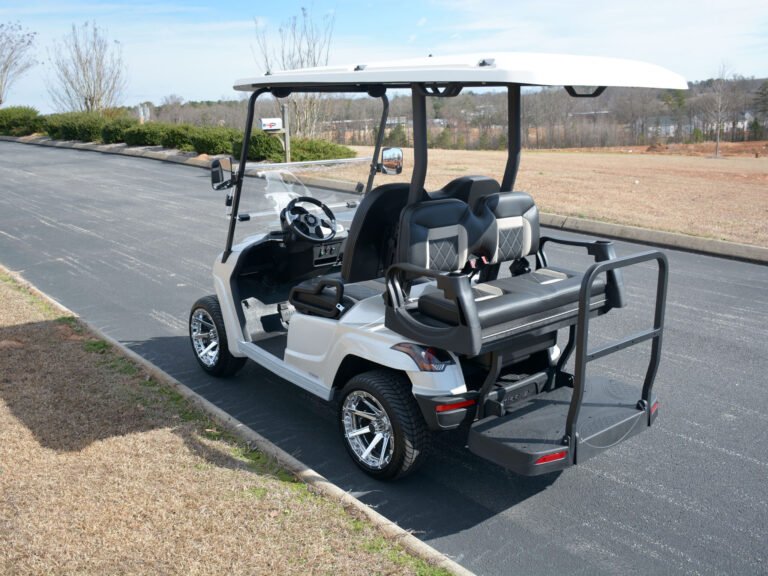
White ICON golf cart parked outdoors, the kind of cart that won't move when its drive-enable path fails

ICON Golf Cart Won’t Move: Diagnosis & Fix

ICON golf cart has power but won't move? Check the run/tow switch, key, pedal sensor, BMS cutoff, motor and controller in order to find why it won't drive.

Open guide
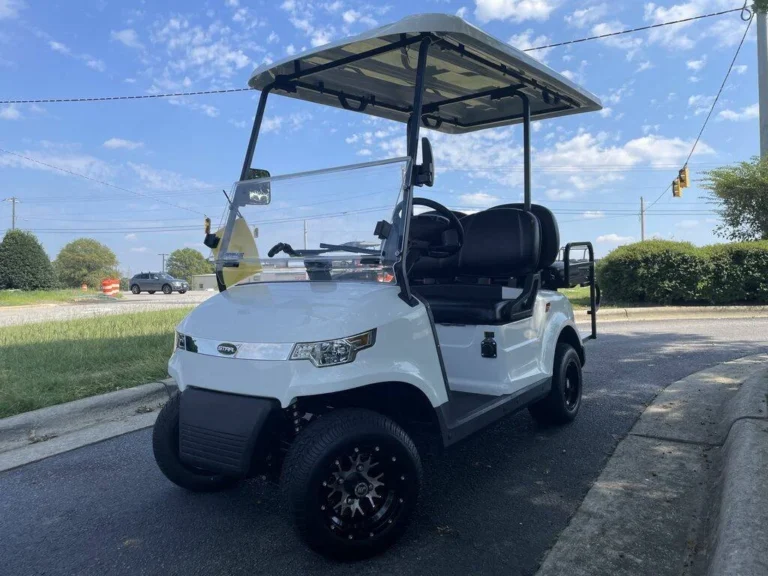
Evolution lithium golf cart with lifted stance, similar to the Classic 4 Plus that wont move when an interlock or BMS protects the pack

Evolution Golf Cart Won’t Move: Diagnosis & Fix

Evolution golf cart has power but won't move? Check the lithium pack, run switch, interlocks, pedal sensor, solenoid and controller in order.

Open guide
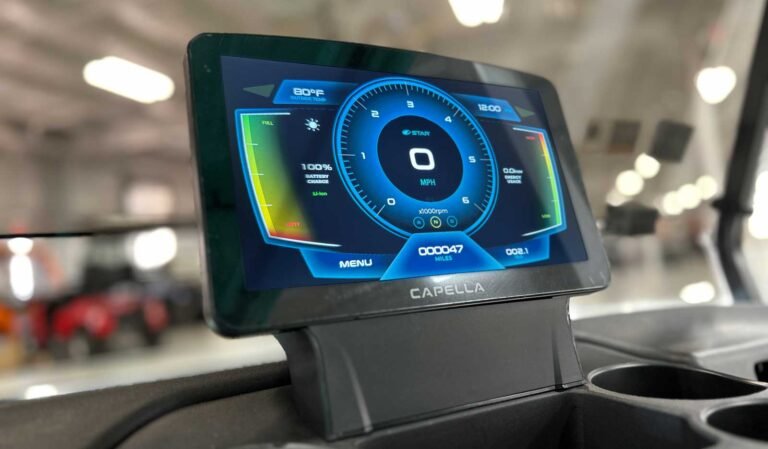
Star EV Capella golf cart parked outdoors, used to diagnose a Star EV golf cart wont move fault

Star EV Golf Cart Won’t Move: Diagnosis & Fix

Star EV golf cart has power but won't move? Check the lithium pack, run switch, interlocks, pedal sensor, solenoid and controller.

Open guide
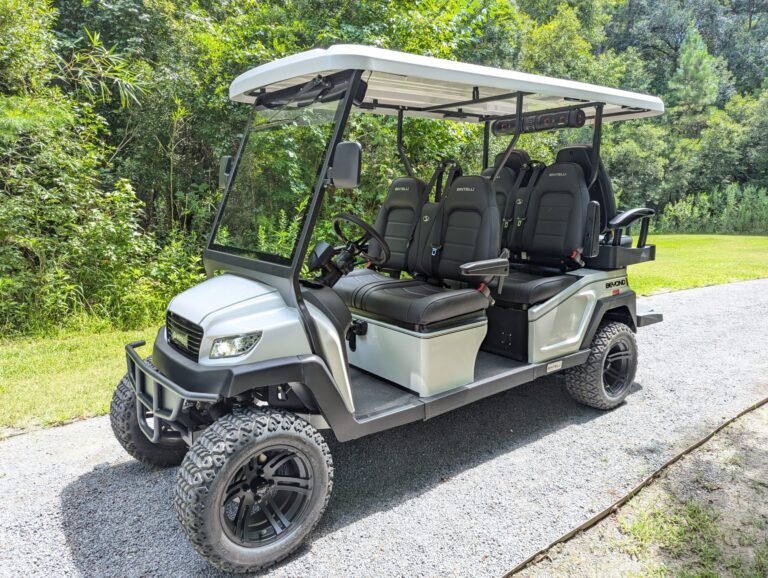
Club Car DS golf cart with jerky acceleration on takeoff

Club Car DS Jerky Acceleration: Causes & Fix

Club Car DS jerky acceleration or lurching on takeoff? Fix the MCOR, throttle sensor, drive clutch, and loose connections that make the DS jerk.

Open guide
Yamaha G29 drive surging hesitation diagnosis on a Yamaha golf cart

Yamaha G29 Surging & Hesitation: Fix Guide

Yamaha G29 surging or hesitating on acceleration? Fix the speed sensor, throttle (TPS), solenoid, brushes and connections on Drive electric and gas carts.

Open guide
Yamaha G14 gas golf cart that bogs down on hills

Yamaha G14 Bogs Down on Hills: Causes & Fix

Yamaha G14 bogs down on hills or loses power on inclines? Fix the fuel delivery, weak pack, governor and clutch that sap the G14 under load.

Open guide
Club Car MCOR pedal sensor units by generation

Golf Cart Stuttering? Club Car MCOR Diagnosis & Fix

Is your Club Car jerking or hesitating? The MCOR (throttle sensor) is likely failing. Learn the symptoms, how to perform the "Pump Test," and how to upgrade to an MCOR 4.

Open guide
Golf cart motor speed sensor for limp mode diagnosis

Golf Cart Limp Mode Fix: Speed Sensor Diagnosis

Is your golf cart suddenly stuck at 8 MPH? It’s likely in "Limp Mode." Learn how to perform the "Roll-Away Test" and replace the speed sensor on Club Car and EZGO motors.

Open guide
Club Car Precedent speed sensor and 3-wire connector at the motor

Club Car Precedent Speed Sensor Testing and Replacement

Is your cart slow? Discover the 5 best ultimate ways to perform a Club Car Precedent speed sensor test and restore your top speed in minutes.

Open guide
EZGO RXV motor brake assembly mounted on the rear electric drive motor

EZGO RXV Motor Brake Guide: Fixing “Roll-Away” & Lock-Ups

A practical guide to the EZGO RXV motor brake: why the cart rolls away or locks up, how the electronic brake works, and the steps to diagnose and fix it.

Open guide
cutaway dc electric motor showing rotor armature and commutator

What Are the Two Types of Golf Cart Motors? Series vs Sepex

The two types of golf cart motors are series-wound and Sepex. Learn the difference in torque, speed control, and regen braking, and how to tell which you have.

Open guide
How to make a golf cart faster with a lift kit and larger tires

How to Make a Golf Cart Faster: 5 Proven Speed Upgrades

How to make a golf cart faster: tires, controller, motor, and voltage upgrades that add real speed, plus a free top speed calculator.

Open guide

How the drive system actually works on a golf cart

On an electric cart, moving forward is a chain of permissions rather than a single circuit. The key switch wakes the controller, the forward and reverse switch tells it which direction to allow, a micro-switch or MCOR at the pedal reports that you are asking for power, and only then does the controller close the solenoid and start feeding current to the motor. Gas carts follow the same logic with a different actuator: the pedal opens the throttle and engages the starter generator, and the forward and reverse lever moves a mechanical shift fork instead of reversing field polarity.

This matters because two very different faults produce very similar complaints. A cart that will not move at all has usually broken the permission chain somewhere before the motor. A cart that moves but feels weak, surges, or drops into limp mode is almost always still getting permission and is instead being current limited, either by the controller protecting itself or by a sensor telling it the wrong thing. Separating those two cases first saves most of the diagnostic time.

The failure modes behind most drive complaints

Across the guides in this archive, the same faults come up again and again:

  • Forward and reverse switch contacts burned. Symptom: works in one direction only, or works after wiggling the lever. The switch carries full motor current on many models and the contacts pit over time.
  • Throttle sensor or MCOR out of range. Symptom: jerky takeoff, surging at part throttle, or no response until the pedal is halfway down. The controller reads a resistance or voltage sweep, and a worn track gives it nonsense.
  • Speed sensor failure on carts that have one. Symptom: the cart drops to a crawl, often called limp mode, and may roll away in neutral on RXV and Precedent models. The controller cannot confirm speed, so it refuses to give full power.
  • Motor brushes worn or the armature dirty. Symptom: loss of power under load, whining, or a burnt smell after hills. Brush length below about a quarter inch means the motor is on borrowed time.
  • Voltage drop feeding the controller. Symptom: fine on flat ground, bogs badly on hills, and battery voltage sags hard under load. This is a pack and cable problem wearing a drivetrain costume, and it is the single most misdiagnosed fault in this category.

What to measure first, and the numbers that matter

Lift the drive wheels off the ground, put the cart in run, and take three readings before you order anything.

1. Pack voltage under load. Watch the main terminals while someone presses the pedal. A healthy 48-volt pack sags a few volts and recovers. A drop below about 44 volts under moderate load means the pack or the cables, not the motor.

2. Voltage on both sides of the forward and reverse switch, in each direction. Full pack voltage in and a large drop out means burnt contacts inside the switch.

3. Throttle sensor sweep. Backprobe the signal wire and press the pedal slowly. The reading should climb smoothly with no dropouts. A jump, a dead spot, or a value stuck at one end is your fault.

MeasurementHealthySuspectWhat it points to
48V pack under load46 to 49 VBelow 44 VWeak pack or cables
36V pack under load34 to 37 VBelow 33 VWeak pack or cables
Drop across F/R switchUnder 0.3 VOver 0.5 VBurned contacts
Throttle signal sweep (0 to 5V type)Smooth 0.5 to 4.5 VDropouts or stuckThrottle sensor or MCOR
Motor brush lengthOver 0.4 in.Under 0.25 in.Brush replacement due
Motor case temp after a hillWarm to touchToo hot to holdOverload or failing motor

Ranges vary by controller brand, so treat these as decision thresholds rather than factory specs. What matters more than the absolute number is whether the reading is smooth and repeatable.

Which guide do you need?

If the cart will not move at all and there is no solenoid click, work the permission chain first with the no-move guides for your brand. If it clicks but does not move, the fault is past the solenoid, so look at the motor and controller feed. If it moves in one direction only, go straight to the forward and reverse switch guides. If it moves but is slow or drops into limp mode, start with the speed sensor and error code guides for your brand. If it bogs only on hills, treat it as a pack and cable problem before touching the motor.

Before any drive test: get the drive wheels off the ground on jack stands and keep hands, cables and clothing clear of the motor and axle. A cart that suddenly regains permission mid diagnosis will move, and it does not care that you are still holding a probe on the solenoid.