
Golf Cart 48V to 72V Conversion: Speed & Torque Gains
Want to hit 40+ MPH? We analyze the real-world data of converting a 48V golf cart to 72 Volts, including the speed gains, torque figures, and the total cost of the upgrade.
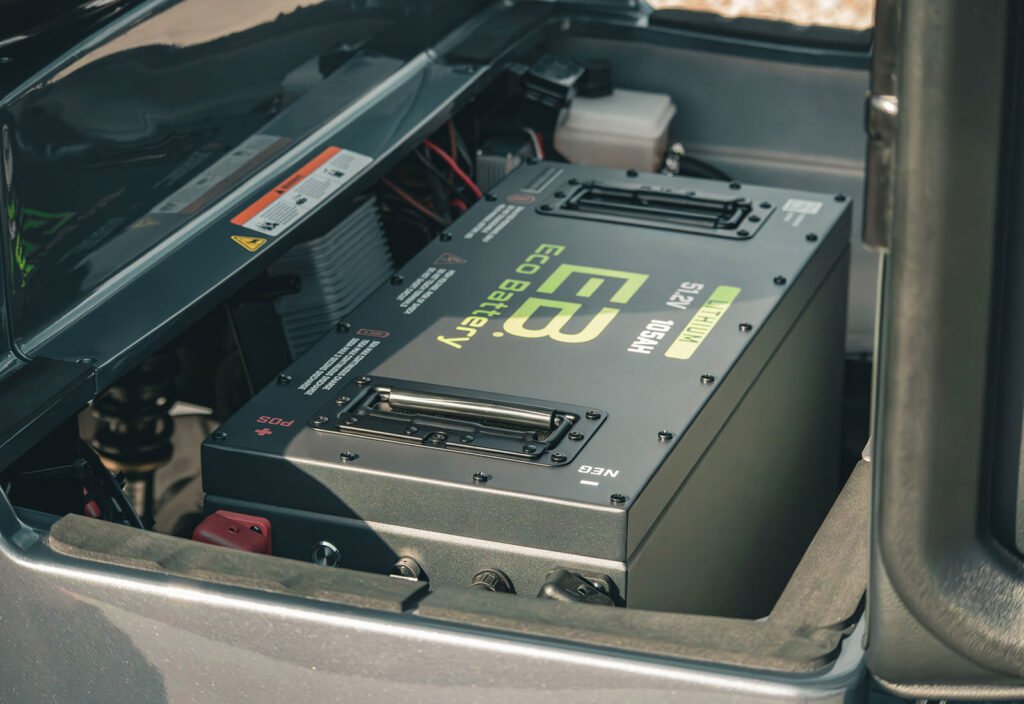
- A proper 72V conversion can push top speed from 14-19 MPH stock to 38-50+ MPH, but every part in the drivetrain has to be upgraded together.
- You cannot just swap in 72V batteries. The controller, solenoid, and often the motor all need to be rated for 72V, or they can fail quickly.
- Budget realistically: a DC build runs about $3,500, a full AC conversion closer to $5,000.
- Once a cart clears roughly 20 MPH it usually crosses into low-speed vehicle territory legally, which means brakes, lighting, and registration matter as much as horsepower.
In the Research Lab, we often see owners intimidated by 72V systems. Is it dangerous? Is it expensive? Is it worth it? The short answer: it transforms a golf cart into a neighborhood electric vehicle (NEV) capable of 40-50 MPH, if every part of the system is upgraded together.
The Physics: Why Voltage Means Speed
To understand the upgrade, you have to understand the relationship between electricity and motion. Voltage is electrical pressure: higher pressure pushes the motor to spin faster (6,000+ RPM) without re-gearing. Amperage is torque, the “grunt.” A 72V system uses lower amps to create the same power, which means it runs cooler and more efficiently on hills than a modified 48V setup pushed to its limit.
Lab Data: The Performance Matrix
Average data from testing a standard EZGO TXT/Club Car Precedent with 23″ tires:
| Metric | Stock 48V | Modified 48V | Converted 72V |
|---|---|---|---|
| Top Speed | 14 – 19 MPH | 25 – 32 MPH | 38 – 50+ MPH |
| 0-20 MPH Time | 8.5 seconds | 5.2 seconds | 2.8 seconds |
| Hill Speed | 8 MPH | 18 MPH | 30+ MPH |
| Range (Est.) | 15 miles | 30 miles | 45+ miles |
The Domino Effect Parts List
You cannot simply drop 72V batteries into a 48V cart. The high voltage will fry the electronics instantly, so every component in the power path has to move up together.
1. The Battery (The Heart)
- Required: a 72V lithium pack (Eco Battery, RoyPow). Do not use lead-acid; lithium is the only realistic option at 72V.
- Cost: $2,200 – $3,000.
2. The Controller (The Brain)
- Required: a 72V-compatible controller (Navitas TSX, Alltrax SR/XCT). Stock Curtis controllers will smoke instantly if fed 72V.
- Cost: $600 – $900.
3. The Solenoid (The Gatekeeper)
- Required: a heavy-duty contactor whose contacts are rated for a 72V pack (look for 96V DC on the data sheet, as on Albright’s blowout models such as the SW180B and SW200) and whose coil matches the voltage that feeds it: 72V if it runs from the pack, 48V if it runs from a 48V tap. A 48V coil fed 72V overheats and fails, and stock 48V solenoids carry no published contact rating for a 72V pack.
- Cost: $80 – $120.
4. The Motor (The Muscle)
- Option A (DC): keep the stock motor, with a real risk of over-revving.
- Option B (AC, recommended): a 5kW AC motor kit. Brushless, more efficient, and safer at higher RPM.
Cost Analysis & Verdict
Budget build (DC): roughly $3,500. Pro build (AC): roughly $5,000.
- For golfers: no. It is overkill and damages turf.
- For street cruisers: yes. It lets you keep up with traffic safely.
- For off-road: maybe. Great for towing, but 48V high-torque is often enough.
Real-World Results by Platform
Voltage math looks clean on paper, but every chassis behaves differently once you actually turn the key. On the EZGO TXT (the 1994-2013 gas-to-electric platform many owners convert), the stock 3.9 hp DC motor will happily spin to 6,500 RPM on 72V, but the factory input shaft bearings were never rated for that speed. Owners often get a great top-end number for two months, then hear a grinding whine as the bearing races pit. If you keep the DC motor, plan on a bearing refresh at the same time.
The Club Car DS and Precedent tell a different story. The Precedent (2004 and newer) uses a sealed IQ or Excel drivetrain, and the factory MCOR throttle sensor does not play nicely with aftermarket 72V controllers. On these carts you almost always have to swap to a 0-5V or 3-wire throttle so the new controller reads it correctly. Skip that step and the cart will either creep or surge.
Yamaha owners running the G29 (Drive) or the newer Drive2 face a quirk of their own: the Yamaha motor is geared taller from the factory, so a 72V conversion there produces frightening top speeds fast. Owners routinely see 45 MPH before the drivetrain feels planted, which is exactly why brakes matter more than horsepower on this platform.
Heat, Wiring, and the Details People Skip
Higher voltage does not automatically mean more heat, but sloppy wiring does. When you jump from 48V to 72V, re-terminate every main cable with 2 AWG at minimum, and re-crimp the lugs rather than reusing the old ones. A loose lug that was fine at 48V becomes a hot spot at 72V because the same power request now has to push through a system that punishes resistance. Check every lug with an infrared thermometer after the first hard run; anything reading more than 20 degrees over ambient needs to be redone.
Charging is the other overlooked domino. A 48V charger cannot charge a 72V lithium pack, and the pack’s BMS expects a charger with the correct voltage profile and communication. Buy the charger the battery manufacturer specifies, not a generic unit. Eco Battery and RoyPow both ship matched chargers, and using them keeps the BMS balancing correctly instead of tripping into protection mode mid-charge.
Legal and Safety Reality Check
Once a cart clears roughly 20 MPH it legally shifts from a golf cart toward a low-speed vehicle (LSV) in most states, which brings requirements for headlights, turn signals, a windshield, seat belts, DOT tires, and a VIN. A 72V conversion pushes you well past that line, so budget for compliance parts and, in many areas, registration and insurance. Building a 50 MPH cart with drum brakes and no seat belts is not a performance upgrade; it is a liability. Treat the brake and lighting upgrade as part of the conversion, not an afterthought. If you want more hill pull without leaving 48V, the AC conversion kit finder shows the controller kits and AC conversions that fit your cart.
The lab bottom line has not changed across dozens of these builds: 72V is transformative for a street or commuter cart, and it is genuinely dangerous if you cut corners on brakes, wiring, and the controller. Do it as a complete system, and it is one of the most satisfying upgrades in the hobby.
If you are spending the money for 72V, go with an AC conversion. It is smoother, safer, and tunable via Bluetooth. Mandatory: upgrade to hydraulic disc brakes at the same time.
Frequently Asked Questions
How fast will a 72V golf cart go?
A well-built 72V golf cart can often run in the 25 to 35 mph range, but the real number depends on motor RPM, tire diameter, controller programming, gearing, load, and local speed limits. Voltage raises the available motor speed, but the controller, motor, brakes, tires, steering, and legal classification still set the safe ceiling.
Can I use my stock motor with a 72V battery?
Sometimes, but it is not a blanket yes. Many stock motors survive mild 72V use only when controller current, heat, and RPM are kept under control. A motor that is already hot, worn, or geared for heavy hill work is a poor candidate. Confirm the motor label, controller limits, and platform-specific service data before assuming the stock motor is safe at 72V.
What parts do I need for a 48V to 72V conversion?
A complete 48V to 72V conversion usually needs a 72V battery pack, a compatible 72V controller, a matching solenoid or contactor, correct charger, heavier battery cables where needed, a compatible DC converter for 12V accessories, updated fusing, and safety checks for brakes, tires, steering, and wiring. The exact list varies by EZGO, Club Car, Yamaha, Series, Sepex, and AC-drive platform.
