How A Golf Cart Works: Controller, Solenoid, Motor, Batteries & Brakes
An electric golf cart is a chain of low-current commands and high-current power. Once you know the order, and the real numbers at each stage, diagnosis stops being guesswork.
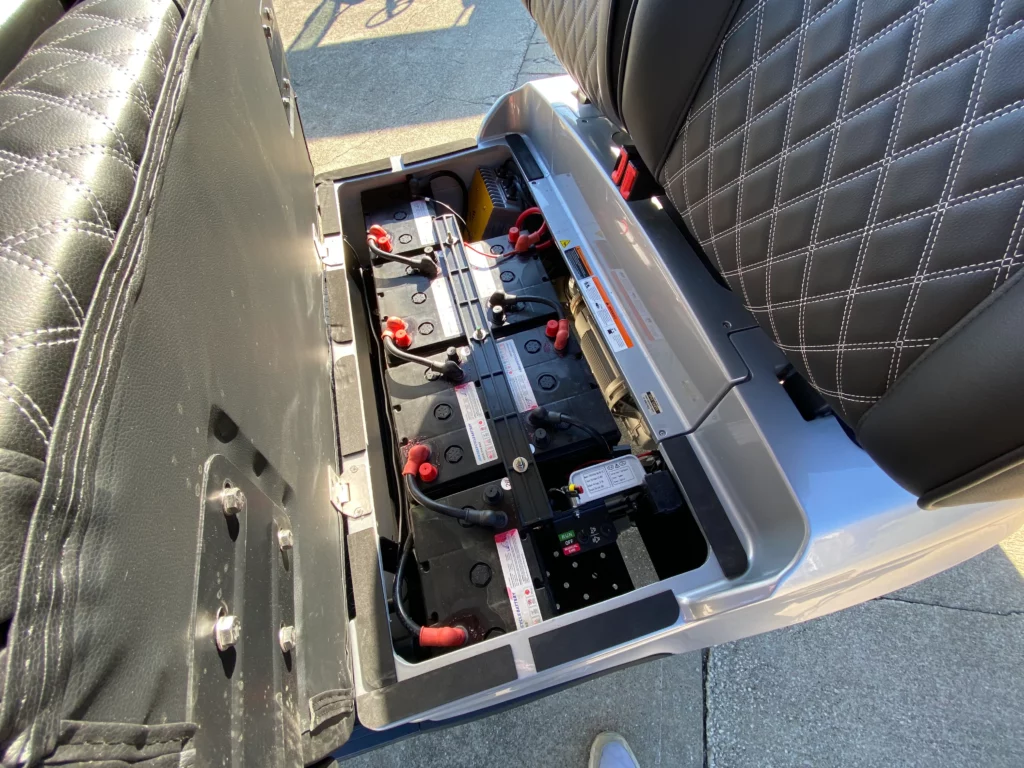
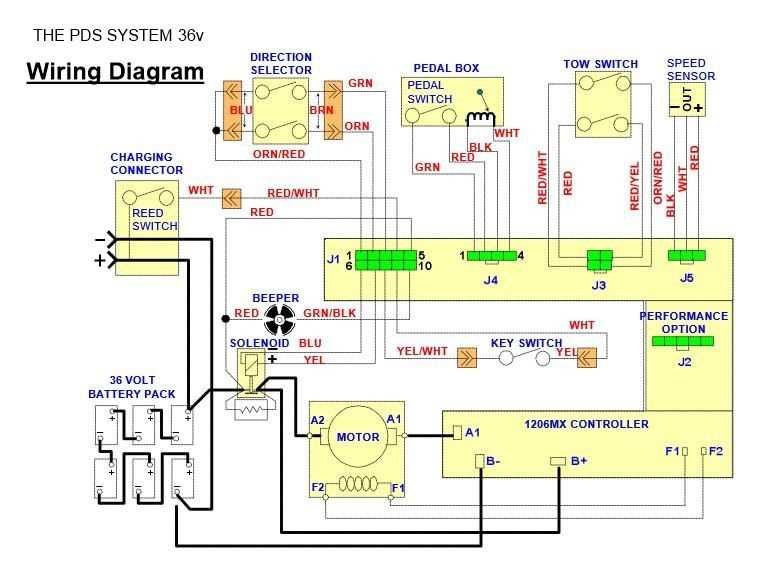
- There are two circuits: a low-current signal side (key, run/tow, throttle sensor, interlocks) and a high-current power side (battery, solenoid, controller, motor).
- Most no-go problems are a break on the signal side, which is why a fully charged cart can still refuse to move.
- Real numbers make the map usable: Alltrax XCT controllers run 300 to 570A, Navitas TSX3.0 is a 600A unit, and 48V builds commonly use a 470 ohm precharge resistor.
- A no-click solenoid points to the signal side. A click with no movement points to contacts, precharge, controller, motor, or pack current.
- Curtis-family controllers begin thermal cutback around 85C and cut off around 95C, so reduced power can be protection rather than a weak motor.
An electric golf cart is a chain of low-current commands and high-current power. Power starts at the battery pack, passes through protection and switching, reaches the controller, and the controller meters current to the motor. The motor turns through the transaxle, and the wheels move the cart. Diagnosis gets easier when you ask where the command disappeared and where the heavy current stopped.
The systems, with real numbers
Each system does one job, and each has a realistic number range you can measure against. The examples below are platform-level unless a specific model is named.
| System | Job | Typical real numbers | Learn more |
|---|---|---|---|
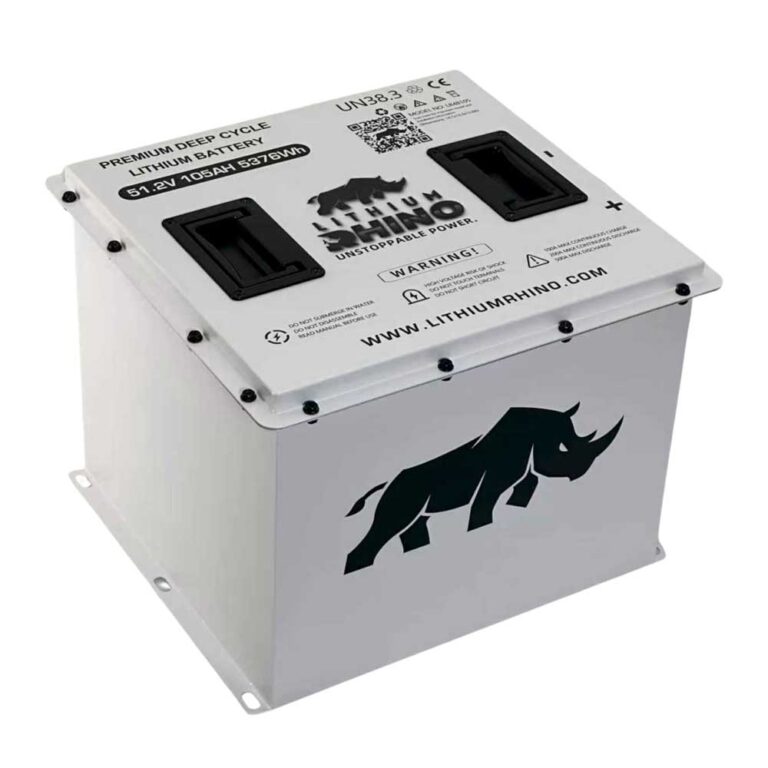
| Battery pack | Stores energy and supplies current. | 36V and 48V lead-acid are common. Current lithium examples include 51.2V 105Ah Eco Battery packs and 72V 165Ah Bintelli Beyond packs. | Batteries |
| Key and pedal circuit | Low-current command path. | E-Z-GO ITS, Club Car MCOR, and Curtis-style 0 to 5V throttle families are common platform examples. | Repair guides |
| Solenoid or contactor | Connects the high-current path when commanded. | Albright SW200 examples are rated 250A interrupted and 400A uninterrupted, depending on exact model. | Solenoid specs |
| Precharge resistor | Fills controller capacitors before the contactor closes hard. | Alltrax documents 220 to 250 ohm 10W for 12 to 36V, 470 ohm 10W for 48V, and 1000 ohm 10W for 60 to 72V systems. | Precharge resistor |
| Controller | Meters current to the motor and protects the system. | Alltrax XCT48300/400/500 cover 300 to 570A peak. Navitas TSX3.0 is commonly sold as a 600A controller. Curtis 1236/1238 families span 24 to 80V and roughly 300 to 650A by model. | Controllers |
| Motor and transaxle | Turn current into wheel torque. | ICON i40 sheet example: 48V 5kW 3-phase motor, 450A controller, and 14:1 rear axle. | Motors |
How this guide is written
This overview follows the same signal-then-power chain used in OEM service manuals and by experienced techs. The difference in this update is that the mental map now has real numbers. The examples are platform-level unless named as a specific model. A Curtis thermal value, an Alltrax resistor table, or an ICON i40 motor spec is not automatically universal for every cart.
For exact fuse locations, connector pinouts, and test leads, follow the model-specific diagnostic guides. This page tells you what each part does and what kind of number is realistic, so a 48V cart with a 470 ohm precharge resistor or a 500A controller no longer feels like mystery hardware.
Where faults actually hide
Most failures hide on one of two sides. The signal side is the key switch, run/tow switch, forward/reverse input, brake or seat interlock where fitted, throttle sensor, and controller enable logic. The power side is the battery pack, main fuse, cables, solenoid contacts, precharge circuit, controller B+ and B-, motor phase or field wiring, and transaxle.
Throttle names vary by brand. E-Z-GO TXT platforms often use an ITS, short for inductive throttle sensor. Club Car uses MCOR, commonly expanded as Motor Controller Output Regulator, on many DS and Precedent-era carts. Curtis controller documents also describe analog throttle families such as 0 to 5V logic. Treat those as families, not interchangeable parts. A cart that uses ITS input will not necessarily accept an MCOR or a generic 0 to 5V signal without the right controller and harness.
The key idea: signal vs power
The signal circuit tells the cart what you want. The power circuit does the work. A fully charged 51.2V lithium pack or 48V lead-acid pack can still go nowhere if the key circuit, run/tow switch, throttle sensor, or solenoid coil command is missing. A cart can also click loudly and not move if the signal side is working but the power side is open, corroded, precharge is missing, or the controller has shut down.
The precharge resistor is a good example of this split. It does not drive the cart. It gently charges the controller’s input capacitors before the contactor closes. Curtis-family documentation gives a useful check: controller B+ to B- should be around 90 percent of pack voltage after precharge. Alltrax publishes resistor values by system voltage, so a 48V build commonly uses 470 ohm 10W while a 60V or 72V build uses 1000 ohm 10W.
How to use this when something breaks
Use a meter and follow the chain instead of swapping parts. These are general checkpoints, so confirm your service manual before probing any connector.
| Checkpoint | What a useful reading looks like | What it tells you |
|---|---|---|
| Pack main positive to main negative | Close to the pack’s nominal class, such as 36V, 48V, 51.2V lithium nominal, or 72V nominal, and higher when fully charged. | If this is missing or collapses under load, start with batteries, BMS, main fuse, and cables. |
| Controller B+ to B- before the solenoid closes | About 90 percent of pack voltage on Curtis-family precharge checks. | If it is near zero, the precharge path, resistor, wiring, or controller input path may be open. |
| Solenoid coil small terminals when pedal is pressed | Pack-voltage-class command on many carts, but exact value is model-specific. | If command is absent, stay on the signal side: key, run/tow, F&R, pedal switch, throttle, interlocks, or controller enable. |
| Voltage drop across big solenoid posts after it clicks | Very low drop across closed contacts. | High drop means burned contacts, undersized contactor, loose cables, or heat in the high-current path. |
| Controller or motor heat complaint | Curtis 1234/1236/1238 documentation gives controller-family thermal cutback beginning around 85C and full cutoff around 95C. | Reduced speed can be protection, not a weak motor. Check hill load, tire size, current settings, cooling, and pack sag. |
If there is no power at all, start at pack voltage and the key circuit. If there is power but no movement, listen for the solenoid and measure whether the controller sees precharge and main pack voltage. If there is movement but reduced power, look for controller fault logic, thermal cutback, pack voltage sag, current limit, or a throttle input that never reaches full command. Use the troubleshooter for a symptom-first path.
Gas carts are different
Gas carts still have a signal chain, but the power side is fuel, spark, compression, clutching, and transaxle rather than controller-to-motor current. A pedal start circuit tells the starter/generator and ignition system to act. The engine then drives through a CVT or clutch system. That is why gas terms such as governor, pulse fuel pump, valve adjustment, carburetor, EFI, drive belt, primary clutch, and driven clutch matter in gas guides but do not diagnose an AC lithium cart.
The common lesson is the same: identify which chain you are in. A gas cart that cranks but will not fire is not solved with a controller. An electric cart that has pack voltage but no solenoid command is not solved with a motor. If a term here is unfamiliar, the golf cart glossary defines each part in one line.
Frequently Asked Questions
Why won’t my cart move even though it is charged?
Usually the low-current command path is missing, such as key, run/tow, throttle sensor, interlock, or controller enable. If the solenoid clicks, move to the high-current path and controller checks.
What does the controller do?
It reads throttle command and meters current to the motor. Real controller ratings vary widely, from 300A Alltrax examples to 600A Navitas and high-current Curtis AC families.
What is the solenoid for?
It is a heavy switch that connects the high-current path when the cart is ready to move. A no-click solenoid points to the signal side. A click with no movement points to contacts, precharge, controller, motor, or pack current.