Golf Cart Sand Tires
Sand performance comes from flotation: a wide contact patch and appropriate pressure spread the cart’s weight so the tire rides over loose material instead of cutting into it. The sidewall limit and wheel retention still control safe pressure.
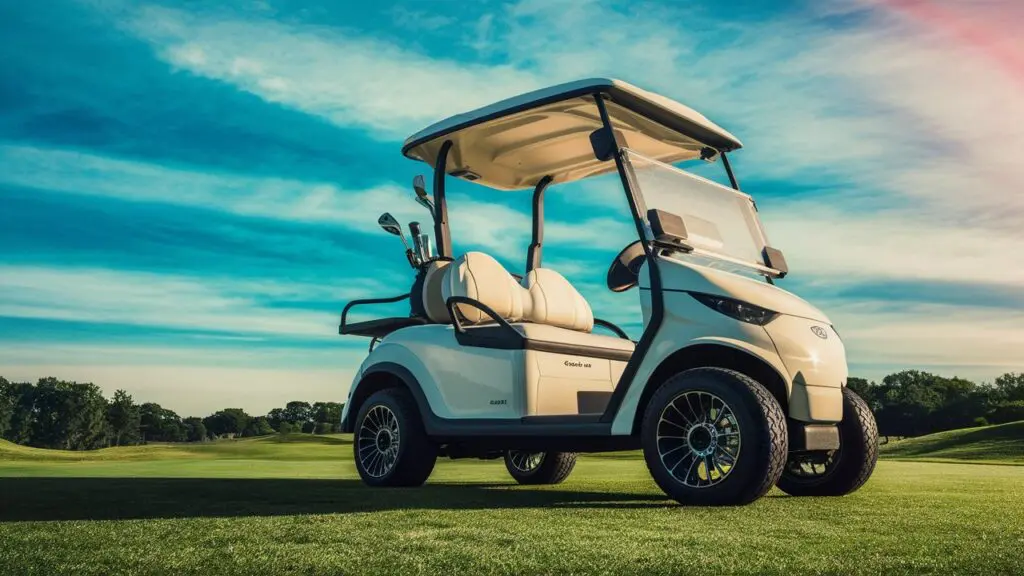
- Flotation reduces ground pressure by increasing the contact area supporting the cart.
- Beach owners benefit most from width, moderate lugs, and low vehicle weight.
- A wide all-terrain tire is the practical dual-purpose answer when the cart travels pavement and beach access roads.
- Sand tires are worth it for repeated soft-beach driving where the cart is permitted, has adequate torque, and can use a dedicated set.
Sand performance comes from flotation: a wide contact patch and appropriate pressure spread the cart’s weight so the tire rides over loose material instead of cutting into it. The sidewall limit and wheel retention still control safe pressure.
What makes a golf cart sand tire work
Flotation reduces ground pressure by increasing the contact area supporting the cart. A wider tire at an approved lower pressure flexes into a longer footprint. Paddle tread adds forward bite in loose sand but can dig, steer poorly, and vibrate on hard surfaces.
| Setup | Verified dimensions | Pressure basis | Pavement status |
|---|---|---|---|
| Carlisle 23×10.50-12 example | 22.8 to 22.9 in OD; 10.3 to 10.4 in wide | 10 PSI 2-ply or 20 PSI 4-ply maximum by SKU | Catalog marks outdoor-power tires NHS |
| Carlisle 18×9.50-8 | 17.8 to 18.5 in OD; up to 9.5 in wide | 12 to 36 PSI by ply/SKU | Verify exact marking |
| Carlisle HD Field Trax | Exact size required | Use current SKU table and sidewall | Off-road pattern, not assumed DOT |
| Street transition tire | Kenda K399 205/50-10, 18.3 in OD | 30 PSI 4PR example | DOT-rated model |
There is no manufacturer-backed universal "sand PSI." The sidewall, bead retention, wheel, load, and exact tire control the safe adjustment.
What beach owners actually report
Beach owners benefit most from width, moderate lugs, and low vehicle weight. Very deep paddles can overload a stock motor and controller because sand already demands high torque. Steering inputs should be smooth so the front tires do not plow.
Start at the tire/cart maker’s approved cold pressure, test a short route, and reduce only within published limits. Never deflate below a documented minimum or enough to unseat the bead.
Sand tires vs a wide all-terrain
A wide all-terrain tire is the practical dual-purpose answer when the cart travels pavement and beach access roads. A paddle or dedicated sand tire is better only when loose sand dominates and a second wheel set avoids pavement use.
Compare all-terrain choices with the platform-specific Club Car beach guide. Larger flotation tires may require the lift guide.
Are sand tires worth it for you?
Sand tires are worth it for repeated soft-beach driving where the cart is permitted, has adequate torque, and can use a dedicated set. They are not worth it for occasional firm sand, long pavement trips, or a stock cart already overheating under load.
Tire code gives nominal diameter, section width, and wheel diameter, but measured diameter varies by model, rim, pressure, and load. Confirm wheel width, body clearance at full steering and suspension travel, load capacity, and sidewall pressure. An 18-inch tire normally fits a stock-height cart; many 20-inch combinations fit selected carts, while 22-inch and 23-inch packages commonly require a lift. That is a fitment rule of thumb, not a universal guarantee.
Salt is the separate failure mechanism: rinse wheels, brakes, suspension, frame, and battery tray with fresh low-pressure water, dry, and inspect connectors. Do not pressure-wash bearings or electrical plugs.
The bottom line on sand tires
The correct verdict is model-specific: use the widest documented tire the wheel, body, load, and drive system can safely carry, then use approved pressure rather than a forum number. Low pressure on pavement builds sidewall heat, worsens steering, can roll the bead, and accelerates shoulder wear.
After every beach trip, remove trapped sand and salt, check bead seating, cuts, pressure, brakes, and lug torque. Rank the project against other upgrades.
Sand tire setup and second-set strategy
A second mounted set preserves road behavior and avoids repeated bead work. Mark rotation direction, store clean and shaded, and record the exact cold pressure used for sand and pavement. Reinflate before hard-surface travel.
Before entering sand, verify the route permits carts, remove unnecessary cargo, and check tow points and recovery equipment. Keep momentum steady and steering inputs shallow. Repeated full-throttle digging loads the motor and controller while burying the chassis. If progress stops, release the throttle and recover the cart instead of spinning deeper.
Monitor pack voltage and drive-system temperature on the first trip. Sand can demand high current for long periods, especially with large tires and passengers. A lithium BMS trip, controller cutback, hot motor, or hot cable is a system-limit warning. Reduce load and correct the setup before repeating the route.
Transitioning to pavement requires the tire’s approved hard-surface pressure, a bead and sidewall inspection, and removal of packed sand from brakes and wheels. A soft sand setup can feel vague, build heat, and wear both shoulders on pavement. Dedicated paddles may not be road-service tires at all.
Rinse salt promptly with fresh low-pressure water and dry the cart. Inspect frame seams, battery tray, brake hardware, wheel fasteners, and electrical connections. Salt held in damp sand continues corrosion after the visible surface looks dry.
Frequently Asked Questions
Are golf cart sand tires worth it?
Only if you regularly drive soft sand or the beach. Their wide, low-pressure design floats the cart instead of digging in. For occasional sand, a wide all-terrain tire is a better daily-use choice.
What pressure should golf cart sand tires run?
For maximum flotation on soft sand, owners often air down to single-digit psi, then re-inflate to normal pressure for road driving. Lower pressure widens the footprint so the cart rides on top of the sand.
Reviewed and updated July 30, 2026 by the Golf Cart Lab team.