Best All Terrain Golf Cart Tires
The strongest all-terrain choice is the tire whose size, load rating, tread, and pressure fit the cart and terrain. Aggressive lugs gain loose-surface traction while adding noise, turf scuff, rolling resistance, and steering effort.
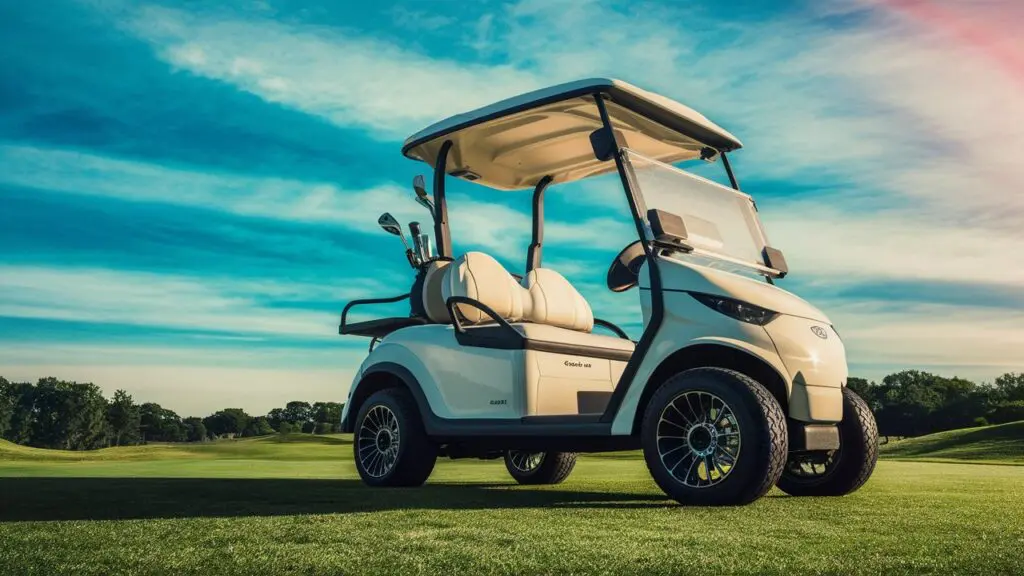
- An all-terrain tire needs open tread for loose material, enough carcass capacity for the loaded cart, and a diameter the chassis can clear.
- For mixed pavement and packed trails, a sawtooth K389 or Links keeps steering and turf behavior civil.
- Choose shallow all-terrain tread for neighborhoods and dry trails, open knobbies for loose soil, and a separate mud tire only when the route demands it.
- Best overall value: a verified 18×8.50-8 or similar sawtooth tire when the cart remains mostly on pavement and turf.
The strongest all-terrain choice is the tire whose size, load rating, tread, and pressure fit the cart and terrain. Aggressive lugs gain loose-surface traction while adding noise, turf scuff, rolling resistance, and steering effort.
What Defines the Best All-Terrain Cart Tires
An all-terrain tire needs open tread for loose material, enough carcass capacity for the loaded cart, and a diameter the chassis can clear. It does not need the most aggressive lug available.
| Named tire | Verified size example | Ply/load data | Tread and lift |
|---|---|---|---|
| Carlisle Knobby | 18×9.50-8 | Use exact SKU table | Knobby; stock-height candidate after clearance check |
| Duro HF-240 | Model-specific ATV/golf sizes | Stiff-sidewall product family | Classic knobby; size-dependent lift |
| Kenda K389 | 18×8.50-8 | 4PR 815 lb at 22 PSI | Sawtooth turf/A-T compromise; normally stock |
| Carlisle Links | 18×8.50-8 | 4 ply, 825 lb at 22 PSI | Sawtooth flotation; normally stock |
| Carlisle catalog large tire | 23×10.50-12 | 4 ply, 1320 lb at 20 PSI | Size requires lift and full clearance check |
Load values belong to the named SKU and rated test speed, not every tire sharing the size.
Top All-Terrain Tire Picks by Use Case
For mixed pavement and packed trails, a sawtooth K389 or Links keeps steering and turf behavior civil. For loose dirt and hunting property, the Carlisle Knobby or HD Field Trax adds void area that can clear soil. Mud use needs deeper, more open lugs, but that pattern is louder and rougher on pavement.
Compare purpose-built options in all-terrain and mud tires. GTW, RHOX, Duro, and Wanda sell useful patterns, but verify the current sidewall and SKU sheet because brand-family marketing pages do not establish load or pressure.
Common Tire-Buying Mistakes to Avoid
The common mistakes are buying wheel diameter instead of overall tire diameter, assuming “4 ply” is a literal layer count, ignoring loaded rear-seat capacity, and using sidewall maximum as a universal operating target. Heavy tires also increase steering effort and unsprung mass. Aggressive lugs can tear turf during sharp turns.
Tire code gives nominal diameter, section width, and wheel diameter, but measured diameter varies by model, rim, pressure, and load. Confirm wheel width, body clearance at full steering and suspension travel, load capacity, and sidewall pressure. An 18-inch tire normally fits a stock-height cart; many 20-inch combinations fit selected carts, while 22-inch and 23-inch packages commonly require a lift. That is a fitment rule of thumb, not a universal guarantee.
Which All-Terrain Tire Fits Your Driving?
Choose shallow all-terrain tread for neighborhoods and dry trails, open knobbies for loose soil, and a separate mud tire only when the route demands it. Large tires need the lift-kit fitment guide. Stock-height buyers should start with the tire size guide and measure.
Use the pressure printed for the exact tire and adjust within the vehicle and tire maker’s instructions. Published examples vary widely: Kenda K389 18×8.50-8 4PR lists 22 PSI, its 6PR version lists 34 PSI, and Carlisle Turf Saver sizes range by construction. One universal golf-cart PSI would be unsafe.
The Bottom Line on All-Terrain Tires
Best overall value: a verified 18×8.50-8 or similar sawtooth tire when the cart remains mostly on pavement and turf. Best loose-ground choice: a knobby sized to the load and clearance. Skip oversized aggressive tires when range, turf protection, quiet ride, and steering effort matter more.
Calculate loaded capacity before ordering. Add passengers, cargo, rear seat, accessories, and battery weight, then use the cart’s axle ratings where published. Each tire must cover its share of the heaviest axle. A high tire load number does not raise the cart frame or axle rating.
Diameter changes gearing. Replacing an 18-inch tire with a measured 22-inch tire increases distance per revolution by 22/18, or 22.2 percent, while reducing wheel torque to 18/22, or 81.8 percent of baseline. The tire size versus torque analysis explains why large A/T tires can make hill performance worse.
Wheel offset also matters. Pushing a heavy tire outward can increase scrub radius, steering effort, and bearing leverage. Pulling it inward can create suspension contact. Verify the platform wheel specification and test both steering locks with the suspension compressed and the normal passenger load.
After mounting, begin with a low-speed figure-eight and controlled braking test. Listen for rubbing, check steering return, verify no brake hose or cable contact, then test the actual trail while monitoring pack sag and motor/controller temperature. Recheck pressure cold, lug torque, tread direction, rubbing, and terminal heat after the first load cycle.
Keep the tire model, SKU, measured diameter, wheel width and offset, cold pressure, and load rating with the cart. Compare the total change with other upgrades.
Frequently Asked Questions
What are the best all terrain golf cart tires?
For mixed dirt and grass, moderate all-terrain lugs like the Carlisle Trail, GTW Predator, and RHOX RXTR lead the value field. Match the size to your lift and reserve aggressive mud tires for genuine off-road use.
What size all terrain tire fits my lifted cart?
As a rough guide, a 3-inch lift clears about 20-inch tires, a 5 to 6-inch lift fits 22 to 23-inch, and 24-inch needs a tall A-arm lift. Always confirm clearance at full steering lock before buying.
Reviewed and updated July 30, 2026 by the Golf Cart Lab team.