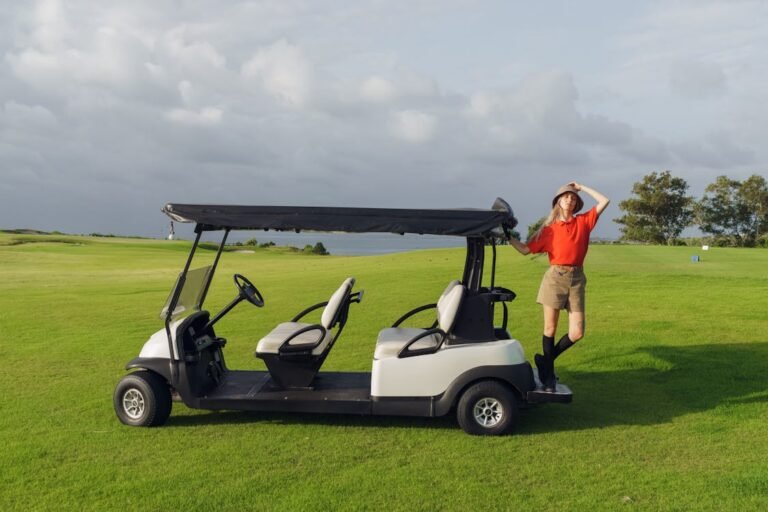
Sand Tires: Upgrades for Club Car
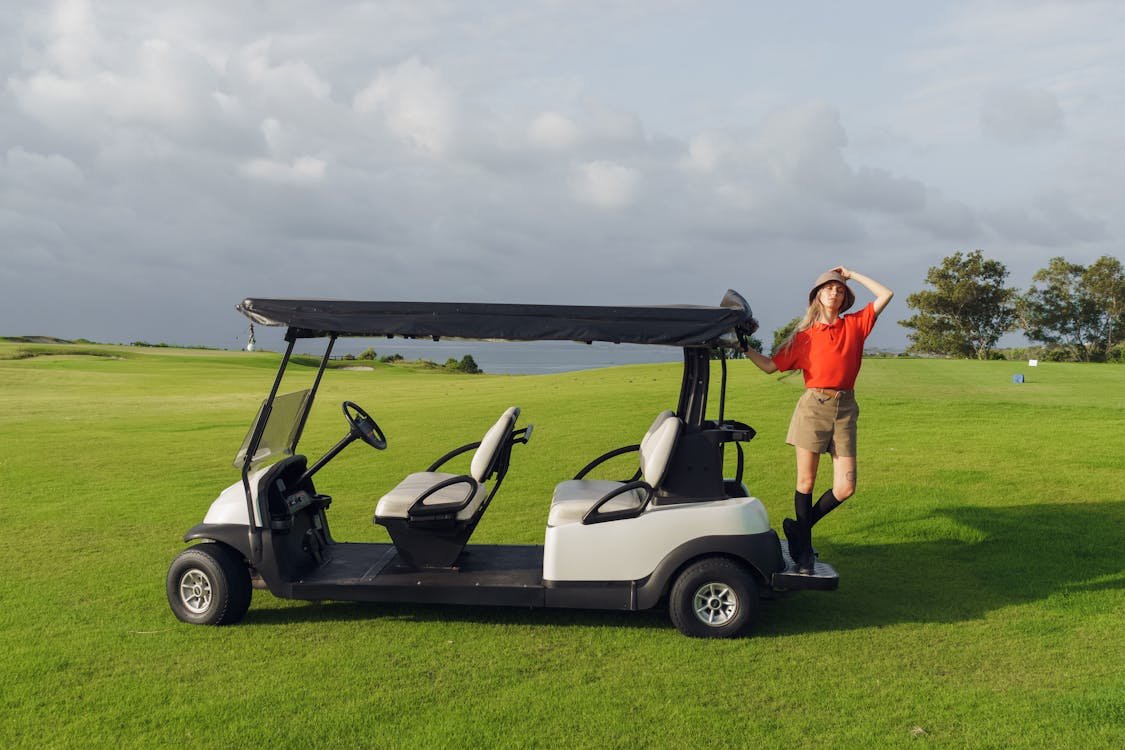
- The golden rule of sand driving is flotation.
- Depending on whether your cart is lifted or stock, here are the top proven options for maximizing beach traction.
- Even the widest sand tires will sink if they are fully inflated to 22 PSI.
- Sand is heavy, but saltwater is destructive.
Driving a Club Car Precedent onto soft, powdery beach sand with the wrong rubber is a guaranteed way to sink to your axles. Many owners mistakenly assume that aggressive mud tires will power them through the dunes, only to find themselves buried. This guide explains the physics of sand flotation and which wide-footprint tires actually work on soft sand.
The Physics of Flotation: Why Mud Tires Fail
The golden rule of sand driving is flotation. When you drive an EZGO TXT or Club Car Precedent onto the beach, the goal is to keep the heavy 1,000-pound chassis resting on top of the loose particles.
This is where most owners make a fatal error: they buy aggressive, deep-lug mud tires. Mud tires are engineered to slice through soft topsoil to find hard dirt underneath. If you use mud tires on the beach, the deep V-shaped lugs act like mechanical shovels, instantly excavating the sand and burying your rear differential into the ground.
Proper sand tires are completely smooth or feature extremely shallow, tightly packed grooves. They operate like snowshoes, spreading the cart’s weight over the widest possible contact patch.
One thing that helps the Club Car specifically is its factory rim size. The Precedent (built 2004 onward) and the older DS both ship on 8-inch wheels with a 4-on-4 bolt pattern, and that small rim leaves room to fit a taller, more balloon-shaped turf tire without a lift, which is exactly the profile that floats best on soft sand. A stock DS rolling on a smooth 18×8.5-8 turf tire will out-float a lifted cart wearing narrow, tall mud tires almost every time, because footprint width beats ground clearance on the beach.
The Top 5 Sand Tires by Chassis
Depending on whether your cart is lifted or stock, here are the top proven options for maximizing beach traction.
- Carlisle Turf Glide (8-inch rim): The absolute best option for an unlifted Club Car DS or Yamaha G29. It has a rounded, balloon-like profile with almost no tread, making it physically impossible to dig holes in the sand.
- Kenda Super Turf (20×10-10 or 22×11-10): Excellent for lifted EZGO TXT carts. It is significantly wider (10 to 11 inches) than factory rubber, providing a massive footprint while still offering enough grip for paved road transitions.
- Duro Desert (22×11-10): Designed specifically for loose terrain. The ultra-wide 11-inch profile gives lifted Club Car Precedents superior dune-climbing ability.
- Innova Driver (Standard sizing): A budget-friendly smooth turf tire that performs incredibly well on wet, hard-packed sand near the tide line.
- Paddle Tires (Custom built): For highly modified, high-horsepower AC carts operating exclusively in deep dunes. These feature lateral scoops that physically propel the cart forward. (Not recommended for any paved use).
The “Air Down” Protocol: Critical PSI Adjustments
Even the widest sand tires will sink if they are fully inflated to 22 PSI. High pressure makes the rubber rigid, turning your tire into a pizza cutter.
-
The Target Pressure: When you hit the sand, use a deflator tool to drop your tire pressure to 5 to 8 PSI.
-
The Effect: This causes the bottom of the tire to “pancake” outward, drastically expanding the contact patch. The cart will immediately stop sinking and begin to glide over the powder.
-
The Warning: Do not execute high-speed, sharp turns at 5 PSI, or the tire bead will peel off the rim. Always carry a portable 12V air compressor to reinflate to 20 PSI before returning to the asphalt.
Post-Beach Maintenance: Defeating Saltwater Corrosion
Sand is heavy, but saltwater is destructive. If you drive your Yamaha G29 through wet sand near the ocean, highly corrosive saltwater will stick to your aluminum frame, steel brake cables, and exposed electronics.
Immediately after a beach run, you must thoroughly hose down the undercarriage of the cart with fresh water. Pay special attention to the mechanical rear drum brakes; if saltwater sits inside the drum, the parking brake cables will seize within a matter of days. For added protection, spray exposed suspension bolts with a marine-grade corrosion inhibitor.
Club Car owners have one extra reason to rinse thoroughly: while the aluminum I-beam frame resists rust far better than a steel chassis, the steel components bolted to it do not. The rear leaf-spring shackles, the brake and accelerator cable ends, and the battery hold-down hardware are all steel, and salt trapped where steel meets that aluminum frame accelerates galvanic corrosion at exactly those contact points. Flush the battery compartment and the area around the rear axle every trip, and the aluminum frame that makes a Club Car last decades will not be undone by the fasteners holding it together.
Looking to buy a pre-built, lifted cart perfect for your coastal property? Browse verified models in our Guides.
Lab Summary
Conquering the beach requires overriding standard off-road logic. Skip the aggressive mud grips and equip your chassis with smooth, wide sand tires. By airing down to 5 PSI and thoroughly washing the corrosive salt from your undercarriage after every trip, your Club Car or EZGO will effortlessly cruise the coastline.
For more details regarding factory payload limits in high-resistance environments, review the Club Car Specifications (Dofollow) or check proper tire load indexes via the NHTSA guidelines.
Frequently Asked Questions
What are the best tires for driving a golf cart on the beach?
You need wide, smooth sand tires designed to float on top of the surface instead of digging in. Good options include the Carlisle Turf Glide and Kenda Super Turf, run at a drastically lowered 5 to 8 PSI for maximum flotation.
Will mud tires work on the beach?
No. Aggressive mud tires dig into soft sand and bury the cart to its axles. Sand calls for wide, smooth-tread tires that spread the load and float on the surface, the opposite of a mud tread.
What tire pressure should I use for beach sand?
Lower the pressure to roughly 5 to 8 PSI so the tire flattens into a wide footprint that floats on loose sand. Re-inflate before returning to pavement.
Reviewed and updated July 27, 2026 by the Golf Cart Lab team.