Golf Cart Range By Brand: Battery, Terrain and Load Guide
Range is set by the battery energy actually installed in the cart, not the badge on the nose. Here are real per-brand and per-model figures, with manufacturer claims separated cleanly from pack-energy math.
- Battery capacity beats badge. A 48V 80Ah pack and a 48V 210Ah pack do not belong in the same range sentence just because both are the same brand.
- Club Car publishes the cleanest golf-cart claim: up to 30 miles with a 4.0 kWh pack, up to 55 miles with 7.0 kWh. GEM publishes far higher local-EV numbers (up to 117 miles for e4).
- Treat kWh as the fuel-tank size. Estimate it as nominal volts times amp-hours, then compare packs across brands on the same energy basis.
- Manufacturer mileage is an ideal-condition claim. Hills, load, lift, aggressive tires, high speed, cold, and battery age all cut the real number.
- An empty mileage row means the OEM did not publish a clean model-specific claim, not that the cart has poor range. The pack-energy math fills that gap honestly.
Golf cart range by brand is useful only if you separate two things: the manufacturer’s ideal-condition range claim and the battery energy actually installed in the cart. The badge matters for support and packaging, but range is still mostly battery capacity, controller tune, tires, terrain, passenger load, speed, temperature, and battery age.
Golf cart range, explained
The table below fixes the weak spot in most range guides. It gives brand and model examples, labels OEM mileage as an up to claim where the manufacturer publishes one, and adds a pack-energy column where a pack spec is public or already verified in Golf Cart Lab sibling posts. A blank mileage row does not mean the cart has poor range. It means the OEM did not publish a clean model-specific mile claim in the source checked.
| Brand and model | Published range claim | Battery or pack data used for math | Calculated pack energy | How to read it |
|---|---|---|---|---|
| E-Z-GO Liberty ELiTE Lithium | No model-mile range published on the current Liberty spec page. E-Z-GO lists Range as N/A. | ELiTE 2.2 single 56.7V max lithium, 48VDC electrical system. | Not calculated from public Ah, because Ah is not published on that page. | Use E-Z-GO’s 56.7V max, 235A AC controller, and 19 mph specs as platform data, but do not invent miles. |
| E-Z-GO Freedom RXV or RXV ELiTE | No current OEM mile claim verified in this pass. | ELiTE lithium RXV examples are model-year and pack-count specific. | Not calculated without the installed module Ah. | Confirm the ELiTE module label or build sheet. Older dealer PDFs describe strong range but do not give a clean public mile number. |
| Club Car Onward 4 Passenger LSV Li-Ion | Up to 30 miles with 4.0 kWh lithium, or up to 55 miles with 7.0 kWh lithium. | Club Car publishes 4.0 kWh and 7.0 kWh lithium options. | 4.0 kWh or 7.0 kWh. | This is the cleanest OEM claim in the set, and it shows why battery option matters more than the badge. |
| Yamaha Drive2 PTV PowerTech Li | No U.S. Yamaha mile range published on the current Drive2 PTV page. | Yamaha publishes lithium-ion battery, Toyota MCU, 6.7 hp or 5.0 kW output, and Delta-Q charger. | Not calculated from U.S. page because Ah is not published there. | Yamaha verifies the system type, not the mileage. Treat dealer range claims as dealer context unless the exact battery label supports them. |
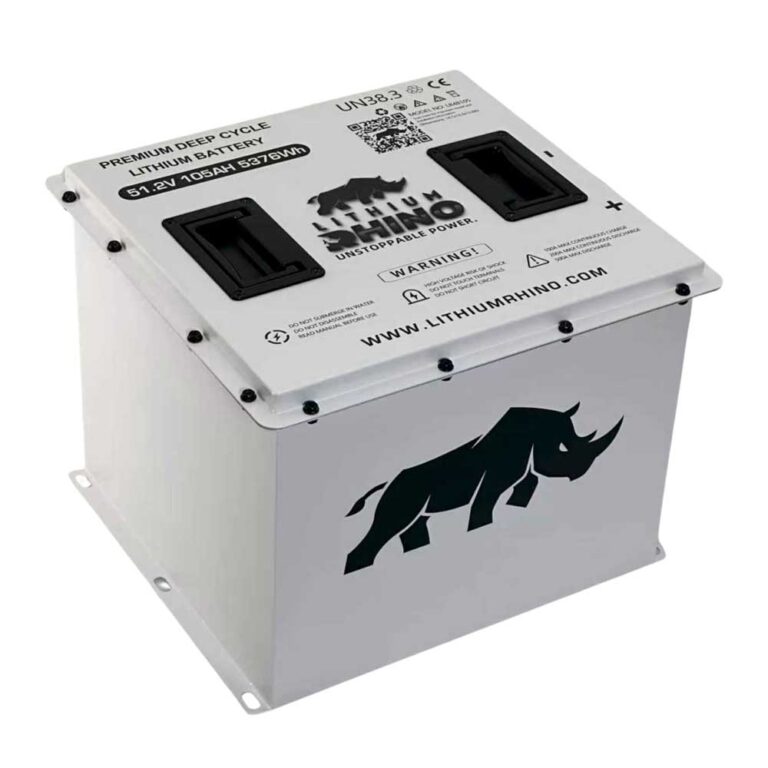
| ICON i40 with Eco Battery Gen3 | ICON FAQ says Eco lithium gives extended range, but no i40 mile number is published there. | ICON FAQ lists 105A or 51V Eco Battery; Eco Battery’s Gen3 data lists 51.2V 105Ah and 5.3 kWh. | 5.38 kWh by 51.2 x 105, with Eco’s rounded 5.3 kWh data-sheet value. | Good pack energy for a four-seat cart, but mileage still depends on tires, lift, speed, and ECO mode programming. |
| Evolution D5 or Classic with Evolution lithium | Evolution’s L48110 data lists 40 to 55 miles per full charge at 13 mph with two seats. | L48110 is 51.2V, 110Ah, 5.28 kWh. Evolution’s model pages also list 48V lithium on current D5 Ranger pages. | 5.63 kWh by nominal math, with Evolution’s own sheet listing 5.28 kWh stored energy. | Use the pack label. Evolution also sells 105Ah, 160Ah, and 205Ah packs, so not every D5 or Classic has the 110Ah pack. |
| Bintelli Beyond 2025 4 Passenger Lifted | No mile range published in the 2025 user manual or 2025 4P Lifted parts manual checked here. | 2025 Beyond 4P Lifted parts manual lists 72V 165Ah lithium battery; it also shows a 48V 165Ah variant in the rear-body parts section. | 11.88 kWh for 72V 165Ah. 7.92 kWh if a 48V 165Ah variant is actually installed. | Big energy number, but confirm the label because Bintelli documents multiple battery variants. |
| STAR EV Capella and Sirius lithium kits | STAR’s lithium chart estimates 15 to 25 miles for 48V 80Ah, 30 to 40 miles for 48V 105Ah, 45 to 60 miles for 48V 160Ah, and 60 to 80 miles for 48V 210Ah on flat ground with two passengers. | STAR publishes 48V 80Ah, 105Ah, 160Ah, and 210Ah packs, plus 72V 230Ah and 460Ah packs. | 3.84, 5.04, 7.68, and 10.08 kWh for the 48V packs. | This is pack-specific, not one Capella number. It is useful because STAR labels load and flat-ground conditions. |
| Advanced EV Advent with Eco Battery | No current manufacturer model-mile claim found on Advanced EV’s public model page. | Advanced EV Advent dealer listings commonly show Eco Battery 51.2V 105Ah, matching the Eco pack this site has already verified. | 5.38 kWh by 51.2 x 105, with Eco’s rounded 5.3 kWh value. | Label as pack math unless your seller provides an OEM sheet or battery label for that exact Advent. |
| GEM e4 and e6 | GEM publishes up to 117 miles for e4 and up to 86 miles for e6, with the note that model, battery, payload, and terrain affect range. | GEM publishes lithium-ion battery warranty and model range claims, but the public model pages do not expose one simple Ah number for this table. | Not calculated from public Ah. | GEM is a true LSV-style local EV, so its range claims are much higher than a basic golf cart and should not be averaged into PTV rows. |
How we compiled this reference
Every figure here is cross-checked against OEM specifications, battery manufacturer datasheets, and already-verified sibling posts before it goes into the table. Manufacturer mileage claims are labeled as claims because they are ideal-condition figures. Pack-energy math is labeled as capacity math because kWh is not the same thing as a verified road-test mile result.
The rule used here is simple: publish the exact OEM number when a source gives one, publish battery energy when the pack spec is public, and say no published range spec when the brand does not publish one. That is why the table has some empty mileage rows. Filling those gaps with generic 25 to 50 mile guesses would make the article look more complete but less true.
Range by power system
The old power-system table is still useful as a broad starting point, but it should not be the whole article. Healthy lead-acid packs on standard 36V and 48V carts often land around 15 to 25 miles in normal use. Lithium iron phosphate packs commonly stretch that because they weigh less, hold voltage flatter, and are sold in larger amp-hour sizes. High-capacity lithium packs, such as STAR’s 48V 160Ah and 210Ah options or Bintelli’s documented 72V 165Ah Beyond pack, carry far more stored energy than a small drop-in pack. Gas carts are different because tank size and mpg replace kWh as the range limit.
| Power type | Typical range use | What decides the number |
|---|---|---|
| Lead-acid | Often 15 to 25 miles when healthy. | Battery age, water level, charge habits, pack balance, and hills. |
| Standard lithium | Often 25 to 50 miles, but pack size decides. | Nominal volts x Ah, BMS current limit, controller tune, tire size, and load. |
| High-capacity lithium | 40 to 80+ miles can be realistic on the right pack and conditions. | Examples include STAR 160Ah or 210Ah packs and large 72V packs. |
| Gas | Usually much farther per fill-up than an electric cart per charge. | Tank size, mpg, engine tune, terrain, and cargo. |
What real-world range looks like
Real-world range runs lower than the cleanest published number. Hills, full passenger loads, cargo, lifted suspension, aggressive tires, high speed, soft turf, cold weather, and aging batteries all raise watt-hours per mile. Lead-acid is hit hard by age and deep discharge. Lithium avoids the voltage fade of lead-acid, but the BMS can still limit output or charging when the pack is cold, hot, low, or overloaded.
Use kWh as the fuel-tank size, not as a promise. A 5.3 kWh ICON or Advanced EV pack and a 5.28 kWh Evolution L48110 pack are in the same energy class, so similar carts driven similarly should be in the same range neighborhood. A 7.0 kWh Club Car XR pack or a 10.08 kWh STAR 210Ah pack gives more room. A six-passenger lifted cart will still consume that room faster than a two-passenger flat-ground cart.
Range by cart class and common platforms
Legacy fleet and PTV carts: E-Z-GO RXV/TXT, Club Car DS/Precedent, and Yamaha Drive2 examples can vary wildly because many were sold with lead-acid packs, later lithium packages, or dealer conversions. Confirm the battery label before trusting the badge.
Modern lithium neighborhood carts: ICON, Evolution, Bintelli, Advanced EV, and STAR EV often ship with lithium or offer lithium packages. The published battery number matters more than the name. A 48V 80Ah pack and a 48V 210Ah pack do not belong in the same range sentence just because both are STAR EV compatible.
Factory LSVs and local EVs: Club Car Onward LSV and GEM publish the cleanest model-level range claims in this pass. Club Car’s own Onward LSV page ties range directly to 4.0 kWh and 7.0 kWh packs, while GEM’s e4 and e6 pages publish much higher local-EV range claims with payload and terrain caveats.
Gas utility and personal carts: Gas Yamaha and Cushman-type utility platforms do not have charge range. Their practical range is tank size, fuel consumption, and how quickly the operator can refuel. That makes them attractive for all-day work even if electric is quieter and lower maintenance.
How to get more range
Start with the battery. A higher-capacity lithium pack adds more stored energy than a vague performance tune. Keep lead-acid packs watered and fully charged, use the charger profile that matches the pack, run correct tire pressure, reduce unnecessary cargo, and drive smoothly. If range suddenly drops, test pack voltage under load, check cable heat, confirm charger behavior, and inspect tire pressure before blaming the controller. To size a lithium pack from your own miles and hills, the Lithium Battery Bundle Finder lists the ones that fit your cart.
For buying, ask the seller for three things: the battery label, the battery data sheet, and the charger model or profile. Then compare those facts with the table above. A cart advertised as long range should be able to show either a manufacturer range claim or enough pack capacity to make the claim plausible. If you are weighing chemistries, the lithium vs lead-acid guide breaks down the range and lifespan trade-offs, and the brand hubs cover each platform in more detail.
Frequently Asked Questions
Which golf cart brand has the best range?
Among sources checked here, GEM publishes the highest local-EV numbers, Club Car publishes a clear Onward LSV claim up to 55 miles with its 7.0 kWh pack, and STAR publishes pack-specific flat-ground estimates up to 60 to 80 miles for its 48V 210Ah pack. For ordinary carts, battery capacity beats badge.
How far can a golf cart go on one charge?
Healthy lead-acid carts often land around 15 to 25 miles. Lithium carts can be much higher, but the honest answer depends on the installed kWh, passengers, hills, tires, speed, and battery age.
Does lithium give more range than lead-acid?
Generally yes, especially usable range, because lithium holds voltage flatter and is often sold in higher-capacity packs. A small lithium pack can still be outranged by a larger pack, so compare kWh.