
Which Golf Cart Brand Is Best?
Choosing the best golf cart brand depends entirely on how you plan to use the cart and what you value most. The industry is dominated by three legacy manufacturers, Club Car, EZGO, and Yamaha, each with distinct engineering philosophies and strengths. A growing wave of Chinese-manufactured brands like Icon and Evolution are disrupting the market with feature-loaded carts at aggressive price points. This guide cuts through the marketing to give you an honest, technically grounded comparison.
01 : Club Car: The Premium Standard
Club Car, now owned by Platinum Equity (previously under Ingersoll Rand), has built its reputation on a single material choice: the aluminum frame. While EZGO and Yamaha use steel frames on most models, Club Car has used rust-proof aluminum chassis construction on its DS and Precedent lines for decades. This gives Club Car carts a significant longevity advantage, especially in coastal and humid environments where steel frames corrode.
Strengths
- Aluminum frame: Will not rust. Carts from the early 2000s still have structurally sound frames.
- Highest resale value: Club Car consistently commands 15-25% higher resale prices than comparable EZGO or Yamaha models according to NADA Guides.
- Fleet-proven reliability: Preferred by major golf courses and resorts worldwide due to low maintenance requirements.
Weaknesses
- Higher purchase price: New Club Car Onward and Villager models are typically $1,000 to $3,000 more than comparable EZGO models.
- OBC complexity: The On-Board Computer on electric Club Car models can cause charging and operational headaches. See our OBC bypass guide for solutions.
02 : EZGO: The Customizer’s Choice
EZGO, manufactured by Textron Specialized Vehicles, is the most popular brand in the DIY and aftermarket modification community. The EZGO TXT and RXV platforms have been sold in massive numbers, creating an enormous ecosystem of compatible parts, upgrades, and technical knowledge.
Strengths
- Largest aftermarket ecosystem: More lift kits, controllers, motors, and accessories are available for EZGO than any other brand. If you plan to modify your cart, EZGO gives you the most options.
- Lower purchase price: New EZGO Freedom and Liberty models offer excellent value. Used EZGO TXTs are the most affordable used carts on the market.
- Simpler electrical architecture: Easier to diagnose and repair compared to Club Car’s OBC-controlled systems. Great for DIY owners.
Weaknesses
- Steel frame: Prone to rust over time, especially on pre-2010 TXT models stored outdoors. Requires regular undercarriage maintenance.
- Lower resale value: High production numbers and lower initial price result in faster depreciation compared to Club Car.
03 : Yamaha: The Gas Cart King
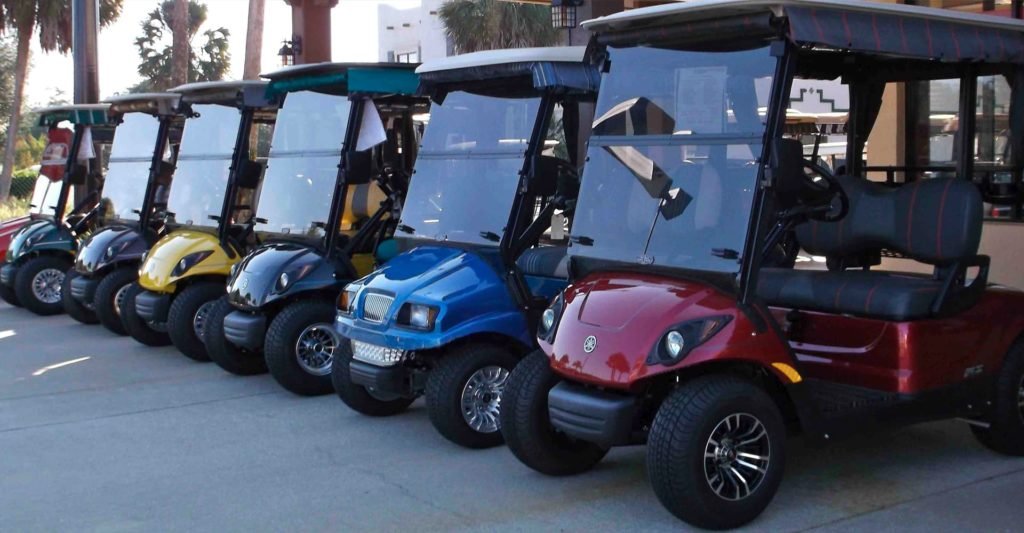
Yamaha brings its legendary small-engine expertise from motorcycles and powersports to the golf cart market. While Yamaha makes excellent electric carts, their gas-powered models (particularly the Drive2 QuieTech) are considered the gold standard for gas golf cart engineering.
Strengths
- Superior gas engine technology: The QuieTech EFI engine is the quietest and most fuel-efficient gas cart engine on the market. See our Yamaha carburetor cleaning guide for maintenance tips.
- Independent rear suspension: Yamaha’s Drive2 offers the smoothest ride of any stock golf cart. The independent suspension handles rough terrain better than the leaf-spring setups used by Club Car and EZGO.
- Excellent build quality: Japanese engineering standards result in tight tolerances and consistent quality control across production runs.
Weaknesses
- Smaller aftermarket parts selection: Fewer lift kits, body kits, and performance upgrades compared to EZGO and Club Car. The Yamaha-specific parts market is growing but still lags behind.
- Proprietary connectors: Yamaha uses modular plug connectors instead of ring terminals on many electrical components, making field repairs slightly more complex.
04 : Emerging Brands: Icon, Evolution, Advanced EV
A new wave of manufacturers, mostly sourcing from Chinese factories, has entered the market with feature-rich carts at aggressive price points. Brands like Icon (by Icon EV), Evolution Electric Vehicles, and Advanced EV offer standard features that are expensive options on the Big Three: touchscreen dashboards, lithium batteries, LED lighting, Bluetooth speakers, and full street-legal packages.
The trade-off is unproven long-term reliability. These brands have only been in the US market for 5 to 8 years, compared to 50+ years for the Big Three. Dealer networks are thinner, parts availability is inconsistent, and resale value is unpredictable. If you are buying for maximum features per dollar and plan to keep the cart for 3-5 years, they offer excellent value. If you are buying for 10+ year reliability and strong resale, stick with the legacy brands.
New-Cart Price Bands and Buyer Verdicts
These are broad U.S. dealer/MSRP bands for current personal carts, before tax and often before freight or setup. Two-seat fleet-style models sit near the low end; lithium, lifted, LSV, and four- to six-seat builds move quickly toward the high end.
| Brand or tier | Approximate new price band | Best for |
|---|---|---|
| Club Car | About $10,000 to $18,000+ | Best for the buyer prioritizing an aluminum chassis, dealer support, and strong long-term demand. |
| E-Z-GO | About $9,000 to $16,000+ | Best for DIY owners and modifiers who want the broadest aftermarket and abundant used parts. |
| Yamaha | About $9,500 to $16,000+ | Best for gas-cart buyers and owners who value quiet operation, ride quality, and factory engineering. |
| ICON, Evolution, Advanced EV | About $8,000 to $15,000+ | Best for feature-first buyers who confirm a capable local dealer and plan to keep the cart through the steepest depreciation years. |
05 : Best Brand by Use Case
- Neighborhood / community driving: Club Car Onward or Precedent. Aluminum frame resists years of outdoor exposure, and the higher resale value protects your investment.
- Off-road / hunting / trails: EZGO TXT or RXV with a lift kit. The massive aftermarket means you can find every off-road accessory imaginable. Browse our all-terrain tire guide.
- Golf course use: Any of the Big Three. All three are fleet-proven. Choose based on your local dealer’s service quality and parts availability.
- Speed / performance builds: EZGO with an Alltrax or Navitas controller upgrade. The aftermarket controller and motor options for EZGO are unmatched.
- Gas-powered preference: Yamaha Drive2 QuieTech. No other gas cart engine matches its noise level, fuel efficiency, and smooth operation.
- Maximum features on a budget: Icon i40 or Evolution D5. Loaded with tech at $2,000 to $4,000 less than equivalently equipped Big Three models.
06 : Resale Value Comparison
Resale varies more by battery age, seating, condition, local registration rules, and dealer density than by badge alone. As a rough asking-price guide, clean five-year-old Big Three personal carts often list around 45% to 65% of a comparable new cart’s current pre-tax price; Club Car and Yamaha commonly occupy the upper half, while plentiful E-Z-GO fleet conversions often sit near the middle but sell quickly because parts are easy to source. Newer import brands frequently fall around 30% to 50%, with strong local dealer support pushing a cart upward and orphaned software or parts pulling it down. These are market bands, not guaranteed retention rates. Compare same-year, same-battery, same-seat listings and check a current valuation source such as J.D. Power. Carts with documented battery health and properly installed wiring usually command the strongest price.
Frequently Asked Questions
Which golf cart brand is best?
There is no single best brand; it depends on use. Club Car leads on frame durability, EZGO on affordable customization, and Yamaha on quiet efficiency. Newer brands like Icon and Evolution win on price and features.
Are Club Car, EZGO, or Yamaha the most reliable?
All three are reliable with proper maintenance. Club Car’s aluminum frame resists corrosion best, EZGO has the widest parts support, and Yamaha’s drivetrains are known for smooth, efficient reliability.
Are cheaper import brands worth it?
Brands like Icon and Evolution offer strong value with lithium packs and loaded features at lower prices, but verify parts availability and warranty support in your area before buying.
Which brand holds resale value best?
The legacy Big 3 hold value best because buyers trust parts availability and frame durability. A clean lithium conversion adds the most resale value across any brand.
