Cushman Hauler Repair Guide: Common Faults by System
The Hauler is a work vehicle rather than a golf cart, and it fails like one. This guide sorts the common faults by system so you can start from the symptom you actually have and go straight to the right test.
- Haulers are built and used as utility vehicles, so load, vibration and outdoor storage drive most failures rather than mileage.
- Start by identifying whether yours is gas or electric. The two share a chassis but almost none of the failure modes.
- Most no-start and no-move complaints resolve to a switch, a connection or a safety interlock rather than to the engine or motor.
- Bed loading is what separates Hauler faults from cart faults. Rear suspension, transaxle and brake wear all arrive earlier on a vehicle that carries weight.
- Work from the symptom down. Each section below links to the full diagnostic procedure for that fault.
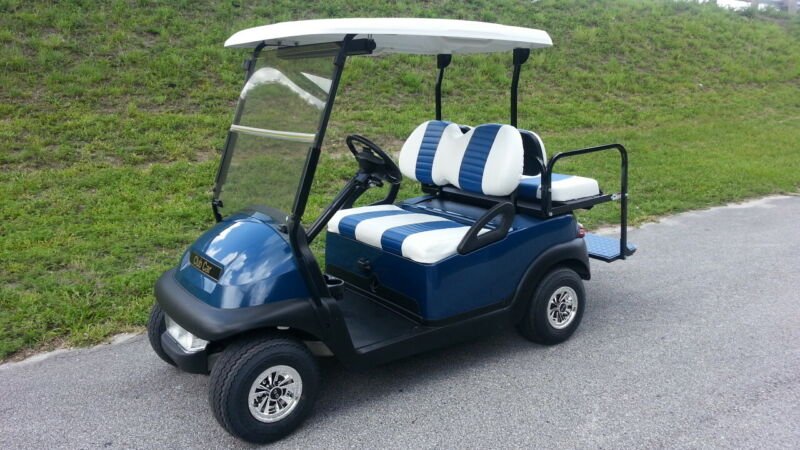
The Cushman Hauler occupies an awkward position in the repair world. It is closely related to golf carts, and shares a great deal with them mechanically, but it is sold and used as a utility vehicle, which means it spends its life carrying loads, working off pavement and living outdoors. That changes which parts fail and how quickly. Advice written for a golf cart that carries two people around a manicured course does not map cleanly onto a vehicle that hauls tools and materials across a site all day.
This guide is organised by system rather than by model year, because the symptom you can see is the useful starting point. Find the section that matches what the vehicle is doing, then follow through to the detailed procedure for that fault. Before any of that, establish which powertrain you have, because it determines which half of this guide applies to you.
Identify Your Hauler First
Cushman has sold the Hauler name across both gas and electric powertrains, and in several bed and chassis configurations. Almost every diagnostic decision below branches on that. A gas Hauler that will not start is a fuel, spark and compression problem. An electric Hauler that will not start is a battery, solenoid and interlock problem. They share almost nothing except the symptom description.
The quickest test is simply to turn the key and listen. A gas machine cranks or attempts to crank. An electric machine is silent, and the only sound you may hear is a click from the solenoid. If you are still unsure, look under the seat or in the bed floor: an electric Hauler has a battery pack and a controller, a gas one has an engine and a fuel tank.
Record the serial number before ordering any part. Cushman, like the other manufacturers in the same group, changes component specifications within a model name across production years, and parts that look identical are frequently not interchangeable. Matching by appearance is the most common cause of a part that arrives and does not fit.
Starting and Power Faults
A Hauler that will not start is the single most common complaint, and the cause distribution is heavily weighted toward the boring end. On both powertrains, the first checks are the ones people skip: the seat or pedal safety interlock, the main switch position, the battery connections and the key switch itself.
On electric Haulers, a single click when you turn the key and press the pedal usually points at the solenoid or at what feeds it, which is a specific and testable fault rather than a dead vehicle. On gas Haulers, the same no-start with a healthy crank is a fuel or ignition question. Either way the diagnosis is systematic and does not require guessing at parts. The full sequence for both powertrains is set out in the guide to a Cushman that will not start.
Corrosion deserves a special mention on this vehicle. Haulers are commonly stored outside and washed down, and the combination attacks terminals and switch contacts. A vehicle that starts intermittently, or starts fine in dry weather and refuses when damp, is describing a connection problem rather than a component failure.
Drive and Movement Faults
A Hauler that powers up but will not move splits into two branches, and telling them apart takes seconds. If the motor makes noise or the engine revs but the vehicle stays put, the problem is mechanical and lives in the drivetrain. If nothing happens at all when you press the pedal, the problem is in the drive command chain: pedal sensor, direction selector, solenoid, controller.
Loaded use makes the mechanical branch more likely on a Hauler than on a passenger cart. Repeatedly starting off with a full bed puts stress through the axle and transaxle that a golf cart never sees. The detailed branch-by-branch procedure is in the guide to a Cushman that will not move.
A related and often misdiagnosed complaint is a vehicle that moves but feels gutless, particularly on inclines or with a load aboard. That is rarely the motor. On electric machines it is usually pack condition under load, and on gas machines it is usually fuel delivery or a governor issue. The distinction between a vehicle that will not move and one that bogs down or has low power is worth respecting, because the tests are completely different.
Charging Faults
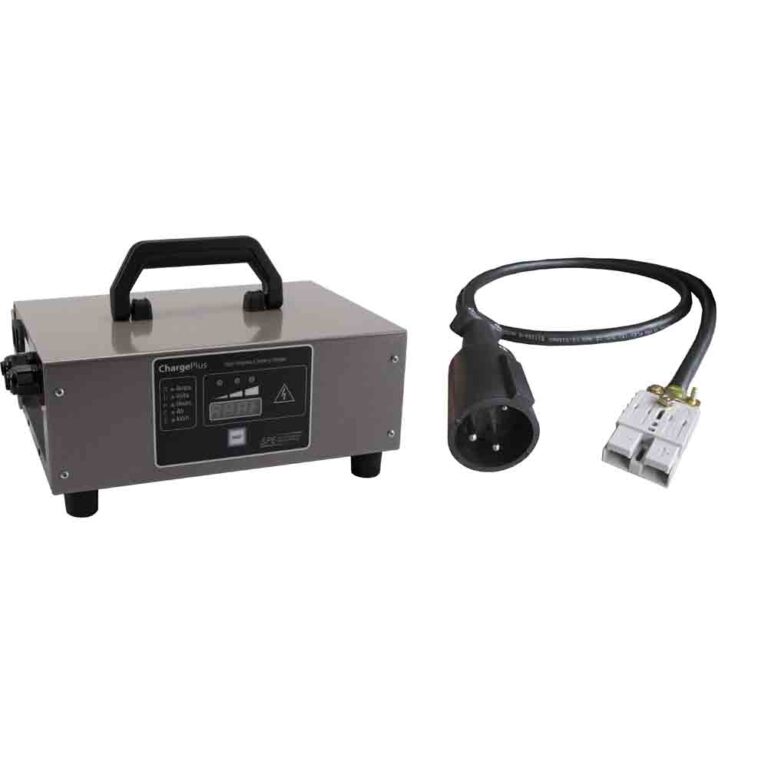
This section applies to electric Haulers only. A pack that will not charge is diagnosed by working outward from the wall: confirm the outlet is live, confirm the charger is receiving power and reporting a state, then confirm the pack is accepting current. Skipping to the assumption that the batteries are finished is the standard mistake and an expensive one.
On an electric Hauler, confirm the main, tow, or run control only if that control is fitted and the serial-matched manual identifies it. A transport or non-run state can block operation, but the label and behavior are model specific. The complete diagnosis is in the guide to a Cushman Hauler that will not charge.
Fuel and Running Faults
Gas Haulers develop the fuel faults typical of any small engine that sits between uses, and seasonal storage makes them worse. Fuel degrades, varnish forms in the carburettor, and the symptom that follows is a machine that starts hard, runs rough, surges, or dies under load.
The pattern of the symptom tells you where to look. A machine that runs at idle but dies when you open the throttle is describing a fuel supply restriction. One that surges at steady throttle is usually describing an air leak or a mixture problem. One that will not start at all after storage is usually describing a carburettor full of varnish. The systematic version of that reasoning is in the guide to Cushman carburettor and fuel problems.
Brakes, Transaxle and Steering
This is the group of faults where the Hauler genuinely diverges from a golf cart, because these components are load-sensitive and the Hauler carries load. Brake wear arrives sooner, the transaxle works harder, and the steering takes more abuse from rough ground.
Brakes and transaxle are treated together because their symptoms overlap: a dragging brake and a failing transaxle bearing can both produce noise, heat and reluctance to roll. Distinguishing them is a matter of where the heat and noise are, and that procedure is covered in the guide to Cushman brake and transaxle problems.
Steering that has become heavy, vague or notchy is its own diagnosis, and on a load-carrying vehicle it is frequently a symptom of something else, including tyre pressure, front-end wear or an overloaded bed. The guide to a Cushman that is hard to steer or has utility load issues covers the interaction between load and steering effort, which is specific to this class of vehicle.
Catching Faults Early
Almost every fault above announces itself before it strands the vehicle. A solenoid that is about to fail starts clicking differently. A pack that is about to fail starts showing reduced range on the same route. Brakes that are about to need attention start pulling or dragging slightly. Learning what those early signals mean is what turns an unplanned breakdown into scheduled maintenance, and the warning signs across the whole vehicle are collected in the guide to Cushman fault basics and warning signs.
For a vehicle in regular working use, three habits prevent most of what is described on this page: keep the battery terminals clean and tight, do not store the vehicle with stale fuel or a discharged pack, and do not routinely exceed the bed rating. The third is the one most often ignored, and it is the one that quietly shortens the life of the transaxle, brakes and rear suspension all at once.
Four Questions That Pick the Right Repair Branch
- Gas or electric? Look under the seat or bed for a 401cc engine and fuel system, or for a traction battery, controller, and charger connection. Do not diagnose by bodywork.
- Dead, no crank, no move, or poor running? A dead dash belongs in the starting and power branch. A gas engine that cranks but will not fire belongs in fuel. A live electric machine that will not move belongs in drive.
- Does the symptom occur unloaded and loaded? A Hauler that works empty but bogs, steers heavily, or overheats with cargo needs a load-sensitive branch, not a generic no-start routine.
- Which model and serial family is it? Record the model number, frame PIN, powertrain label, and battery or engine tag before ordering. Then follow the linked symptom guide from the matching section below.
Current Hauler Model Map
Cushman’s current catalog divides Haulers by payload, ride height, and powertrain. The figures below are model-level published specifications, not permission to transfer parts between years. Legacy 4X4 machines are especially important to identify by plate because they are not part of the current Hauler lineup.
| Model | Published powertrain | Published bed capacity | Distinguishing point |
|---|---|---|---|
| Hauler 800 | Gas, or ELiTE lithium electric. The electric page lists a 48 VDC system and a 56.7 V maximum single battery. | 400 lb | 800 lb total vehicle load class and standard-height utility layout. |
| Hauler 800X | Current catalog lists gas and ELiTE lithium electric. | Not independently verified in the reviewed public specification. | Lifted X model. Do not copy 800 load figures into this row without its sell sheet. |
| Hauler 1200 | 401cc, single-cylinder, 13.5 hp EFI gas. | 800 lb | 1200 lb vehicle load capacity and 1500 lb maximum published towing capacity. |
| Hauler 1200X | 401cc, single-cylinder, 13.5 hp EFI gas. | 500 lb | Lifted suspension, 7 inch ground clearance, 900 lb vehicle load capacity. |
| Hauler PRO | ELiTE lithium only, twin 56.7 V maximum packs, 48 VDC system, 11.1 kW AC motor. | 800 lb | 1200 lb vehicle load class with automatic electromagnetic parking brake. |
| Hauler PRO-X and PRO LSV | Current catalog lists ELiTE lithium only. | Not verified from the pages reviewed. | PRO-X is the lifted branch. PRO LSV is the street-legal branch. Use its own specification and VIN record. |
| Hauler XL and XL LSV | XL is offered in gas and ELiTE lithium. XL LSV is ELiTE lithium. | XL LSV publishes a 1200 lb deck capacity. Other XL values require the exact page. | Long flatbed platform rather than the molded 12 cubic foot bed used on several smaller Haulers. |
| Legacy Hauler 4X4 | Model and production-era specific. | Not published in the current catalog. | Not a current catalog model. Use the frame PIN and legacy manual before parts selection. |
Serial and engine identification
The current Hauler 1200 owner manual tells the owner to record both the model number and frame PIN and illustrates the identification locations. The exact physical label position is not stated in searchable text and older frames can differ, so the reliable method is to open the identification page in the serial-matched manual and compare the illustration with the cart. Read the full label, including prefixes and leading zeros. A model name stamped on bodywork is not a frame PIN.
Current gas 1200 and 1200X pages publish the engine as a 401cc, single-cylinder, four-cycle OHV EFI unit rated at 13.5 hp. They do not name an engine manufacturer or publish a complete engine-family history. For older Haulers, use the engine data tag plus frame PIN. Ordering a carburetor, starter, filter, or ignition part from the words Hauler 1200 alone is not enough.
Published Maintenance Example
Cushman’s gas Hauler 1200 family manual says to perform service at whichever limit arrives first and to shorten intervals for dust, mud, water, sand, long low-speed use, cold short trips, or prolonged heavy loads. This compact table is a routing aid for the documented gas family, not an electric Hauler schedule.
| Interval | Published examples | Hub takeaway |
|---|---|---|
| Before each ride | Steering, suspension, tires, wheel hardware, accelerator, brakes, frame hardware, levels, lights, warning alarm, switches, leaks, and CVT belt. | Catch a safety or load fault before it becomes a roadside repair. |
| First 15 to 20 hours | Check the starter and generator belt. | This is an initial-service item on the documented gas model. |
| First 50 hours | Replace engine oil and filter. | Do not carry this gasoline interval onto an ELiTE powertrain. |
| Weekly | Inspect wheels, air filter, cooling airflow, engine oil, and starter and generator belt as applicable. | Dust and heavy-load work can require more frequent attention. |
Fixing a Hauler starts with two questions: is it gas or electric, and which system is actually misbehaving. Those two answers eliminate most of the diagnostic tree immediately. Beyond that, treat this vehicle as a work machine rather than a golf cart, because load and outdoor storage are what drive its failures. Check interlocks, switch positions and connections before condemning any expensive component, confirm the fitted main or transport switch position before diagnosing a charging fault, and always match replacement parts by serial number rather than by appearance.
Frequently Asked Questions
Is a Cushman Hauler the same as a golf cart?
Mechanically they are closely related and share a great deal, but the Hauler is built and used as a utility vehicle. It carries loads, works off pavement and usually lives outdoors, which means brakes, transaxle and rear suspension wear faster than on a passenger cart. Diagnostic logic transfers; service intervals and wear expectations do not.
My Hauler clicks but won’t start. What is it?
A single click when you turn the key and press the pedal usually points at the solenoid or at the circuit feeding it, rather than at a dead vehicle. Before replacing anything, confirm the battery connections are clean and tight and that the safety interlocks and main switch are in the correct positions, because those account for a large share of clicking no-starts.
Why won’t my electric Hauler charge?
Work outward from the wall: confirm the outlet is live, then that the charger powers up and reports a state, then that the pack accepts current. On an electric model, confirm any fitted main or transport switch from the serial-matched manual, because a non-run state can imitate a fault.
How do I know whether my Hauler is gas or electric?
Turn the key and listen. A gas machine cranks or attempts to crank, while an electric one is silent apart from a possible solenoid click. Confirm visually under the seat or bed floor, where an electric Hauler has a battery pack and controller and a gas one has an engine and fuel tank.
Do I need my serial number to order parts?
Yes, and it matters more than people expect. Component specifications change within a model name across production years, and parts that look identical are often not interchangeable. Matching by appearance rather than by serial number is the most common reason a part arrives and does not fit.