Cushman Golf Cart Won’t Start: Gas Hauler Fix
A gas Cushman Hauler that cranks poorly or will not fire needs a model-aware check of the 12-volt start circuit, starter/generator belt, spark, and fuel system before any parts get replaced.
- Split the no-start by sound first: no crank is electrical, slow crank is battery or belt, and a strong crank with no fire is spark or fuel.
- Current Hauler 800/1200 gas engines are a Walbro 401 cc (24.5 cu in) 13.5 hp OHV single with EFI. Verified EFI specs: 43.5 psi (3 bar) fuel-pump pressure, fuel-pump relay 663593, spark plug NGK BPR2ES.
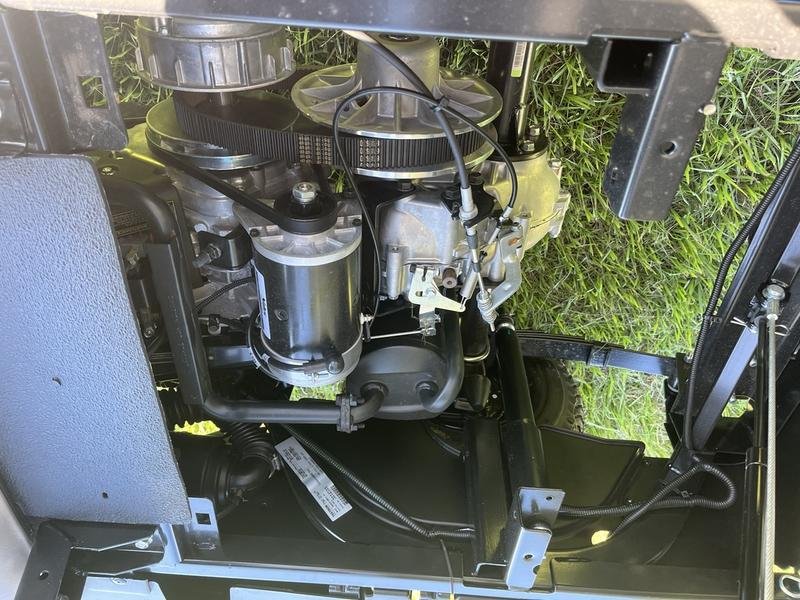
- It is a starter/generator cart. One belt both cranks the engine and charges the battery, so a loose or glazed belt causes weak cranking and a dying battery at the same time.
- Starter/generator belt 26414G1: tension a new belt to 25 to 30 lb (3/8 in max deflection) and an existing belt to 17 to 18 lb (1/2 in max deflection).
- Older carbureted Haulers use a crankcase-pulse fuel pump. A split pulse hose or ethanol varnish in the idle circuit mimics an ignition failure, so confirm fuel reaches the bowl before condemning spark.
Current gas Hauler 800 and Hauler 1200 manuals list a 401 cc, 13.5 hp EFI single-cylinder engine with a starter/generator, a 12-volt maintenance-free starting battery, and pedal start. Older carbureted Haulers can still use a remote pulse fuel pump and a float-bowl carburetor. That split matters, so identify the engine and fuel system by the serial plate before you order ignition, pump, or carb parts. Then split the fault into no crank, slow crank, or crank-with-no-fire and work it in order.
01: Listen to the Crank Pattern
The sound tells you where to begin. No crank is electrical. Slow crank is battery, cable, ground, or starter/generator belt load. A strong crank with no fire is spark, EFI fuel pressure, or carburetor fuel delivery depending on the year.
- Slow crank: charge and load-test the 12-volt starting battery. The current Hauler manuals call it a starting battery, not a deep-cycle battery, and warn that repeated deep cycling shortens its life.
- No crank: confirm the start sequence, key switch, brake pedal position, direction selector, fuse block, solenoid trigger, and ground path before condemning the starter/generator.
- Cranks but no fire: use an inline spark tester, then check EFI fuel pressure on current models or pulse-pump and carburetor delivery on older carbureted units.
02: No-Start Pattern Table
| Symptom | Likely Area | First Test |
|---|---|---|
| No click, no crank | Start input, fuse, safety logic, or solenoid control | Set brake and selector correctly, then check for voltage at the solenoid small terminal |
| Click, no crank | Battery cable, ground, solenoid contacts, starter/generator, or belt load | Voltage-drop test both large cables while pressing the accelerator |
| Slow crank or squeal | Weak battery or loose starter/generator belt | Check the battery under load and inspect belt tension |
| Cranks, no fire (current EFI Hauler) | EFI fuel pressure, spark, ECM fault, relay, or pump circuit | Listen for pump prime and verify the 43.5 psi fuel-pump pressure with the correct gauge |
| Cranks, no fire (older carbureted Hauler) | Pulse pump, fuel filter, choke, carburetor bowl, or stale fuel | Confirm pulse-line condition and fuel flow before opening the carburetor |
03: Spark and Fuel Checks
Use a spark tester before pulling the carburetor. Current Hauler 800 and 1200 owner manuals identify the engine as a Walbro 4-cycle, 24.5 cubic inch, 401 cc single-cylinder OHV engine with electronic inductive or magneto ignition and closed-loop electronic fuel injection. The same manuals list fuel-pump operating pressure at 43.5 psi (3 bar), fuel-pump relay 663593, and spark plug NGK BPR2ES. Those are EFI-model checks, not carburetor checks.
For older carbureted Haulers, do not force the EFI numbers onto the cart. A 2017 Hauler 800 gas spec sheet describes the 13.5 hp, 401 cc Kawasaki engine with a fixed-float-bowl carburetor and a remote pulse fuel pump. On those carts a cracked pulse hose, clogged filter, stuck float needle, or stale fuel in the bowl can all mimic ignition failure. Confirm fuel reaches the bowl, then clean the idle circuit if the engine only pops or runs on choke.
04: Safety Switches and Solenoid
- Start sequence: the current Hauler 800 manual says to sit in the driver’s seat, press and hold the brake pedal, turn the key on, move the direction selector to the intended position, then slowly press the accelerator to start the engine.
- Pedal-start behavior: releasing the accelerator de-energizes the ignition circuit and the engine stops, so a pedal switch or key-circuit problem can feel like a dead ignition module.
- Solenoid control: if there is no click, check for voltage on the small terminal while the cart is set up correctly to start. If voltage is missing, walk the key, brake, selector, pedal, and fuse path.
- Starter/generator: the current manuals identify the electrical system as a starter/generator with a solid-state regulator. That one unit both starts the engine and charges the battery.
- Ground path: clean the battery terminals, engine ground, frame ground, and starter/generator case connections before replacing parts.
05: Know Which Hauler Engine You Have
The current Hauler 800 and Hauler 1200 product pages both publish a 4-cycle, 24.5 cubic inch, 401 cc single-cylinder OHV gas engine at 13.5 hp. The current owner manuals add the Walbro EFIA-1 engine model, forced-air cooling, pressurized lubrication, a spin-on oil filter, and a starter/generator electrical system. A modern Hauler is therefore not diagnosed like a small lawn tractor with a separate starter motor and alternator. It is a pedal-start utility vehicle where the starter/generator, belt, solenoid, regulator, and 12-volt battery all affect both starting and charging.
The verified public data does not support one universal engine for every Cushman ever sold. Older Hauler 800 and 1200 variants, MPTs, and refresher trucks used earlier carbureted packages. If the serial plate, engine shroud, or parts book points to an older Kawasaki carbureted engine, use the older pulse-pump and carburetor path. If it is a current EFI Hauler, use the EFI relay, pressure, spark plug, and fault-light path instead.
06: Ethanol, Storage, and the Fuel Path
Cushman owner manuals call for clean, regular 87-octane unleaded fuel, allow no more than 10 percent ethanol, and warn that excess alcohol hurts starting performance and deteriorates the fuel system. Methanol is not permitted. That makes the storage advice more than folklore: if the cart sat with old pump gas, drain and inspect the fuel, then work forward from the tank.
For current EFI Haulers, verify pump power, the pump relay, and 43.5 psi pressure before replacing injectors or the ECM. For older carbureted carts, check the pulse line first because the pump depends on crankcase pulses. A split pulse hose can leave the tank full, the filter dry, and the carburetor bowl empty. If the bowl contains varnish, clean the idle jet and pilot passages, not only the main jet.
07: Starter/Generator Belt and Work-Cart Interlocks
The owner manuals list starter/generator belt 26414G1 as a replacement maintenance item and say to check it at initial service and weekly after that. They also publish belt-tension numbers: a new belt should be set to 25 to 30 lb with a maximum manual deflection of 3/8 inch, while an existing belt should be 17 to 18 lb with a maximum deflection of 1/2 inch. Do not roll the belt over pulley edges during installation, and do not exceed 160 lb of tension while installing it.
On interlocks, stay close to the manual’s starting procedure: brake held, key on, selector in the intended direction, accelerator pressed slowly. If a work cart has been pressure-washed or used around fertilizer, corrosion at the fuse block, solenoid trigger wire, key switch, or ground point can interrupt that chain. Test for voltage at each step instead of jumping the solenoid blindly.
Sort the fault by sound, then by year. Prove the battery, grounds, and starter/generator belt on a slow crank. On a crank-with-no-fire, spark-test first, then take the EFI path (43.5 psi, relay 663593, plug NGK BPR2ES) on current Haulers or the pulse-pump and carburetor path on older carbureted units. Confirm the start inputs and fuel system before buying a starter/generator, pump, solenoid, or carburetor.
Frequently Asked Questions
Why won’t my Cushman golf cart start?
Split it by symptom. No crank points at the battery, key switch, safety/interlock circuit, fuse, solenoid, or grounds. Slow crank points at a weak battery or a loose starter/generator belt. A strong crank with no fire points at spark, or at fuel: EFI pressure on current Haulers, or the pulse pump, filter, choke, and carburetor on older carbureted models.
Why does my Cushman crank but not start?
Strong cranking with no start is spark or fuel. Spark-test first. On a current EFI Hauler 800 or 1200, verify pump prime, the fuel-pump relay 663593, and 43.5 psi fuel pressure. On an older carbureted Hauler, confirm the crankcase-pulse fuel pump is delivering, check for a cracked pulse hose, and clean the carburetor idle circuit if it only pops or runs on choke.
Can stale fuel stop a Cushman Hauler from starting?
Yes. Cushman manuals allow no more than 10 percent ethanol and warn that stale or high-alcohol fuel hurts starting and damages the fuel system. Left through storage, ethanol fuel absorbs moisture and lays varnish in the small idle and pilot passages first, so the engine cranks and pops but will not idle. Drain the old fuel and clean the idle circuit, not just the main jet.
How do I know if my Cushman Hauler is EFI or carbureted?
Check the serial plate and engine shroud. Current Hauler 800 and 1200 gas models use a Walbro 401 cc EFI engine (closed-loop electronic fuel injection, 43.5 psi fuel-pump pressure). Older Hauler variants used a Kawasaki carbureted engine with a float bowl and a remote pulse fuel pump. Diagnose each on its own path rather than forcing EFI specs onto a carbureted cart.