Evolution Golf Cart Lithium Battery & BMS Problems: Fix
A protective BMS shutdown can mimic a dead battery, bad charger, or controller fault. Here is the real per-model pack spec table and BMS protection data, not a generic 48V estimate.
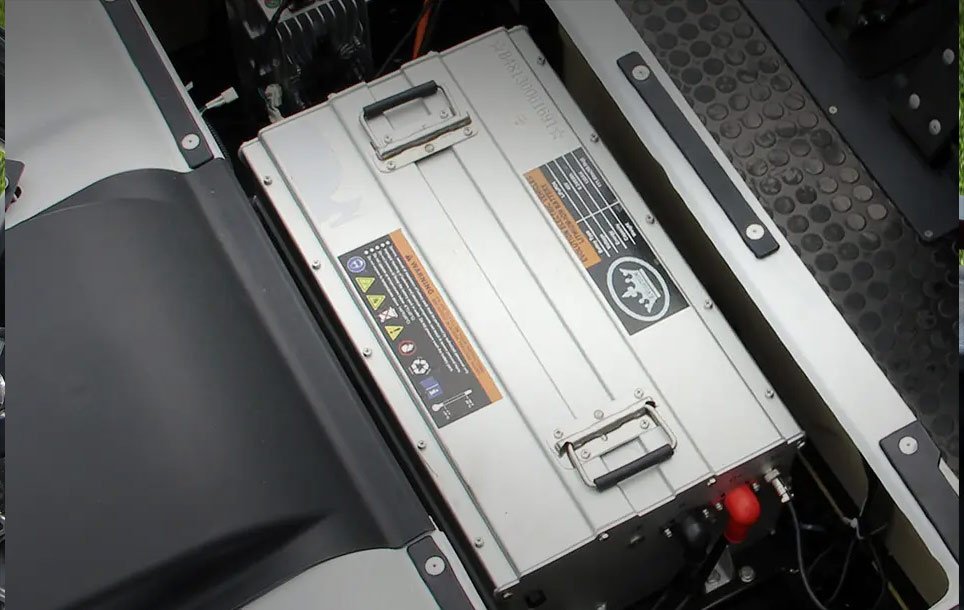
- Evolution sells at least seven distinct lithium packs, do not use one generic voltage for all of them.
- The L48110 pack (51.2V) has a materially different charge ceiling than the 48V 105Ah/160Ah/205Ah packs.
- Published low-voltage disconnects range from 39V to 41.6V depending on the exact pack.
- A cart dead after storage is almost always a sleeping BMS, not a ruined battery.
- Evolution’s BBMAS app can show SOC, cell status, and balancing data when voltage alone is not enough.
Lithium packs make Evolution carts easier to own than flooded lead-acid carts, but the BMS changes how failures look. A protective shutdown can mimic a dead battery, bad charger, or controller fault. This guide diagnoses the pack state first, using Evolution’s own published per-model specs, then follows the symptom.
01: Identify the Battery Symptom
Battery faults do not all feel the same. A pack that will not wake, a pack that will not charge, and a pack that cuts out under load each points to a different test path.
- No power: Start with disconnect, BMS sleep, pack output, and main fuse. See the no power guide.
- No charge: Inspect charger, charge port, and BMS wake state. See the no charge guide.
- Cuts out driving: Look for voltage sag, heat, loose cables, or BMS current limit. See reduced speed.
02: Per-Model Pack Spec Table
The mistake most owners make is treating every Evolution lithium pack as one generic 48V battery. Evolution’s public data separates 48V nominal packs from the 51.2V nominal L48110, and even the 48V packs do not all publish the same cutoff values. Measure at the main output with the disconnect closed, then match the reading to the model number on the battery label or the plate under the seat.
| Evolution Pack or Cart | Confirmed Public Spec | Low Voltage Disconnect | Max Charge Voltage |
|---|---|---|---|
| Classic 4 Plus installed pack | 48V lithium battery, 48V 6.3kW AC motor, 400A controller, 25A onboard charger | Not publicly listed on the model page | Not publicly listed on the model page |
| D5 Series Plus battery options | 48V 105Ah and 48V 160Ah lithium packs | Use the matching battery data sheet | Use the matching battery data sheet |
| L48105 | 48V, 105Ah, LiFePO4, 15 cells in series | 40V | 54.75V |
| L48105-A | 48V, 105Ah, LiFePO4, 15 cells in series | Not publicly listed | Not publicly listed |
| L48110 | 51.2V, 110Ah, LiFePO4, 16 cells in series | 41.6V | 58.4V |
| L48160 | 48V, 160Ah, LiFePO4, 16 cells in series | Not publicly listed | Not publicly listed |
| L48160-A | 48V, 160Ah, LiFePO4, 16 cells in series | 39V | 54.75V |
| L48205 | 48V, 205Ah, LiFePO4, 16 cells in series | 39V | 54.75V |
That table replaces the old generic shortcut. A 51.2V L48110 can legitimately use a higher charge ceiling than the 48V 105Ah, 160Ah, and 205Ah data sheets that publish 54.75V as max charge voltage. Live charger voltage, just-finished charge voltage, and rested open-circuit voltage are not the same thing, so compare your meter reading to the battery label, charger state, and the published limit for that exact pack.
03: BMS Protection Table
For diagnosing Evolution golf cart lithium battery problems, use this table as the scan-first reference once you know which pack is installed.
| BMS Protection Area | Evolution Published Numbers | How to Read the Fault |
|---|---|---|
| Overvoltage / overcharge | L48105, L48160-A, L48205 publish 54.75V max charge. L48110 publishes 58.4V max charge. Overvoltage recovery is 51V or lower (L48105), 48V or lower (L48160-A, L48205), or 54.4V or lower (L48110). | If the pack shuts off after charging or downhill regen, match the charger and pack label first, do not use a generic 48V number. |
| Undervoltage | L48105 publishes 40V low voltage disconnect, L48110 publishes 41.6V, L48160-A and L48205 publish 39V. | A pack below its disconnect can look dead at the cart output until the correct charger wakes the BMS. |
| Overcurrent / short circuit | Published operating limits: 105A continuous (L48105), 110A (L48110), 160A (L48160-A), 205A (L48205), with short pulse or instantaneous limits by pack. | A cart that cuts out only on hills, heavy throttle, tall tires, or high passenger load may hit a current limit even when resting voltage looks normal. |
| Temperature protection | L48105 publishes 32F to 131F charge, -4F to 131F discharge. L48110, L48160-A, L48205 publish 32F to 110F charge, -4F to 140F discharge. | No-charge below freezing is expected LiFePO4 protection behavior. Let the pack warm before blaming the charger. |
| Cell balance & communications | Evolution’s BBMAS app monitors SOC, pack voltage, cycle count, charge/discharge current, BMS MOSFET temperature, individual cell status, balancing indicators, and alarms. | If voltage looks healthy but the cart limits power, get the app or dealer readout. A weak cell group or communication alarm can stop drive without a bad motor. |
Evolution’s public battery data sheets do not publish a universal dash DTC table for every BMS alarm. Treat any beep, icon, or app alarm as model-year specific, photograph it, and send it with the battery model number to the dealer if the fault returns after one full balance charge.
Evolution has grown fast in the U.S. LSV market since the late 2010s, and its lineup, the Classic, Forester, D5, and Turfman series, ships with lithium (LiFePO4) packs rather than lead acid. Because Evolution sells through dealers and includes a multi-year battery warranty, the pack you are diagnosing may still be covered, so it is worth checking the purchase date before spending money on parts.
A real Evolution quirk: because the packs are lithium with a smart BMS, a cart left unused for weeks can present as completely dead, no dash, no lights, when in fact the BMS has simply gone to sleep to protect the cells. Owners often assume the battery is ruined and call for a replacement when a proper wake charge brings it right back.
04: Cable Heat, Storage, and Cold Weather
Loose high current cables create heat and voltage drop. After a short test drive, carefully feel near the cable ends without touching exposed conductors. A warm lug or discolored insulation means resistance is stealing power and can trigger BMS protection. Tighten only with the cart off and the disconnect open. If a connector is melted or the cable insulation is brittle, replace the damaged part instead of cleaning around it.
- Charge before storage: Store at a moderate state of charge, following the battery label or dealer guidance.
- Use the disconnect: Turn the cart off at the main battery switch if it will sit.
- Wake gently: Use the proper charger and give the BMS time to respond.
- Do not bypass protection: A BMS shutdown is a warning to diagnose, not a lock to defeat.
Lithium chemistry is sensitive to temperature, and this trips up Evolution owners in northern climates. Many LiFePO4 BMS units refuse to accept a charge below freezing to protect the cells, so a cart stored in an unheated garage over winter may show a charger that will not start even though nothing is broken. Bring the pack into a warmer space, let it reach room temperature, and try again before condemning the charger or the port. Likewise, drive performance can feel reduced on a very cold morning and return to normal as the pack warms, which is expected behavior, not a failure.
Evolution battery problems are usually about BMS state, charge communication, cable resistance, heat, or voltage sag, not a ruined pack. Identify the exact model from the battery label, match it to the correct spec table, wake it correctly, and let warnings guide the next test.
Frequently Asked Questions
Why does my Evolution lithium battery shut off?
The BMS may be protecting the pack from low voltage, high current, heat, cold, imbalance, or a wiring fault. Charge fully and check for warnings and hot cables.
Can an Evolution battery sleep after storage?
Yes. Lithium packs can enter a protective sleep state after sitting. Use the correct charger and main disconnect procedure to wake the pack.
Should I bypass the BMS on an Evolution golf cart?
No. The BMS protects the battery and cart. Bypassing it can damage cells or wiring and can create a safety risk.