
Parts and repair guide archive
Parts notes, fitment paths, common replacement decisions, and repair resources for golf cart owners comparing what to check next.
Start with these parts and fitment guides
A cross-section of the 62 guides in this archive, covering OEM versus aftermarket choices, fitment by year and model, tires and lifts, and buying decisions. Use the search above or the filters to narrow by brand or part.
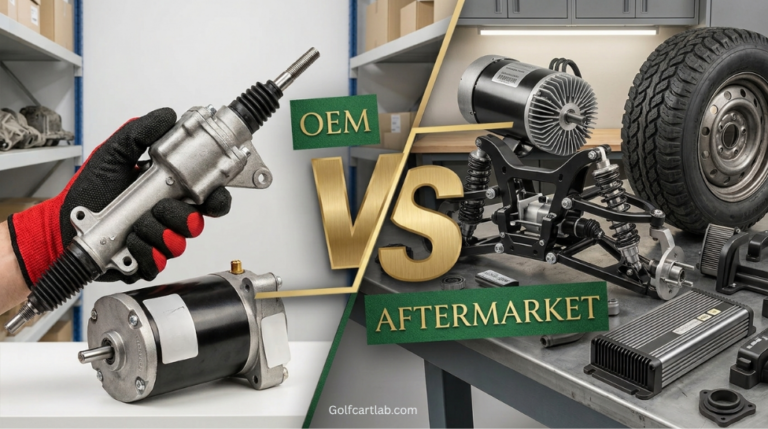
OEM vs. Aftermarket Golf Cart Parts: Fitment and Compatibility Guide
Stop wasting money on incompatible upgrades. Discover the definitive fitment and compatibility guide for OEM vs aftermarket golf cart parts
Open guide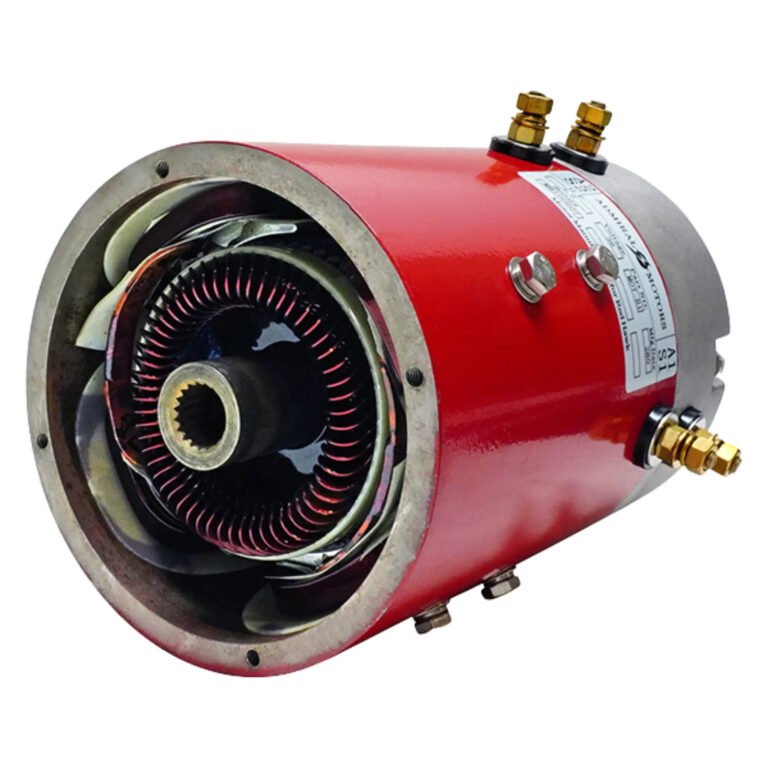
Are Golf Cart Motors Interchangeable? Axle Spline Counts Explained
Are golf cart motors interchangeable? Check spline count (10 vs 19), Series vs Sepex, and voltage before you buy a replacement, and avoid a costly mismatch.
Open guide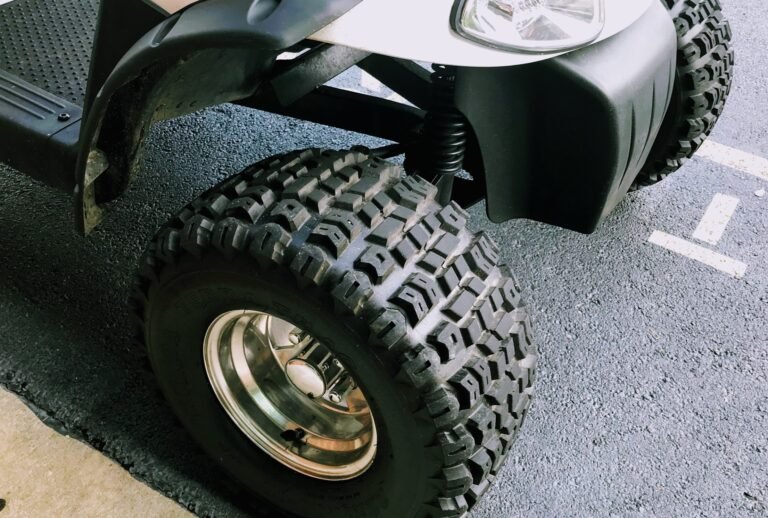
Golf Cart Tire Size Guide: Fitment, Lift & Speed
Golf cart tire size explained: how to read tire sizes, what fits without a lift, the speed and torque trade-offs, and how to choose the right tire.
Open guide
10L0L Golf Cart Parts Review: Honest 2026 Verdict
10L0L golf cart parts review: honest take on the budget accessory catalog, fit, quality, when to buy vs OEM, and who should skip.
Open guide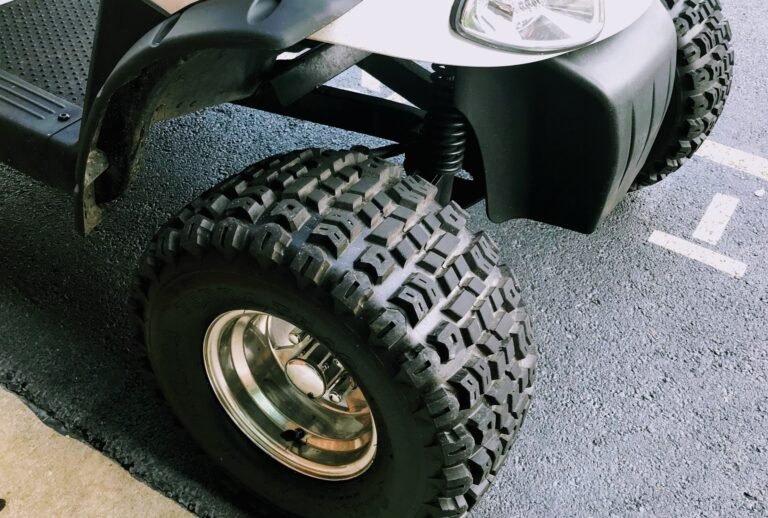
Golf Cart Lift Kit & Tire Size: Fitment Chart + Calculator
Golf cart lift kit and tire size guide: how much lift each tire diameter needs, a fitment chart, the effect on speed, and a free fitment calculator.
Open guide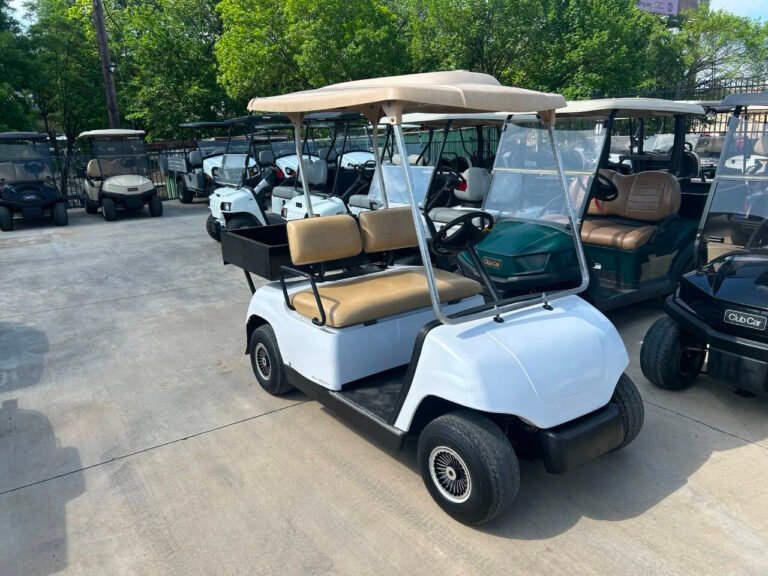
Used Golf Cart Buying Guide: Inspection Checklist
Used golf cart buying guide with a full inspection checklist: verify the year, test the batteries, check the frame, and spot red flags before you buy.
Open guide
EZGO vs Club Car vs Yamaha: Which Golf Cart to Buy
EZGO vs Club Car vs Yamaha compared: durability, customization, reliability, and resale, so you can pick the right golf cart brand for you.
Open guide
Proven Universal Voltage Reducers for Electric Golf Carts
Upgrade your power system. Discover the best universal voltage reducers to protect your battery pack and power 12V accessories on 36V and 48V golf carts.
Open guide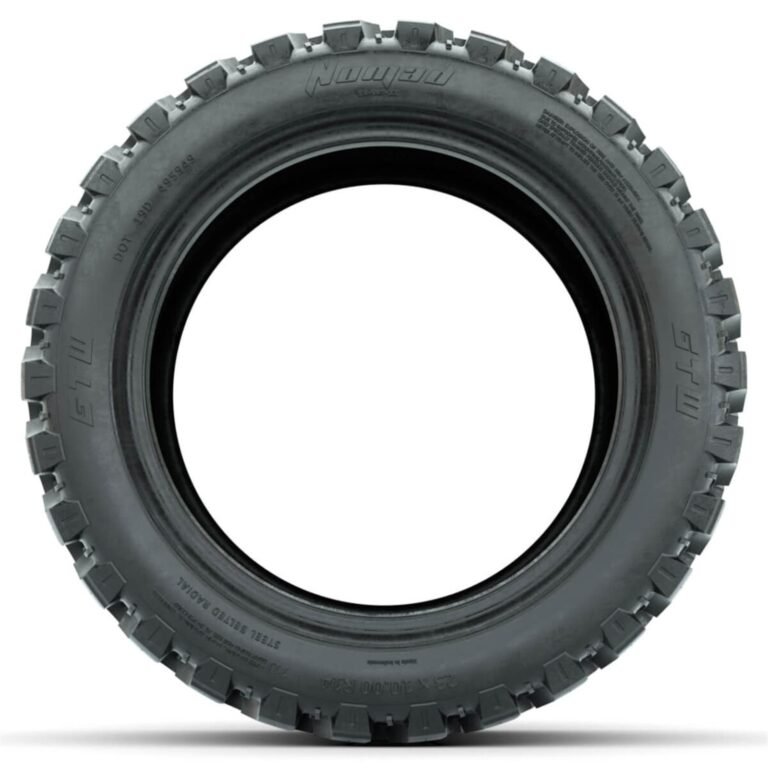
GTW Tire Review: Honest 2026 Verdict for Golf Carts
GTW tire review: honest take on combo packages, street, turf, and all-terrain treads, wear, value, and who should buy versus skip.
Open guide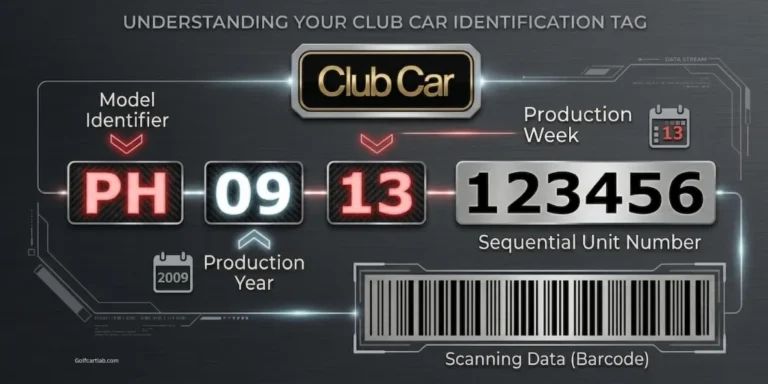
Club Car Serial Number Lookup: Decode Year, Model & Voltage
Club Car serial number lookup made simple. Decode your Precedent, Onward, or DS serial to find the model year, model, and voltage, with a free tool.
Open guide
How Much Does a Golf Cart Cost? New, Used & Lithium Prices
How much does a golf cart cost? New carts run $9,000-$15,000+, quality used $4,000-$9,000. See price by type, the lithium premium, and hidden costs.
Open guide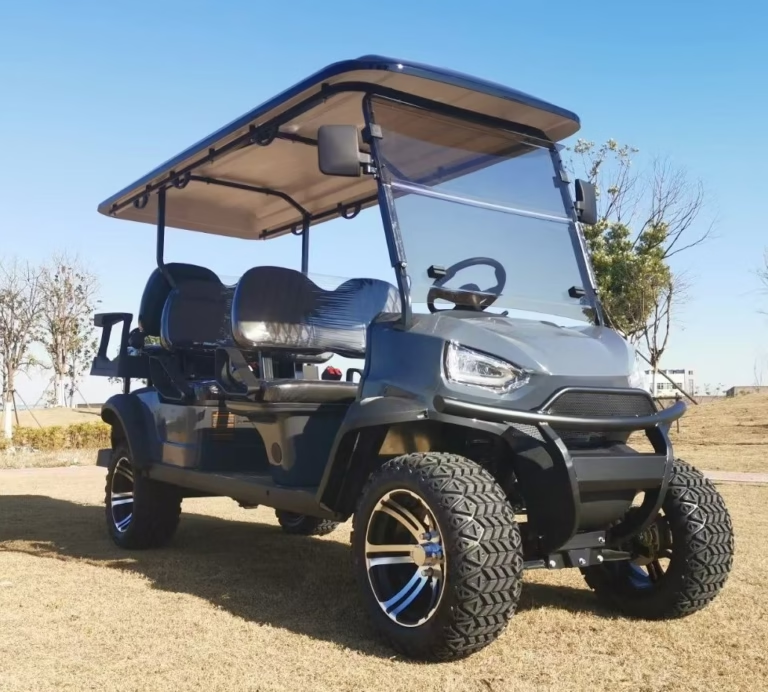
Best Golf Cart Accessories: Must-Have Upgrades Guide
The best golf cart accessories, organized by performance, comfort, safety, and convenience, plus which upgrades to buy first for how you drive.
Open guideHow golf cart parts fitment actually works
Golf carts look interchangeable and mostly are not. Every brand froze its own dimensions decades ago and then quietly changed them mid-generation, so the question that matters is never whether a part fits a Club Car, but whether it fits a 2004 Club Car DS with the IQ system. Three things decide fitment on almost every part: the platform generation, the pack voltage, and the mounting pattern. A rear leaf spring for a Precedent will not bolt to a DS frame, and a 48-volt motor dropped into a 36-volt cart will turn but never make its rated torque.
Aftermarket manufacturers work around this by building to the most common variant and then publishing a fitment range that is optimistic at the edges. That is why two carts of the same model year can take the same listed part and only one of them bolts up cleanly. The reliable approach is to identify your cart from the serial plate first, then match the part to that exact build rather than to the model name printed on the box.
The failure modes behind most parts and fitment complaints
A small number of mistakes account for most of the returns and most of the questions in this archive:
- Buying by model name instead of serial number. Symptom: the part mounts but sits at the wrong angle or fouls a bracket. Club Car revised the DS frame several times, and EZGO split TXT into pre-2001 and post-2001 electrical layouts that need different parts.
- Ignoring spline count on drivetrain parts. Symptom: a replacement motor will not slide onto the axle input at all. EZGO commonly uses a 19-spline shaft where Club Car uses 10, and the two are not compatible in either direction.
- Matching voltage but not the controller. Symptom: the cart drives, then goes into limp mode or overheats. A high-torque motor drawing more current than the original controller was built to pass will trip it or cook it.
- Tires and wheels bought on diameter alone. Symptom: rubbing at full lock, or the cart loses noticeable top speed. Offset and backspacing decide clearance, and every inch of added tire diameter costs roughly 4 to 6 percent of top speed.
- Assuming aftermarket equals lower quality, or that OEM equals correct. Symptom: money spent in the wrong place. Aftermarket wear parts such as brake shoes and bushings are usually fine, while aftermarket electronics and charging components are where cheap parts fail early.
What to check first, and the numbers that matter
Before ordering anything, collect four data points. They take about five minutes and they prevent most wrong-part purchases.
1. The serial number. Club Car puts it under the passenger seat or on the frame near the driver side, EZGO inside the glove box or on the frame rail, Yamaha under the seat or on the frame near the rear tire. The serial gives you model year, model, and often voltage.
2. Pack voltage, measured rather than assumed. Count the batteries and read the total at the main terminals. Six 8-volt units means 48 volts, six 6-volt units means 36 volts.
3. Motor spline count and shaft type if the part touches the drivetrain. Pull the cover and count, or read the number stamped on the motor tag.
4. Bolt pattern and existing tire size, read straight off the sidewall, before buying wheels or a lift.
| Spec | Club Car | EZGO | Yamaha |
|---|---|---|---|
| Wheel bolt pattern | 4 on 4 in. | 4 on 4 in. | 4 on 4 in. |
| Common motor spline | 10 spline | 19 spline (TXT/RXV) | Model specific, often 15 |
| Stock tire diameter | 18 in. (Precedent) | 18 in. (TXT) | 18 in. (G29) |
| Max tire without lift | 20 in. | 20 in. | 20 in. |
| Tire pressure, street tread | 18 to 22 psi | 18 to 22 psi | 18 to 22 psi |
| Lug nut torque | 50 to 85 ft-lb | 50 to 85 ft-lb | 50 to 85 ft-lb |
Treat these as starting points and confirm against your own serial decode. Lug torque in particular is worth a torque wrench rather than an impact gun, because aluminium wheels crack at the stud holes when they are run down hard.
Which guide do you need?
If you are not sure what cart you own, start with the serial decoder guides and settle the year and model before anything else. If you are choosing between an OEM and an aftermarket part, the OEM comparison and brand review guides cover where each one is worth the money. If you are fitting tires or a lift, use the tire size and lift fitment guides together, since the two decisions constrain each other. If you are buying a whole cart, the used buying checklist and cost guides are the right entry point.
One habit that saves money: photograph the serial plate and the old part, including any cast or stamped numbers, before you remove anything. Sellers will match on a part number far more reliably than on a description, and a returned part that has already been test fitted is often refused.