Golf Cart USB Charger / Accessory Port: Worth It? (2026)
A cheap, genuinely useful upgrade, as long as you wire it right. Here is why you cannot just tap the pack for 5V, and the correct path through a 12V converter.
- A USB or accessory port is a cheap, high-value add for phones, GPS, rangefinders, and speakers on the go.
- You cannot tap the 48V (or 36V) pack directly for 5V USB, the voltage is far too high and tapping two batteries ages the pack.
- Wire it through a DC-DC voltage reducer’s regulated 12V output, then a small fuse, for a safe, clean install.
- The only real risk is a bad install: tapping pack batteries causes the uneven discharge that shortens battery life.
Quick verdict: A golf cart usb charger or accessory port is a cheap, genuinely useful upgrade that almost every owner appreciates, it keeps phones, GPS, range finders, and speakers charged on the go. The only real rule is to power it correctly through a 12V converter, not by tapping pack batteries. For a few dollars it adds real convenience with no downside. It is one of the easiest “yes” upgrades on this whole list.
01 : What a USB Charger or Accessory Port Adds
Why can a tiny USB socket damage a 48V cart? The socket itself usually expects 12V or 24V input and converts that to USB voltage. It is not designed for a 36V or 48V traction pack. A proper electric-cart chain is pack voltage to a DC-DC reducer, then regulated 12V to the USB module, then 5V, 9V, 12V, or higher negotiated USB-C output as the device requests.
| Power stage | Published example | What it does |
|---|---|---|
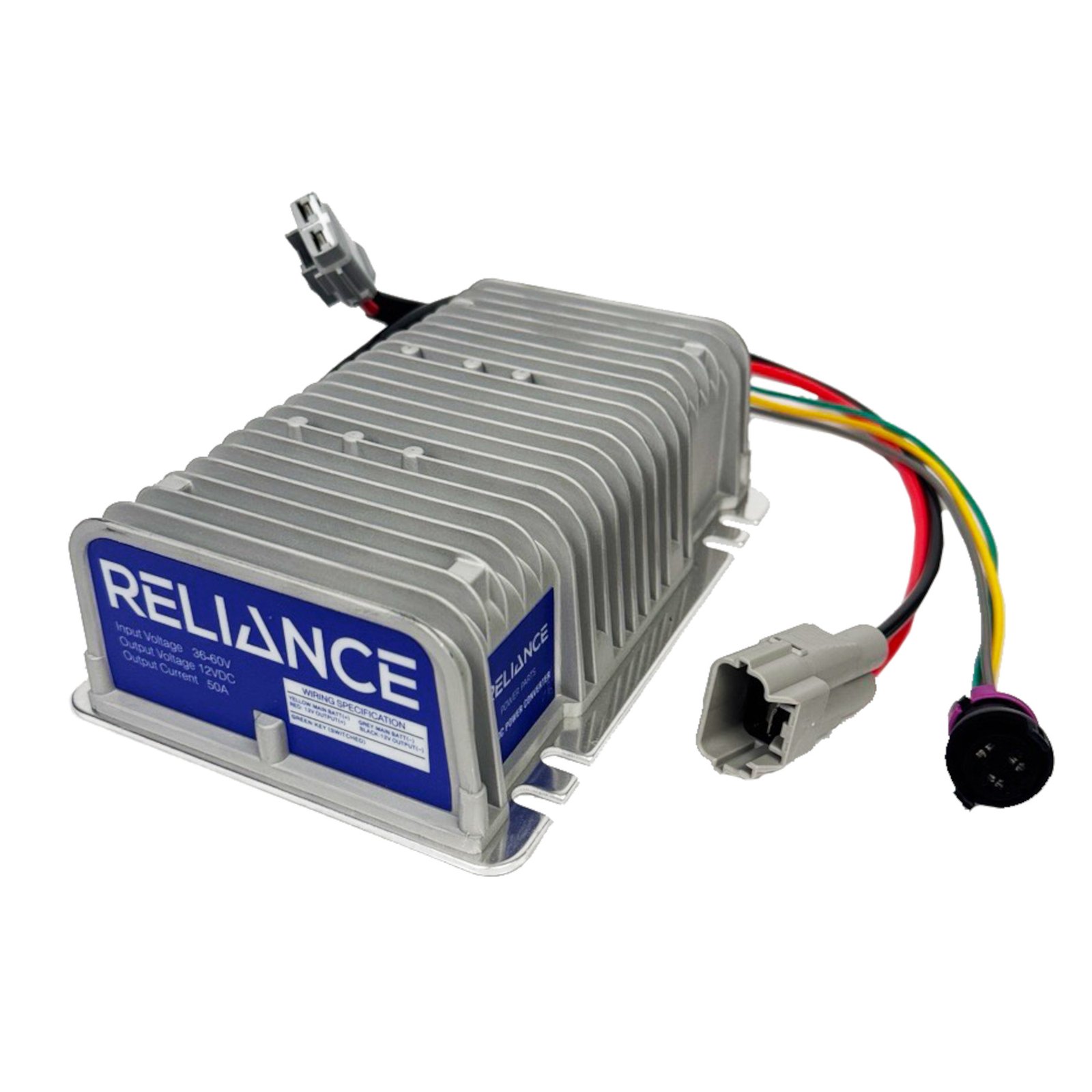
| 36V or 48V pack to 12V | Reliance item 13-030 accepts 36V or 48V and supplies 30A at 12V. | Powers several 12V accessories from the whole pack without unbalancing one battery pair. |
| 48V pack to 12V premium converter | Victron publishes a 48/12-30 model with 32 to 70V input and 12.2V nominal output. | Provides regulated output with defined undervoltage behavior and protection. |
| 12V or 24V to USB-A | Blue Sea 1045 accepts 9 to 32V, outputs 5V within 5 percent, and supplies 4.8A total. | Charges phones and tablets, with short-circuit, thermal, and reverse-polarity protection. |
| 12V or 24V to higher-power USB-C | Scanstrut publishes a USB-C output up to 20V at 3A on its dual-port accessory module. | Supports USB Power Delivery devices after negotiation. |
A 30A reducer is useful for lights, audio, fans, and USB together. One phone port does not need 30A. Size the reducer for the total simultaneous 12V load plus starting current and reasonable headroom. The golf-cart DC converter guide covers sizing and installation trade-offs.
02 : What Owners Report About USB Ports
The high-value features are a sealed cover, published input range, per-port output, thermal and short-circuit protection, and a small parasitic draw. Blue Sea publishes IP45 with the cover closed and only 1 mA parasitic draw for its 1045 socket. That is a useful benchmark because many cheap modules publish only a headline charging wattage and no standby number. The diagnosis for an uneven battery tap is covered in the auxiliary 12V drain guide.
Mount the socket where rain cannot sit in it and where the cable cannot snag the steering or passenger. A cap protects an unused port, but front-only water resistance does not make the back terminals waterproof. Use insulated terminals, strain relief, and a protected enclosure behind the dash.
03 : The Right Way to Wire a USB Port
- Disconnect the traction pack. Put the cart in tow when applicable and remove the main negative connection using insulated tools.
- Feed the reducer from the full pack. Do not tap two 6V batteries or one 12V battery in a series pack. Uneven accessory draw creates pack imbalance.
- Fuse the reducer input near the pack. Choose the fuse from the reducer manual, input wire ampacity, and expected load. The fuse protects the wire, not the phone.
- Use the reducer’s remote or a key-switched relay when available. This prevents the converter’s no-load draw from slowly discharging a parked cart.
- Build a fused 12V branch. Feed the USB port from a small fuse block or inline fuse. One current Scanstrut Charge Pro listing recommends a 10A fuse for that 6A-input product. Follow the exact port manual rather than copying that value to a lower-power USB-A socket.
- Ground to the reducer output negative. Keep the 12V accessory circuit separate from random chassis points unless the vehicle design specifically bonds them.
- Test under load. Verify 12V at the reducer, then confirm USB voltage and charging with one and two devices before closing the dash.
Use copper wire sized for circuit length, fuse, and load. A 60W USB-C device can draw about 5A from a 12V bus before conversion losses. At 48V pack level that is roughly 1.4A at 90 percent efficiency. A 10W phone is closer to 0.23A from a 48V pack at the same efficiency. The energy draw is small, but a shorted unfused pack wire is not.
04 : Is a USB Charger Worth It for You?
| Tier | What to buy | Best use |
|---|---|---|
| Basic | Sealed USB-A or USB-C socket with published 9 to 32V input, fuse instruction, and protective cap. | Cart that already has a regulated 12V bus. |
| Complete accessory setup | 36V or 48V to 12V reducer, fused distribution, switched control, and sealed socket. | Lead-acid cart with no existing reducer. |
| Premium outdoor | Marine-grade or vehicle-certified module with published IP rating, standby draw, protection, and per-port Power Delivery output. | Work cart, rain exposure, or frequent high-power USB-C charging. |
Worth it for almost every cart when it is wired from a regulated and fused accessory bus. Skip the direct-pack shortcut and skip any port that does not publish its input-voltage range. The socket is cheap. The safe power path is the part that makes the upgrade reliable. Compare other practical additions in the best golf-cart accessories guide.
05 : The Bottom Line on Cart USB Chargers
A golf cart usb charger or accessory port is the definition of a low-cost, high-convenience upgrade: a few dollars buys reliable on-the-go charging for every device you carry. The only thing to get right is the power source, run it from your 12V converter through a fuse, not off pack batteries, and choose a sealed, fast-charge unit so it survives the outdoors. Add it once and you will use it constantly. For almost every owner, a USB port is an easy, no-regret yes.
Worth it for nearly everyone, it is cheap and keeps phones, GPS, and speakers charged. The one rule that matters: wire it through your 12V DC-DC converter and a small fuse, never by tapping two pack batteries, which causes the uneven discharge that ages the whole pack.
Frequently Asked Questions
Is a golf cart USB charger worth it?
For nearly everyone, yes, it is cheap and keeps phones, GPS, rangefinders, and speakers charged on the go. The only rule is to wire it through your 12V converter, not by tapping pack batteries.
How do you wire a USB port on a golf cart?
Run it from the regulated 12V output of a DC-DC converter through a small fuse. Even though USB ports draw little current, tapping two pack batteries for them still causes the uneven discharge that ages the battery pack.
Can I wire a USB port straight to my golf cart batteries?
No. The pack voltage is far too high for USB, and tapping just one or two batteries for 12V accessories causes uneven discharge that shortens pack life. Always run accessories from a proper 12V DC-DC converter output.
Do I need a voltage reducer for a golf cart USB port?
Yes, unless the cart already has a regulated 12V accessory circuit. A DC-DC voltage reducer steps the 36V or 48V pack down to a stable 12V, which the USB port then converts to 5V safely and without loading the pack unevenly.