Bintelli Golf Cart Slow on Hills: Voltage Sag, Load, Tires, and Heat
Use Bintelli Beyond-specific checks for charge state, tire pressure, brake drag, controller heat, cable voltage drop, load, and battery limits before assuming the motor is weak.
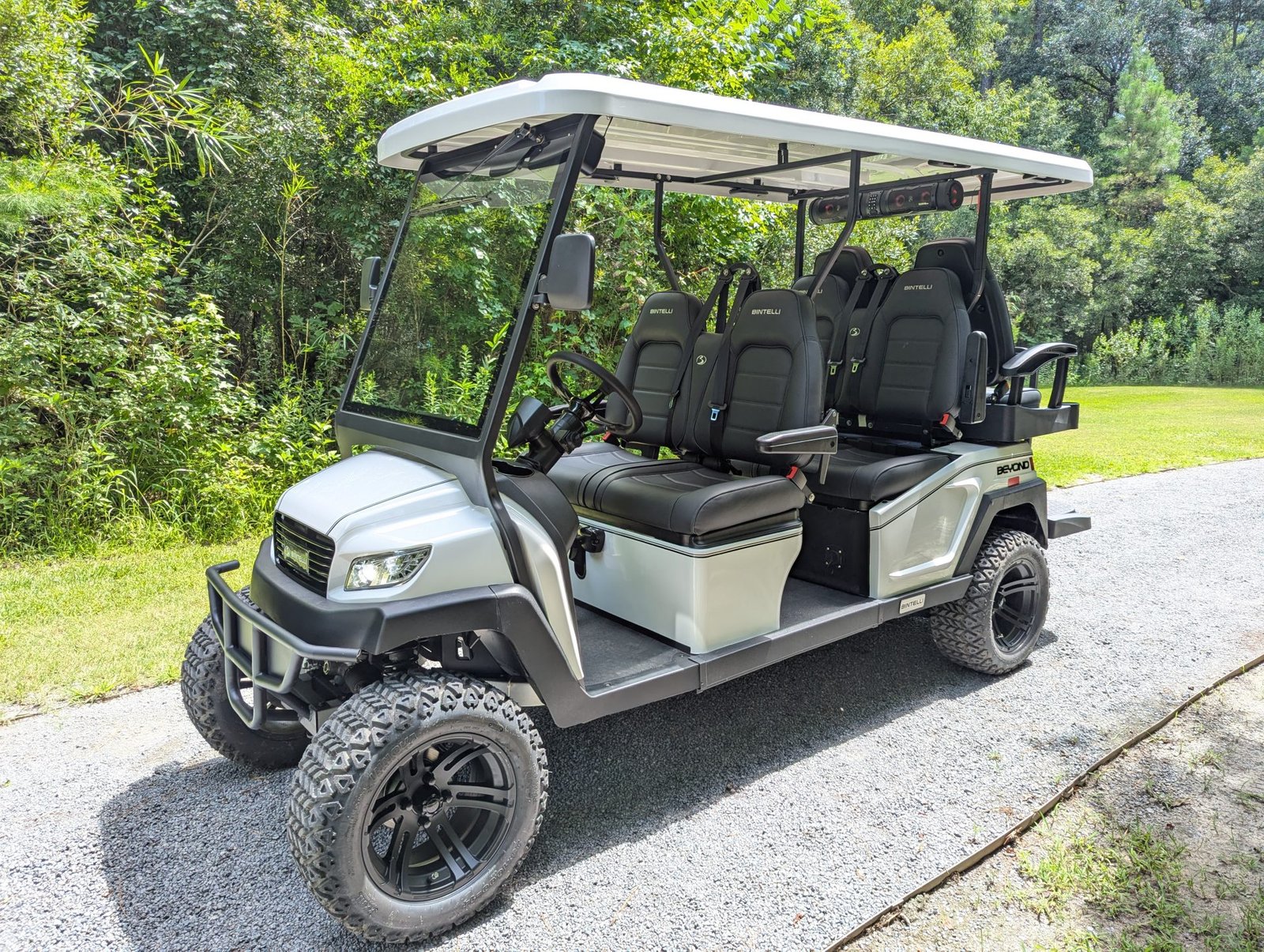
- The documented 2025 Beyond baseline includes a 72V 165Ah lithium battery, 72V 5kW motor, JEVD1-72M450L controller, and 400A fuse for that trim.
- Low voltage and charger state must be resolved before any hill-power diagnosis.
- Manual storage guidance lists 30 psi tire pressure, making tire checks a real first step.
- Brake drag, oversized tires, passengers, cargo, heat, and cable resistance can all reduce climbing torque.
A Bintelli golf cart slow on hills usually points to load, tire pressure, brake drag, low state of charge, voltage sag, heat protection, or a battery/controller limit. The 2025 Beyond source set gives useful anchors, but it does not publish one universal hill-grade or limp-speed table for every trim. That means the right diagnosis is a measured sequence, not a guess.
Start With the Verified Beyond Baseline
The strongest public Bintelli baseline is the 2025 Beyond parts data. For the documented 4 Passenger Lifted trim, it lists a 72V 165Ah lithium battery, 72V 5kW motor, JEVD1-72M450L controller, 400A fuse, main contactor, DC converter, and Tow/Run switch. That is enough to avoid the old generic 48V or 60V wording, but it is not permission to assign the same pack to every Beyond year.
| Item | Verified public detail | How to use it |
|---|---|---|
| Battery | 72V 165Ah lithium on the documented 2025 trim | Compare against the label on the actual cart. |
| Motor | 72V 5kW motor on the documented 2025 trim | A weak hill climb is not automatically an undersized motor. |
| Controller | JEVD1-72M450L listed in the parts data | Use model-specific service data before calling a controller bad. |
| Main fuse | 400A listed in the parts data | A high-current fault path should include fuse, contactor, and cable checks. |
| Tires | Manual storage guidance calls for 30 psi | Low tire pressure can mimic weak hill torque. |
Read the Hill Symptom
| Hill symptom | Likely cause | First test |
|---|---|---|
| Slow but steady uphill | Load, tire pressure, grade, or normal controller limit | The Beyond manual says to drive slowly on inclines and not exceed grade ability. A dealer spec for a Beyond 4 Passenger Lifted lists max grade up to 25 percent, so treat steeper claims as model-specific. |
| Starts strong then fades | Voltage sag, controller heat, battery current limit, or brake drag | Public Bintelli parts data lists JEVD1-72M450L, and LVTONG platform data lists JEVD1-72M450L-012-150/450A. No public Bintelli thermal cutback temp was verified, so record LCD warnings and check heat at cables, brakes, and controller. |
| Cuts out or warning appears | BMS, controller, low voltage, or loose high-current path | Photograph the LCD warning. Check the documented 400A fuse path, main contactor, battery label, and cable temperature before replacing the motor. |
| Smells hot after hill | Brake drag, motor heat, controller heat, or cable resistance | Compare brake corners and cable ends after a short controlled drive. A hot corner points away from the battery and toward drag. |
| Only weak with passengers or cargo | Load exceeds practical hill reserve | The dealer spec lists 800 lb max load for the 4 Passenger Lifted. Retest with one driver and no cargo before condemning drive parts. |
| Weak after taller tire swap | Effective gearing moved taller | Dealer specs list 23×10-14 tires for the lifted cart. Going from 23 inch to 25 inch tires leaves about 92 percent of the original wheel torque because 23 divided by 25 equals 0.92. |
Bintelli tells owners to drive slowly on inclines, avoid overloading the vehicle, and avoid slopes beyond the cart’s grade ability. The public Bintelli manual does not publish one universal Beyond grade number. A dealer listing for the 4 Passenger Lifted gives up to 25 percent grade, 800 lb load, and 23×10-14 tires, so those numbers are useful context only when they match the cart and tire label.
Brake Drag, Tires, and Load
Mechanical drag is the cheap diagnosis that gets missed. A parking brake that does not fully release, a dragging service brake, low tire pressure, or tall/heavy tires can all make a healthy electric cart feel weak on a hill. The manual’s 30 psi storage note is not a full tire engineering table, but it is enough to show that pressure belongs in the first pass.
Use the tire label before doing gearing math. The Bintelli parts manual verifies a 14×7 lifted rim and a lifted Innova tire entry, while dealer specs commonly list the lifted Beyond at 23×10-14. If the cart is actually on 23 inch tires, a 25 inch replacement reduces wheel torque by about 8 percent; if the installed tire label is different, redo the math with that number.
- Confirm tire pressure cold and inspect for mismatched tire diameters.
- After a short drive, compare wheel and brake temperatures by corner.
- Check that the parking brake warning is off and the brake releases fully.
- Retest without passengers, cargo, coolers, or accessories before changing parts.
Voltage Sag, Heat, and High-Current Connections
If the cart fades after the first part of the climb, test the electrical path. A weak state of charge, loose battery terminal, hot cable lug, contactor drop, or BMS current limit can look like a tired motor. The public Beyond parts manual verifies the JEVD1-72M450L controller and 400A fuse for the documented 2025 trim. Public LVTONG platform literature gives a JEVD1-72M450L-012-150/450A controller reference, but no Bintelli-exact thermal cutback temperature was found.
- Fully charge the pack and confirm the battery switch is on.
- Record resting pack voltage at the main battery terminals.
- Drive the same hill under a controlled load and note any LCD warning.
- Stop safely and check for abnormal heat at cable ends, contactor, fuse, controller area, and brake corners.
- If voltage sags hard or a fault number appears, use dealer service data for the exact controller and battery.
What Usually Fixes Bintelli Hill Power
The common fixes are boring in the best way: full charge, correct tire pressure, less load, brake adjustment, clean high-current connections, battery wake or BMS correction, and controller diagnosis only after real readings. Replace the motor last, not first.
Frequently Asked Questions
Why is my Bintelli slow uphill but fine on flat ground?
Hills expose low tire pressure, passenger load, brake drag, voltage sag, controller heat, and battery current limits. Start with charge state, tires, load, brake release, and cable heat.
Does Bintelli publish one hill grade rating for every Beyond?
No public source verified one universal grade rating for every Beyond trim. Use the manual for safe incline behavior and confirm model-specific limits by serial number or dealer data.
Can a lithium battery make a Bintelli cut out on hills?
Yes. A BMS can limit output for low state of charge, temperature, current, or connection problems. Photograph any warning and test voltage under load.