How Far Can a Golf Cart Go on One Charge? Range Guide + Calculator
Real-world range for 36V and 48V carts, a worked example with real Trojan and Eco Battery numbers, the factors that quietly drain it, and a free calculator that estimates your miles per charge.
- Expect roughly 15 to 25 miles from 36V lead-acid, 20 to 35 from 48V lead-acid, and 30 to 50-plus from lithium, all on flat ground with healthy batteries.
- Usable capacity is the hidden lever: plan lead-acid around 50% depth of discharge and lithium around 90%, so a same-amp-hour lithium pack delivers far more real miles.
- The range formula is Volts x Amp-hours x Usable %, divided by watt-hours per mile (about 110 on flat turf, 150 rolling, 200 loaded or hilly).
- Terrain, load, cold weather, tire pressure, and battery age all subtract miles, so treat every mileage figure as a planning estimate, not a promise.
“How far can a golf cart go?” sounds like a simple question, but the honest answer is “it depends.” Two carts with the same badge on the hood can deliver wildly different range depending on voltage, battery chemistry, age, and terrain. This guide gives you real numbers, a worked example, and a tool to estimate your own.
Typical golf cart range by pack
Voltage alone does not answer how far a golf cart can go. Pack amp-hours and usable depth of discharge matter just as much. The ranges below are estimates for healthy batteries, flat turf or pavement, correct tire pressure, mild weather, and a moderate speed. A lifted cart with four adults, low tire pressure, hills, or cold batteries will land lower.
| Common pack | Capacity used | Usable watt-hours | Estimated flat-turf miles at 110 Wh/mi |
|---|---|---|---|
| 36V lead-acid, six 6V batteries like Trojan T-105 Plus | 6V, 225Ah at the 20-hour rate. | 36 x 225 x 50% = about 4,050 Wh usable. | About 37 miles as a math ceiling; many real carts see about 15-25 miles after age, load, hills, and Peukert losses. |
| 48V lead-acid, six 8V batteries like Trojan T-875 | 8V, 170Ah at the 20-hour rate. | 48 x 170 x 50% = about 4,080 Wh usable. | About 37 miles as a math ceiling; many real carts see about 20-35 miles in normal use. |
| 48V lead-acid, four 12V deep-cycle batteries | Read the label on the installed batteries; Ah varies widely. | 48 x labeled Ah x 50%. | Use the formula below. Do not assume it matches a six-battery pack. |
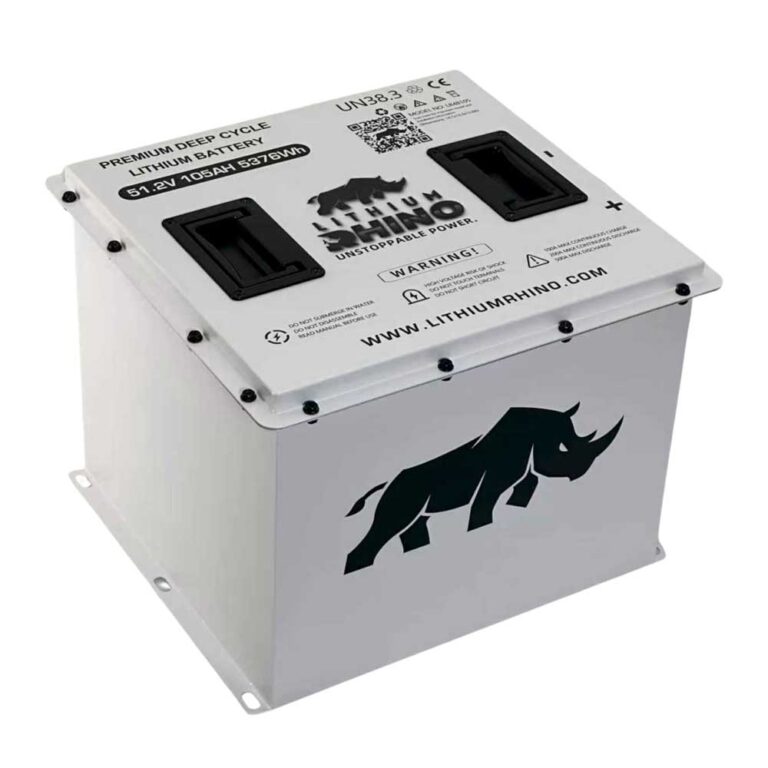
| 51.2V lithium, 105Ah LiFePO4 like Eco Battery | 51.2V, 105Ah, about 5,376 Wh. | About 4,838 Wh planned at 90% usable. | About 44 miles at 110 Wh/mi; real result still depends on cart weight, tires, and speed. |
If you are weighing a voltage upgrade, our breakdown of the best voltage for a golf cart explains how 36V, 48V, and 72V compare for range and speed.
What determines how far a golf cart can go
Rated range assumes ideal conditions. In the real world, these factors decide what you actually get:
- Terrain: hills can cut range by 30 to 50% versus flat turf.
- Load: every extra passenger or heavy cargo draws more current per mile.
- Temperature: cold weather can temporarily reduce battery capacity by 10 to 30%.
- Tire pressure: under-inflated tires add rolling resistance and quietly steal miles.
Why lithium carts go farther
Two packs rated at the same amp-hours do not deliver the same practical range. Trojan’s maintenance guidance recommends 50% or less discharge for long lead-acid life and treats 80% discharge as the maximum safe depth. That is why a lead-acid range estimate should usually plan around about half the nameplate capacity, even though the battery can be discharged deeper in an emergency.
LiFePO4 packs commonly give more usable energy because they hold voltage flatter and their BMS is designed around deep cycling. Eco Battery’s 51.2V 105Ah pack is listed around 5,376 Wh of energy by retailers and about 5.3 kWh in the data-sheet family already used on this site. For planning, 90% usable capacity is a realistic lithium estimate, but the pack’s own BMS cutoff and warranty manual always win.
Lithium also removes a lot of lead-acid weight, so the same cart may use fewer watt-hours per mile. The tradeoffs and payback math are covered in our lead-acid vs. lithium cost analysis and our look at the disadvantages of lithium batteries.
How far can a golf cart go on a full charge? Calculate yours
You can estimate range with one formula: Range = (Volts × Amp-hours × Usable %) ÷ Watt-hours per mile. Flat turf often estimates around 110 Wh per mile, rolling terrain around 150, and steep or loaded driving around 200. Treat those as planning numbers, not measured manufacturer specs.
Worked example: a 48V cart with six 8V Trojan T-875-style batteries at 170Ah has 48 x 170 = 8,160 Wh of rated energy. Planning at 50% usable lead-acid capacity gives 4,080 Wh. On flat turf at about 110 Wh per mile, 4,080 ÷ 110 = about 37 estimated miles before adding real-world losses. With age, hills, passenger load, and voltage sag, a practical 20 to 35 mile result is more believable than treating 37 as a promise.
Rather than do the math by hand, plug your numbers into the golf cart range calculator. It returns your estimated miles per charge, runtime in hours, and even the cost of a full charge based on your electricity rate.
How to get more range from your cart
- Keep tires inflated to the recommended PSI to minimize rolling resistance.
- Charge fully after every use; partial charging shortens lead-acid life and capacity.
- Water flooded lead-acid batteries on schedule and keep terminals clean.
- Avoid leaving the cart discharged for long periods, which accelerates sulfation.
- When the pack is worn out, upgrading to lithium is the single biggest range gain available.
Curious how range and speed interact? A taller tire raises top speed but changes your energy per mile, see the top speed calculator and browse more in our repair guides. For battery longevity data, manufacturers like Trojan Battery publish detailed discharge curves.
Real-world range planning notes
Range numbers are only useful when you tie them to battery type and terrain. A 48V lead-acid Precedent or TXT with healthy batteries may manage a neighborhood day easily, but the same cart with a rear seat, 23-inch tires, soft turf, and hills can use energy much faster. Lithium carts often hold voltage flatter, so they feel strong until the BMS reaches its cutoff zone, which can surprise owners used to lead-acid packs that slow down gradually.
For a real range check, start fully charged, note tire pressure, passenger load, and route, then measure pack voltage at rest and under load halfway through the trip. Accessories matter too. A stereo, light bar, and underglow should be fed by a voltage reducer, not by tapping one battery. An unbalanced accessory tap can shorten range by dragging one battery down before the rest of the pack is empty.
Frequently Asked Questions
How far can a golf cart go on one charge?
Most 48V golf carts travel about 20 to 35 miles on a full charge, while older 36V carts manage about 15 to 25 miles. Lithium carts reach the top of those ranges, around 30 to 50-plus miles, because they safely use about 90% of their capacity versus roughly 50% planned for lead-acid. Terrain, load, cold, tire pressure, and battery age all subtract miles.
Why does my golf cart lose range as it gets older?
Lead-acid batteries lose usable capacity as they age and sulfate, so a four-to-five-year-old pack may deliver only half the range it did when new. Cold weather, low tire pressure, hills, and heavy loads also cut range significantly.
How do I calculate my golf cart’s range?
Use Range = (Volts x Amp-hours x Usable %) / Watt-hours per mile. For a 48V cart with six 8V 170Ah batteries at 50% usable lead-acid capacity on flat turf at about 110 Wh per mile: 48 x 170 x 0.5 = 4,080 usable watt-hours, divided by 110 is about 37 estimated miles before real-world losses. Age, hills, and load make a practical 20 to 35 miles more realistic.
Do lithium golf carts really go farther?
Yes, for two reasons. Lithium LiFePO4 packs are safely planned around about 90% usable capacity versus about 50% for lead-acid, and they hold voltage flatter and weigh less, so the same cart can use fewer watt-hours per mile. The pack’s own BMS cutoff and warranty manual always set the real limit.