The Disadvantages of Lithium Golf Cart Batteries
Lithium leads on lifespan, weight, and maintenance, but it is not flawless. Before you spend the money, weigh the real downsides: upfront price, cold-weather behavior, BMS quirks, and charger compatibility.
01 : Higher Upfront Cost
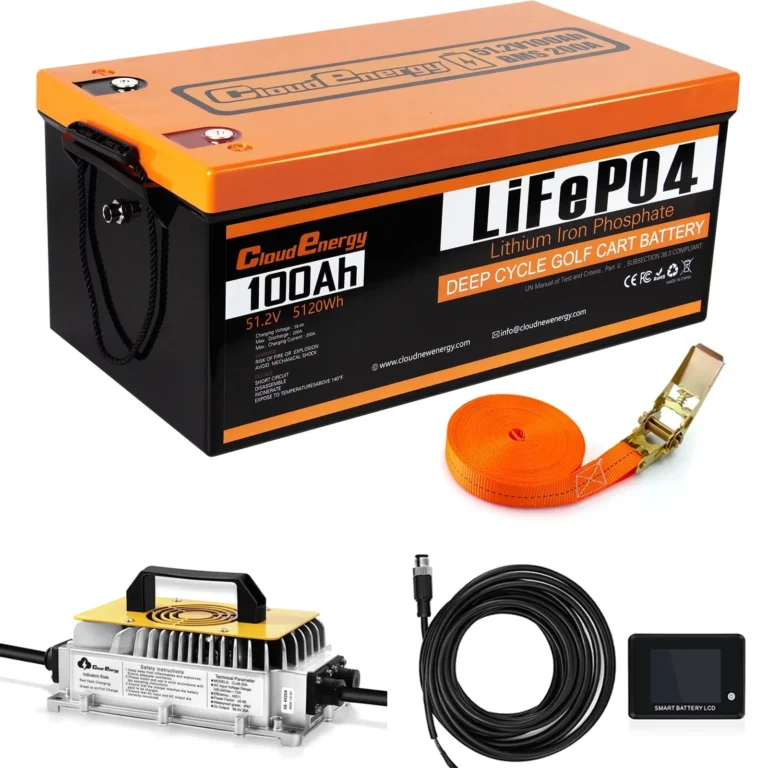
The first disadvantage is installed cost, not just pack price. A lithium quote may also include a chemistry-matched charger, secure bracket, state-of-charge display, cable changes, and an OBC bypass where the battery maker requires one. The familiar “two to three times lead-acid” figure is a market planning shorthand, not a durable manufacturer specification. Compare current delivered quotes at the same nominal voltage, usable energy, BMS current rating, warranty, and included hardware. The lead-acid versus lithium ROI guide shows how to compare the installed system rather than two bare pack prices.
02 : Cold-Weather Disadvantages of Lithium Golf Cart Batteries
LiFePO4 can discharge in cold weather, but charging is the critical restriction. RELiON specifies full-rate charging from 0 C (32 F) upward and reduced current below freezing; its low-temperature packs use internal heat before accepting normal charge. Other BMS designs simply block charging at their model-specific cutoff. Never assume every lithium pack has heat or the same threshold. Read the pack datasheet and place the temperature sensor where the manufacturer requires.
This matters in an unheated garage because plugging in a cold cart may produce no charge, a long heating delay, or a restricted charge current. The cold-weather storage guide covers the storage side of the problem.
03 : BMS Complexity
Every lithium pack relies on a battery management system to balance cells and protect against over-charge, over-discharge, and heat. When the BMS works, it is invisible; when it faults, the entire pack can shut off without warning, leaving you stranded. Diagnosing communication faults requires specific knowledge, see the BMS communication error guide.
04 : Charger and OBC Compatibility
Lithium requires a charger approved for the selected pack voltage, chemistry, and BMS wake-up behavior. An old lead-acid charger may use an equalization or finishing routine the lithium maker does not allow. On an OBC-equipped Club Car, the correct conversion depends on the battery and charger instructions: many kits bypass the OBC and use a lithium charger, but a 48V battery-count change by itself is not something the OBC is “reprogrammed” for. Follow the serial-matched Club Car manual and the pack installation guide. The OBC bypass guide explains the wiring check.
Parts note: Every lithium bundle we stock includes a charger matched to its pack, so the charger question is settled in the box. See lithium bundles
05 : Are They Still Worth It?
For most owners, yes, the 10+ year lifespan, light weight, and zero maintenance usually outweigh the downsides. But if you are on a tight budget, live somewhere bitterly cold, or have a charger and OBC you cannot easily change, the disadvantages of lithium golf cart batteries may tip you toward staying with lead-acid for now.
The downside comparison is clearest when the conditions behind each number are shown.
| Trade-off factor | Flooded lead-acid | LiFePO4 golf-cart pack |
|---|---|---|
| Upfront installed cost | Lower pack price; compatible existing charger may be reusable if healthy. | Often higher and may add charger, bracket, display, cabling, or interface work. No universal multiplier survives changes in capacity and included hardware. |
| Cold charging | Charge acceptance slows in cold weather, but there is no lithium-plating cutoff. | Normal-rate charging is commonly limited at about 0 C / 32 F; BMS cutoff, reduced-current, or self-heating behavior is model-specific. |
| Cycle-life reference | U.S. Battery comparison: about 600 cycles for its flooded reference at the stated test conditions. | 3,000+ cycles for the Essential Li line; Trojan currently offers a 10-year lithium warranty. Test conditions and remaining-capacity thresholds differ. |
| Weight | A six-battery T-875 example is 378 lb because each battery is 63 lb. | Usually much lighter, but exact pack and bracket weight must come from the selected datasheet. Reduced rear mass can change ride and traction. |
| Repairability | Individual batteries can be tested and replaced, although mixing one new battery into an old series string can create imbalance. | Cells and BMS are usually inside one sealed pack. Field cell replacement is normally not supported; warranty or manufacturer service may be required. |
| Charger and Club Car OBC | Use the correct voltage and lead-acid algorithm. OBC-equipped Club Cars require the main negative path through the OBC. | Use the pack-approved lithium charger. Bypass the OBC only when the pack or charger instructions require it; battery count alone is not an OBC programming event. |
06 : Repair and Replacement Realities
A flooded pack is modular, so each battery can be load-tested and physically replaced. That does not make a single-battery repair automatically wise: one new battery in an aged series string can be chronically overcharged while the weaker units limit the pack. Diagnose all batteries and compare the cost of a balanced set.
A single lithium pack integrates cells, contactors, sensors, and a BMS. Opening it can create shock, fire, warranty, and sealing hazards, and most consumer packs do not support field cell replacement. A post-warranty failure may therefore require manufacturer service or whole-pack replacement even when the rest of the cart is sound. Warranty length, transferability, diagnostic access, shipping process, and local service are part of the purchase decision.
07 : Weight, Fit, and Ballast Surprises
The light weight of lithium is usually a selling point, but it has a hidden downside on some carts. Lead-acid batteries add 300 to 400 pounds low in the chassis, and that mass actually helps traction and stability. Swap to a lithium pack that weighs a fraction of that and a lifted or high-torque cart can feel noticeably lighter in the rear, which some owners dislike on hills or loose surfaces.
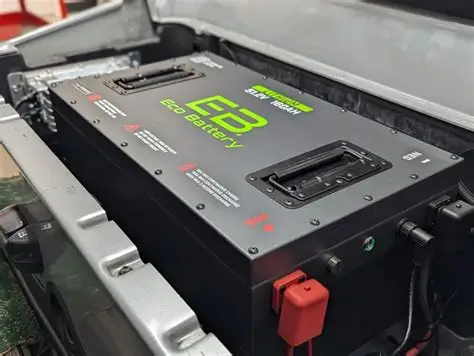
Fitment can bite too. Because a single lithium pack is far smaller than a tray of six batteries, you may need adapter brackets or spacers to secure it, and a poorly mounted pack that shifts under braking is a real hazard. Budget a little for proper mounting hardware rather than assuming the lighter pack simply drops in. The Lithium Battery Bundle Finder asks for your tray size up front and names the mounting bracket where a pack needs one, so the fit question is answered before you order.
08 : Real Climate and Model Quirks
Heat can also trigger protective charge or discharge limits. A BMS pause in extreme heat or cold is often protection working as designed, not proof of a failed pack. Diagnose cell temperature, BMS event history, charger output, and load before condemning the battery.
On Club Car Precedent conversions, OBC treatment is kit-specific rather than “nearly mandatory” for every cart. Some model years and charger systems have no traditional OBC, and supported kits differ in how they handle charging. Identify the serial number, charger generation, and pack instructions first. E-Z-GO and Yamaha conversions also require model-specific charger, mounting, peak-current, and communication checks; neither brand is automatically plug-and-play.
09 : Who Should Still Choose Lead-Acid
Lithium is not automatically the right call for everyone. A budget-focused owner who drives short, flat, occasional trips, stores the cart in a cold garage, and already owns a working lead-acid charger and OBC may get better value from a fresh lead-acid set. The disadvantages of lithium, upfront cost, cold-charge limits, BMS dependence, and charger compatibility, hit hardest for exactly that profile. For high-mileage, warm-climate, or performance-minded owners, lithium still wins handily, but an honest look at your own use pattern is the smartest way to decide.
One practical middle path is to keep your current lead-acid pack running while you save, then time the lithium switch to coincide with a charger upgrade or an OBC bypass you were going to do anyway. Bundling those jobs spreads the labor cost and removes most of the compatibility friction that makes lithium feel expensive up front.
Frequently Asked Questions
What are the disadvantages of lithium golf cart batteries?
The main downsides are high upfront cost (often two to three times lead-acid), weak cold-weather charging, dependence on the BMS, and charger or OBC compatibility issues.
Do lithium golf cart batteries work in cold weather?
LiFePO4 chemistry does not like to charge below freezing, and many packs include a low-temperature charge cutoff. Capacity also drops in winter unless the pack is heated.
Can I use my old charger with a lithium pack?
Usually not. Lithium needs a lithium-profile charger, and a Club Car OBC may refuse to recognize the pack, so many conversions require a charger swap or OBC bypass.
Is lithium still worth it despite the disadvantages?
For most owners yes, because the 10 plus year lifespan, light weight, and near-zero maintenance outweigh the downsides. Budget, cold climate, or an unchangeable charger can tip the scale to lead-acid.
Lab Verdict: The key disadvantages of lithium golf cart batteries are high upfront cost, weak cold-weather charging, BMS dependence, and charger/OBC compatibility. The long lifespan usually offsets them, but budget, climate, and your existing charger decide if lithium is right today.