Yamaha Steering Shaking: Fixes for G29 Wobble
- Standard automotive tires are mounted on a high-speed machine and balanced perfectly before they ever touch your car.
- If the yamaha steering shaking only happens at top speed (and disappears when you slow down), your tires are out of balance.
- If the cart shakes at all speeds and feels like it wants to wander off the road, your alignment is out of spec.
- If you balanced the tires and dialed in a perfect Toe-In, but the yamaha steering shaking persists, you have worn out mechanical hardware.
You hit 15 mph on a smooth paved road, and suddenly the steering wheel starts vibrating violently in your hands. If you are constantly searching "why is my yamaha steering shaking?", you are experiencing the dreaded "death wobble." This protocol decodes why the Yamaha G29 and Drive2 steering racks are highly sensitive to out-of-balance wheels, and exactly how to dial in your alignment to restore a factory-smooth ride.
The Physics of Wobble: Why Your Yamaha Shakes
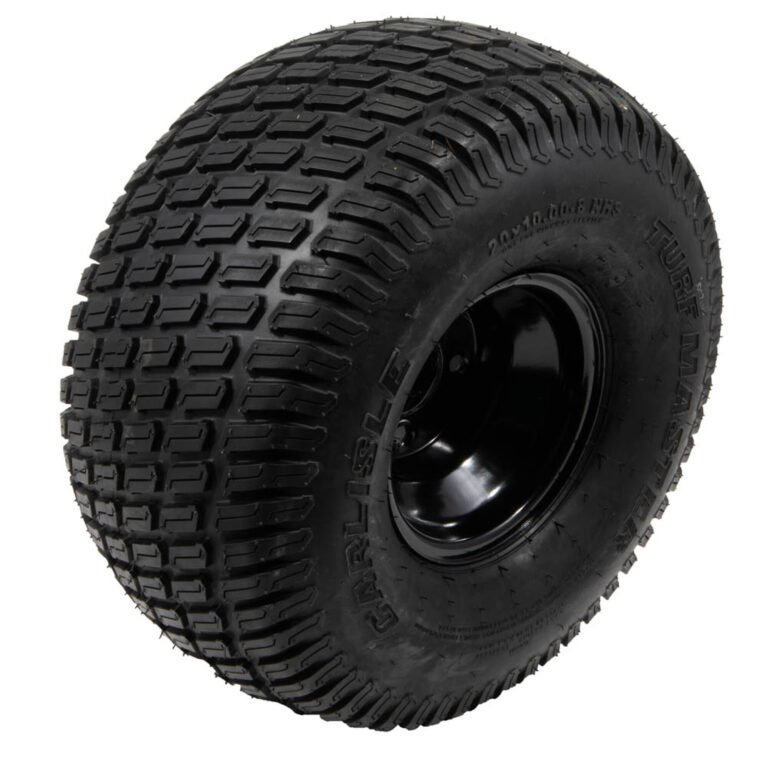
Standard automotive tires are mounted on a high-speed machine and balanced perfectly before they ever touch your car. Golf cart tires, however, are almost never balanced from the factory. When driving a Yamaha G29 at 12 mph on a golf course, you won’t notice a heavy spot on the tire. But when you upgrade your controller to hit 25 mph on the street, that slight imbalance generates centrifugal force that shakes the entire rack-and-pinion steering system.
The Yamaha G29 (sold as The Drive from 2007 to 2016) and the newer Drive2 (2017 and up) both run a self-adjusting rack-and-pinion box rather than the older worm-gear steering of the G22 era. That design gives crisp on-center feel, but it also transmits wheel imbalance directly back to your hands with very little dampening. Owners who lift these carts and swap the stock 8-inch wheels for 10, 12, or 14-inch rims magnify the problem, because the larger rotating mass exaggerates even a tiny heavy spot. The taller the tire and the faster the cart, the more punishing an unbalanced wheel becomes.
There are three primary reasons your steering wheel vibrates:
- Unbalanced Wheels: The most common cause. A heavy spot on the rubber causes the wheel to hop at high speeds.
- Improper Alignment (Toe-Out): If the front tires are pointing away from each other, they will “fight” the steering rack, causing the cart to dart back and forth.
- Bent Rims: Hitting a pothole with low-profile tires will bend the soft aluminum rim, making true rotation impossible.
The Fix: How to Balance Golf Cart Tires
If the yamaha steering shaking only happens at top speed (and disappears when you slow down), your tires are out of balance. Because standard automotive shops often lack the correct cones to mount an 8-inch or 10-inch golf cart wheel on their balancers, you may need to address this yourself.
The Toe Alignment Protocol
If the cart shakes at all speeds and feels like it wants to wander off the road, your alignment is out of spec.
- Center the Wheel: Park your Yamaha G29 on flat concrete. Manually turn the steering wheel until it is perfectly dead-center.
- Measure the Gap: Take a tape measure and measure the distance between the center treads of the two front tires at the front bumper. Then, measure the distance between the center treads at the back of the front tires.
- Dial the Tie Rods: You want the front measurement to be exactly 1/8″ to 1/4″ smaller than the rear measurement. This is called a “Toe-In.” Loosen the jam nuts on your tie rods and twist the rods until the tires toe slightly inward. Tighten the jam nuts securely.
Inspecting the Hardware
If you balanced the tires and dialed in a perfect Toe-In, but the yamaha steering shaking persists, you have worn out mechanical hardware.
Jack up the front of your Yamaha. Grab the front tire at the 9 o’clock and 3 o’clock positions and forcefully wiggle it side to side. If you hear a clunking noise or feel severe “play” before the steering rack engages, your tie rod ends or wheel bearings are shot. You must replace the tie rod ends immediately, as a snapped rod at 20 mph will result in a total loss of steering.
On the G29 and Drive2 the outer tie rod ends and the lower steering column bushing are the usual culprits, and they wear faster on carts washed with a pressure washer aimed at the front end, which strips the factory grease. While the front is jacked up, grab the tire at 12 and 6 o’clock and rock it to check the kingpin and bearings for vertical play. A clunk in that plane means worn kingpin bushings, and no tie rod adjustment will settle the wobble until those are replaced.
Tired of chasing down vibrations on an older chassis? Browse fully rebuilt, perfectly aligned carts in our Guides.
Lab Summary
You don’t have to live with yamaha steering shaking. By ensuring your tires are physically balanced using stick-on weights or ceramic beads, and locking your tie rods into a 1/8″ Toe-In alignment, your Yamaha G29 or Drive2 will track straight and smooth on any paved road.
For more specific torque specs regarding your Yamaha’s tie rod jam nuts, consult the factory service guides at Yamaha Golf-Car Company. Additionally, review the NHTSA Tire Safety Portal (Dofollow) for standard low-speed vehicle steering compliance.
Frequently Asked Questions
Why is my Yamaha G29 steering shaking at speed?
Shaking that appears at higher speeds is almost always caused by out-of-balance tires, bent rims, or improper toe alignment. The G29 and Drive2 racks are very sensitive to wheel balance, and cart wheels are rarely balanced from the factory.
What is golf cart 'death wobble'?
'Death wobble' is the violent steering-wheel vibration that can hit a Yamaha G29 or Drive2 around 15 mph on smooth pavement. It's driven by unbalanced or bent wheels and bad alignment exciting the sensitive steering rack.
How do I fix Yamaha steering shake?
Balance the tires and check for bent rims first, then verify the tie rods are tight and set proper toe alignment. Since cart wheels often ship unbalanced, balancing alone resolves many cases of high-speed shake.
Reviewed and updated July 27, 2026 by the Golf Cart Lab team.