
Chassis and suspension repair guides
Steering, brakes, suspension, tires, ride quality, alignment, and chassis symptoms that affect control and safety.
Start with these chassis and suspension guides
A cross-section of the 60 guides in this archive, covering steering play, brakes, springs and shocks, tires and ride quality. Use the search above or the filters to narrow by brand or symptom.
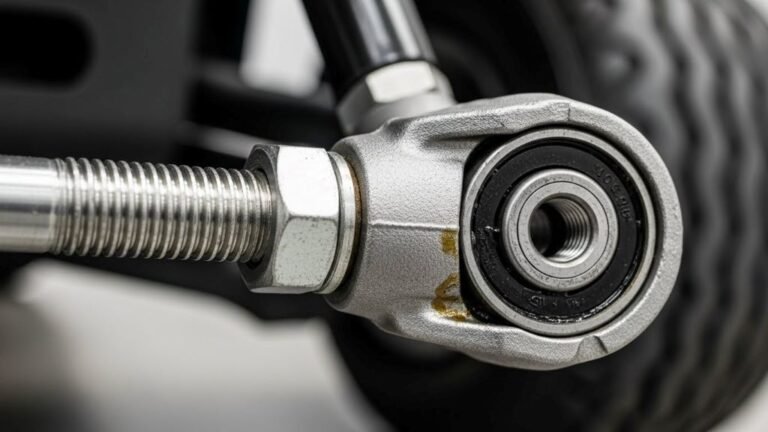
Diagnosing the “Death Wobble”: Kingpins, Bushings, or Wheel Alignment?
Steering wheel shaking violently? Diagnose the "Death Wobble" in your EZGO, Club Car, or Yamaha. We compare kingpins, control arm bushings, and alignment specs to fix the issue.
Open guide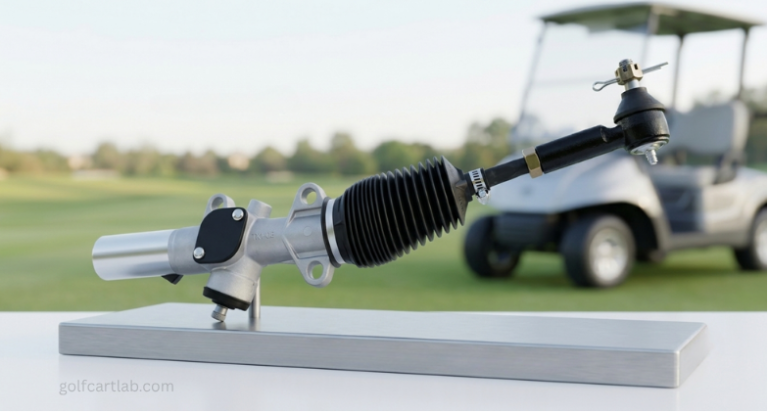
Fix Loose Steering: Adjusting Box Lash on EZGO & Club Car
Steering wheel have too much "play" before the tires move? Learn how to adjust the steering lash (guide shoe) on EZGO and Club Car racks to tighten up your handling.
Open guide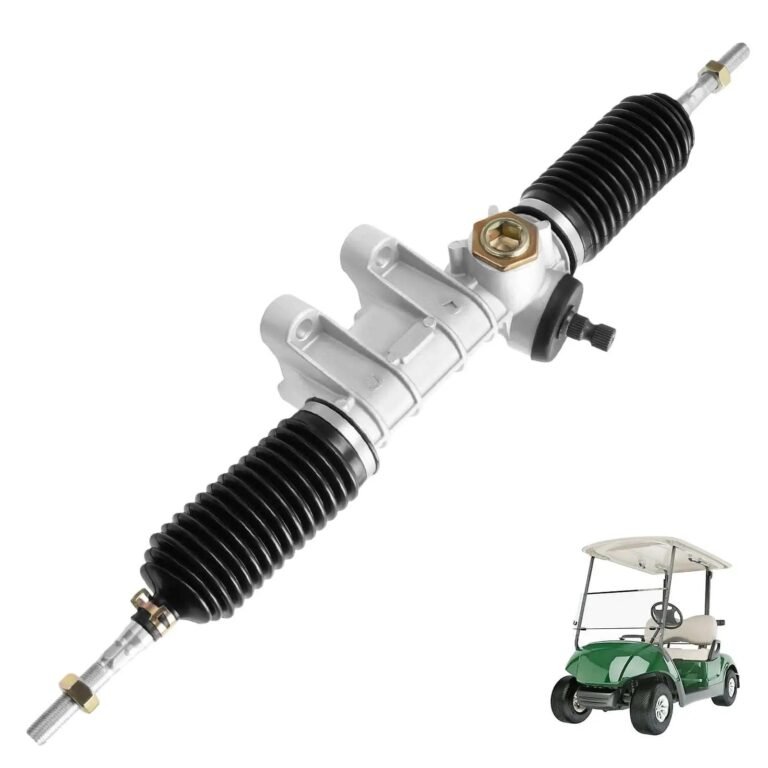
Yamaha G29 Drive Steering Box Play: How to Tighten Loose Steering
Fix sloppy golf cart steering. Learn how to diagnose Yamaha G29 Drive steering box play, inspect tie rods, and tighten loose steering with our lab protocol.
Open guide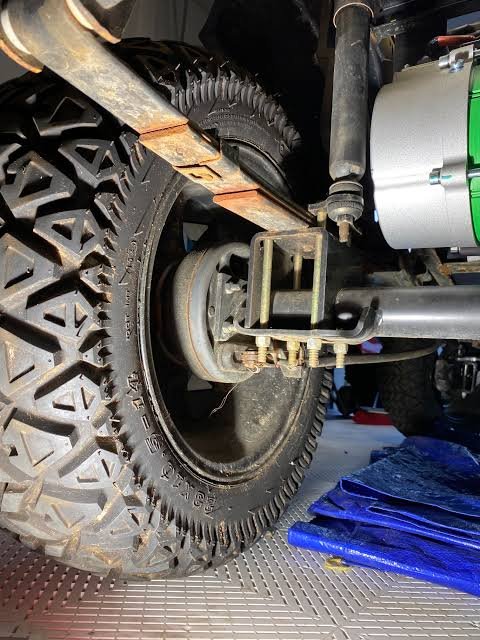
Golf Cart Leaf Spring Sag: Do You Need Heavy Duty Springs?
Is your golf cart rubbing tires or leaning? We analyze the signs of leaf spring sag and help you decide if you need Heavy Duty (HD) springs or just a stock replacement.
Open guide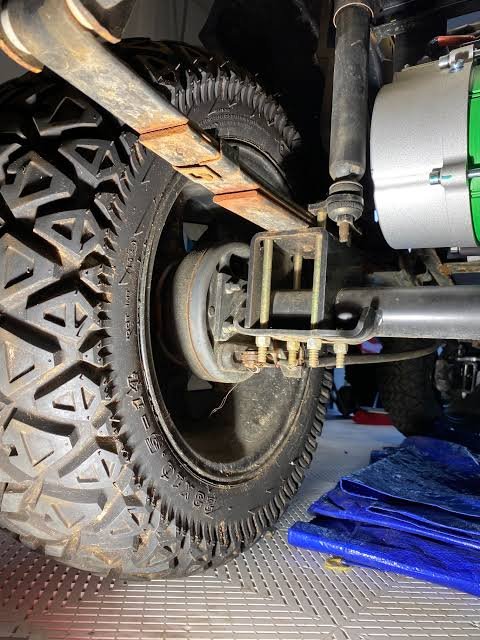
Golf Cart Squeak Fix: Suspension vs. Frame Noise
Annoying squeak driving you crazy? Learn how to isolate suspension creaks from frame rattles. We cover lubricating bushings, tightening roof struts, and fixing leaf springs.
Open guide
Replacing EZGO RXV Front Suspension A-Arm Bushings
Fixing a clunking front end? Discover the 5 ultimate steps to replace your EZGO RXV front suspension A-arm bushings and restore your steering.
Open guide
How to Patch a Punctured Tubeless Golf Cart Tire
Got a flat on the trail? Discover the 5 ultimate steps to safely patch a punctured tubeless golf cart tire on your EZGO, Club Car, or Yamaha.
Open guide
Golf Cart Lift Kit Ride Quality: Honest Review (2026)
Does a golf cart lift kit ruin ride quality? An honest review, how lift type, height and tires affect comfort, and how to lift without a rough ride.
Open guide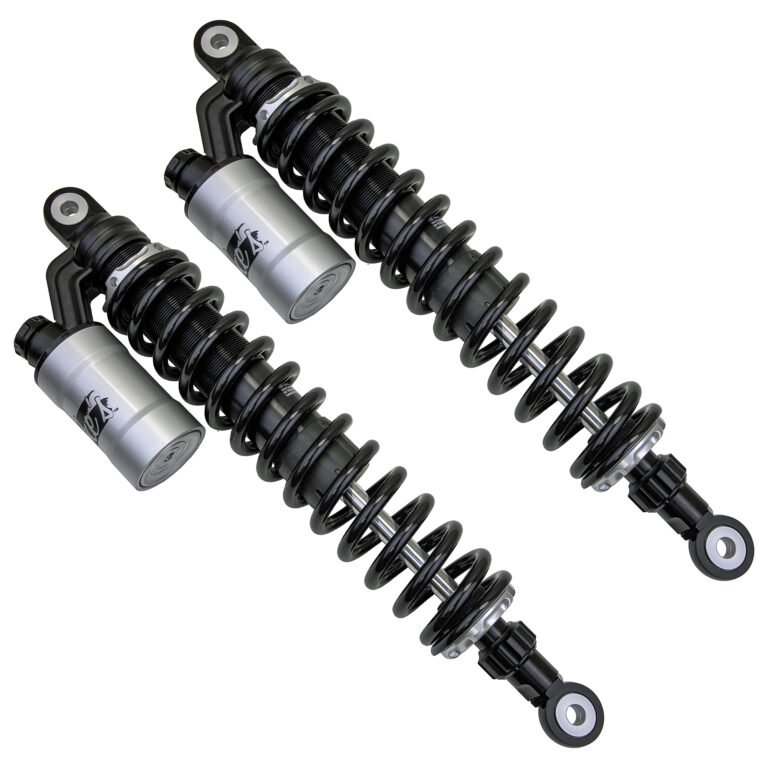
Golf Cart Shock Upgrade Worth It? Honest Verdict
Is a golf cart shock upgrade worth it? An honest look at ride and load gains from upgraded shocks and springs, and who can skip it.
Open guide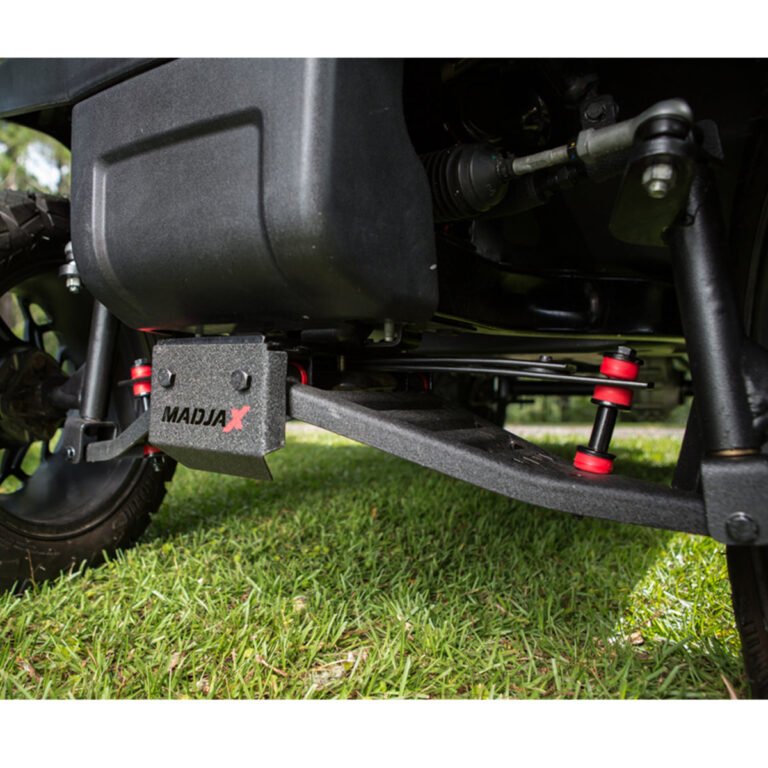
MadJax vs Jakes vs RHOX Lift Kit: Which Is Best?
MadJax vs Jakes vs RHOX golf cart lift kits compared, honest buyer guide on strength, install, fitment, and which lift brand to choose.
Open guide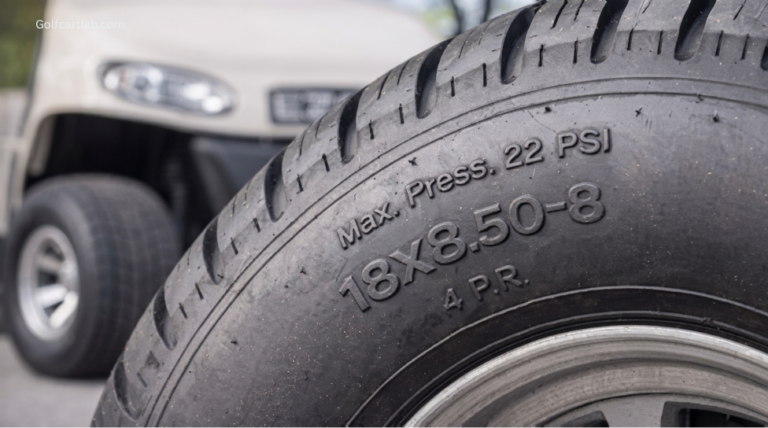
Understanding Golf Cart Tire Sizes: A Complete Measurement Guide
What do those numbers actually mean? Discover the 5 best ultimate hacks to read tire sizes for your EZGO TXT, Club Car Precedent, and Yamaha G29 to avoid rubbing.
Open guide
Cushman Golf Cart Hard To Steer or Utility Load Issues: Fix
Cushman hard to steer or overloaded? Check tire pressure, cargo weight, steering joints, alignment, suspension bushings and wheel bearings.
Open guideHow golf cart steering and suspension actually work
A golf cart chassis is deliberately simple. Most models use a rack and pinion or a worm-and-sector steering box feeding a pair of tie rods, an A-arm or leaf sprung front end, and leaf springs with basic shocks at the rear. There is no power assist and no electronic damping, so every bit of wear in that chain reaches your hands directly. That is useful for diagnosis: a cart that feels vague on centre is telling you a specific joint has play, and the play is almost always measurable by hand with the wheels off the ground.
Braking is just as mechanical. Drum brakes at the rear are pulled by cables from the pedal, self adjusting on some models through a ratchet that only works if the cart is rolled backwards and stopped regularly. Ride quality is a product of three things you can actually change: tire pressure, spring rate, and shock condition. Owners usually blame the springs when the real culprit is a tire running at 25 psi on a cart that weighs under 1,000 pounds.
The failure modes behind most chassis and ride complaints
Across the guides in this archive, five faults cover the large majority of cases:
- Worn kingpins and bushings. Symptom: the front end shakes at speed, often called death wobble, and steering wanders on smooth pavement. Grab the tire at 12 and 6 and rock it. Any perceptible knock means a kingpin or bearing, not an alignment problem.
- Steering box lash. Symptom: an inch or more of free play at the wheel rim before the tires move. On most boxes this is an adjustable screw and lock nut, so it is a five minute fix that owners often pay to have replaced instead.
- Sagging or broken leaf springs. Symptom: the rear sits low, bottoms out over bumps, or the cart leans with two passengers. Measure ride height at both rear corners. A difference over half an inch means one pack has settled.
- Brake cable stretch and out of adjustment shoes. Symptom: long pedal travel, the cart pulls to one side when stopping, or the parking brake will not hold on a slope. Cables stretch long before the shoes wear out.
- Wrong tire pressure or the wrong tire for the job. Symptom: harsh ride, scalloped tread wear, or a cart that feels tippy in turns. Turf tires on pavement wear fast, and an over inflated tire transmits every seam in the path.
What to measure first, and the numbers that matter
Chassis diagnosis is mostly measurement, and the tools are a tape measure, a tire gauge, and a torque wrench. Do these three checks before ordering parts.
1. Free play at the steering wheel. With the front wheels on the ground and pointed straight, turn the rim gently until the tires start to move. More than about 1 inch of rim travel means lash in the box or a worn tie rod end.
2. Wheel shake with the front lifted. Rock each front wheel top to bottom, then side to side. Vertical knock points to kingpins or wheel bearings. Horizontal knock with no vertical play points to a tie rod end.
3. Ride height at all four corners, measured from the ground to a fixed frame point. Side to side differences over half an inch mean a sagged spring or a bent A-arm, and they show up as a cart that always pulls one way.
| Check | In spec | Investigate | Typical cause |
|---|---|---|---|
| Steering wheel free play | Under 1 in. at rim | Over 1.5 in. | Box lash, tie rod ends |
| Front wheel vertical rock | No perceptible knock | Any knock | Kingpin, wheel bearing |
| Tire pressure, turf tread | 14 to 18 psi | Over 22 psi | Harsh ride, centre wear |
| Tire pressure, street tread | 18 to 22 psi | Under 14 psi | Sidewall flex, tippy feel |
| Lug nut torque | 50 to 85 ft-lb | Uneven or over 90 | Cracked wheel at studs |
| Brake pedal free travel | Under 1 in. before drag | Over 2 in. | Stretched cable, worn shoes |
| Ride height, side to side | Within 0.5 in. | Over 0.5 in. | Sagged leaf pack |
Take tire pressures cold, before driving. A tire that sat in the sun reads 2 to 3 psi high and will send you chasing a ride quality problem that does not exist.
Which guide do you need?
If the cart shakes or wanders at speed, start with the death wobble and kingpin guides and work the front end joints in order. If the steering feels loose but stable, the steering box lash guides are the cheaper first stop. If the cart rides harshly or bottoms out, check pressures first, then the leaf spring and shock guides. If it squeaks or clunks, the suspension versus frame noise guide separates the two. If you are changing tires or adding a lift, use the tire size and lift fitment guides together, because the lift decides what diameter will clear.
Before you lift anything: chock the wheels that stay on the ground and put the cart in tow mode with the key out. Jack stands under the frame, never under a leaf spring or A-arm, and never work under a cart held up only by a jack. A golf cart is light enough to feel safe and heavy enough to be fatal.