Golf Cart Squeak Fix: Suspension vs. Frame Noise
Most suspension squeaks are actually dry bushings or loose frame hardware, not a failing part. This guide isolates the noise with a bounce test, then walks the fix by platform.
- Isolate the noise with a stationary bounce test before buying parts, most squeak chasing fails because techs guess instead of provoking the sound.
- Dry leaf spring and control arm bushings are the most common suspension-side cause; use silicone grease, never a water-displacing spray.
- A loose roof strut or body mount sleeve is the most misdiagnosed noise, often mistaken for a worn bushing.
- Match the lubricant to the material, silicone grease works across rubber and polyurethane; petroleum grease does not.
There is nothing worse than cruising in a silent electric cart, only to have a rhythmic squeak ruin the experience. It makes a premium vehicle feel neglected. A resistor getting hot, a stuck solenoid, and a squeaky suspension are unrelated failures, but they all reward the same discipline: isolate before you replace.
01. The Stationary Bounce Test
Before you buy parts, replicate the noise while stationary to isolate the source. Most squeak chasing fails because techs guess at parts instead of provoking the noise on a lift or in a flat driveway. On Club Car DS and Precedent platforms built from the mid-2000s through the 2014 facelift, the rear leaf pack is the usual offender, while EZGO TXT48 carts from the 2010s tend to talk through the front A-arm bushings first. Work the cart by hand for two or three minutes per zone and you will almost always hear the joint give itself up before you ever loosen a bolt.
Do this test with the cart cold and dry. Heat and the residual film from a fresh wash can silence a dry bushing for ten minutes, then the squeak returns once everything settles. If you can repeat the noise on demand by hand, you have isolated it, and that is worth more than any parts-cannon approach.
- The Lateral Rock: Grab the roof handle and rock the cart. If it squeaks, it’s likely bushings (leaf springs or A-arms).
- The Vertical Drop: Bounce the bumpers. If it squeaks, check shocks or kingpins. If it rattles, check body panels.
- The Roof Shake: Shake the roof supports without rocking the cart. This reveals the #1 hidden culprit: the roof strut.
02. Suspension Suspects
Worn rubber and dry joints are the primary generators of suspension feedback. E-Z-GO owner and service material treats front suspension, rear suspension, steering play, worn bushings, loose hardware, ball joints, and wheel bearings as scheduled inspection or lubrication items, which matches the bounce-test approach here. On lifted carts with aftermarket A-arm kits, rubber may be swapped for polyurethane, and poly behaves nothing like rubber. It needs compatible grease at assembly and will groan loudly the moment that film burns off, so do not assume a new lift kit is silent for life.
Leaf Spring Bushings
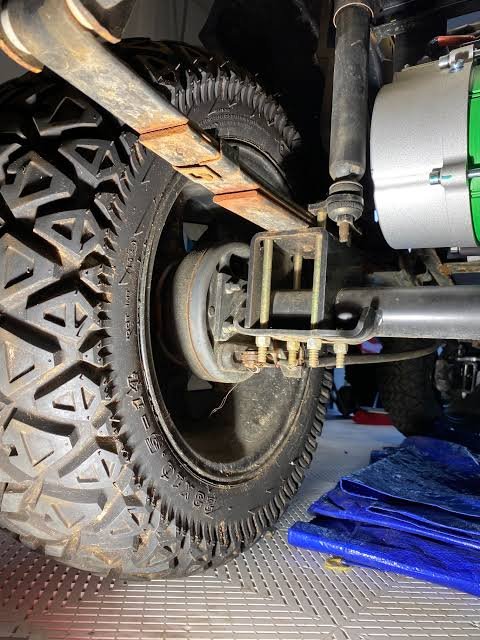
Rubber hardens over time and can spin inside the metal eyelet. The fix is a silicone grease or dielectric-style silicone compound that lists rubber compatibility. Do not treat a water-displacing spray as bushing grease. It may quiet the noise briefly, but it is not a durable suspension lubricant.
Control Arm Bushings
Common on Club Car Precedents and lifted aftermarket front ends. Pump grease into serviceable zerks until old grease begins to move out. If the joint is sealed, disassembly is required for lubrication, and the final torque should come from the model-specific service manual.
Leaf Spring Friction Pads
Plastic pads between layers prevent metal grinding. The noise is a metallic groaning; the fix is spraying dry PTFE lube between leaves with a pry bar.
03. Frame and Hardware Culprits
Vibration causes hardware to lose torque, turning the frame into a sound resonator. This is the stage most owners skip, and it is where the genuinely annoying intermittent squeaks hide. A loose roof strut or a battery hold-down rod will mimic a worn bushing perfectly, sending you down the wrong path for weeks. Work top down: roof, seat frame, body-to-chassis bolts, then the battery tray, and torque each fastener before you condemn a suspension part.
One quirk worth knowing on EZGO RXV and TXT models from the 2014 generation onward is the plastic body mount sleeve. These crush slightly over the years, so the body shifts a millimeter or two against the steel frame and chirps over every seam. The fix is cheap: pull each body bolt, wrap the sleeve contact point in a thin strip of self-adhesive felt or a rubber washer, and retorque. Yamaha Drive and Drive2 carts from the G29 era onward rarely do this, but their front cowl clips dry out and tick instead.
The Roof Strut
The #1 misdiagnosed noise. Bolts rattle loose at the base of the struts. The fix is tightening bolts near the seat back and adding rubber washers as dampers.
The Battery Tray
60lb lead-acid batteries will rub against each other if hold-downs are loose. Tighten rods until snug, but avoid cracking the plastic cases.
04. Lubricant Cheat Sheet and Long-Term Care
Use a lubricant that matches the bushing material instead of grabbing whatever spray is on the shelf. Super Lube lists its silicone grease as compatible with most rubber and plastic compounds and names bushings, sleeves, and rubber parts as applications. Its compatibility chart also shows why material matters: silicone grease rates excellent for EPDM, natural rubber, SBR, and polyurethane, while some synthetic grease and oil columns are not compatible with several rubber families. The single most common mistake we see is using a water-displacing spray as a long-term bushing lubricant. It can quiet the noise briefly, then the joint runs dry again.
For carts that live near salt water or get pressure washed weekly, build a short maintenance rhythm. Hit the grease zerks every season, inspect the rear leaf bushings for cracking each spring, and re-felt any body mount that has started to chirp. A cart that is greased and torqued on a schedule simply does not develop the rolling squeaks that make a five-year-old machine feel worn out. Most of the noise complaints we diagnose come down to deferred lubrication, not failed parts, and that is good news because the fix is usually under twenty dollars and an afternoon of patient work.
| Component | Recommended Lube | Do Not Use |
|---|---|---|
| Rubber Bushings | Silicone grease / dielectric silicone | Petroleum or unknown grease |
| Poly Bushings | Silicone/PTFE-compatible bushing grease | Dry spray as the only lubricant |
| Leaf Springs | Dry PTFE film on sliding pads | Sticky grease that collects grit |
| Heim Joints | Chain wax / Teflon | Thick grease |
Start with the roof-shake fix. Proceed to grease all zerk fittings and inspect rear leaf bushings for dry rot.
Frequently Asked Questions
Why does my golf cart squeak when I go over bumps?
Squeaks over bumps are typically caused by dry suspension bushings in the leaf springs or control arms. Friction between the metal bolt and the urethane bushing creates the noise. This can be fixed by disassembling and lubricating with marine-grade silicone grease.
Can I use WD-40 to stop golf cart squeaks?
No. Standard WD-40 is a solvent, not a lubricant. It will temporarily stop the noise but will quickly evaporate and dry out rubber components, making the squeak worse later. Use silicone spray or white lithium grease instead.
Why is my golf cart roof making noise?
Loose roof struts are a major cause of creaking noises. The bolts connecting the roof supports to the frame often vibrate loose. Tightening these bolts and adding rubber washers can silence the noise.