YAMAHA G22 DIES AT FULL SPEED
When a gas Yamaha G22 dies at full speed but idles fine, the engine is being starved of fuel under load. This guide walks the fuel path, and the ignition, in the fastest order.
- A Yamaha G22 that dies only at full speed is usually a fuel-demand problem, not a general no-start issue.
- The fast path is tank vent, filter, hoses, pulse pump, carb bowl, main jet, then hot spark.
- Verified G22A manual values include BPR2ES spark plug, 0.028 to 0.031 inch gap, and 14.5 ft lb tightening torque.
A gas Yamaha G22 that runs fine around the yard but coughs, sputters, and dies once you hold full throttle is a classic fuel-starvation pattern. At idle the engine sips fuel and everything seems normal; at full speed it demands far more, and a restriction anywhere in the fuel path, filter, pump, carburetor, or tank vent, can’t keep up, so the engine leans out and quits. Less often it’s a heat-related ignition fault. Test the fuel side first; it accounts for the large majority of cases.
01 : Idles Fine but Dies Under Load: Read the Pattern
A Yamaha G22 dies at full speed complaint is usually a demand problem. At idle the engine needs little fuel and spark energy. At wide-open throttle it needs steady fuel flow, a clear main jet, a vented tank, strong pulse-pump action, correct throttle linkage, and ignition that still works hot. The point of diagnosis is to recreate the failure and decide whether the bowl is running dry, the mixture is going lean, or spark disappears when heat and load rise. The fuel-delivery order overlaps with the gas cart sputters and dies at full speed guide, but the G22 parts and spark values below stay Yamaha-specific.
Yamaha’s G22A owner manual identifies the cart as a gas G22A platform, lists unleaded gasoline, warns against gasoline blended with methyl alcohol because it can damage fuel-system parts, and calls out fuel filter, fuel hose, carburetor, and spark plug checks in its maintenance and troubleshooting sections. The manual also lists the fuel tank capacity at 6.1 US gallons, which matters when owners confuse a cap-vent problem with simply running low.
| Dies-at-WOT pattern | Test | What confirms it | Fix |
|---|---|---|---|
| Runs farther with gas cap loosened | Short controlled road test with cap loose | Problem improves or disappears | Clear or replace tank cap/vent path. |
| Dies after a long pull, then restarts quickly | Check carb bowl fuel immediately after stall | Bowl is low or empty | Filter, fuel line, pulse line, or pump output repair. |
| Idles fine, falls flat as throttle opens | Clean and inspect main jet and bowl | Varnish, debris, or water in bowl | Carburetor clean or rebuild with correct parts. |
| Throttle pedal moves but carb does not fully open | Watch throttle plate and governor linkage | Partial travel, sticking, or delayed return | Adjust cable/linkage to service manual. |
| Dies hot, restarts after cooldown | Check spark immediately hot, then after cooling | No spark hot but spark returns cool | Ignition coil or TCI diagnosis after fuel checks pass. |
02 : Why a Yamaha G22 Dies at Full Speed: The Fuel Chain
Fuel moves from tank to vented cap, through fuel lines and filter, through the pulse fuel pump, into the carburetor bowl, through the main jet, and finally into the engine. A restriction anywhere in that chain may still pass enough fuel for idle. It fails only when the engine is held at full throttle long enough to drain the bowl faster than the system refills it.
- Blocked tank vent, creates vacuum in the tank as fuel leaves. The quick clue is improvement with the cap loosened.
- Clogged fuel filter or aging fuel hose, confirmed by weak flow or visible debris. Yamaha’s maintenance schedule calls for checking the fuel filter and replacing fuel filter and hoses at the specified interval.
- Weak pulse pump, caused by a hardened diaphragm, cracked pulse hose, loose clamp, or poor crankcase pulse.
- Dirty carburetor bowl or main jet, especially after old fuel evaporates and leaves varnish in the high-speed circuit.
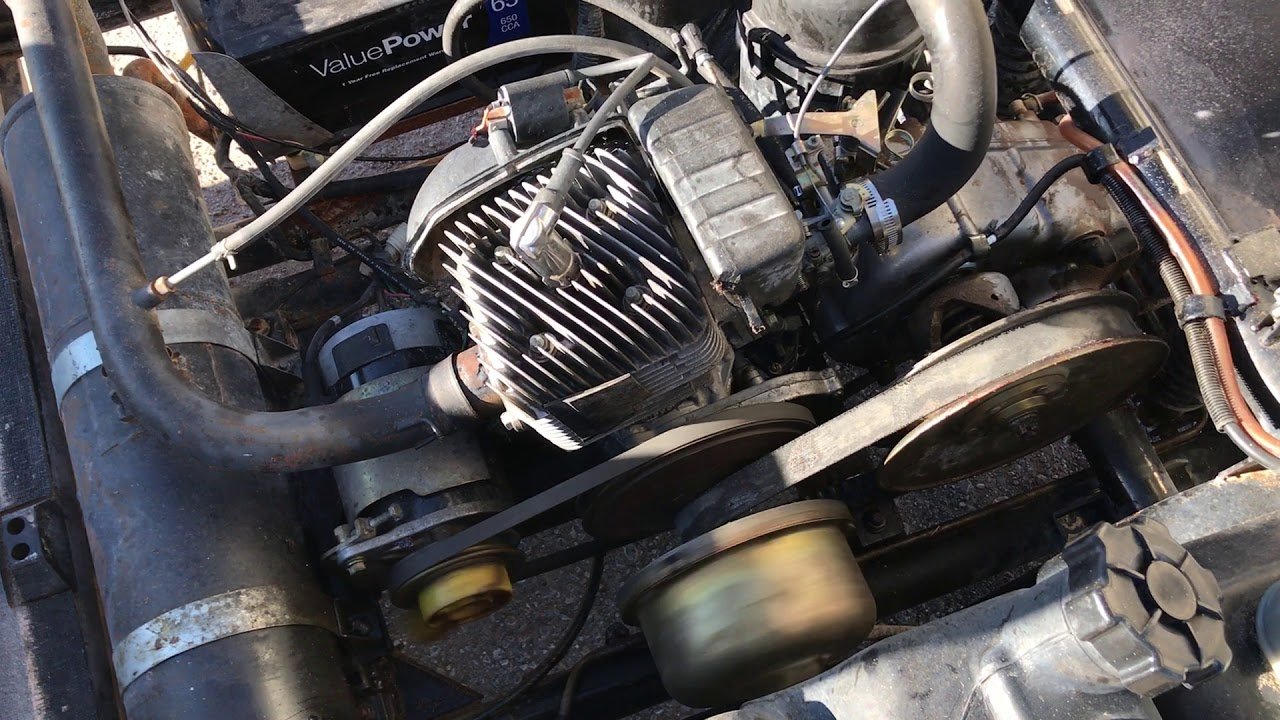
The Yamaha G22 parts catalog confirms the platform uses a carburetor assembly, fuel pump assembly, filter assembly, fuel pipes, and throttle wire. Those part rows are useful for identifying the system, but final replacement part numbers still need the frame serial and installed component checked before ordering.
03 : Step-by-Step Fuel Test
- Start with fresh fuel and the cap test. Run a short, safe test with the cap loosened. If full-speed dying stops, repair the vent path before touching the carburetor.
- Replace or bypass-test the filter safely. A filter can pass idle fuel and fail at WOT. Use correct fuel-rated parts and clamps.
- Inspect all fuel and pulse hoses. Bend each hose and look for cracks, soft spots, kinks, and loose clamps. A cracked pulse hose can make a good pump look bad.
- Check pump output. Route the carb feed into a safe container and crank briefly. You should see pulsing delivery. Weak dribble means supply restriction, pulse-line leak, or pump failure.
- Open the carburetor bowl. Look for water, rust, varnish, and sediment. Clean the main jet and emulsion passages. The G22 parts catalog lists a main jet inside the carburetor assembly, but jet size and carb details should be verified by the exact model and serial.
- Confirm throttle travel. With the engine off, press the pedal and watch the carb throttle plate and governor linkage. Sticky or partial travel can feel like fuel starvation.
04 : Tank Vent and Pulse Pump Details
Two G22-specific checks deserve extra attention. First is the tank vent. If loosening the cap makes the problem vanish, the engine was not getting steady fuel because the tank was pulling vacuum. Do not leave the cap loose as the repair. Clear the vent or replace the cap with the correct part.
Second is the pulse fuel pump. The pump depends on crankcase pressure pulses through a small hose. If that pulse hose is split, hardened, loose, or oil-soaked, the pump may move enough fuel at idle but not enough under sustained load. The parts catalog lists the G22 fuel pump assembly and fuel pipes in the fuel tank section, which is a reminder to inspect hoses and clamps before replacing the pump itself. A new pump cannot work if the pulse signal never reaches it.
When checking pump output, keep fuel away from ignition sources and catch it in a safe container. The test is not a published universal ounces-per-minute spec for every G22. It is a comparison test: strong pulsing flow versus weak, aerated, or absent flow while the symptom is present.
05 : Ignition and Heat-Related Stalls
If the fuel chain is genuinely clean and the G22 still dies at full speed, shift to ignition. Yamaha’s owner manual lists BPR2ES as the standard spark plug, a 0.028 to 0.031 inch gap, and 14.5 ft lb tightening torque for the G22A spark plug. Those are verified manual values for the G22A manual referenced here. Use the installed plug and manual for your exact serial if anything differs.
The practical split is hot spark versus no hot spark. The moment the cart stalls, pull safely aside and check spark with an appropriate tester. If spark is strong while hot, return to fuel and carburetion. If spark is missing hot but returns after cooldown, suspect the ignition coil, TCI unit, or wiring connection that opens with heat. Do not condemn the TCI first. A lean WOT stall from a plugged main jet can mimic ignition because both feel like the engine is being switched off.
The same fuel-and-throttle discipline applies across Yamaha gas carts, and the Yamaha G29 surging and hesitation guide covers the related Drive platform behavior.
06 : Bottom Line
A Yamaha G22 that idles but dies at full speed is usually running out of fuel delivery before it is running out of ignition parts. Test the tank vent, filter, hoses, pulse pump, carburetor bowl, main jet, and throttle linkage before replacing coils or TCI parts. If fuel checks pass, test spark hot at the moment of failure. Use Yamaha manual values where published, and treat catalog part numbers as serial-specific confirmation points rather than one-size-fits-all repair facts.
Updated July 2026: added G22 fuel-chain diagnostics, tank vent and pulse pump tests, carburetor checks, and verified spark plug values.
A Yamaha G22 that idles but dies at full speed is usually running the carburetor bowl dry under load. Test the tank vent, filter, pulse pump, hoses, and main jet before chasing ignition parts.
FAQ
Why does my Yamaha G22 die at full speed but idle fine?
At idle the engine needs little fuel. At full throttle it can drain the carburetor bowl faster than a restricted vent, filter, hose, pump, or main jet can refill it.
How do I test the G22 tank vent?
Run a short controlled test with the gas cap loosened. If the symptom improves only with the cap loose, repair the cap or vent path instead of leaving it loose.
When should I suspect ignition instead of fuel?
Suspect ignition after the fuel chain passes and the cart loses spark while hot. Test spark immediately after the stall, then again after cooldown.
What spark plug does the Yamaha G22A manual list?
The cited G22A manual lists BPR2ES, a 0.028 to 0.031 inch gap, and 14.5 ft lb tightening torque. Confirm against the manual for your exact serial if parts differ.