
EZGO Gas Cart Sputters and Dies at Full Speed: Fuel Delivery Fixes
An engine that runs fine at idle but sputters and dies under load is starving for fuel volume, not fuel presence. Work through the pulse pump, main jet, filters, and lines in the order the E-Z-GO service chart actually recommends.
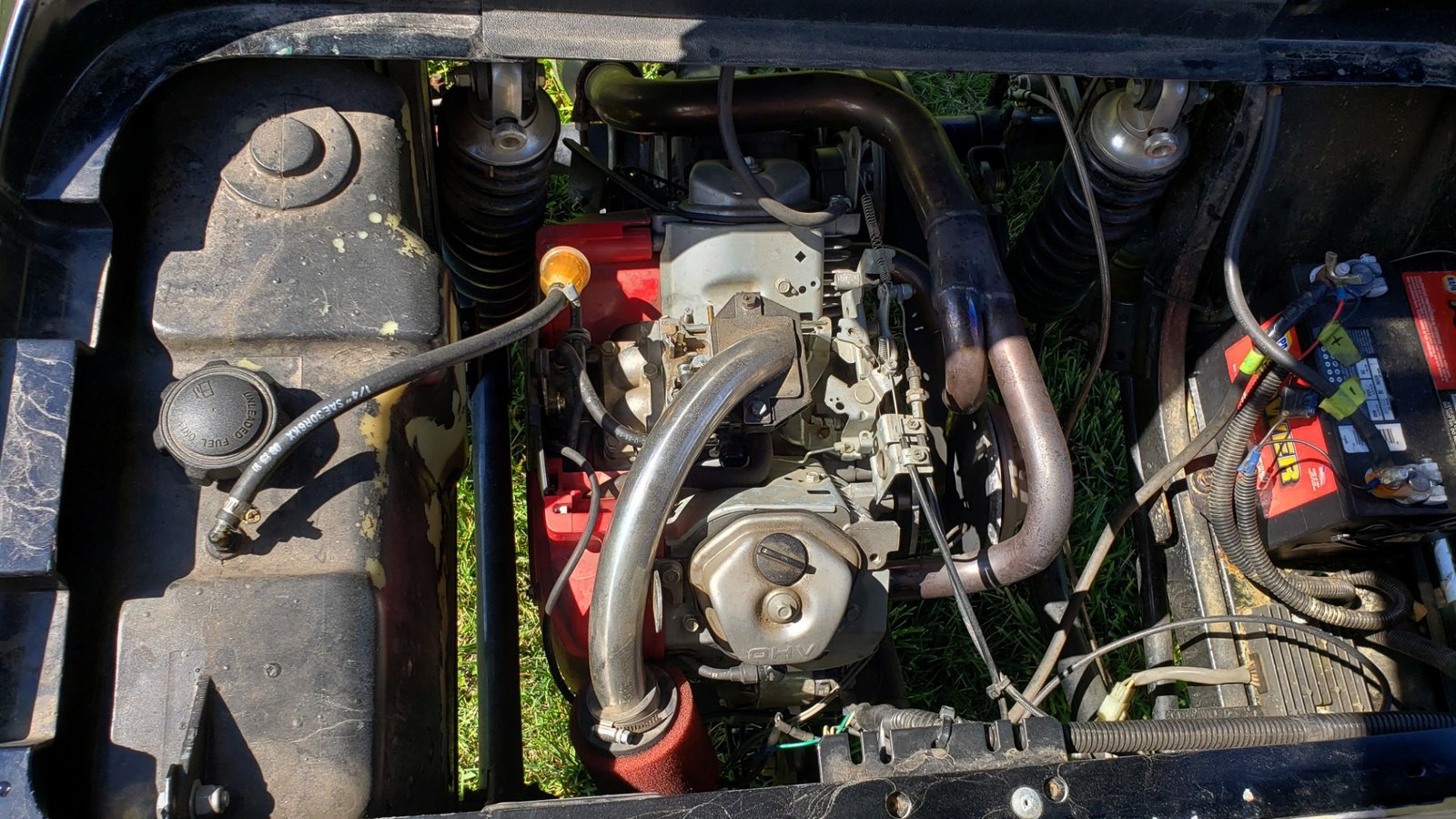
- Fuel starvation under load, not ignition failure, is the most common cause of full-speed sputtering and stalling.
- Check the pulse pump and vacuum line first; a weak dribble instead of strong pulsing flow points to pump or line failure.
- Never drill a main jet to enlarge it; clean the installed jet and match its stamped size when replacing.
- A partially clogged filter or a collapsing fuel hose can pass enough fuel for idle but fail exactly at wide-open throttle.
- Rule out a heat-sensitive ignition coil before replacing fuel system parts if cleaning does not resolve the stall.
If your EZGO gas cart sputters and dies at full speed, your engine is likely experiencing fuel starvation. At low speeds, a weak pump or partially clogged filter can often keep up, but once you demand maximum RPMs, the fuel delivery system fails. This guide details how to diagnose why your EZGO gas cart sputters and dies at full speed by working through the pulse pump, lines, filters, and carburetor jets in the order the manufacturer’s own troubleshooting chart recommends.
Pulse Pump Diaphragm and Vacuum Line Test
A gas TXT that idles cleanly and then falls on its face at wide-open throttle is often starving for fuel. The Robin/Subaru EH29 and EH35 engines used on many older TXT and Medalist carts, plus later Kawasaki TXT engines, use a pulse-style fuel pump. The pump does not make steady automotive fuel pressure; it moves fuel in pulses from crankcase vacuum and pressure changes.
The E-Z-GO gas service manual’s poor high-speed operation chart points to a faulty fuel pump, loose or clogged main jet, incorrect float level, dirt in the tank or hoses, clogged fuel filter, and dirty air filter. That is the right order for this diagnosis because every item limits fuel volume only after the engine is under load.
| Component | Verified reference | Field test |
|---|---|---|
| Pulse fuel pump | 72873G01 is a common replacement reference for Robin 295cc / 350cc and related small-engine pulse pumps in parts listings | Remove the carb feed line, crank the engine, and look for strong pulsing flow. A weak dribble is a failed pump or pulse line. |
| Pulse line | No universal public length spec found | Inspect for hardening, cracks at the barb, loose clamps, or fuel inside the pulse line. |
| Fuel pump pressure | No E-Z-GO public pressure number verified for these older pulse-pump carts | Use flow strength and recovery under load as the method, not an invented PSI target. |
High-Speed Main Jet Obstruction Check
If the engine runs on choke or at part throttle but dies at full speed, remove the carburetor bowl and inspect the main jet and emulsion tube. E-Z-GO’s service troubleshooting specifically lists loose main jet, clogged main jet or main jet air passage, and incorrect fuel level in the float bowl under poor high-speed operation. That supports the main-jet check, but it does not publish one universal jet size for every TXT gas engine.
Do not assume a fixed jet size for every cart. Robin/Subaru EH29, EH35, Kawasaki FE290, Kawasaki FJ400, and EX1 EFI generations differ. Clean the jet that is installed in your carburetor, record its stamped number if visible, and replace it with the same numbered jet unless your model’s engine manual specifies an altitude kit. Never drill a main jet; a single copper strand or proper jet cleaner is enough to remove varnish without enlarging the orifice.
Inline Fuel Filter Flow Restriction
Fuel filters are cheap and they fail gradually. A partially clogged filter lets enough fuel through for idle and low-speed cruise, then empties the carburetor bowl after a long hill or full-throttle run. Many aftermarket catalogs cross-reference E-Z-GO fuel filter number 72084G01 for older TXT / Medalist style gas carts, but confirm by hose size and arrow direction before installing.
- Flow direction: install the filter arrow toward the pump or carburetor, following the layout on your cart.
- Filter count: older carts may have a tank-side filter and an engine-side filter. Later carts may use a single inline filter.
- Water and sediment: if a fresh clear filter loads up quickly, drain and clean the tank instead of replacing filters repeatedly.
Suction-Induced Fuel Line Collapse
Old rubber fuel hose can collapse internally. From the outside it may look normal, but the liner can turn soft and fold shut when the pump pulls fuel at high RPM. Replace questionable hose with ethanol-resistant 1/4 inch fuel line unless your model’s fittings require a different size. Do not force 5/16 inch hose onto small barbs or clamp cracked hose back into service.
Route the hose away from the muffler, cylinder fins, and sharp frame edges. Use fuel-rated clamps, not hardware-store worm clamps that cut into small hose. After replacement, run the cart with the seat up and watch the clear filter. If the filter stays full and the cart no longer dies at speed, the fault was supply restriction rather than ignition.
Prove It Is Fuel and Not Spark Before You Buy Parts
A heat-soaked ignition coil fails in almost exactly the same way as fuel starvation: fine at idle, dies under sustained load, then restarts after a rest. Running this split first stops you replacing a fuel pump for an ignition fault.
| Test | How to Run It | What It Tells You |
|---|---|---|
| Clear-filter watch | Fit a clear inline filter, run the cart until it stumbles, then look at the filter immediately. | A filter that empties or shows air as the engine dies is a supply problem. A filter that stays full points at ignition instead. |
| Hot restart | When it dies at speed, try to restart right away, then again after 15 to 20 minutes. | Dead hot but fine once cool is the classic heat-sensitive coil pattern. Restarts immediately is more consistent with a fuel bowl refilling. |
| Spark under failure | With the engine hot and stalling, check for spark using an inline spark tester rather than pulling the plug on a hot engine. | No spark at the moment of failure is ignition. Steady spark while it dies puts you back on fuel volume. |
| Choke or prime response | As it starts to stumble at full throttle, briefly apply choke. | A brief recovery on choke means the engine is running lean, which supports the fuel-starvation path. |
High-RPM Fuel Delivery Summary
An EZGO gas cart sputters at full speed because the engine is using fuel faster than the tank, line, pump, filter, float bowl, or main jet can supply it. The fix is not to turn idle screws. Prove fuel volume first, then clean the main jet and verify float operation.
| Symptom | Most likely check | Verified source support |
|---|---|---|
| Weak pulsing fuel flow while cranking | Pulse line, pump, tank pickup | E-Z-GO poor high-speed chart lists faulty fuel pump and dirt in hoses |
| Idles but dies only at full throttle | Main jet, main air passage, float level | E-Z-GO chart lists clogged main jet and incorrect float level |
| Runs briefly after a rest | Filter restriction or collapsing hose | E-Z-GO chart lists clogged filter and dirt in tank or hoses |
| Fuel issue not proven | Heat-related ignition coil or spark loss | Check spark under failure conditions before buying fuel parts |
1. Crank with the carb feed line removed and confirm strong pulsing fuel flow. 2. Replace clogged filters, commonly 72084G01 style where fitment matches. 3. Replace soft hose with ethanol-resistant 1/4 inch fuel line when the fittings match. 4. Clean the installed main jet without drilling it and verify float movement.
Frequently Asked Questions
Why does my EZGO gas cart only sputter and die at full speed, not at idle?
At idle and low speed the engine needs very little fuel volume, so a weak pulse pump, a partly clogged filter, or a slightly restricted main jet can still keep up. At full throttle the engine demands much more fuel per second, and any one of those restrictions becomes the bottleneck, causing the sputter and stall under load.
How do I test the pulse fuel pump on an EZGO gas engine?
Pull the fuel line off the carburetor and crank the engine over. A healthy pulse pump delivers strong, forceful spurts of fuel. If fuel only dribbles out weakly, the pump diaphragm or the crankcase pulse line feeding it has failed and cannot support high-speed demand.
What main jet size does my EZGO gas cart carburetor use?
There is no single universal main jet size for every EZGO TXT gas engine. Robin/Subaru EH29, EH35, and Kawasaki FE290/FJ400 engines differ. Clean the jet that is already installed in your carburetor, record its stamped number, and replace it with the same numbered jet unless your engine manual specifies an altitude kit.
Could the sputtering be an ignition problem instead of fuel delivery?
Yes. A failing ignition coil can heat up and cut spark intermittently at high RPM, which mimics fuel starvation. Confirm consistent spark under load before replacing fuel system parts, especially if cleaning the pump, filter, and jet does not resolve the stall.
