
What Is the 90 Rule in Golf Carts?
The 90-degree rule keeps carts off the fairway except at a right angle to your ball, protecting turf while letting you drive close to your shot. Here is exactly how to follow it.
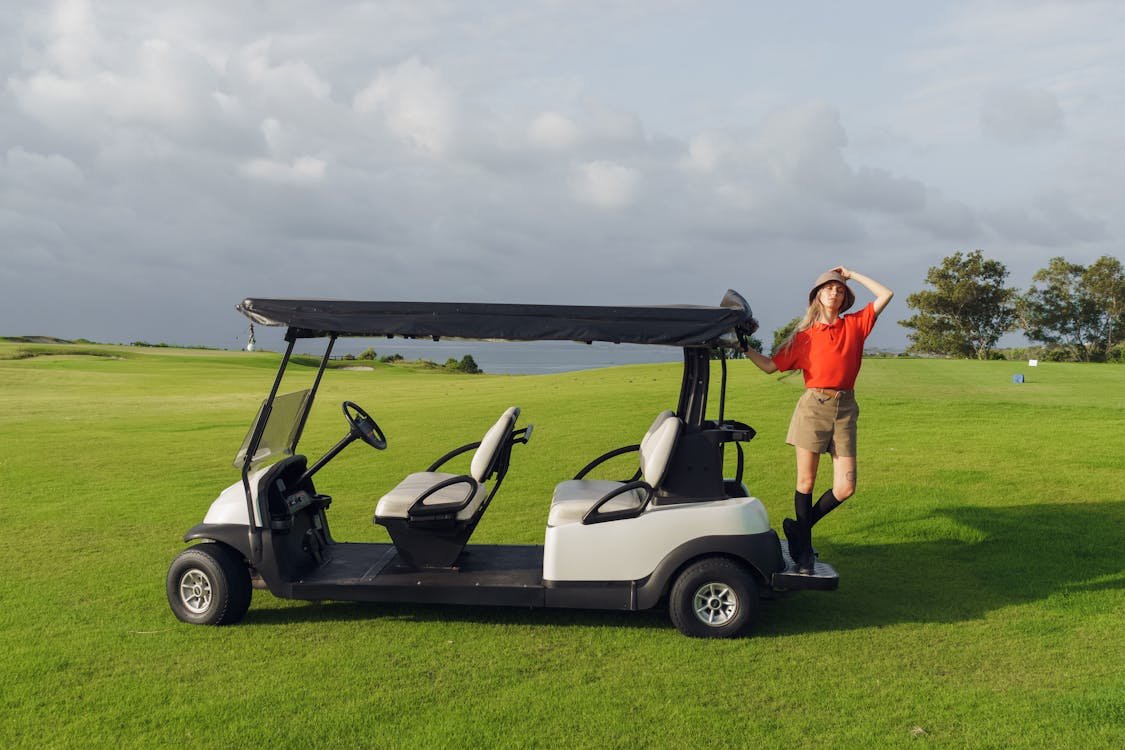
- USGA describes the rule as a middle ground between unrestricted turf access and cart-path-only operation.
- Cart tires press and shear the grass canopy and compact soil, especially during turns, acceleration, and braking.
- A superintendent can invoke the rule after rain when the course is wet but not wet enough for full path-only restrictions.
- There is no universal distance from a green or tee that applies at every course.
If you have seen a sign reading “90-Degree Rule in Effect” and wondered what it asks of you, it is one of the most common course-management policies in golf. The 90 rule in golf carts balances course protection with player convenience by controlling where and how carts leave the path.
The Rule In One Pass
- Drive on the cart path until the cart is even with the ball.
- Turn from the path at about a right angle and take the shortest practical route across the turf.
- Play the shot, avoiding wet, roped, repaired, tee, green, and approach areas.
- Return to the path on a similar near-perpendicular route instead of continuing down the fairway.
USGA describes the rule as a middle ground between unrestricted turf access and cart-path-only operation. It spreads entry and exit points, reduces the distance traveled on grass, and avoids the worn funnels created when every cart leaves near the tee and returns near the green.
| Course rule | What it means | When it is used |
|---|---|---|
| 90-degree rule | Stay on path until even with the ball, cross briefly, then return | Wet or stressed turf where limited access is still acceptable |
| Cart path only | All four tires stay on the path for the hole or round | Saturated, newly established, frozen, very dry, or otherwise vulnerable turf |
| Open or scatter traffic | Carts may leave the path subject to local boundaries | Firm, healthy turf when the course permits access |
| Ropes, stakes, or directional signs | Follow the marked route or keep out of the protected area | Localized repair, drainage, safety, or traffic-control needs |
| Walking-only area | No riding cart enters the marked zone | Greens, tees, approaches, hazards, habitat, or site-specific restrictions |
Why A Short Crossing Helps Turf
Cart tires press and shear the grass canopy and compact soil, especially during turns, acceleration, and braking. Wet soil deforms and ruts more easily. Very dry or cold-stressed grass grows too slowly to repair wear. Repeated traffic is more damaging than one isolated pass because it concentrates pressure along the same route.
USGA explains that the 90-degree rule keeps carts on the path longer and shifts entry and exit locations according to where different balls lie. It therefore reduces total grass travel and spreads crossings. It does not eliminate damage, and it does not authorize driving through a soft area merely because the angle is correct.
When Courses Change The Policy
A superintendent can invoke the rule after rain when the course is wet but not wet enough for full path-only restrictions. USGA also identifies cold weather, extended dry periods, shoulder seasons, winter, ground under repair, and heavy play as reasons. Cart-path-only rules are more likely when soil is saturated, turf is newly planted, or recovery is too slow to tolerate tires.
Policies can differ by hole because drainage, shade, soil, slopes, and repair work differ. Check the first tee, starter instructions, GPS message, scorecard, and signs on each hole. If instructions conflict, stop on the path and ask course staff rather than assuming access.
Apply The Rule Without Creating A New Wear Line
- Stay fully on the path while waiting. USGA recommends keeping all four tires on the path where possible instead of wearing the edge.
- Avoid steep, visibly wet, and extremely dry areas. Safety and turf condition override the shortest geometric line.
- Make smooth starts, stops, and turns. Tire spin and sharp steering add shear damage.
- Share a cart when course policy permits. Fewer vehicle passes reduce total traffic.
- Park and walk during a ball search. Circling adds unnecessary compaction.
- Respect every rope and stake. A 90-degree sign does not cancel a smaller protected zone.
There is no universal distance from a green or tee that applies at every course. Follow the local paint line, sign, GPS boundary, or staff instruction. The USGA’s broader guidance is to keep carts away from greens, approaches, and teeing surfaces.
What The Rule Does Not Mean
The phrase does not create a 90-degree steering requirement, a brake specification, a battery rule, or a federal vehicle classification. Off-course operation is governed by property rules and applicable traffic law, not by the course’s turf policy. Federal low-speed-vehicle equipment standards do not define this course rule.
For ownership background, see the average golf-cart lifespan, the golf-cart brand comparison, and the repair guides.
Frequently Asked Questions
What is the 90 rule in golf carts?
The 90-degree rule means staying on the cart path until you are even with your ball, then driving onto the fairway at a 90-degree angle to reach it and returning the same way. It protects course turf by minimizing grass travel.
What is the difference between the 90 rule and cart-path-only?
The 90-degree rule lets you enter the fairway at a right angle from the path, while cart-path-only forbids leaving the path entirely. Cart-path-only is stricter and used when turf is most vulnerable, such as after rain.
Reviewed and updated July 30, 2026 by the Golf Cart Lab team.
