Who Are the Big 3 in Golf Carts?
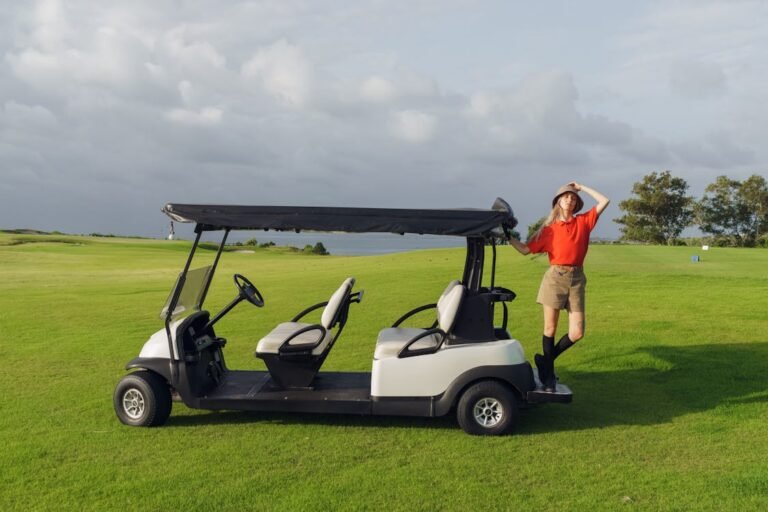
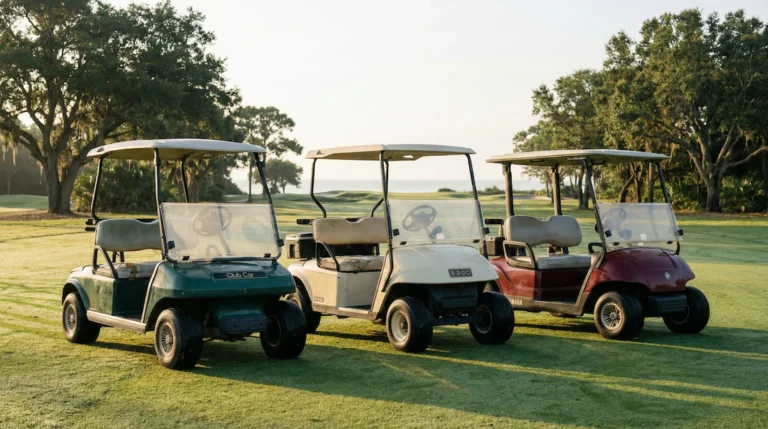
Walk onto almost any course or into any dealership and you will see the same three names again and again. The Big 3 golf carts brands have dominated the industry for decades, and understanding what separates them is the fastest way to shop smart, whether you are buying new or used.
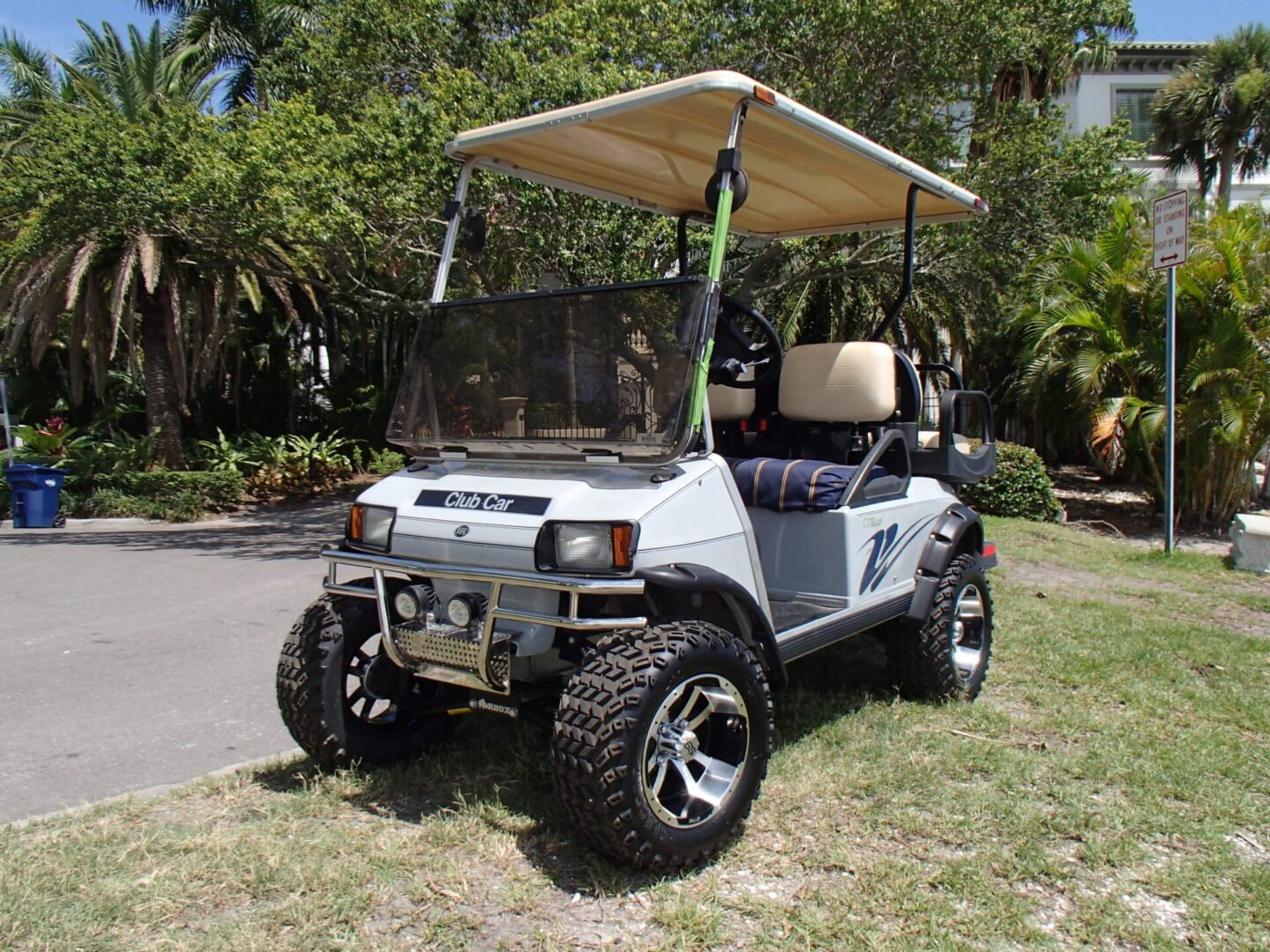
01 : Club Car, The Aluminum Frame Leader
Club Car built its reputation on a rustproof aluminum frame at a time when competitors used steel. That single engineering choice makes Club Car the favorite in coastal and humid regions where corrosion destroys lesser chassis.
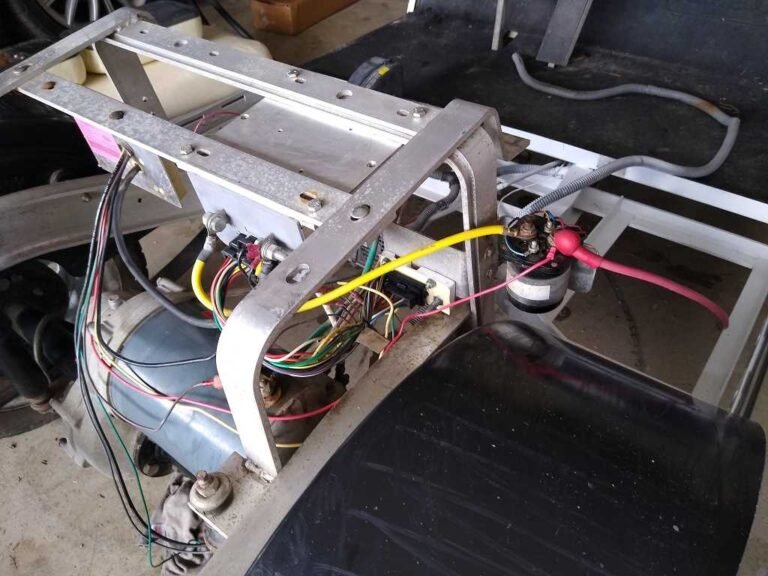
Models like the DS, Precedent, and Onward are workhorses with excellent parts support. The trade-off is that Club Car’s onboard computer (OBC) system can complicate charger swaps, a common project covered in our repair guides.
02 : E-Z-GO, Value and Customization
E-Z-GO (owned by Textron) is the brand most associated with personalization and value. The TXT and RXV platforms have a massive aftermarket, so lift kits, seats, and body kits are cheap and plentiful.
The RXV introduced an advanced AC drive and regenerative braking that improved efficiency and hill performance, making E-Z-GO a strong pick for buyers who want to build a custom cart without overspending on the base vehicle.
03 : Yamaha, Quiet, Efficient Drivetrains
Yamaha leans on its engine-building heritage. Its gas carts, especially the QuieTech EFI line, are famously quiet and fuel-efficient, while the Drive2 electric models are smooth and reliable. Yamaha’s independent rear suspension on some trims also gives a more car-like ride. If long range, low noise, and refinement matter most to you, Yamaha is the standout of the three.
04 : Which of the Big 3 Should You Buy?
All three are safe. Match the brand to your priority:
- Live near salt water or want max durability? Club Car.
- Want the cheapest path to a custom build? E-Z-GO.
- Want the quietest, most efficient ride? Yamaha.
Beyond the Big 3, several reputable challenger brands are worth knowing, we cover those in our brand comparison guides.
05 : How the Big 3 Split the Market
Between Club Car, E-Z-GO, and Yamaha, these three brands account for roughly 90 percent of the fleet and personal-cart market in North America. That dominance is not an accident. All three have decades of dealer networks, service training, and parts distribution that smaller brands simply cannot match. When you buy into the Big 3, you are buying into an ecosystem where a controller, solenoid, or motor is a phone call away rather than a two-week overseas shipment.
Club Car and E-Z-GO both trace their roots to the 1950s golf boom in the American South, while Yamaha entered the U.S. golf market in 1979 and leaned hard on its motorcycle and marine engine expertise. That difference in heritage still shows up today: Club Car and E-Z-GO feel like purpose-built utility platforms, while Yamaha carts often feel more like scaled-down automobiles.
06 : Key Model Years and Platform Changes
Model-year breaks matter because body panels, controllers, chargers, axles, and wiring can change while the badge stays familiar.
- Club Car: The DS arrived in the early 1980s and overlapped the newer Precedent after the Precedent’s 2004 launch. Mid-1990s 48V PowerDrive DS carts, later IQ/Excel electronics, and 2004-up Precedents are different parts families. Around 2014.5/2015, Precedent charging moved from the PowerDrive/OBC setup toward the ERIC high-frequency charger architecture. Tempo replaced Precedent in fleet sales around 2018, while the personal-use Onward began in 2017. Used-buyer check: identify DS versus Precedent/Tempo, then confirm OBC versus ERIC before ordering charger or controller parts.
- E-Z-GO: The Marathon gave way to the Medalist/TXT body family in the mid-1990s. Electric TXT buyers must separate Series drive from DCS (roughly late 1990s), PDS (about 2000/2001 onward), and 48V TXT systems introduced around 2010; their controllers and harnesses do not interchange by appearance alone. The RXV launched for 2008 with an AC drivetrain and electric motor brake, a major change from TXT hardware. Used-buyer check: read the manufacturing code and controller label, especially on early RXVs.
- Yamaha: The G-series moved through G14/G16/G19/G22 generations before the Drive, also called G29, arrived for 2007. Drive2 followed for 2017 with a new body and updated gas/electric powertrains; QuieTech gas and PowerTech AC variants require model-specific parts. Used-buyer check: use the Primary ID/serial prefix, not the seller’s year estimate, because gas and electric carts sharing a body can use completely different drivetrains.
Transition-year carts can carry running changes, so the serial plate and original part label outrank body shape. Verify those before buying a controller, charger, rear axle, or wiring harness.
07 : Long-Term Reliability and Brand Quirks
Every brand has a signature weak spot. On Club Car Precedents, the onboard computer (OBC) is the part that most often strands owners, because a failing OBC blocks charging and mimics a dead battery pack. On E-Z-GO RXV models, the early cars had inductive throttle sensors that could develop a hesitation off the line. Yamaha Drive2 electric carts are stout, but their J17 charge connector and relay can corrode in humid storage.
None of these issues are dealbreakers. They are simply the known items a smart buyer checks before handing over cash. If you understand the platform history and the one or two brand-specific gremlins, any Big 3 cart will give you 15 to 20 years of service with basic maintenance.
08 : Resale Value Across the Big 3
Resale is where the Big 3 truly separate from off-brand carts. A well-kept Club Car Precedent, E-Z-GO TXT, or Yamaha Drive holds value far better than an unknown import because buyers trust the parts availability and the frame durability. Lithium conversions and clean bodywork add the most resale value, while a tired lead-acid pack is the single biggest price drag. When you buy Big 3, you are also buying an easier future sale.
One more resale note: the electric versus gas decision matters more each year. In many resort and community markets, buyers now specifically search for electric and lithium carts, so a Yamaha QuieTech gas cart may sell slower in those areas even though it is mechanically excellent, while a Club Car or E-Z-GO already converted to lithium can command a premium of several hundred dollars over an identical lead-acid car. Factor your local buyer preferences into the brand and drivetrain you choose, because the smartest purchase is the one that also sells easily when you are ready to move on.
Frequently Asked Questions
Who are the Big 3 in golf carts?
The Big 3 golf cart brands are Club Car, E-Z-GO, and Yamaha. These three have dominated the industry for decades and together hold the majority of the market.
Which of the Big 3 is most durable?
Club Car is widely seen as the most durable thanks to its rustproof aluminum frame, which resists the corrosion that affects steel-framed carts in coastal and humid climates.
Do the Big 3 share parts?
No. Platforms and model years use different controllers, chargers, axles, and wiring, so confirm the exact platform and year by serial before ordering parts, even within one brand.
Which Big 3 brand is quietest?
Yamaha is the quietest, especially its QuieTech EFI gas line and smooth Drive2 electric models, drawing on the company’s engine-building heritage.