
Yamaha Quietech Engine Won't Fire: Spark & Fuel Fixes
- Use one branch at a time. Replacing a plug, pump, coil, injector, sensor, and ECU together destroys the evidence that identifies the actual fault.
- If these five branches pass, retrieve Yamaha diagnostic data or use a qualified technician.
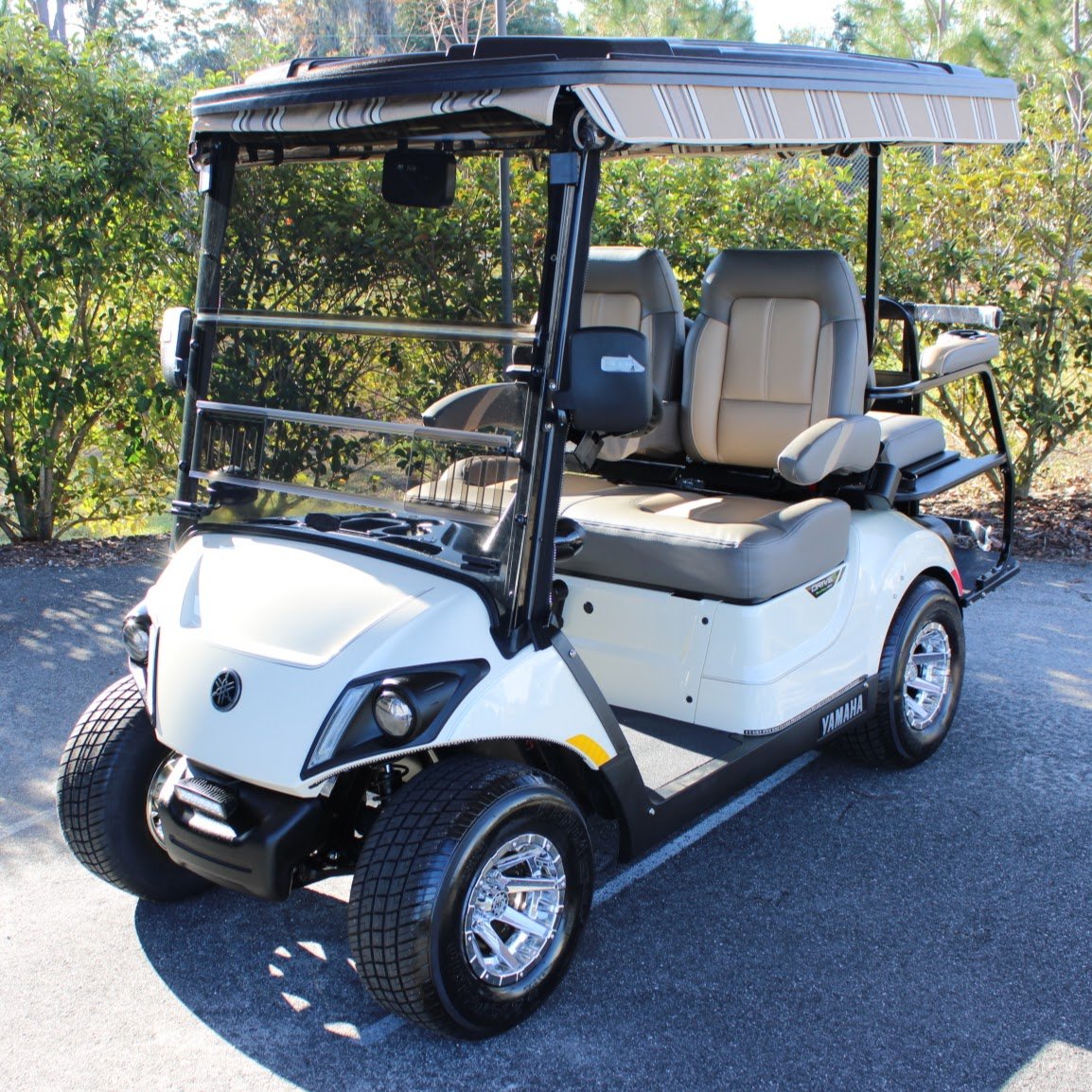
The QuieTech EFI (or carbureted) engine in the Yamaha Drive2 is designed for stealth and reliability, but when a Yamaha Quietech engine won't fire despite the starter spinning freely, the silence becomes frustrating. This guide covers the practical ways to restore combustion by isolating ignition failure from fuel delivery logic.
Exactly Five Ordered Fixes
| Fix | Symptom clue | Test | Tool |
|---|---|---|---|
| 1. Fuel quality and delivery | Sat unused, no prime, contaminated fuel | Fresh-fuel inspection, filter restriction, documented pump and injector test | Container, pressure or electrical tool specified by manual |
| 2. Spark and plug | Fuel smell, wet plug, intermittent start | Approved spark test, plug condition and gap | Inline tester, feeler gauge |
| 3. Safety and control circuit | No injector or ignition command | Key, pedal, stop circuit, connectors, and diagnostic code path | Wiring diagram and multimeter |
| 4. Intake and compression | Restricted air or uneven cranking sound | Air path inspection and service-manual compression test | Light, compression gauge |
| 5. Timing or flywheel key | Spark and fuel present but mistimed backfire | Service-manual timing reference and key inspection | Model-specific service tools |
Use one branch at a time. Replacing a plug, pump, coil, injector, sensor, and ECU together destroys the evidence that identifies the actual fault. Keep a worksheet with battery voltage during cranking, spark result, plug wet or dry condition, fuel-pressure result, injector command, compression, and stored diagnostic information.
1. Fuel Quality And Delivery
Drain stale or contaminated fuel safely and confirm the correct fresh fuel. Inspect the filter and connectors. A pump sound does not prove correct pressure, and no sound does not prove a failed pump until power, ground, fuse, and command are tested. Use the Drive2 service pressure and injector procedure; do not substitute a carbureted G-series pulse-pump test.
A dry plug after repeated cranking supports a delivery or injector-command problem. A wet plug supports flooding, poor spark, low compression, or mistimed ignition. Neither observation replaces the documented fuel-pressure test. Relieve pressure by the service procedure and prevent vapor, spills, sparks, and hot surfaces.
2. Spark And Plug
Use an inline spark tester rather than holding a loose plug near fuel vapor. Yamaha’s current Drive2 EFI owner manual identifies a 0.028 to 0.031-inch spark-plug gap on its emissions label. Yamaha’s current EFI utility manual publishes BPR4ES, 0.7 to 0.8 mm, and 20 N m for that documented model. Treat these as model-scoped values. Verify the exact cart label and manual before applying a part number or torque.
A visible spark proves only that a spark occurred during that test. It does not prove correct timing or adequate voltage under cylinder pressure. Inspect the plug insulator, electrode wear, cap engagement, coil connector, engine ground, and harness before condemning the coil.
3. Safety And Control Circuit
Inspect battery voltage, grounds, fuses, key and pedal inputs, harness locks, and diagnostic indications in manual order. Do not bypass an interlock or jumper ECU pins. A missing ignition and injector command can be an input, power, ground, sensor, or ECU problem, so prove the circuit before replacing a module.
4. Intake And Compression
Check the air filter, inlet, throttle body, and crankcase ventilation without flooding sensors with solvent. Then run the exact compression or leak-down procedure. Cranking does not guarantee enough cylinder pressure to ignite. Equal repeated gauge pulses matter as well as the final model-specific reading.
5. Timing Or Flywheel Key
Only after fuel, spark, control inputs, and compression pass should timing be opened. A damaged key or mechanical timing fault can make spark occur at the wrong crank position. This is a service-manual inspection, not a guess from coil resistance. The public Yamaha owner sources used here do not publish a universal QuieTech coil-resistance value, so none is invented.
Narrow It Down Before You Start
Before working through the five branches, spend two minutes sorting the symptom. A QuieTech that turns over but will not fire is telling you something specific depending on how it cranks, what it smells like, and whether it ever catches for a moment. Sorting this first often saves an hour of testing in the wrong branch.
- Cranks fast and evenly, no catch at all. The engine is spinning well enough, so battery and starter are unlikely. Start at fuel delivery, then spark. This is the most common pattern on a cart that sat over winter.
- Cranks slowly or unevenly. Fix the cranking speed first. A weak 12V start battery or a corroded ground can spin the engine enough to sound normal while leaving spark voltage too low to jump the gap under compression. Check start-battery voltage during cranking, not at rest.
- Catches for half a second, then dies. Fuel is reaching the cylinder but something is cutting the run circuit or starving it immediately after. Look at the safety and control circuit branch, plus fuel pressure holding under load rather than just initial prime.
- Strong fuel smell, wet plug. Delivery is working. The problem is on the ignition side, or the engine is flooded from repeated cranking attempts. Stop cranking, pull the plug, let it clear, then test spark properly.
- Backfires through intake or exhaust. Skip ahead and consider timing or the flywheel key. Fuel and spark are both present but arriving at the wrong crank position.
Write down which pattern matches before you touch a tool. If the cart changes behavior partway through testing, that change is itself diagnostic information worth recording.
Safety Notes Specific To This Job
This job puts you around fuel vapor and a live ignition system at the same time. Work outdoors or in a well ventilated bay, keep a suitable extinguisher within reach, and never test for spark by holding a loose plug near an open fuel source. Relieve fuel pressure using the documented service procedure before opening any line on an EFI cart.
Disconnect the start battery before working inside the harness or removing connectors. On EFI models, repeatedly cranking a flooded engine can wash oil off the cylinder wall and load the catalyst with raw fuel, so limit cranking attempts to short bursts with a rest between them.
Frequently Asked Questions
Why does my QuieTech turn over but not start after sitting all winter?
Stale fuel is the usual answer. Modern pump gasoline with ethanol can begin separating and losing volatility within a few months, and what is left may not ignite readily even though the tank looks full. The fuel system may also have lost prime. Drain the old fuel safely, refill with fresh fuel, and work through the delivery branch before assuming anything electrical has failed.
How do I know whether it is a fuel problem or a spark problem?
Pull the plug after several cranking attempts and look at it. A dry plug points toward fuel delivery or injector command. A wet plug means fuel is arriving, so the problem is more likely spark quality, compression, or timing. This is a strong first indication, but it does not replace the documented fuel-pressure test, because a plug can be damp from a weak spray pattern that still is not enough to run the engine.
I have spark at the tester, so why will it still not fire?
An inline tester proves a spark happened in open air at atmospheric pressure. Inside the cylinder under compression, the same coil may not produce enough voltage to jump the gap. Spark timing also matters as much as spark presence. If the tester shows spark and the engine still will not catch, verify plug gap and condition, confirm compression, and then look at timing rather than replacing the coil on the assumption that it is weak.
Can a bad battery stop a gas cart from starting even though it cranks?
Yes. The starter can draw enough current to pull system voltage down far enough that ignition and injector operation become unreliable, while the engine still sounds like it is spinning acceptably. Measure the start-battery voltage while cranking rather than at rest, and clean the battery terminals and engine ground before condemning any engine component.
Is it safe to bypass a safety switch just to test whether it starts?
No. Those interlocks exist so the engine cannot start with the cart in gear or the pedal in an unexpected position, and bypassing one can cause the cart to move unexpectedly the moment it fires. Test the switch and its circuit with a meter against the wiring diagram instead. If a switch is genuinely faulty, replace it rather than jumping around it.
When should I stop and take it to a technician?
If fuel delivery, spark, the control circuit, and compression all test within specification and the engine still will not fire, the next step is retrieving stored diagnostic data from the ECU, which needs Yamaha-specific equipment. Timing and flywheel key inspection also calls for model-specific service tools and reference figures. At that point a qualified technician will be faster and cheaper than continuing to substitute parts.
Stop Point
If these five branches pass, retrieve Yamaha diagnostic data or use a qualified technician. See diagnostics and repair guides.
Reviewed and updated July 30, 2026 by the Golf Cart Lab team.
