
EZGO TXT Stuck Gas Pedal: Throttle Linkage and Spring Adjustment
A wide-open throttle that will not release is a safety-critical mechanical failure. Work through the pedal box, linkage, springs, cable, and governor in order, using the actual service-manual spec, not guesswork.
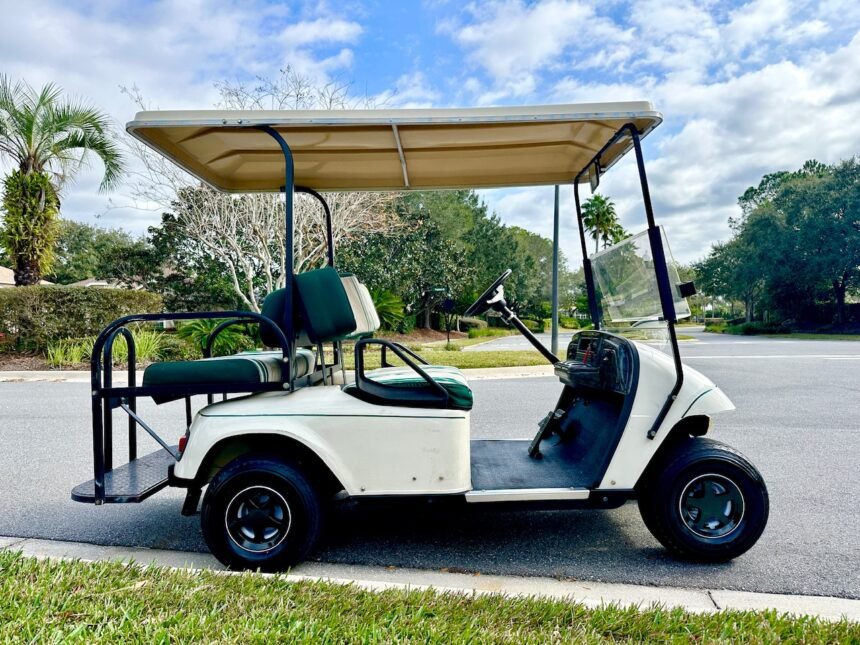
- Start with the pedal box: debris packed into the pivots is the cheapest and most common cause of a stuck pedal.
- The service-manual spec is 1 inch of free travel at the top of the accelerator pedal with the carburetor fully closed.
- Return springs and cable part numbers differ by engine family; match by serial number before ordering.
- Never use extra governor spring preload to mask a binding cable or linkage.
- A helper-assisted, wheels-off-the-ground test isolates whether the fault is the pedal, the cable, or the carburetor shaft.
A EZGO TXT stuck gas pedal is one of the most dangerous mechanical failures you can encounter on the trail or the street. Whether the pedal is physically wedged in the floor mat or the internal return spring has snapped, a wide-open throttle that will not release requires immediate diagnosis. This guide breaks down the five checks that find and fix the actual cause, in the order that avoids masking a real problem with a spring or cable shortcut.
Pedal Box Debris Clean-Out
On the gas TXT, the pedal box is a low, open cavity under the floor mat. Sand, pine needles, acorns, and dried mud can hold the accelerator pedal down even when the cable and carburetor are healthy. If you are chasing a stuck gas pedal, start here because it is the cheapest failure point and it is also the easiest one to inspect safely.
Remove the floor mat and the metal access plate. Vacuum loose debris first, then blow the pivot area clean with low-pressure compressed air while wearing eye protection. E-Z-GO maintenance schedules call for throttle and governor linkage checks at regular service intervals, so this is not just a cosmetic cleanout. Use a light, dry-film spray only on exposed pivots after cleaning; heavy grease can trap grit inside the pedal box and make the same problem return.
Governor-to-Carburetor Linkage Alignment
The TXT gas throttle chain is mechanical. The pedal pulls the accelerator cable, the governor system meters throttle opening, and the governor-to-carburetor rod moves the carburetor butterfly. If one piece is bent, over-tightened, or routed against the engine shroud, the pedal may not return cleanly.
| Reference item | Verified data | How to use it |
|---|---|---|
| Throttle cable adjustment | E-Z-GO gas service manual method: carburetor throttle plate fully closed, governor arm fully counter-clockwise, cable secured with no tension and minimal slack. | Use this for the governor-to-carb cable. If the cable holds the throttle partly open, the pedal will hang. |
| Accelerator cable adjustment | E-Z-GO gas service manual method: throttle fully closed while allowing 1 inch travel at the top of the accelerator pedal. | This is the hard adjustment number to check after pedal-box work. |
| Accelerator cable reference | 72713G02 is a common replacement reference for 1996 and newer gas TXT / utility applications in parts catalogs. | Confirm by serial number and cable length before ordering because Workhorse, RXV, and EX1 layouts differ. |
Inspect the governor rod and carburetor lever while a helper slowly presses and releases the pedal with the rear wheels safely off the ground. The carburetor butterfly must snap back to the idle stop every time. Shiny rub marks on the rod, a cable jacket pulled out of its bracket, or a missing plastic bushing means the linkage is binding rather than the pedal itself sticking.
Replacing the Primary Return Springs
Return springs are safety parts, not tuning parts. The TXT uses spring tension at the pedal and governor linkage to pull the throttle closed after your foot comes off the pedal. Replace any spring that is stretched, rusty, rubbing a bracket, or has a hooked end worn thin.
Public parts catalogs cross-reference several E-Z-GO return spring numbers, including 70181-G01, 10135-G1, and 70272-G01, but these are not one-size-fits-all for every TXT gas year. Match the spring by serial number, engine family, and linkage diagram before buying. Robin/Subaru EH29 and EH35 carts, Kawasaki FE290 and FJ400 carts, and newer EX1 EFI carts do not all use the same linkage shape.
- Pedal spring: returns the pedal arm and pedal switch cam. A weak spring gives a lazy or mushy pedal.
- Governor spring: works against the governor arm. Excess preload can overpower the return path.
- Carburetor shaft: must close under its own spring force when the linkage is disconnected. If it sticks bare, clean or rebuild the carburetor before adjusting cables.
Throttle Cable Lubrication and Friction
A worn throttle or accelerator cable can feel fine with the cart parked and still bind under engine vibration. Disconnect both ends and slide the inner wire by hand. It should move smoothly with no crunching, kinks, broken strands, or delayed return. If the cable liner is swollen from rust or old lubricant, replace the cable rather than forcing oil through it as a permanent repair.
Use the service-manual method after installing a cable. For the throttle cable, set the carburetor plate fully closed and the governor arm fully counter-clockwise, then tighten the cable with no tension and minimal slack. For the accelerator cable, keep the throttle closed while leaving 1 inch of free travel at the top of the pedal. That 1 inch number matters because a zero-slack pedal can hold the carburetor slightly open and create the stuck-pedal symptom you are trying to fix.
Governor Tension and Speed Adjustments
Many stuck-pedal complaints start after a speed adjustment. Tightening the governor spring nut can increase throttle opening, but too much preload reduces the linkage’s ability to return to idle. E-Z-GO engine and service literature warns against governor tampering because overspeed can damage the engine and affect warranty coverage.
Reset the linkage before tuning anything for speed. Back off added spring preload, verify the carburetor closes against the idle stop, and confirm the pedal has the 1 inch top travel called out in the service procedure. If the cart still hangs after those checks, the problem is friction, cable routing, or a worn pivot, not a need for more spring tension.
| Item | Known reference | Caution |
|---|---|---|
| Accelerator cable | 72713G02 common replacement reference, often listed as 55-1/2 inch for older gas utility/TXT family applications | Verify by serial number and cable length |
| Pedal free travel | 1 inch at top of accelerator pedal | Published service adjustment method |
| Throttle cable preload | No tension, minimal slack, carb fully closed | Method from E-Z-GO gas service manual |
| Governor speed setting | Check governed speed, no public universal nut dimension | Use tachometer and model manual, do not tune by thread count |
1. Clean the pedal box and pivot area. 2. Disconnect the linkage and confirm the carburetor closes by itself. 3. Reset cable adjustment to fully closed throttle with 1 inch pedal top travel. 4. Replace kinked cables or weak springs using serial-number-matched parts.
Frequently Asked Questions
How much free travel should an EZGO TXT gas pedal have?
The E-Z-GO gas service manual method calls for the throttle plate fully closed at the carburetor while allowing about 1 inch of travel at the top of the accelerator pedal before the cable begins to pull. A pedal with zero slack can hold the carburetor slightly open and create a stuck-pedal symptom even with healthy springs.
What causes an EZGO TXT stuck gas pedal besides a broken spring?
Debris packed into the pedal box pivots is the most common non-spring cause, followed by a bent or misaligned governor-to-carburetor rod, a swollen or kinked throttle cable liner, and over-tightened governor spring preload from a prior speed adjustment.
Can I just add more governor spring tension to fix a stuck pedal?
No. Adding governor spring preload increases throttle opening but reduces the linkage’s ability to return to idle, which can make a sticking pedal worse. Reset the linkage to the service-manual baseline first, then diagnose friction or a binding cable rather than compensating with extra spring tension.
Is the same return spring part number used on every EZGO TXT gas cart?
No. Public parts catalogs cross-reference multiple E-Z-GO return spring numbers, but Robin/Subaru EH29 and EH35 carts, Kawasaki FE290 and FJ400 carts, and newer EX1 EFI carts do not share one linkage shape. Match the spring by serial number and engine family before ordering.
