The Average Lifespan of a Golf Cart
A golf cart frame can outlive a car, 20 to 40 years with basic care. The catch is that batteries, tires, and the motor wear out long before the chassis. Here is how long each part really lasts.

01 : The Average Lifespan of a Golf Cart Frame
The single biggest reason golf carts last so long is the chassis. Built from steel or aluminum and operating at low speeds with minimal impact stress, a golf cart frame routinely survives 20 to 40 years. Aluminum frames (like those on many Club Car models) resist rust especially well, which is a major factor in long-term survival.
Because the frame is so durable, the practical lifespan of your cart is determined almost entirely by how diligently you replace the wear items bolted to it. A 30-year-old cart with a fresh battery pack, new tires, and a rebuilt motor drives like new. This is why brand and build quality matter so much, the guide on which brand is easiest to maintain directly affects how painless those decades of upkeep will be.
02 : Batteries: The Shortest Clock
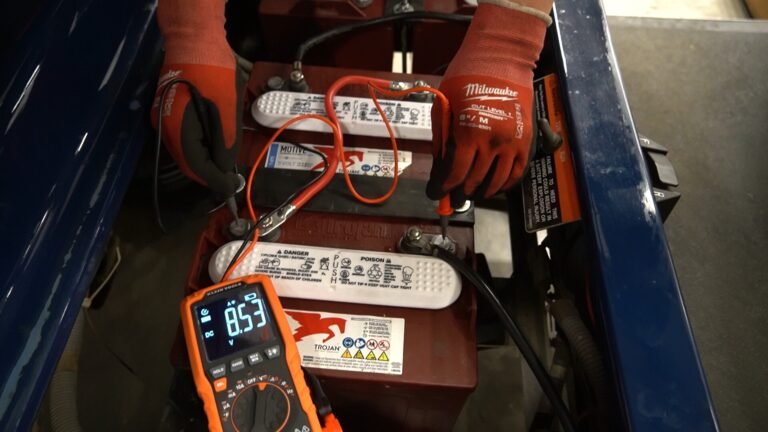
The battery pack is the component most owners replace first and most often. On an electric cart, the battery is also the single biggest factor in how the cart feels day to day:
-
Lead-acid (flooded): 5 to 7 years with proper watering, charging, and storage. Neglect, chronic undercharging or letting them sit dead, can cut that in half.
-
Lithium (LiFePO4): 10+ years and thousands of cycles, with far less maintenance and steady performance until end of life.
Battery choice has a huge effect on long-term cost, not just lifespan. The lead-acid vs lithium cost breakdown shows how the higher upfront price of lithium often wins over the life of the cart.
03 : Motor, Tires, and Other Wear Parts
Beyond the battery, a handful of components define your maintenance calendar:
-
Motor: Often lasts 20+ years. Brushes and bearings are the usual wear points and are rebuildable rather than total-loss items.
-
Tires: Roughly 5 to 7 years, or sooner with sun exposure and rough terrain. Dry rot from sitting often kills them before tread wear does.
-
Controller & solenoid: The controller frequently lasts the life of the cart, while solenoids are a periodic replace item.
For a deeper look at how long the electronics specifically hold up, see the guide on how long golf cart controllers last.
A detail many owners miss is that tire age matters more than tread depth on a cart. Because most carts cover only a few hundred miles a year, the sidewalls dry-rot and crack while the tread still looks fresh. Look for the four-digit DOT date code stamped on the sidewall: a tire more than seven years old should be replaced regardless of how it looks, since a blowout on a lifted cart can bend a spindle. The same slow-aging logic applies to drive belts on gas models and to the rubber motor mounts, both of which harden and crack from ozone and heat rather than from mileage.
The component clocks are easier to use when their uncertainty is visible. Battery makers do not publish one life for every climate and duty cycle, and frame makers do not rate a chassis to a universal retirement year. The table therefore separates sourced manufacturer facts from conservative field-planning ranges.
| Component | Typical service-planning range | Main wear driver | What the source can and cannot prove |
|---|---|---|---|
| Frame / chassis | 20-40+ years when structurally sound | Steel rust, battery acid, collision damage, cracked welds, or fatigue around lift and seat mounts. | No OEM publishes one universal calendar life. Club Car aluminum and E-Z-GO coated steel require different inspections. |
| Flooded lead-acid pack | About 4-7 years in well-maintained private use; intensive fleet duty is often shorter | Deep discharge, low water, heat, long partial-charge storage, and weak charging. | U.S. Battery says life cannot be precisely predetermined. The range is a maintenance-planning estimate, not a warranty. |
| LiFePO4 pack | 10+ years is a reasonable target for a quality supported pack | Cycle depth, heat, charging outside the pack limits, BMS stress, and long storage at extreme state of charge. | Trojan currently backs its lithium line with a 10-year warranty; exact cycle and capacity terms remain model-specific. |
| Traction motor | 10-20+ years | Heat, overload, bearing contamination, commutator wear on DC motors, or feedback faults on AC motors. | No universal design-life number is published. Use temperature, insulation, bearing noise, and current draw rather than age alone. |
| DC motor brushes | Often 5-10 years in private use; hours and remaining brush length are better measures | Starts under heavy load, dust, a rough commutator, heat, and high current. | Inspect against the serial-matched motor service limit. Do not replace by calendar alone. |
| Tires | Inspect annually; 6-10 years is the common manufacturer age window cited by NHTSA | UV, heat, underinflation, curb damage, cracking, and tread wear. | NHTSA says recommendations commonly fall at 6-10 years and explains the four-digit DOT date code. |
| Controller | About 8-15 years; simple lightly loaded DC units can exceed 20 | Thermal cycling, moisture, overvoltage, loose high-current connections, and chronic overload. | The detailed controller lifespan guide treats this as a field estimate, not an OEM rating. |
| Solenoid / contactor | About 5-10 years, with very wide duty-cycle variation | Contact arcing, low coil voltage, welded contacts, heat, water, and excessive key cycles. | Test coil command and voltage drop across closed contacts. Calendar age alone does not prove failure. |
A cart does not become worn out when the first component reaches the end of its row. A sound frame with available parts can accept several battery packs, tires, contactors, and even a motor. Structural corrosion, recurring electrical heat, and unavailable serial-matched electronics are more meaningful retirement signals than the odometer alone.
04 : How to Maximize Your Cart’s Lifespan
Getting to the top of that 20-to-40-year range comes down to consistent, unglamorous habits:
- Charge correctly, never store lead-acid batteries discharged, and keep lithium in its recommended range.
- Keep it dry and covered, moisture is the enemy of terminals, the motor, and electrical connections.
- Water flooded batteries on schedule with distilled water, checking levels monthly in use.
- Clean and protect terminals to prevent the corrosion that quietly robs performance and damages components.
- Service the motor, replace brushes and bearings before they damage the commutator or armature.
Build quality sets the ceiling on all of this. If you are buying with longevity in mind, the comparison of which golf cart brand is best weighs durability and parts availability across the major makers.
One habit worth adopting on any cart from the mid-2000s onward is checking the leaf-spring shackle mounts and the rear-axle U-bolts once a year. On carts that see coastal air or road salt, these fasteners rust from the inside long before the frame rails show it, and a seized shackle bolt is the kind of small neglect that turns a 30-year chassis into a scrap candidate. A few minutes with a wire brush and anti-seize keeps the suspension rebuildable.
05 : Gas vs Electric Longevity
Both gas and electric carts can reach decades of service, but they age differently. Electric carts have fewer moving parts and lower maintenance, with the battery pack as the main recurring cost. Gas carts add an engine, fuel system, and more routine servicing (oil, filters, carburetor), but they avoid battery replacement entirely and can be easier to keep running long-term in remote settings. Neither is inherently longer-lived, the deciding factor in the average lifespan of a golf cart is always maintenance discipline, not the power source.
There is a resale wrinkle worth knowing. On the used market, a gas cart with a tired engine is often worth rebuilding because a top-end kit is inexpensive, while an electric cart facing a full lead-acid pack replacement can cost more to revive than the cart is worth, which is exactly why so many older electrics sit unused with dead packs. If you are shopping a 15-to-20-year-old cart, budget for that pack up front and the electric platform easily matches the gas one for total years of service.
Frequently Asked Questions
What is the average lifespan of a golf cart?
The chassis of a golf cart commonly lasts 20 to 40 years. The real lifespan depends on replacing wear items: batteries, tires, brushes, and eventually the motor.
How long do golf cart batteries last?
Flooded lead-acid packs last about 5 to 7 years with proper watering and charging, while lithium LiFePO4 packs last 10 plus years and thousands of cycles.
What wears out first on a golf cart?
The battery pack is replaced first and most often, followed by tires (often from dry rot, not tread wear), then motor brushes and bearings.
How do I make a golf cart last longer?
Charge correctly, keep it dry and covered, water flooded batteries on schedule, keep terminals clean, and service the motor brushes and bearings before they damage the commutator.
Lab Verdict: The average lifespan of a golf cart is 20-40 years for the chassis. Batteries (5-7 yrs lead-acid, 10+ lithium), tires, and brushes wear first, replace them on schedule, keep the cart dry, and the frame will outlast them all.