New vs Used Golf Cart: Which Is the Smarter Buy?
How depreciation, price, warranty, and condition stack up, with real dated market price anchors, so you know exactly when a used cart saves you thousands versus when buying new is worth the premium.
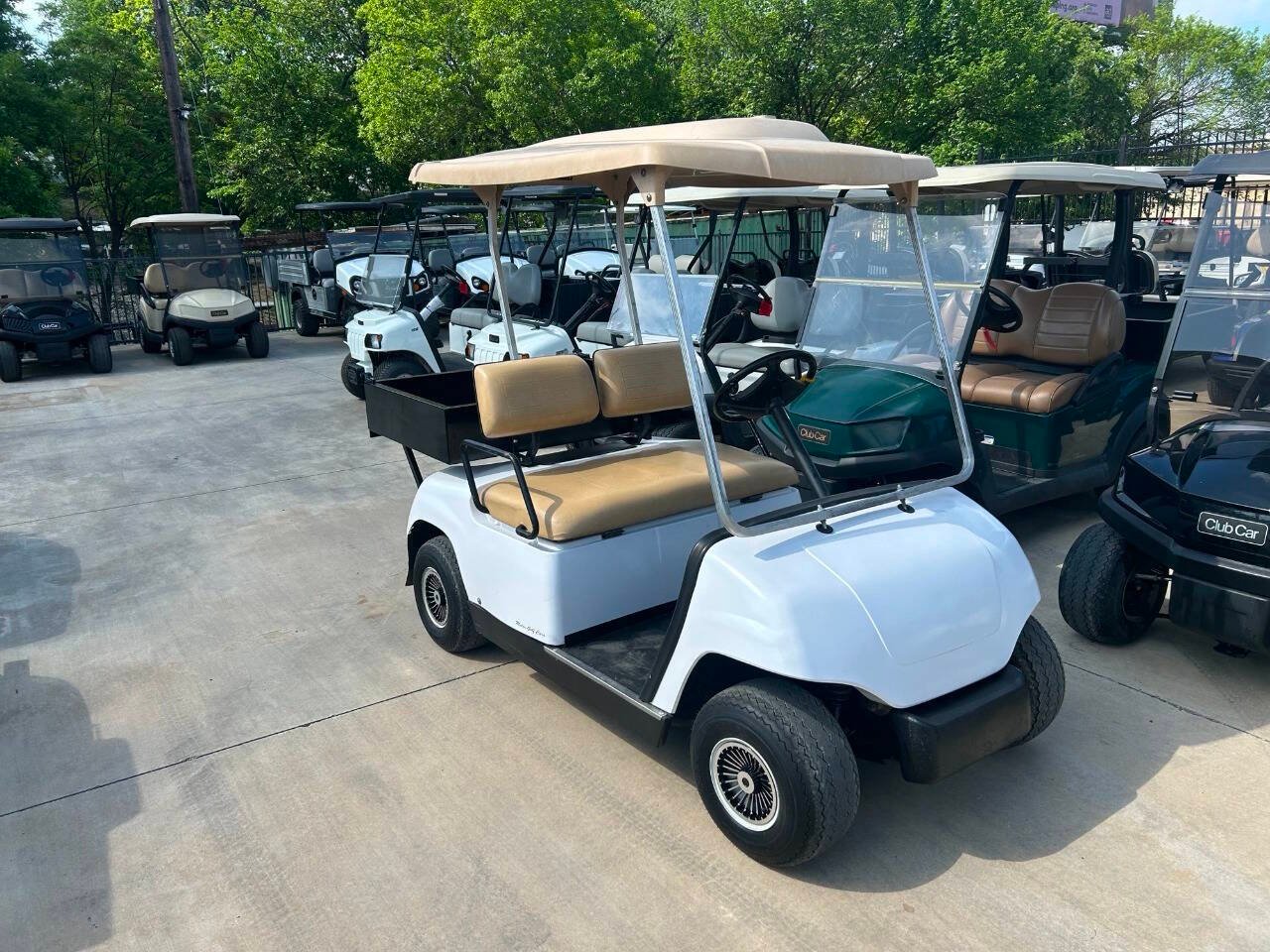
- Club Car’s Onward starts at $11,299 new, while GolfCartSearch’s March 2026 data shows a $5,450 median asking price across 208 used Club Car Precedent listings.
- Club Car’s Certified Pre-Owned electric models start at $5,999, a useful middle-ground anchor between private used listings and full new pricing.
- The cleanest depreciation rule is not “half price after three years.” It is early value loss, then condition and battery age driving the price from there.
- Battery age is the single biggest hidden risk in a used cart; always test voltage under load and decode the true year before buying.
Once you have decided on electric versus gas and settled on a brand, the next question is whether to buy new or used. It is largely a question of value versus peace of mind, and understanding how golf carts depreciate makes the decision much clearer.
The price gap between new and used
New carts from a dealer typically start around $9,000-$12,000 and climb past $15,000 once you add lithium, lift kits, street-legal equipment, and accessories. A current anchor: Club Car’s U.S. site listed the Onward 4 Passenger at a starting price of $11,299 on the main vehicle page, while the detailed Onward 4 Passenger page listed current starting MSRP examples by powertrain, including flooded lead-acid at $11,699 and gas at $12,199. Checked July 18, 2026, Club Car’s Certified Pre-Owned page listed electric CPO vehicles starting at $5,999 and a CPO 4 Forward lithium starting MSRP of $8,999 before freight and setup.
That is the depreciation reality check: used-price data is market data, not a factory schedule. GolfCartSearch’s Club Car Precedent value page, updated March 2026, reported 208 used Precedent listings with a median asking price of $5,450 and most examples between $3,999 and $6,995. Its year table showed a 2023 Precedent fair price of $6,990, a 2020 fair price of $4,995, and a 2016 fair price of $4,995, with top-dollar older carts often lifted, reconditioned, or carrying newer batteries.
| Observed price anchor | Source and date | How to read it |
|---|---|---|
| New Club Car Onward 4 Passenger, $11,299 starting price on Club Car’s main vehicle listing | Club Car site, checked July 18, 2026 | New-model anchor, before final dealer fees, freight, setup, taxes, accessories, and local incentives. |
| Club Car Certified Pre-Owned electric models starting at $5,999 | Club Car CPO page, checked July 18, 2026 | Factory CPO anchor, useful because it is not a private-party one-off. |
| Club Car Precedent median asking price, $5,450 from 208 listings | GolfCartSearch, updated March 2026 | Directional market data based on dealer asking prices, not guaranteed sale prices. |
| Used 2016 Club Car Precedent, sale price $4,999, with new batteries | Fink Golf Cars listing, checked July 18, 2026 | Single dealer example showing how an older cart can still price near the model median when reconditioned. |
So the cleanest rule is not “half price after three years.” It is “new carts lose a meaningful chunk early, then condition and battery age take over.” Not sure which model fits your budget? Our cart finder quiz narrows it down and links real used prices by year. For a full breakdown of pricing across new, used, and lithium carts, see our guide on how much a golf cart costs.
What you get by buying new
Buying new is not just about the badge. A new cart comes with a fresh battery bank (often lithium), the latest drivetrain and safety features, and a manufacturer warranty that covers expensive components for several years. You also get to order exactly the configuration you want, color, seating, lift, lights, and wheels, instead of settling for whatever is on the used lot.
For buyers who value worry-free ownership, a warranty on the battery and electronics alone can justify the premium, since those are the two costliest things to replace. If you plan to keep the cart a decade and want it set up precisely to your taste from day one, new makes sense.
What you get by buying used
The used market is where the value lives. Because golf carts are mechanically simple and the major brands are durable, a cart that has been cared for can deliver many more years of reliable service at a fraction of the new price. You can often buy a higher trim used, with a lift, nicer wheels, and accessories already installed, for less than a base new cart.
The catch is that condition varies enormously. A used cart may need a battery bank soon (a $700-$3,000 expense), or it may have hidden frame rust or tired electronics. That is why a careful inspection is essential, the savings only materialize if you buy a good example. Our used golf cart buying guide walks through a full inspection checklist.
The risks of buying used (and how to manage them)
Most used-cart regret comes from skipping due diligence. Protect yourself by checking the big-ticket items before you pay:
- Battery age and health: ask the date and test the voltage under load, a dying pack is the most common hidden cost.
- True model year: decode the serial yourself rather than trusting the seller’s claim, using our serial number decoder.
- Frame and rust: steel-framed carts in wet climates can hide structural corrosion.
- Drive test: listen for whining, check acceleration on a hill, and confirm the brakes feel solid.
Which should you buy?
Use the money data and the inspection result together:
- Buy new if you want a warranty, the newest tech, exact custom options, and zero history to worry about.
- Buy used if you want the best value, are comfortable inspecting a cart, and are happy with a model that is a few years old.
A middle path many buyers love is a lightly used or certified pre-owned cart with a known battery date. Club Car’s CPO page gives a useful current anchor because it starts electric CPO models at $5,999 and lists a 2-year manufacturer’s warranty on its Black and Gold CPO package comparison. That can be a better buy than the cheapest private listing if the cheaper cart needs batteries, tires, or charger work immediately.
| Buyer profile | What the observed market data suggests | Main risk to check |
|---|---|---|
| Lowest upfront price | Older Precedent examples in the March 2026 dataset commonly live around the $3,999 to $5,450 range | Battery age, charger health, frame corrosion, and hidden reconditioning costs. |
| Best value with support | CPO electric starting around $5,999 can sit close to used-market medians while adding dealer backing | Confirm exactly what the CPO warranty covers and whether batteries are new. |
| Latest features | New Onward and similar carts start around the low five figures before options | Dealer fees, freight, setup, lithium upgrade cost, and insurance or registration for LSV trims. |
Compare brands first in our EZGO vs Club Car vs Yamaha guide, or browse all of our buyer and repair guides. Used prices vary by region, condition, season, and battery type, so treat every number here as an observed anchor, not a fixed appraised value.
The bottom line
For the majority of buyers, a carefully inspected used golf cart delivers the best balance of value and performance. Carts are simple, durable machines, so age matters far less than maintenance history and battery condition. If you do your homework, verify the year, test the batteries, and check the frame, you can save thousands and still own a cart that runs like new for years.
Choose new when the warranty, latest features, and custom-spec freedom genuinely matter to you and the premium fits your budget. There is no wrong answer here, only the answer that fits your priorities. Whichever way you lean, never buy any cart, new or used, without confirming its exact year and model and giving it an honest test drive first. A few minutes of inspection up front is the cheapest insurance you will ever buy on a golf cart, and it is what separates a great deal from an expensive mistake.
The new-versus-used decision is mostly about battery risk and feature certainty. A used 2016-2022 Precedent, TXT, RXV, Drive, or Drive2 can be a great buy, but the battery pack can erase the savings if it is near end of life. Lead-acid packs need date-code checks, voltage testing, and a load test. Lithium carts need proof of brand, capacity, charger compatibility, and whether the BMS app works. New carts cost more, but you know the warranty clock, charger, controller, and accessories belong together. Used carts are better when you can inspect the frame, decode the year, and negotiate around tires, batteries, and seat condition. Avoid comparing only paint and upholstery. A shiny used cart with old batteries can be more expensive over two years than a plain cart with documented maintenance.
Used wins on value for most buyers, a $11,299 new Onward versus a $5,450 median used Precedent, thanks to steep early depreciation. New wins for warranty, latest tech, and custom specs. Either way, verify the year with our serial decoder and inspect before you pay.
Frequently Asked Questions
Is it better to buy a new or used golf cart?
For most buyers, a carefully inspected used golf cart delivers the best value. Golf carts are mechanically simple and durable, so age matters far less than maintenance history and battery condition. Buy new if you want a warranty, the latest lithium tech, exact custom options, and zero history to worry about.
How much do golf carts depreciate?
Golf carts lose the most value in their first two to three years, similar to cars. Real market data backs this up: Club Car’s Onward 4 Passenger starts at $11,299 new, while GolfCartSearch’s March 2026 dataset of 208 used Club Car Precedent listings showed a median asking price of $5,450, with most examples between $3,999 and $6,995. After the early drop, price is driven more by condition and battery age than by year alone.
What should I check before buying a used golf cart?
Check battery age and health by testing voltage under load, decode the serial number yourself to confirm the true model year rather than trusting the seller, inspect the frame for rust or hidden corrosion, and do a drive test listening for whining while checking acceleration on a hill and brake feel.
Is a certified pre-owned golf cart worth it?
Often yes. Club Car’s Certified Pre-Owned page starts electric CPO models at $5,999, close to typical used-market medians, while adding dealer backing and a manufacturer’s warranty on the CPO package. That can be a better buy than the cheapest private listing if the cheaper cart needs batteries, tires, or charger work immediately.