Solenoid Upgrades: When Do You Need a 400A Solenoid?
Upgrading your motor or controller? Learn the science behind why a 400A heavy-duty solenoid is required for high-performance golf carts to prevent melting and welding.

- To understand why you need an upgrade, you have to understand how solenoids are rated in the real world.
- Before a solenoid fails outright it usually warns you.
- Where the solenoid lives and how it is triggered varies by cart.
- A heavy-duty solenoid only helps if the rest of the circuit can keep up.
Think of the solenoid as the "Gatekeeper" of your amperage. Every single amp flowing from your battery to your motor must pass through this switch. Trying to push 600A through a stock 100A solenoid is like pushing a fire hose through a cocktail straw.
Continuous vs. Peak Ratings
To understand why you need an upgrade, you have to understand how solenoids are rated in the real world.
| Rating Type | What it Means | Stock Unit | HD Unit |
|---|---|---|---|
| Continuous | Indefinite current flow | 80 – 100 Amps | 400+ Amps |
| Peak/Inrush | 1-3 second burst | ~300 Amps | 1,000+ Amps |
Lab Verdict: If you install a 500A or 600A controller, you are asking for more “Peak” current than a stock solenoid can handle, leading to rapid internal degradation.
How Stock Solenoids Burn Out
In high-performance carts, undersized solenoids suffer from two terminal issues:
1. Pitting and Carbon Buildup
Higher amperage creates a hotter electrical arc every time the solenoid “clicks.” This arc eats away the smooth copper, creating pits and soot that eventually insulate the connection (The “Click of Death”).
2. Contact Welding
Extreme heat can melt and fuse copper contacts together. This creates a dangerous “runaway” situation where the cart continues to drive even after you release the pedal.
When the 400A Upgrade Becomes Mandatory
You meet the “High Load” criteria for an upgrade if any of the following apply:
- Controller Upgrades: If your controller is Alltrax or Navitas (400A+), the 400A solenoid is mandatory.
- The Load Factor: Frequently carrying 4+ adults or towing yard equipment.
- Steep Terrain: Daily driving on grades steeper than 15%.
- Large Tires (22″+): Bigger tires require a massive amperage spike (Breakaway Torque) every time you start moving.
The Lab Choice: Silver Oxide Contacts
In the Research Lab, we look for **Silver Oxide Contacts**. While standard copper is common, silver oxide handles high-heat arcing without pitting, maintaining a clean connection for 48V and 72V high-performance systems.
Summary Checklist
- Verify Voltage: Match your coil voltage (36V or 48V) to your battery pack.
- Upgrade Wires: Pair a 400A solenoid with 2AWG or 4AWG welding cables.
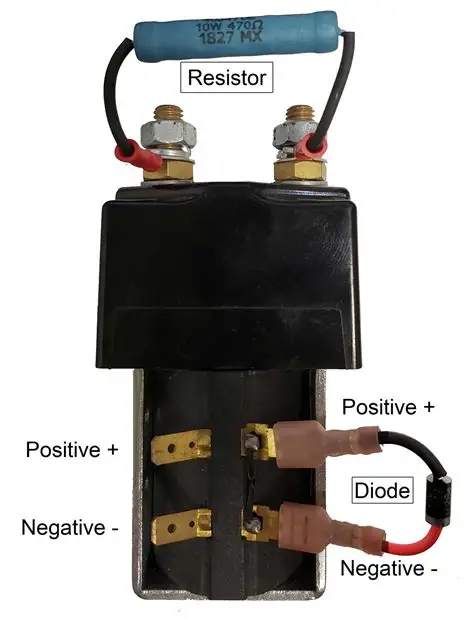
- Install a Diode: Always use a fresh Flyback Diode on small terminals to protect your controller from voltage spikes.
- Resistor Pre-charge: Use a pre-charge resistor to protect the internal contacts from initial arc-over.
Field Symptoms of a Dying Solenoid
Before a solenoid fails outright it usually warns you. The most common early sign is a loud single click when you press the pedal but no movement, or movement only after several tries, that is pitted contacts failing to pass current cleanly. A solenoid on its way out often gets hot to the touch after a short drive, and you may notice the cart hesitating or cutting power on hills where it used to pull steadily. The most dangerous symptom is the opposite of no-start: welded contacts that keep the motor energized after you lift off the pedal, causing the cart to creep or lurch. If you ever feel the cart trying to drive with your foot off the pedal, stop and disconnect the pack immediately, because that is a welded solenoid and it will not fix itself.
Solenoid Setups by Cart Platform
Where the solenoid lives and how it is triggered varies by cart. On an older Club Car DS and the E-Z-GO TXT series, the solenoid sits in an easy-to-reach spot near the controller and is a simple four-post unit, which makes the upgrade straightforward. Newer Sepex and AC carts like the IQ Precedent and the E-Z-GO RXV integrate the solenoid, sometimes called a contactor, into a more managed system, and the controller handles pre-charge, so you must match the replacement to that controller rather than grabbing a generic part. Yamaha G-series carts place theirs under the seat as well. Whatever the platform, confirm the coil voltage of the replacement matches your pack, a 48V coil on a 36V cart will not pull in reliably, and a 36V coil on a 48V pack will overheat.
Getting the Install Right
A heavy-duty solenoid only helps if the rest of the circuit can keep up. Pair the 400A unit with heavy welding cable, typically 4 AWG or 2 AWG on a performance build, because a fat solenoid feeding thin cable just moves the bottleneck downstream. Always fit a fresh flyback diode across the small coil terminals; that diode absorbs the voltage spike when the coil releases and protects your expensive controller from being killed by it. On big controllers, add a pre-charge resistor so the controller capacitors are gently charged before the main contacts slam shut, which dramatically reduces the arc that pits contacts over time. Torque the large stud nuts firmly and keep them tight, since a loose main lug creates resistance, heat, and premature failure no matter how good the solenoid is.
Getting the Most Life From Your Solenoid
Even a quality silver-oxide solenoid lasts longer with good habits. Avoid slamming from forward to reverse while still rolling, because that dumps a huge current spike through the contacts every time. Keep your battery connections clean and tight so the pack delivers full voltage, since a sagging pack makes the controller draw more current to do the same work, and that extra current lands on the solenoid. Check the small trigger wires occasionally for corrosion, as a weak coil signal causes the solenoid to chatter, and chatter destroys contacts fast. On a well-maintained performance cart, a proper 400A silver-oxide solenoid should outlast several sets of tires, which is exactly why it is such cheap insurance against a mid-trail failure.
For the federal equipment standards that apply, see NHTSA low-speed vehicle standards.
Frequently Asked Questions
How do I know if I need a 400A solenoid?
If you have upgraded to a 400A-600A controller, or if your cart has large tires and carries heavy loads, you need a 400A solenoid. If your stock solenoid is hot to the touch after driving, it's a sign it is undersized.
Will a 400A solenoid increase my top speed?
No, it won't increase top speed, but it increases reliability and torque. By removing the electrical bottleneck, your motor receives the full amperage it needs without losing energy to heat at the solenoid contacts.
Reviewed and updated July 10, 2026 by the Golf Cart Lab team.