Golf Cart LED Light Kit Worth It?
LEDs are brighter and far more efficient than halogen, an easy yes for most carts. The catch is beam quality: cheap reflector kits blind oncoming drivers.
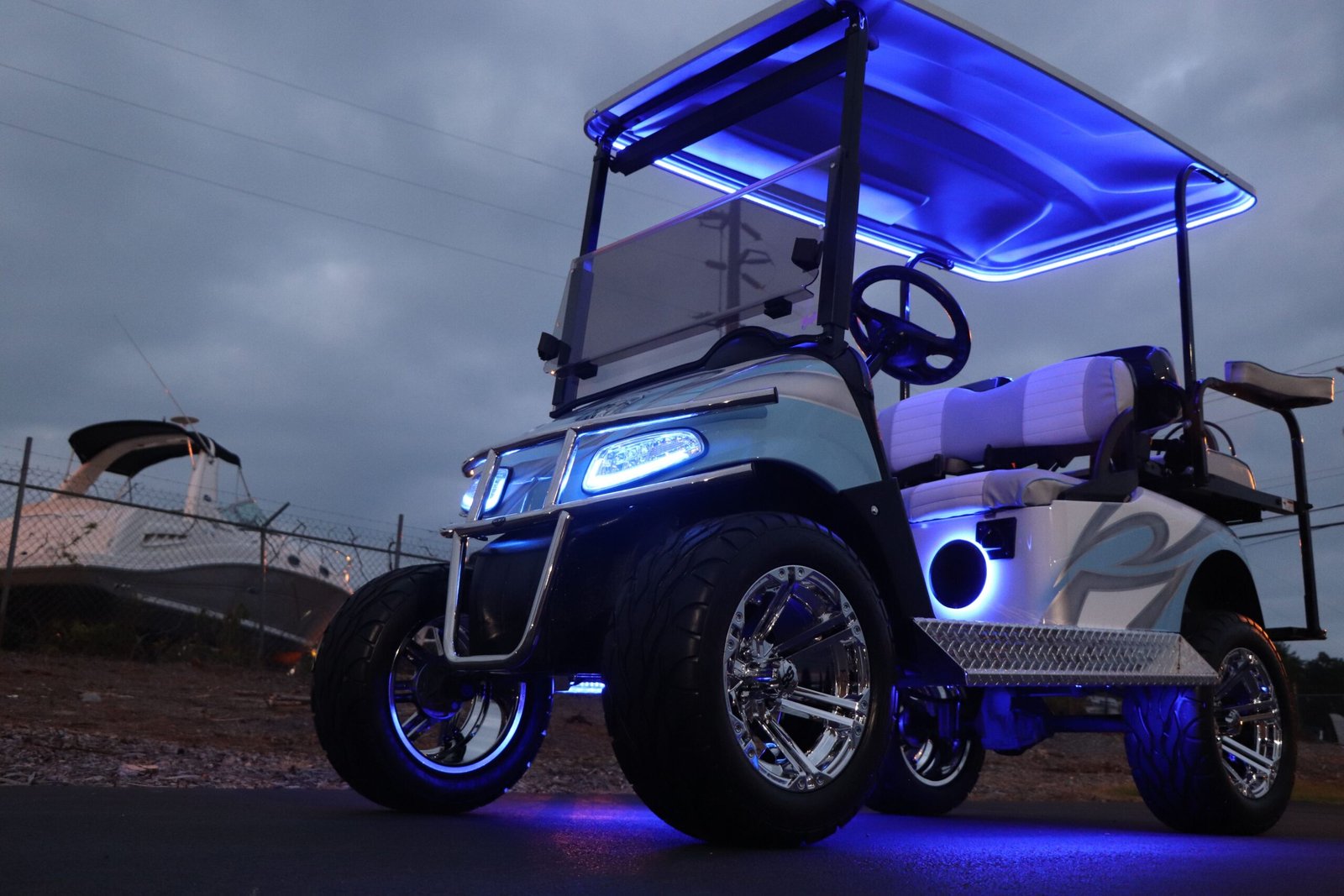
- LED headlights put out roughly 1,500-3,000 lumens versus 700-900 for halogen, while drawing only 2-4 amps versus 8-10 for halogen.
- Buy the kit listed for your exact make, model, and year, MadJax and RHOX both sell model-specific plug-in harnesses.
- Beam quality, not brand, is what separates a good kit from a bad one: choose a projector-lens kit over a cheap open reflector.
- LED-compatible flasher relays fix hyper-flash turn signals; seal connectors and aim beams for a kit that lasts years.
An LED light kit is one of the most popular and practical golf cart upgrades. The lights themselves are almost always an improvement over halogen, the only real decision is buying a properly aimed kit instead of the cheapest one. A golf cart LED light kit is worth it for almost anyone who drives at dusk, at night, or anywhere near roads.
What an LED Kit Delivers and What It Costs
Fitment is the first thing to sort out, because a kit that bolts to an EZGO TXT will not line up on a Club Car Precedent. The most common platforms, the EZGO TXT and RXV, the Club Car DS and Precedent, and the newer ICON i-series, each have kits cut to their exact cowl and body openings, so buy the kit listed for your make, model, and year rather than a universal set you have to hack in. MadJax and RHOX both sell model-specific plug-in harnesses for these carts that clip into the factory light openings, which turns a wiring project into a thirty-minute swap.
A modern LED headlight assembly puts out roughly 1,500 to 3,000 lumens versus 700 to 900 for old halogen kits, while drawing only 2 to 4 amps total at 12V versus 8 to 10 amps for halogen, a real difference on a 36V cart where every accessory amp shortens range. A basic headlight/taillight kit runs about $60 to $150; a full street-legal kit with turn signals, brake lights, and a horn runs $150 to $350+. Brands that come up often include MadJax, RHOX, the OEM E-Z-GO and Club Car kits, and budget options like 10L0L and Boogey Lights. The dividing line is not brand prestige, it is whether the headlight uses a focused projector lens or a cheap open reflector.
What Owners Actually Report After Installing
Owners overwhelmingly endorse switching to LED, the brightness, low draw, and long life are not really debated. The complaints cluster around two things. First, the cheapest kits throw raw, unaimed glare that annoys oncoming traffic and does not actually light the path well; owners repeatedly recommend projector-lens kits with a real beam pattern. Second, some budget kits use thin wiring or weak connectors that corrode, a frequent fix is upgrading the harness or sealing the connectors.
For anyone going street-legal, owners stress that lights are only part of the requirement (turn signals, brake lights, mirrors, horn, and often a windshield are also needed). Our street-legal checklist covers the full list state by state.
The Honest Trade-offs to Weigh
The one quirk that surprises owners is the taillight and brake circuit on street-legal kits. Because LEDs draw so little current, some carts with an older mechanical flasher can make the turn signals blink far too fast, the classic hyper-flash problem, since the flasher expects the higher load of incandescent bulbs. The fix is an electronic LED-compatible flasher relay, usually a five-dollar part, and it is worth buying the kit that already includes one. On lithium ICON and Advanced EV carts that ship with factory LED lighting, adding a light bar is simpler, but you still want to confirm the factory 12V reducer has the spare amps before you tap it, or the new lights will dim the dash.
- Brightness & efficiency: 2 to 3x the light of halogen at a fraction of the amp draw.
- Lifespan: LEDs typically outlast the rest of the kit, little maintenance.
- Cheap-kit glare: Unaimed reflectors blind oncoming drivers and light the path poorly.
- Wiring quality varies: Budget harnesses can corrode; a DC converter is needed to power 12V lights on a 36/48V cart.
Is an LED Kit the Right Buy for Your Cart?
Worth it if: you ever drive in low light, share paths or roads with others, or want a cleaner look, which is nearly everyone. Just buy a projector-style kit rather than the cheapest listing.
Skip it if: your cart only ever runs in full daylight on a private course and you have no interest in the look, then lights are optional. Otherwise the value is strong.
If your cart runs 36V or 48V, make sure you have a healthy converter to feed 12V accessories, see why a failing one can fry your accessories, and browse other worthwhile add-ons in our best accessories guide.
The Bottom Line on Upgrading to LED
If you want the kit to last, spend the extra few minutes sealing the connections. Budget harnesses use open crimp connectors that corrode green within a season in wet climates, so pack the plugs with dielectric grease or replace them with heat-shrink butt connectors, and route the wiring up and away from the tires where road spray hits. Aim the projector beams before you call it done, headlights pointed slightly down light the path without blinding oncoming carts.
An LED light kit is one of the easiest “yes” upgrades on this whole list. It improves safety and visibility, sips power compared to halogen, and rarely needs attention once installed. The only way to get it wrong is to chase the lowest price and end up with a glare-bomb reflector kit and flaky wiring. Spend a little more for projector lenses and decent connectors, feed it from a healthy 12V converter, and an LED light kit is comfortably worth it for the vast majority of owners.
Worth it for nearly everyone who drives in low light or near roads, brighter and far lower draw than halogen. Buy projector-lens kits with good wiring; skip the cheapest glare-prone reflector kits.
Frequently Asked Questions
Is a golf cart LED light kit worth it?
For almost anyone who drives in low light or near roads, yes, LEDs are brighter, draw far less current, and last for years. Choose a projector-lens kit to avoid blinding oncoming drivers.
Do LED lights drain a golf cart battery?
Very little, a full LED kit draws only about 2 to 4 amps at 12V versus 8 to 10 for halogen, so impact on range is minimal, especially compared to older bulbs.