Golf Cart Battery Maintenance: Watering, Charging & Care
A simple routine to make golf cart batteries last: watering flooded lead-acid the right way, charging habits that add years, and the exact hydrometer numbers that make a check useful.
- Confirm chemistry first: flooded packs need watering, while AGM and lithium must never be opened.
- Water flooded cells with distilled water only after a full charge, to just below the fill well.
- Trojan full-charge specific gravity is 1.277 corrected to 80F; near 1.217 is only about 70 percent charged.
- Correct SG by 0.004 per 10F from 80F, and treat a cell more than 0.030 below its neighbors as a problem.
Identify your battery chemistry before you start
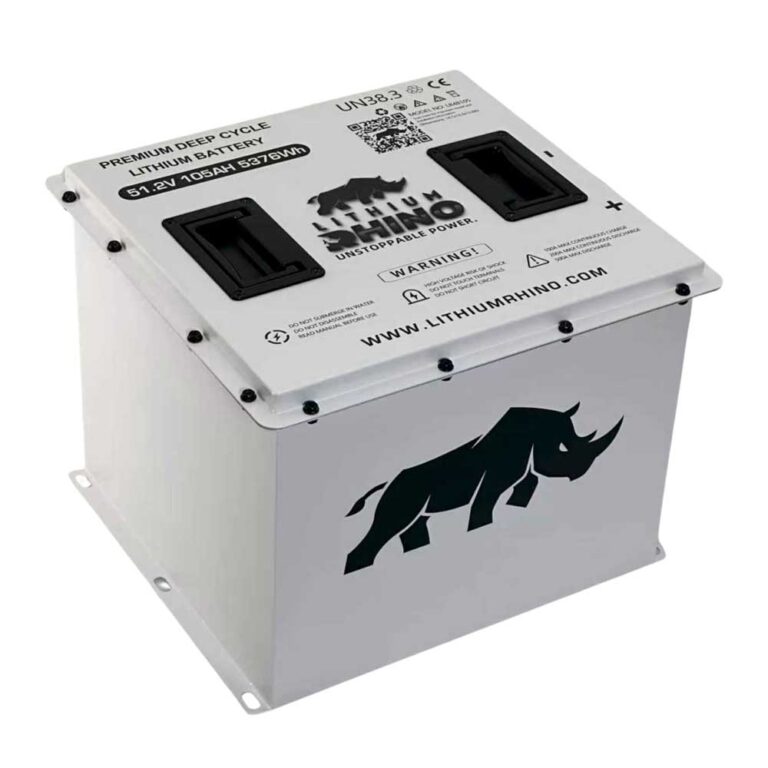
Maintenance depends on chemistry. Flooded (wet) lead-acid batteries have removable caps and need regular watering. Sealed AGM lead-acid batteries are maintenance-free inside and must never be opened. Lithium iron phosphate packs are sealed, self-managing through a battery management system, and require no watering at all. If you are unsure which you have, check the labels and look for fill caps. Opening a sealed battery ruins it, so confirm the type before doing anything.
Watering flooded lead-acid packs the right way
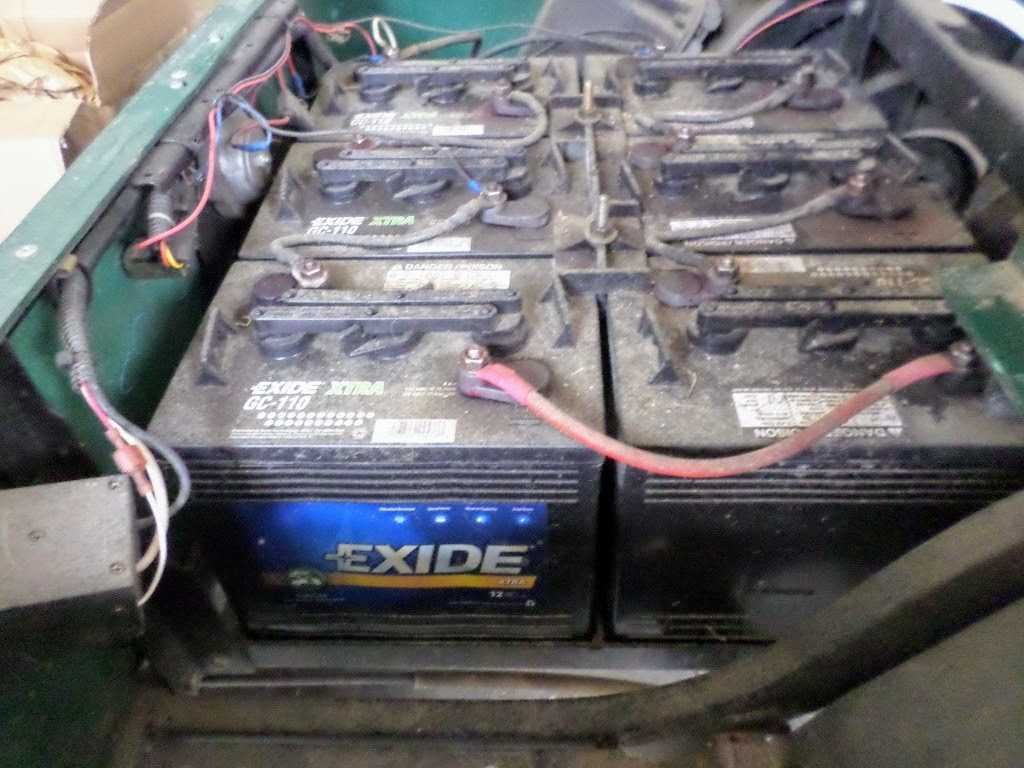
The most common flooded packs on golf carts are the Trojan T-105, T-875 and T-1275 and the US Battery equivalents, and they have been built to the same basic format for close to two decades, so this routine applies whether your batteries are five years old or brand new. On these six-volt and eight-volt units the electrolyte should sit about one eighth to one quarter inch below the bottom of the fill well, which usually means adding water until it just reaches the split ring inside the cell. If you own a fleet or simply hate the drip tray, a single-point watering kit from Flow-Rite or Trojan HydroLink links all the caps together so you fill the whole pack from one hose fitting, which cuts a twenty-minute chore down to two.
Watering is the single most important maintenance task for flooded packs, and the timing matters. Always charge fully first, because the electrolyte level rises as the battery charges and watering a discharged battery can cause overflow later. Then top up with distilled water only until the plates are just covered, leaving room below the fill well. How often depends on use, climate, and age, which is why the battery watering schedule tool gives you a tailored interval and a safe checklist.
| Usage | Temperate | Hot Climate |
|---|---|---|
| Daily / heavy | ~ every 2 weeks | Weekly |
| Weekly / regular | ~ every 4 weeks | Every 2 to 3 weeks |
| Seasonal / light | Every 1 to 2 months | Every 3 to 5 weeks |
Use only distilled water, never tap water, and never add acid. Overwatering is as harmful as underwatering because it dilutes the electrolyte and can overflow during charging. Battery makers such as Trojan Battery publish detailed watering and maintenance guidance worth following.
Charging habits and terminal care that add years
One quirk that quietly kills lead-acid packs is chronic undercharging from an oversized parasitic draw. Accessories like light kits, a Bluetooth stereo, or an aftermarket DC converter left wired hot can pull the pack down overnight, so it never truly reaches full charge and slowly sulfates. If you clean the terminals and still see resting voltage drifting low, put a clamp meter on the main lead with everything off and look for any draw above a few milliamps. For sulfation that has already started, most quality chargers offer an equalization or desulfation mode that runs a controlled overcharge on flooded batteries, and running it once a month on an aging pack can recover a surprising amount of lost capacity.
Charge lead-acid batteries fully after every meaningful use rather than leaving them partially drained, because shallow, frequent charging extends life and deep, infrequent cycling shortens it. Let the charger complete its cycle so the pack does not sulfate. Keep the tops of the batteries clean and dry, since grime and moisture create slow discharge paths between terminals. Clean any white or blue corrosion off the terminals, then coat them lightly to slow it returning. Loose or corroded connections add resistance that mimics a weak battery and wastes energy; our voltage drop test guide shows how to find hidden resistance.
Building a simple check-up routine
Put real numbers behind the routine so you are not guessing. A healthy resting 48V flooded pack should read roughly 50.9 volts two hours after charging, which works out to about 6.37 volts across each eight-volt battery; a battery sitting more than three tenths of a volt below its neighbors is your weak link. Twice a year, or any time range drops off a cliff, pull a hydrometer reading on each cell, since specific gravity catches a dying cell long before voltage does. Write the readings on a strip of tape stuck to the battery hold-down and date it, because the trend between check-ups tells you far more than any single reading ever will.
Build a simple routine. Check water levels on the schedule the tool gives you, inspect terminals monthly, and read resting voltage periodically with the battery voltage chart to spot a pack that is drifting low. If range starts dropping, compare it against the range calculator to tell a tired battery from underinflated tires or a hungry controller. For winter storage, charge the pack, disconnect it if possible, and either top it up periodically or use a maintainer so it does not self-discharge into damage.
Hydrometer numbers that make the check useful
A hydrometer reading is only useful if the article gives readers the target numbers. Trojan’s current maintenance guidance says flooded-battery specific-gravity readings should be corrected to 80 degrees F and should be at or above the factory specification of 1.277 +/- 0.007. Its state-of-charge table lists 1.277 as 100 percent, 1.238 as 80 percent, 1.217 as 70 percent, and 1.172 as 50 percent. In plain English, a rested full Trojan flooded cell should be around 1.270 to 1.284 after temperature correction, while a reading near 1.217 is already roughly 70 percent state of charge and should be recharged before regular use.
| Trojan corrected SG | Approx. state of charge | What it means on a golf cart |
|---|---|---|
| 1.277 | 100 percent | Healthy full-charge target for most Trojan flooded batteries at 80 degrees F. |
| 1.238 | 80 percent | Still usable, but not fully charged. Confirm the charger is completing its cycle. |
| 1.217 | 70 percent | Recharge before further use; repeated operation here shortens lead-acid life. |
| 1.172 | 50 percent | Too deep for routine use on a lead-acid golf cart pack. |
| Cell spread over 0.030 | Problem flag | Trojan says a spread greater than 30 points can indicate a problem after charging and equalization. |
Temperature correction matters. Trojan says to add 0.004 to the hydrometer reading for every 10 degrees F above 80 degrees F, and subtract 0.004 for every 10 degrees F below 80 degrees F. A 1.250 sample at 90 degrees F corrects to about 1.254; the same 1.250 sample at 70 degrees F corrects to about 1.246. If every cell remains low after a complete charge, or one cell stays more than about 0.030 below the others, the pack needs equalization, load testing, or battery replacement rather than more water.
The bottom line on keeping a pack healthy
Good battery maintenance is cheap insurance against an expensive pack replacement. For flooded lead-acid, water on schedule with distilled water after charging, never let plates dry out, and never overfill. For every chemistry, charge fully and promptly, keep tops and terminals clean and tight, and check voltage now and then so a single weak battery does not quietly drag down the whole set. A few minutes of routine care adds years of reliable service, and the watering tool plus the voltage chart turn that care into a repeatable habit instead of guesswork.
Frequently Asked Questions
How do I make golf cart batteries last longer?
Good golf cart battery maintenance means charging fully after each use, watering flooded lead-acid cells on schedule with distilled water, keeping terminals clean and tight, and avoiding deep discharges. Reading resting voltage or specific gravity occasionally helps you catch a weak battery before it damages the rest of the pack.
What should the specific gravity of a golf cart battery be?
For Trojan flooded batteries the full-charge target is about 1.277, corrected to 80F. Trojan lists 1.238 as roughly 80 percent charged, 1.217 as about 70 percent, and 1.172 as about 50 percent. Add 0.004 to the reading for every 10F above 80F and subtract 0.004 for every 10F below.
How often should I add water to golf cart batteries?
It depends on use and climate. Daily, heavy use in a hot climate can need weekly watering, while light seasonal use in a temperate climate may only need it every one to two months. Always water after a full charge, never before, and use only distilled water.
Do lithium golf cart batteries need maintenance?
Very little. Lithium packs are sealed and managed by a BMS, so they need no watering. Just charge them correctly with a lithium-compatible charger, keep connections clean and tight, and store them at a moderate charge level.