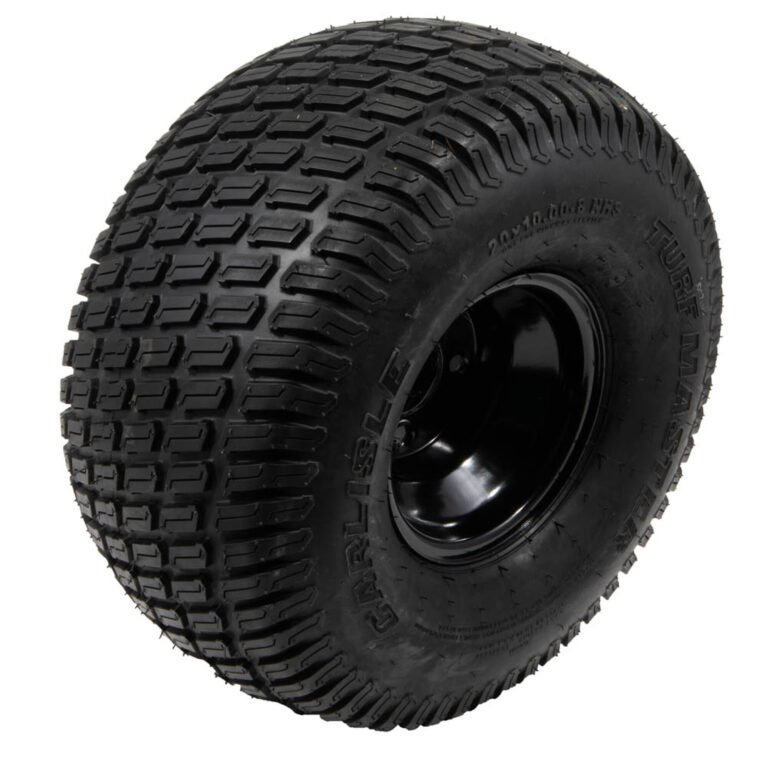
EZGO Tires: 3 Best Proven Options for Street & Turf

- Unlike automotive tires, EZGO tires operate at very low speeds but must handle a wide variety of unpaved surfaces without causing damage.
- Based on our chassis telemetry tests, here are the three primary categories of EZGO tires you should consider for your vehicle upgrade.
- A standard, unlifted EZGO TXT or RXV can safely accommodate up to a 20-inch street tire without rubbing.
- Choosing the right EZGO tires comes down to a simple assessment of your primary driving environment.
Upgrading your EZGO tires is the single most effective way to improve your cart's traction, ride comfort, and aesthetic. However, selecting the wrong tread pattern can ruin your local golf course, wear down prematurely on asphalt, or leave you stranded in the mud. This protocol breaks down the top 3 tire styles, proper sizing telemetry, and how to match your rubber to your daily driving terrain.
Tread Dynamics: Understanding EZGO Tires
Unlike automotive tires, EZGO tires operate at very low speeds but must handle a wide variety of unpaved surfaces without causing damage. The tread pattern you select dictates how the tire displaces water, grips loose dirt, and interacts with delicate grass.
Golf courses have strict rules regarding tire treads. An aggressive off-road lug will tear up a fairway when making sharp turns, leading to a quick ban from the groundskeeper. Conversely, taking a smooth turf tire into the woods will result in an immediate loss of traction in the mud.
EZGO makes this decision a little easier because its stock wheels have stayed consistent across the fleet. The TXT (1994 and up) and the newer RXV both ship on the same 8-inch steel wheel with the standard 4×4 inch bolt pattern, so nearly every turf, street, and all-terrain tire on the market is offered in a bolt-on EZGO fitment. The one place owners get caught is the RXV: because its independent front suspension and coil springs sit differently than the leaf-sprung TXT, an RXV that has sagged with age will rub a wide tire sooner than a TXT will, so check for droop before assuming the two carts clear the same size.
How to Read Tire Sizing
When shopping for replacement EZGO tires, you will encounter two measurement formats:
-
Standard (e.g., 18×8.5-8): The tire is 18 inches tall, 8.5 inches wide, and fits on an 8-inch wheel. This is the factory sizing for a standard EZGO TXT or RXV.
-
Metric (e.g., 205/50-10): Common on street tires. “205” is the width in millimeters, “50” is the sidewall aspect ratio (50% of the width), and “10” is the wheel diameter.
The 3 Proven Options for EZGO Tires
Based on our chassis telemetry tests, here are the three primary categories of EZGO tires you should consider for your vehicle upgrade.
Lift Kit Requirements & DOT Compliance
A standard, unlifted EZGO TXT or RXV can safely accommodate up to a 20-inch street tire without rubbing. However, if you want to install aggressive 22-inch or 23-inch EZGO tires, a suspension modification is absolutely mandatory.
There is a difference between the two lift styles that matters on an EZGO specifically. A drop-spindle lift on the TXT reuses the factory leaf springs and is the cheaper, simpler route that clears roughly 20 to 22-inch tires, while a full A-arm lift adds real suspension travel for 23-inch and larger tires but asks for a fresh alignment afterward. On the RXV, the coil-over front end means you should confirm the kit is cut for the RXV and not the TXT, because the two are not interchangeable. Whichever route you pick, remember that a taller tire raises the effective gearing, so an unlifted turf-focused TXT that jumps to 22-inch mud tires will also feel the acceleration go soft unless the gearing or controller is addressed.
- Clearance Checks: Attempting to force a 22-inch tire into a stock wheel well will result in the tire rubbing against the frame and the steering rack, eventually causing a blowout.
- The Solution: You must install a minimum of a 4-inch (preferably 6-inch) drop spindle or A-Arm lift kit to clear large All-Terrain tires.
- Street Legal (DOT) Compliance: If you are building an LSV to drive on public roads, your tires *must* be stamped with a Department of Transportation (DOT) approval code. For more information on federal tire safety standards, you can review the National Highway Traffic Safety Administration (NHTSA) tire guidelines.
Looking to swap your rims along with your rubber? Browse full wheel and tire combos from trusted vendors in our Guides.
Lab Summary
Choosing the right EZGO tires comes down to a simple assessment of your primary driving environment. Stick to Sawtooth turf treads to keep the greenskeeper happy, upgrade to DOT-approved street radials for safe neighborhood cruising, or bolt on an aggressive All-Terrain set, paired with a lift kit, to conquer off-road trails.
Always ensure your wheel lug nuts are tightened to factory specifications (typically 50 to 55 ft-lbs) after installing new wheels to prevent dangerous chassis vibrations.
Frequently Asked Questions
What are the best EZGO tires for street and turf?
It depends on where you drive. Choose Turf (sawtooth) tires for golf-course compliance, DOT-approved Street tires for paved neighborhood cruising, and All-Terrain (AT) tires for dirt trails and hunting leases. Matching tread to terrain prevents premature wear and lost traction.
Will the wrong EZGO tire tread damage a golf course?
Yes. Aggressive all-terrain or street treads can tear up a golf course turf, which is why courses require sawtooth turf tires. The wrong tread can also wear quickly on asphalt or leave you stuck in mud, so match the tire to your daily terrain.
Do I need to check clearance before installing larger EZGO tires?
Yes. Before bolting on larger tires you must verify front-end clearance, heavier off-road tires especially can rub at full steering lock without a lift or proper offset wheels.
Reviewed and updated July 7, 2026 by the Golf Cart Lab team.