Upgrading to a 400 Amp Solenoid: 36V vs 48V Guide
A stock relay welds shut behind an aftermarket controller. Here’s how to pick the right contact rating and coil voltage, verified against real Albright and Sayoon data sheets.
- A solenoid has two separate ratings: high-amp contacts for pack current, and a low-amp coil for the activation voltage. Match both, not just one.
- Albright’s SW200 is verified at 250A interrupted / 400A uninterrupted thermal current; Sayoon’s MZJ-400A is verified at 400A continuous on a 48V circuit.
- Coil voltage must match the voltage that actually energizes the coil terminals, not just the pack label, measure it if you’re unsure.
- A 400+ amp controller upgrade always needs a matching flyback diode and pre-charge resistor, not just a bigger contactor.
You just installed a high-performance Navitas or Alltrax motor controller, wired up heavier cables, and hit the throttle. Weeks later, the cart sticks at full speed or dies completely. The usual cause: the stock solenoid, sized for the factory 200A-class controller, welded its contacts shut under the new load. Upgrading to a heavy-duty 400 amp contactor is mandatory for modern controller builds, but mixing up 36V vs 48V coil compatibility can just as easily strand you. This guide verifies the real numbers, sourced from Albright and Sayoon data sheets, so you buy the right part once.
01. Why the 400 Amp Solenoid Upgrade Is Mandatory
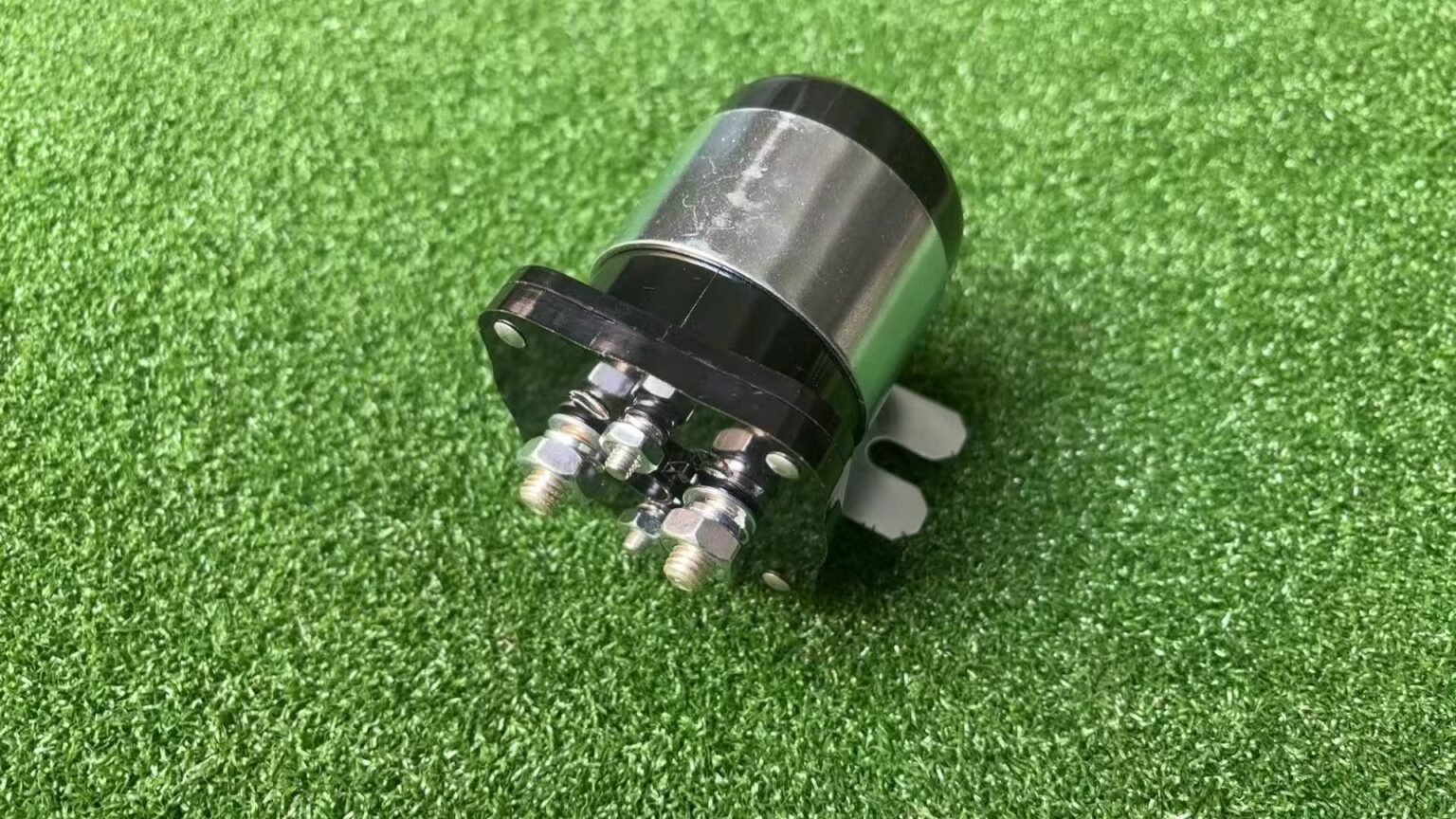
A solenoid, more accurately a main DC contactor, is the high-current switch between the battery pack and the controller. The small coil terminals only energize the magnet; the large studs carry the pack current. That distinction is the whole point of a 400 amp upgrade: the coil must match the cart’s activation voltage, while the contacts must be rated for the current your controller can actually demand.
Factory EZGO TXT, Club Car DS/Precedent, and Yamaha Drive models typically ship with stock-style 36V or 48V contactors sized for factory controllers. Installing a 400A to 600A aftermarket controller from Alltrax or Navitas can turn that small stock relay into the bottleneck. The failure isn’t subtle: high resistance at the contacts generates heat, the heat damages the tips, and badly damaged contacts fail open or weld closed, sometimes leaving the cart stuck at full throttle.
The verified spec baseline replaces the old marketplace shorthand. Albright lists the SW200 as a 250A interrupted / 400A uninterrupted thermal-current contactor, rated 455A at 30% duty on interrupted loads and 730A at 30% duty on uninterrupted loads. Sayoon lists the MZJ-400A as a 400A-rated contactor on a 48V circuit at continuous-work specification, with a 1500A / 5ms fault-current rupture rating at 48V DC. Those numbers aren’t the same as saying every “400 amp solenoid” on a marketplace listing is safe, buy by the data sheet, coil voltage, and mounting fit, not the headline number.
02. The 36V vs 48V Coil Compatibility Rule
This is where expensive mistakes happen. The contact rating and coil rating are separate specs. The high-current contacts must be rated for the voltage and current being switched. The activation coil must match the voltage the cart actually sends to the small terminals.
- High-amp contacts: don’t assume the large studs “don’t care” about voltage. Albright lists SW200 maximum recommended contact voltage as 96V DC (48V DC or 60V DC for the SW200N variant); Sayoon lists MZJ-400A contact voltage at 60V DC with a maximum switching voltage of 72V DC.
- The activation coil: the small posts are voltage-sensitive. Albright publishes SW200 coil-voltage availability from 6V to 240V DC. Sayoon publishes MZJ-400A coil options including 6V, 12V, 24V, 36V, 48V, 60V, 72V, 84V, 120V, and 150V. Order the 36V coil for a 36V activation circuit and the 48V coil for a 48V activation circuit, unless your controller or converter documentation says otherwise.
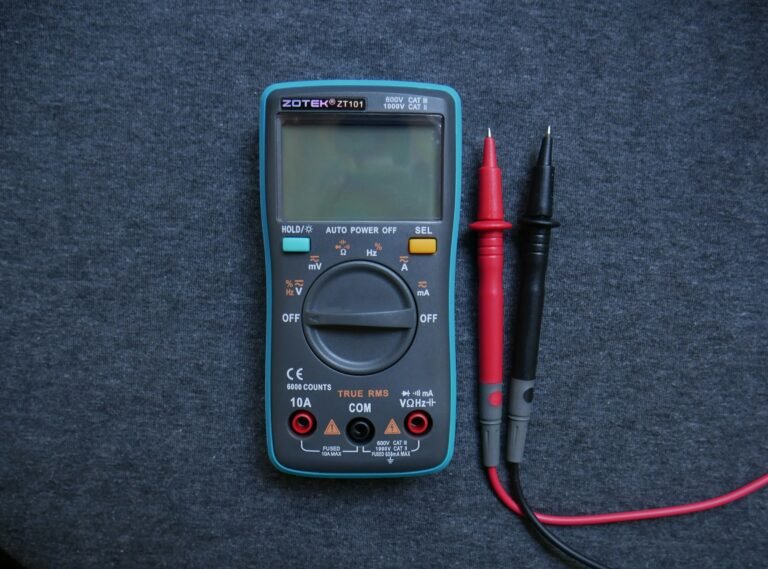
The rule: match the coil to the voltage that energizes the coil, not just the battery label on the cart. Most 36V-to-48V conversions need a 48V coil once the cart sends pack voltage to the solenoid coil. A reducer-fed 12V control circuit needs a 12V coil. When in doubt, measure the voltage at the two small solenoid wires during key-on or pedal command before ordering.
| Contactor / Relay | Verified Coil Options | Verified Current & Voltage | Use Note |
|---|---|---|---|
| Albright SW200 series | 6V to 240V DC coil range; continuous coils listed at 13W to 21W | 250A interrupted / 400A uninterrupted thermal current. Max contact voltage 96V DC (SW200N: 48V or 60V DC) | Premium heavy-duty upgrade. Choose exact coil voltage and suppression option. |
| Sayoon MZJ-400A | 6V, 12V, 24V, 36V, 48V, 60V, 72V, 84V, 120V, 150V | 400A rated load current on 48V circuit; contact voltage 60V DC; max switching voltage 72V DC | Common 400A golf-cart upgrade. Verify genuine data sheet and bracket type. |
| Stock Trombetta / Prestolite / SW80 | Model-specific (e.g. 36V EZGO, 48V Club Car 101908701, Yamaha JU6-H1950-00) | Not one universal rating; catalog examples range 100A to 200A continuous or intermittent | Fine for stock repairs matching the exact OEM part number. Do not reuse behind a high-amp controller. |
03. Brand Specifics: EZGO, Club Car & Yamaha
Premium 400A contactors from Albright International or Sayoon-style suppliers are electrically universal only after you match the coil, contact rating, and mounting. The chassis work is where owners get surprised.
- EZGO TXT & RXV: catalog references show common EZGO 36V solenoid replacements such as EZGO 609428 and Trombetta 684-3681-012-14. Those are stock-repair references, not proof the original relay is safe behind a 500A controller. On TXT DCS/PDS conversions, measure the bracket space and coil voltage before choosing an SW200 or MZJ-400.
- Club Car DS & Precedent: public parts catalogs list Club Car 101908701 as a 48V DS/Precedent solenoid, identified in some catalogs as a 200A stock-style contactor. A true SW200 or MZJ-400 may require drilling, a remote bracket, longer cables, and careful routing so the heavy studs can’t contact the frame or cover.
- Yamaha G-Series & Drive: public Yamaha Drive catalog listings point to 48V solenoid part JU6-H1950-00 for 2007-up Drive models. Yamaha harnesses often use molded plugs or short leads at the activation circuit, so plan on adapting coil terminals without leaving an unsupported splice near the battery tray.
The safest ordering workflow is boring but reliable: photograph the current relay label, measure battery pack voltage, measure coil-command voltage at the small wires, note stud size and bracket spacing, then pick a data-sheeted contactor. If the label can’t be verified, say so and order by cart serial/model from a parts catalog instead of assuming every Trombetta, SW80, or MZJ number is interchangeable.
04. Mandatory Protection: Diodes & Resistors
You cannot simply bolt a 400 amp solenoid into the circuit without proper protective hardware.
- The Pre-Charge Resistor: this large ceramic block bridges the two large high-amp posts. It allows a tiny trickle of voltage to bypass the solenoid and keep the motor controller’s capacitors charged. Without it, the sudden rush of 400 amps upon pedal press causes electrical arcing that pits the heavy copper contacts.
- The Flyback Diode: this small component bridges the two small activation posts. When the solenoid disengages, the collapsing magnetic coil sends a voltage spike back through the wiring. The diode absorbs it, protecting the cart’s microswitches and logic board. The striped end of the diode always faces the positive activation wire.
If installing a 400+ amp aftermarket motor controller, order a heavy-duty contactor rated for that current (Albright SW200 at 250A interrupted / 400A uninterrupted, or Sayoon MZJ-400A class). Verify your actual coil-command voltage at the small terminals before ordering, don’t assume it matches the pack label. Install a flyback diode and pre-charge resistor as part of the same upgrade.
Frequently Asked Questions
Can I use a 36V solenoid on a 48V golf cart?
No. Using a 36V solenoid on a 48V golf cart will cause the internal magnetic coil to overheat and burn out from excessive voltage. Always match the coil voltage to the voltage that feeds the coil, which on most carts is the pack voltage.
Why do I need a 400 amp solenoid upgrade?
If you upgrade to an aftermarket motor controller, a stock 85-amp to 200-amp solenoid will literally weld its internal contacts shut under the extreme electrical load. A heavy-duty 400 amp solenoid upgrade ensures safe, uninterrupted current delivery.
Do I need a diode and resistor on my 400 amp solenoid?
Yes. The diode prevents voltage spikes from destroying your controller when the solenoid disengages, and the pre-charge resistor keeps the controller capacitors charged to prevent electrical arcing upon engagement.