
Motor test repair guides
Bench-style checks, symptom sorting, and practical motor diagnosis for carts with weak drive, no drive, or suspicious wiring.
Start with these motor test guides
All 7 guides in this archive, covering series versus SepEx identification, continuity and brush checks, RPM limits, and replacement motor choices. Use the search above or the filters to move into another system or brand.
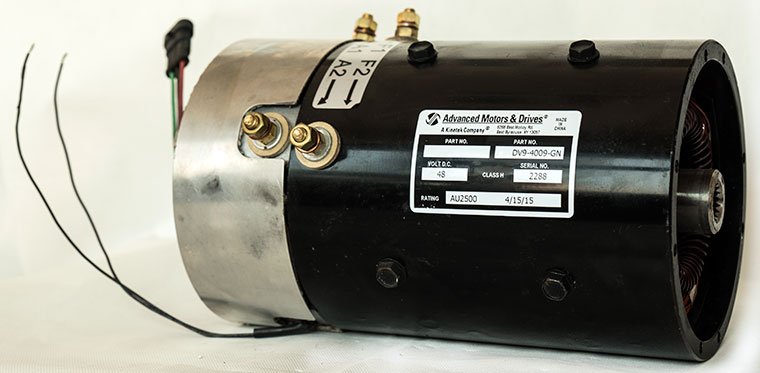
Golf Cart Series vs. Sepex (Shunt) Motors: Hills vs. Speed Guide
Which motor is better: Series or Sepex? We compare the torque, speed, and hill-climbing ability of both DC motor types to help you choose the right setup for your terrain.
Open guide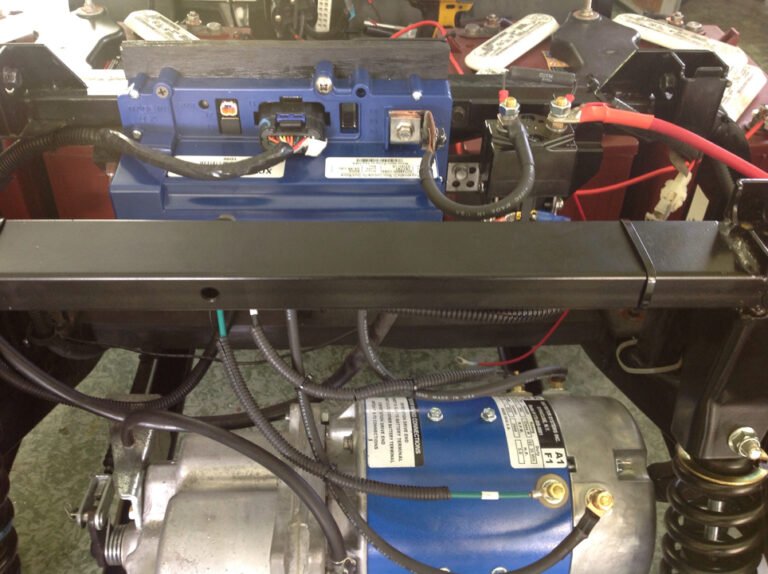
Plum Quick Motor Review: Honest 2026 Verdict
An honest Plum Quick motor review, real speed potential but a divided reputation. Owner feedback on reliability, support, and whether it is worth it.
Open guide
Are Golf Cart Speed Upgrades Worth It? Honest Verdict
Are golf cart speed upgrades worth it? An honest breakdown of tires, gears, controllers and speed chips, what adds MPH and what just kills your motor.
Open guide
Golf Cart Motor Brush Wear: When to Replace to Save Your Commutator
Don't wait for your motor to die. Learn the signs of worn brushes, like sparking and loss of torque, and how to inspect them before they destroy your commutator.
Open guide
Golf Cart Motor RPM Limits: Calculating Safe Max Speed
How fast is too fast? Learn the safe RPM limits for stock Club Car and EZGO motors, the math to calculate your top speed, and why "overspeeding" can lead to a motor explosion.
Open guide
Golf Cart Motor Upgrade Worth It? Honest Verdict
Is a golf cart motor upgrade worth it? An honest look at torque vs speed windings, when the stock motor is the real limit, and who should upgrade.
Open guide
DD Motor Systems Review: Honest 2026 Verdict
An honest DD Motor Systems review, USA-made performance motors and matched controllers, owner feedback, and whether the upgrade is worth it.
Open guideHow golf cart motors actually work, and how to test one
Almost every electric golf cart uses a brushed DC motor in one of two configurations. A series motor wires the field and armature in series, so field strength rises with current draw. That gives strong low speed torque and is why series carts climb well and top out modestly. A SepEx or shunt motor powers the field separately, letting the controller manage field strength independently, which gives smoother speed control, regenerative braking on some models, and a higher practical top speed at the cost of raw hill torque.
The distinction matters before you test anything, because the two have different terminal layouts and different expected resistances. A series motor has field and armature terminals joined internally or by a strap, and a SepEx motor keeps them separate so you can measure each independently. Getting this wrong is the most common reason a bench test reads as a failure on a healthy motor.
The failure modes behind most motor complaints
Five faults account for the majority of motor cases:
- Worn brushes. Symptom: loss of power under load, arcing visible through the inspection band, sometimes a burnt smell after hills. Brushes are consumable and are far cheaper than the motor they protect.
- Glazed or grooved commutator. Symptom: whining, poor power, and new brushes that wear out quickly. Once the copper is grooved, the brushes cannot seat and the motor keeps eating them.
- Shorted or open armature winding. Symptom: the motor runs hot, draws heavy current, and may have a flat spot where it will not start from certain positions. This is the fault that ends a motor.
- Field winding fault on SepEx motors. Symptom: controller faults naming the field, or the cart driving with no speed control authority. Measured separately from the armature, which is why the motor type has to be identified first.
- Bearing failure. Symptom: a rising whine that changes with speed and not with load. Left alone the rotor eventually contacts the field poles and destroys the motor.
What to measure first, and the numbers that matter
Disconnect the pack before any resistance test, then take three readings with the motor leads isolated.
1. Armature resistance, measured across the two armature terminals. Expect a very low value, well under 1 ohm. A reading of infinity means an open winding, and a dead short with no reading at all means a shorted armature.
2. Field resistance, across the field terminals. A series field reads near zero because it is heavy wire designed to carry full current. A SepEx field reads noticeably higher because it is many turns of fine wire.
3. Insulation to case. Measure from each terminal to the motor housing. This should be an open circuit. Any continuity to the case means a winding has grounded and the motor is finished.
| Test | Series motor | SepEx motor | Failure reading |
|---|---|---|---|
| Armature resistance | Under 1 ohm | Under 1 ohm | Open, or dead short |
| Field resistance | Near 0 ohm, heavy wire | About 3 to 20 ohm | Open winding |
| Terminal to case | Open circuit | Open circuit | Any continuity |
| Brush length, new | About 0.6 in. | About 0.6 in. | Replace under 0.25 in. |
| Commutator surface | Even copper colour | Even copper colour | Grooved, burnt or glazed |
| Shaft play by hand | None perceptible | None perceptible | Any radial knock |
Cheap meters struggle below 1 ohm, so subtract your lead resistance by touching the probes together first. What you are looking for is open or shorted, not a precise value.
Which guide do you need?
If you are not sure which motor you have, start with the series versus SepEx guide, because every other test depends on that answer. If the cart loses power under load or smells hot, go to the brush wear and overheating guides first. If you are planning a speed or torque upgrade, the motor upgrade and RPM limit guides cover what the rest of the drivetrain can survive. If you are comparing replacement motors, the brand review guides cover real world durability rather than advertised horsepower.
Before any motor test: disconnect the main pack negative and let the controller capacitors discharge before touching motor leads. If you bench test with power, clamp the motor down. An unloaded series motor accelerates violently and can throw itself off a bench.