
Passenger Upgrades: Adding an EZGO Rear Seat and HD Springs
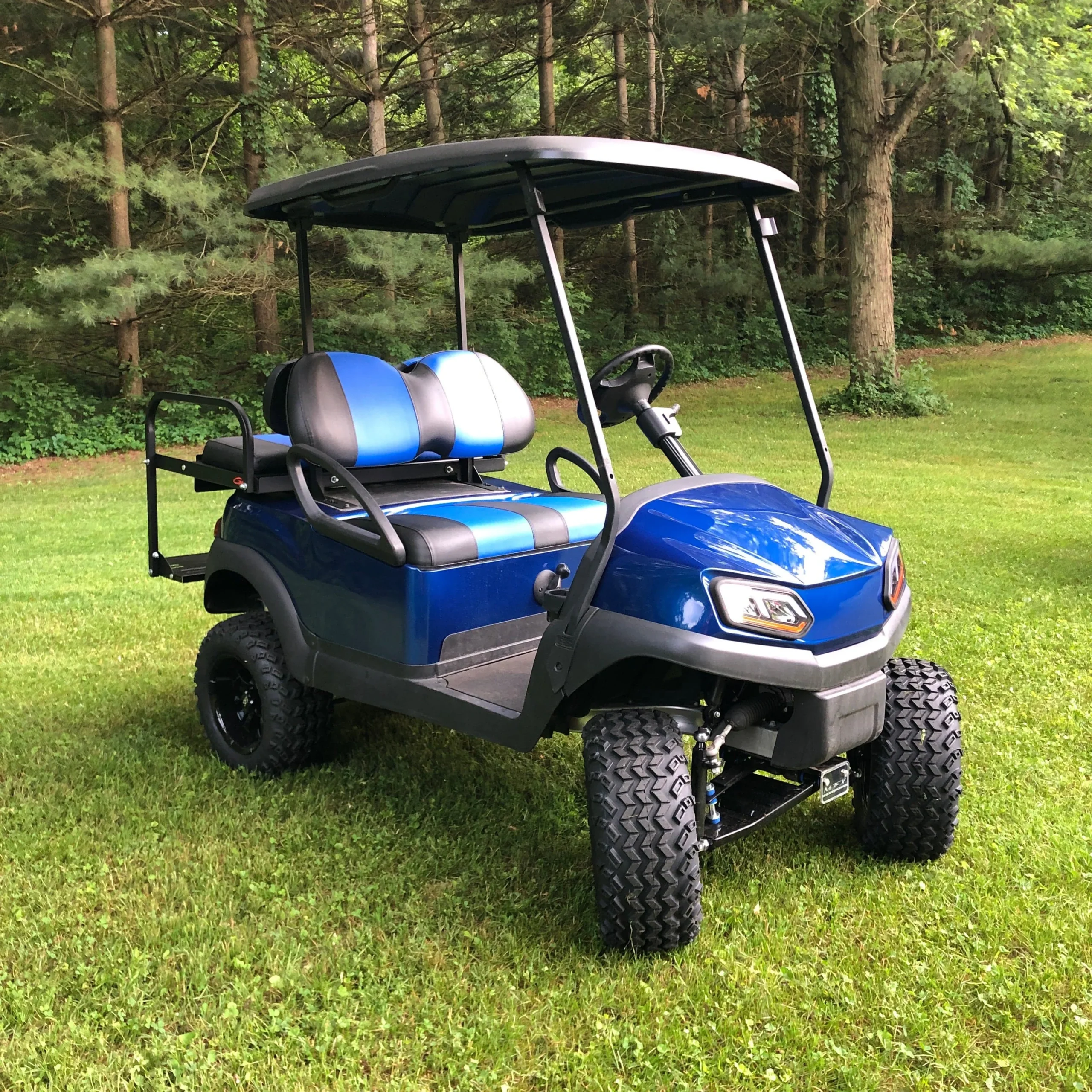
- heavy-duty springs restore loaded ride height only when the exact kit matches the chassis, powertrain, lift status, and year.
- A factory EZGO is engineered with single-leaf springs designed to support two front passengers and two golf bags.
- This is a heavy structural modification. Never rely on hydraulic pressure alone to hold the cart while removing suspension components.
- Always upgrade the leaf springs before installing the EZGO rear seat.
Adding an EZGO rear seat is the most popular upgrade for TXT and RXV models, but bolting 80 lbs of steel to the back of your cart introduces a major structural flaw if you skip the suspension. This guide covers the mandatory process of combining heavy-duty leaf springs with your new EZGO rear seat to prevent severe chassis sag and dangerous steering dynamics.
TXT Versus RXV Spring Fitment
Direct answer: heavy-duty springs restore loaded ride height only when the exact kit matches the chassis, powertrain, lift status, and year. They do not increase the cart’s published vehicle load rating, brake capacity, tire rating, or rear-seat certification.
| Current spring example | Published fitment | Included | Torque source | Critical note |
|---|---|---|---|---|
| Nivel 30319 four-leaf kit | Non-lifted TXT electric 1994.5-current; gas 1994.5-2013 | Two springs, four U-bolts, bushings, spacers | Exact service or kit manual | Not for 2014-up gas TXT |
| MadJax 7972 dual-action | TXT electric 1994-up; gas 1994-2013 | Spring sold individually; two required | Exact service or kit manual | Listing directs 2014-up gas to item 8336 |
| MadJax 8094 RXV tapered HD | RXV gas and electric 2008-up listing | Spring only | Exact RXV manual | Eyelets, bushings, and hardware sold separately |
E-Z-GO’s lifting guidance requires a firm level surface, wheel chocks, rated jack stands at the documented frame points, and a stability check before service. Support the frame and axle independently so the spring is unloaded without letting brake cables, wiring, or shocks carry axle weight.
- Confirm the serial, powertrain, lift configuration, spring SKU, bushings, U-bolts, and seat manual.
- Photograph cable, shock, spring, spacer, and plate orientation before removal.
- Isolate power as the model manual directs, chock the opposite wheels, lift at the approved point, and lower onto stands.
- Support the axle. Replace one side at a time, keeping body parts clear of stored spring force.
- Seat the center pin and plates correctly, install new hardware when required, and tighten only to the exact documented specification.
- At normal ride height, verify brake-cable slack, shock travel, tire clearance, rear-seat frame alignment, and loaded ride height.
No accessible E-Z-GO owner source used here publishes one universal TXT and RXV U-bolt, shackle, shock, or seat-frame torque. Put the exact service-manual or kit value in the job sheet before starting. Recheck hardware at the interval specified by the spring and seat manufacturers.
Want to learn more about how suspension balance impacts your ride? Here are the comprehensive guides in the Diagnostics Lab covering alignment, shocks, and frame integrity.
Chassis Load Dynamics: Why Factory Springs Fail
A factory EZGO is engineered with single-leaf springs designed to support two front passengers and two golf bags. When you mount an EZGO rear seat, you immediately add the weight of the steel/aluminum kit, plus the dynamic weight of two rear passengers. This places up to 500 lbs directly over and slightly behind the rear axle.
Without upgrading the springs, this excessive weight causes the factory leaf springs to flatten out and deflect beyond their structural limit. The result? Your rear tires will rub the inner fender wells, the cart will bottom out violently over bumps, and the shift in the center of gravity will make the front steering feel dangerously loose.
Evaluating Spring Upgrades for an EZGO Rear Seat
Lab Kit & Safe Isolation
This is a heavy structural modification. Never rely on hydraulic pressure alone to hold the cart while removing suspension components.
-
Two Sets of Jack Stands & Floor Jack: Support the frame with the stands, and use the jack to lower/support the heavy rear axle.
-
Impact Wrench & Socket Set: 9/16″, 5/8″, 15mm, and 17mm sockets are commonly required for EZGO hardware.
-
Pry Bar & Alignment Punch: For aligning the heavy leaf spring eyes with the frame shackles.
Step-by-Step: Heavy-Duty Leaf Spring Installation
Always upgrade the leaf springs before installing the EZGO rear seat. The cart is much lighter and the suspension is easier to manipulate without the extra steel frame bolted to the back.
- Elevate and Support: Jack up the rear of the cart. Place jack stands solidly under the main chassis frame rails (not the axle). Remove the rear tires.
- Support the Axle: Place your floor jack directly under the rear differential/motor assembly with light upward pressure to prevent the axle from dropping.
- Remove Hardware (One Side at a Time): Starting on the driver’s side, unbolt the lower shock mount. Remove the U-bolts securing the axle to the leaf spring.
- Extract the Factory Spring: Remove the front and rear shackle bolts holding the leaf spring to the frame. Pull the old spring out.
- Install HD Spring: Slide the new heavy-duty spring into place. Loosely install the front and rear shackle bolts. Note: Do not fully tighten these bolts yet.
- Seat the Axle: Lower the floor jack slightly to align the axle’s positioning pin with the hole in the new leaf spring. Reinstall the U-bolts and lower shock mount. Repeat for the passenger side.
Need a platform to sell your gold cart? Explore Guides.
Hardware Integration: Mounting the EZGO Rear Seat
With the suspension now fortified, you can safely bolt down the rear flip seat framework.
- Teardown the Bag-Well: Remove the factory sweater basket, golf bag straps, and the vertical roof struts. Save the roof hardware.
- Install Main Brackets: Mount the main structural seat brackets to the frame. On an EZGO, these bolt directly into the factory bag-well holes and the original front seat-back supports.
- Assemble the Footrest: Bolt the footplate to the main rear brackets and install the rear grab bar. Leave all bolts hand-tight to allow for micro-adjustments.
- Mount the Seat Pan: Place the composite or plastic flip deck onto the brackets. Bolt the seat hinges to the frame, ensuring the deck flips smoothly.
- Torque to Spec: Go back through the entire assembly, including the leaf spring shackles from Step 3, and tighten all hardware securely.
- Reattach the Roof: Install the new extended rear roof struts provided in your kit, bolting them from the new seat backrest to the rear of the canopy.
Rear seat kits change the spring job because the cart is no longer carrying the same load the factory designed around. On EZGO TXT and RXV carts, a flip seat plus two adults can add several hundred pounds behind the axle, which increases sag and can make the front end feel light. Heavy-duty springs should be matched to real use. If the cart only carries kids around the campground, the stiffest spring may ride harshly and reduce traction over bumps. If it carries adults, cargo, or a cooler every weekend, weak stock springs will flatten quickly. Inspect shackle bushings and U-bolts during the install, not after. A new spring on worn bushings can still clunk and steer poorly. After the first loaded drive, recheck U-bolt torque and verify the brake cables are not pulled tight at full suspension droop.
Lab Summary
Adding an EZGO rear seat requires a loaded ride-height and suspension check; heavy-duty springs are appropriate when the exact cart, kit, and normal load require them. By safely elevating the cart, swapping to HD springs one side at a time, and loosely threading your seat hardware before final torque, the installation can be checked for correct ride height and hardware seating that can handle heavy passenger loads.
For factory torque specifications on frame hardware, consult the Official EZGO Owner’s Manuals.
Frequently Asked Questions
Do I need heavy-duty springs to add an EZGO rear seat?
Yes. Adding an EZGO rear seat to a TXT or RXV bolts roughly 80 lbs of steel plus passenger weight to the back of the cart. You must first replace the factory suspension with 3-leaf or 4-leaf heavy-duty leaf springs so the chassis can handle the extra 400-plus lbs of payload before bolting in the seat frame.
What happens if I add a rear seat without upgrading the springs?
Skipping the suspension upgrade introduces a serious structural flaw, the extra rear weight causes severe chassis sag, tire rub, and dangerous steering dynamics as the cart's center of gravity shifts rearward.
Where does the EZGO rear seat frame mount?
Once the suspension is upgraded to handle the added payload, the rear-seat framework bolts directly into the factory bag-well mounts on the TXT or RXV.
Reviewed and updated July 30, 2026 by the Golf Cart Lab team.
