
Parasitic Draw Testing: Finding the “Ghost” Drain That Kills Your Pack in a Week
A cart charged on Sunday and flat by Saturday has a parasitic draw. This guide shows the exact milliamp thresholds, the safe 10A-jack meter procedure, and a component-by-component isolation table to find the leak.
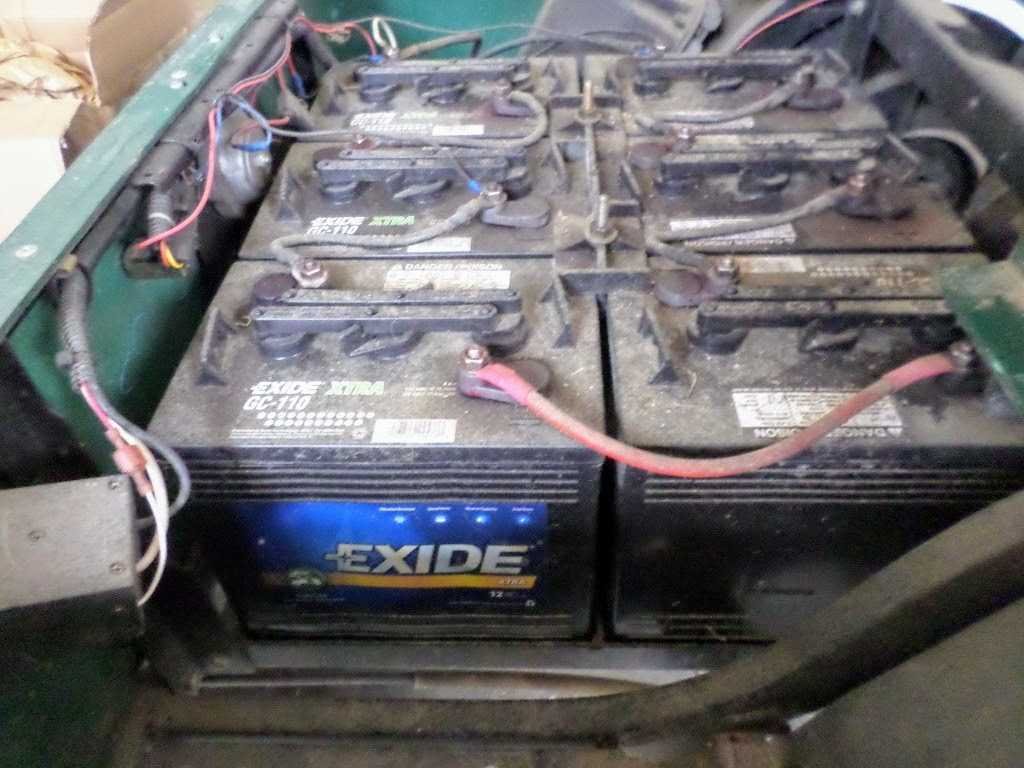
- Around 0 to 20 mA is normal for a simple cart; about 25 mA is often acceptable; over 100 mA is a real problem.
- Start on the meter’s 10A jack, then move to the mA jack only once the reading is safely below the mA fuse rating.
- Wire the meter in series with the main negative cable, key off, after everything has timed out.
- The math is honest: a 0.10A draw for 168 hours removes 16.8Ah, enough to flatten a cart parked for a week.
There is nothing more frustrating than fully charging your golf cart on Sunday, leaving it parked for a week, and returning to find the batteries completely flat the following Saturday. When batteries lose charge while the key is off, you are dealing with a parasitic draw. It is often caused by a faulty accessory, a stuck relay, or a poorly wired voltage reducer, and if left unchecked it will not just ruin your weekend, it will permanently damage your batteries through deep discharge and hard sulfation.
Where Phantom Drains Usually Hide
Parasitic draw is any current that keeps leaving the pack after the key is off. A tiny memory load can be normal. A converter, stereo, GPS tracker, USB socket, BMS, OBC, or corroded charge port that never goes to sleep can drain the cart over a weekend. Use the numbers as a triage range, not as a factory spec for every golf cart. Around 0 to 20 mA is typical for a simple lead-acid cart with no accessories awake. Automotive parasitic-draw references commonly treat about 25 mA as acceptable and anything over 100 mA as a real problem. Golf carts with lithium BMS electronics, telematics, alarms, or an older OBC may have a different sleeping baseline, so measure your known-good baseline after everything has timed out.
The Lab Procedure: How to Perform a Draw Test
Start on the high-current input so the meter survives the first connection. A normal handheld meter usually has a separate 10A jack and a fused milliamp jack. Put the red lead in the 10A jack first, select DC amps, and only move to the mA range after the reading is safely below the meter’s mA fuse rating.
- Fully charge the pack, key OFF, accessories OFF, charger unplugged.
- Set Tow/Run to Tow if the cart has it and let controllers or chargers go to sleep for 5 to 20 minutes.
- Disconnect the main negative cable from the battery pack.
- Put the meter in series: one meter lead on the battery negative post, the other on the removed negative cable.
- Read amps on the 10A jack. Do not press the pedal, switch on lights, or connect a charger through the meter.
- If the reading is low enough, move the red lead to the mA jack and change the dial to milliamps for a precise number.
The meter fuse caveat matters. Turning on headlights, a DC converter, or the solenoid coil while the meter is in the mA jack can pop the internal fuse instantly. If the meter suddenly reads zero after a mistake, test the meter fuse before assuming the cart has no draw.
Reading What the Meter Tells You
| Sleeping Draw | Meaning | Next Move |
|---|---|---|
| 0 to 20 mA | Usually normal for a simple cart with minimal electronics. | Record it as your baseline. |
| About 25 mA | Often acceptable in automotive parasitic-draw guidance. | Acceptable for many carts unless the batteries still go flat quickly. |
| 50 to 100 mA | Suspicious on a golf cart, especially without accessories. | Start isolating reducers, stereo memory, OBC, GPS, USB, and BMS circuits. |
| Over 100 mA | Abnormal by common parasitic-draw guidance. | Find the circuit. This can take meaningful amp-hours over a week. |
| 0.50A or higher | Fast drain. | Look for a stuck converter, relay, solenoid coil, light circuit, or lithium contactor/BMS load. |
The math keeps the diagnosis honest: amps times hours equals amp-hours removed. A 0.10A draw for 168 hours is 16.8Ah before battery inefficiency. That is enough to matter on a cart parked for a week.
The Pull-and-Watch Method
Once the draw is confirmed, leave the meter in series and disconnect one branch at a time. When the draw drops, the last disconnected branch contains the load.
| Component | How to Isolate It | What a Drop Means |
|---|---|---|
| DC-DC voltage reducer | Disconnect the reducer input lead or main reducer fuse. | The reducer is staying awake, or an accessory on its output side is backfeeding. |
| Stereo memory and amplifier | Pull the stereo constant-power fuse and amp feed. | Memory wire, remote turn-on, or amplifier is not sleeping. |
| GPS, tracker, alarm, Bluetooth | Unplug the module or inline fuse. | The module may be normal but too large for long storage. |
| USB sockets and light kits | Pull accessory fuses one by one. | Cheap USB reducers and LED controllers often draw with the switch off. |
| OBC or charge receptacle | Disconnect the OBC/charge harness per the service manual. | Older onboard computers, gray sense circuits, or corroded receptacles can keep a path alive. |
| Lithium BMS or main contactor | Use the battery maker’s sleep/shutdown process or disconnect BMS accessory outputs. | The pack electronics may be awake, or the cart wiring may be holding the BMS on. |
| Solenoid coil or relay | Check for voltage at the small solenoid posts with key OFF. | A stuck key switch, pedal switch, or accessory relay can leave the coil energized. |
Do not reconnect high-current loads through the meter while testing. If a branch is large enough to spark when reconnected, bypass the meter or switch back to a safer high-current setup before continuing.
Stopping the Drain Before It Starts
If you cannot find the source or have accessories that require a memory wire, the best fix is a main battery disconnect switch. By physically breaking the connection at the battery post, you ensure that zero current can flow, preserving your specific gravity during long-term storage. A parasitic draw is often the result of lazy wiring, where accessories are connected directly to the batteries rather than through a switched source, so re-terminating those loads through a switched circuit is the permanent cure.
Brand-Specific Drain Quirks
Older Club Car OBC carts can show a small sleeping load that newer simple carts do not. Lithium carts can also keep a BMS awake for balancing, Bluetooth, heater control, or a main contactor strategy. Those loads may be normal for the system but still too high for storage. The useful rule is baseline plus trend: a simple cart should usually be down near single-digit to low double-digit mA after sleep, around 25 mA can be acceptable, anything over 50 mA deserves isolation, and anything over 100 mA is a problem unless the battery or vehicle maker explicitly says that sleeping load is expected. By using your multimeter as a detective tool, you can identify the leak, save your batteries from premature death, and ensure your cart is ready to go when you are.
A parasitic draw kills packs quietly. Measure the sleeping current in series after everything times out, compare it against the milliamp thresholds, then pull one branch at a time to find the leak. When the source is a memory-wired accessory you cannot remove, a main battery disconnect switch stops the drain for good during storage.
Frequently Asked Questions
What is a normal parasitic draw on a golf cart?
Around 0 to 20 mA is typical for a simple lead-acid cart with no accessories awake. Automotive parasitic-draw references commonly treat about 25 mA as acceptable and anything over 100 mA as a real problem. Carts with a lithium BMS, telematics, alarm, or older OBC may have a different sleeping baseline, so measure your own known-good baseline after everything times out.
How do I test for a parasitic draw with a multimeter?
Fully charge the pack, key off, accessories off, charger unplugged, and let controllers sleep for 5 to 20 minutes. Disconnect the main negative cable and put the meter in series: one lead on the battery negative post, the other on the removed cable. Start on the 10A jack, then move to the mA jack only after the reading is safely below the meter’s mA fuse rating.
Why does my golf cart battery drain when parked?
A parasitic draw is any current that keeps leaving the pack after the key is off. Common culprits are a DC-DC voltage reducer, stereo memory, GPS or alarm module, USB sockets and LED kits, an older OBC, or a lithium BMS that stays awake. The math matters: a 0.10A draw for 168 hours is 16.8Ah removed, enough to flatten a cart parked for a week.
How do I stop a parasitic draw?
Isolate the source by leaving the meter in series and disconnecting one branch at a time until the draw drops. If you cannot find it or you run accessories that need a memory wire, install a main battery disconnect switch so zero current can flow during long-term storage, which preserves the batteries.
