Star EV Golf Cart Lithium Battery & BMS Problems: Fix
Lithium packs make the Capella easier to maintain, but the BMS changes how failures appear. Verified pack capacities, discharge ratings, and BMS thresholds separate a protective shutdown from a real cell failure.
- Verified Capella baseline is 48V STAR Smart Lithium, not a blanket 48V/72V claim, 72V is bus-only per Star’s own lithium-kits page.
- Star publishes 80Ah, 105Ah, 160Ah, and 210Ah packs with stored energy of 3.84, 5.04, 7.68, and 10.08 kWh.
- Max continuous discharge is 80A, 105A, 160A, and 200A; short discharge is 350A on smaller packs, 480A on the 210Ah pack.
- Charge at 10 percent SOC, never discharge below 5 percent, per Star’s own lithium manual.
- Check main terminal bolts yearly at 124 in-lb and the 4-pin signal connector every six months, a loose lug can trigger false protection.
Lithium packs make the Capella easier to maintain, but the BMS can change how failures appear. A protective shutdown can mimic a dead battery, bad charger, or drive fault. This guide uses Star EV’s own lithium manual and Capella owner manual to give real thresholds instead of generic lithium advice.
01: Pin Down the Battery Symptom
Different battery complaints need different paths. A pack that will not wake, one that will not charge, and one that cuts out under load are not the same failure. For the current personal-cart Capella and Sirius material, the verifiable Star EV lithium baseline is 48V STAR Smart Lithium, not a blanket “48V and 72V higher-output builds” statement. Star’s lithium-kits page says the 72V system is only available on new bus orders and is not for aftermarket kits, while the Capella specs list 48V lithium choices for the personal carts.
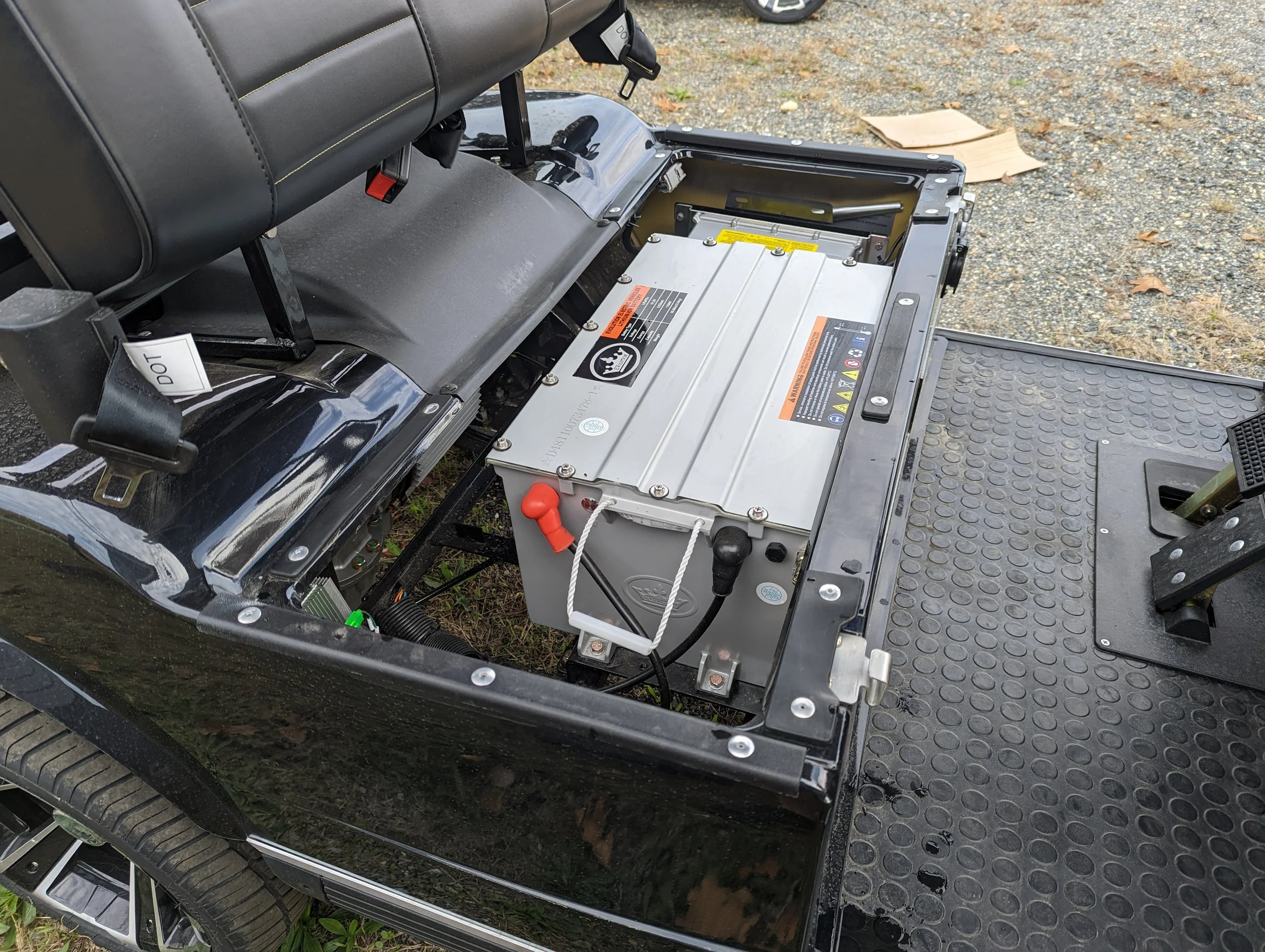
The dedicated battery problems baseline is this: Star publishes 80Ah, 105Ah, 160Ah, and 210Ah 48 Volt packs. Stored energy is 3.84 kWh, 5.04 kWh, 7.68 kWh, and 10.08 kWh. Max continuous discharge is published as 80A, 105A, 160A, and 200A. Short discharge capability is 350A on the 80Ah, 105Ah, and 160Ah packs and 480A on the 210Ah pack. Those numbers matter more than generic lithium advice because a small 80Ah pack on a lifted or loaded cart reaches its protection envelope sooner than a 210Ah pack.
- No power: Check the battery power button if equipped, key cycle, disconnect, fuse, output, and wake state.
- No charge: Inspect the charger, charge port, battery profile, and whether the pack is awake enough for the charger to start.
- Cuts out: Look for low SOC, high current, loose terminals, corroded 4-pin signal connector, or heat.
02: Read the Failure Pattern
The upside of a smart pack is that the pattern usually names the system to test. The STAR lithium manual lists BMS protections for cell-level voltage, temperature, over-voltage, under-voltage, and over-current. It also says to charge as soon as possible below 10 percent SOC, avoid discharging below 5 percent, and avoid hard acceleration because current spikes can trigger the battery’s self-protective cutoff.
| Symptom | Verified Star EV Context | Next Guide |
|---|---|---|
| Dead after storage | Sleep mode can turn power off after 1 hour of key power with no driving. 80Ah, 105Ah, and 160Ah batteries may also need the battery power button after key cycling. | No power guide |
| Charger will not start | The charger profile and battery wake state must match, cold charging is restricted below 32°F on the Star lithium instructions. | No charge guide |
| Slows or cuts out | The manual gives 10 percent SOC as the stop-driving warning and lists over-current and under-voltage protection. | Reduced speed guide |
| Warning on a hill | Hill load raises current demand, Star notes range falls with passenger configuration and hilly terrain. | Hill power guide |
03: Connection Heat and Voltage Drop
Do the safe warm-check before you reach for a wrench: after a short drive, use the back of your hand to compare each accessible cable end for one running noticeably hotter than its neighbors. Always open the main disconnect and follow the battery power-off procedure before working on the pack, because a 48V lithium bus can dump enormous current into a bridged terminal or dropped tool.
Star gives a real torque and inspection target here. The lithium manual says to check the main battery terminal bolts yearly with a 13mm wrench or socket and torque them to 124 in-lb. The Capella owner manual also says to inspect the 4-pin connector near the lithium battery every six months for corrosion. A loose main lug creates heat and voltage drop under acceleration, while a dirty signal connector can make a healthy battery look like a BMS problem.
On lithium this is a bigger deal than owners expect. Because LiFePO4 voltage stays relatively flat through much of the charge, a high-resistance lug can make the measured voltage collapse only when the controller asks for hill current. That does not prove the cells are bad. It proves you need a load test and connection inspection before replacing the pack.
04: Storage, Balancing, and Waking the Pack
Storage is where many Star EV battery problems start. The STAR lithium manual says the battery can enter sleep after 1 hour of key power with no driving. The recovery is to cycle the key off and back on, on 80Ah, 105Ah, and 160Ah packs the manual says the battery power button may also need to be pressed. Do not jump across the contactor or bypass the BMS to wake a sleeping pack.
- Charge before storage: Fully charge the lithium battery per Star’s manual guidance.
- Recharge on a schedule: Star says to recharge at least every 3 months, with monthly recharge recommended.
- Respect the SOC floor: Do not leave the battery uncharged after SOC drops below 10 percent, or below 20 percent above 113°F.
- Winter storage: Store above freezing, do not charge or operate below 32°F.
Balancing is less visible but still important. A Star EV that has been short-cycled all season benefits from a complete charge so the pack and charger can finish their normal top-of-charge behavior. If the cart wakes, charges, and then cuts out again under load, move from storage recovery to load testing, terminal inspection, and BMS history rather than repeating resets.
Star EV battery problems are usually BMS state, charge communication, cable resistance, heat, or voltage sag. The strongest public baseline is 48V STAR Smart Lithium in 80Ah, 105Ah, 160Ah, and 210Ah sizes, with published BMS protections and a 10 percent stop-driving warning. Correct the 72V assumption before diagnosing: Star does publish 72V lithium specifications, but its lithium-kits page says 72V is only available on new bus orders and not aftermarket, while Capella personal-cart sources point to 48V systems. If your battery label says otherwise, follow that label.
Frequently Asked Questions
Why does my Star EV lithium battery shut off?
The BMS may be protecting from low voltage, high current, heat, cold, imbalance, or wiring resistance.
Can a Star EV battery sleep after storage?
Yes. Lithium packs can enter a protective sleep state. Use the correct charger and disconnect procedure to wake the pack.
Should I bypass the BMS on a Star EV?
No. The BMS protects the battery and cart. Bypassing it can damage cells or wiring and create a safety risk.