Golf Cart Big Tires Worth It?
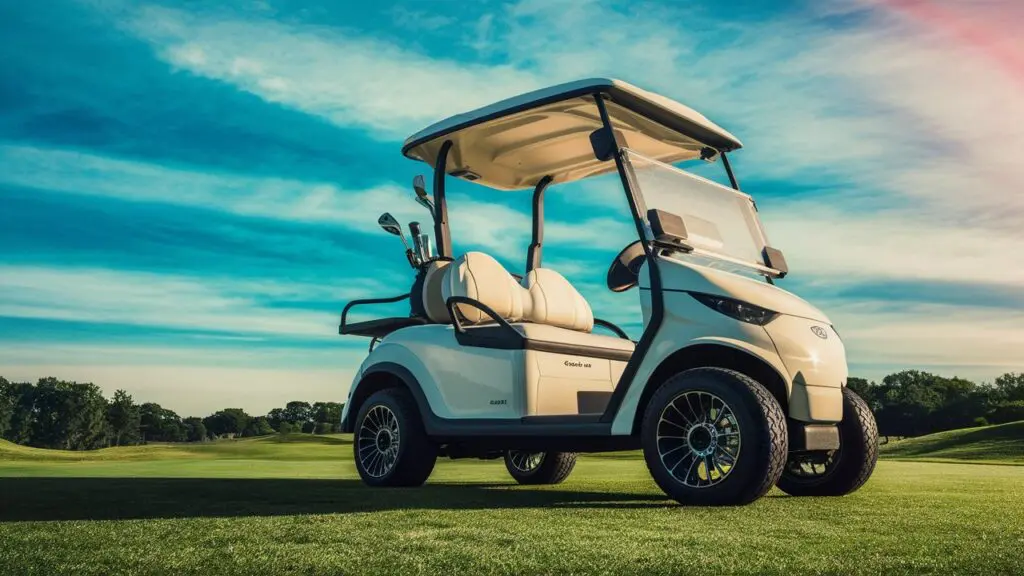
Larger tires increase distance traveled per wheel revolution. That can raise theoretical speed, but it reduces wheel torque by the same ratio, increases effective gearing, changes clearance, and can add current and heat under load.
- The speed ratio is new diameter divided by old diameter.
- Owners notice ground clearance and appearance immediately.
- Large tires can rub the body, frame, brake cables, or suspension at full steering and compression.
- Big tires are worth it for needed clearance and moderate speed change on flat terrain when the cart has enough torque, brakes, steering condition, and battery current.
Larger tires increase distance traveled per wheel revolution. That can raise theoretical speed, but it reduces wheel torque by the same ratio, increases effective gearing, changes clearance, and can add current and heat under load.
What bigger tires change (and cost)
The speed ratio is new diameter divided by old diameter. Moving from a measured 18-inch tire to 22 inches gives 22/18 = 1.222, so theoretical road speed rises 22.2 percent at the same motor RPM. Wheel torque falls to 18/22 = 0.818, about 18.2 percent lower before weight and drag losses.
| Measured diameter | Ratio vs 18 in | Theoretical speed | Wheel torque | Clearance |
|---|---|---|---|---|
| 18 in | 1.000 | Baseline | Baseline | Common stock size |
| 20 in | 1.111 | +11.1% | -10.0% | Platform-specific stock fit |
| 22 in | 1.222 | +22.2% | -18.2% | Commonly needs lift |
| 23 in | 1.278 | +27.8% | -21.7% | Lift and full-travel check |
These are geometry results, not promised GPS gains. Controller RPM limits, voltage sag, load, tread, and aerodynamic drag reduce the result.
What owners actually say
Owners notice ground clearance and appearance immediately. The hidden result is taller effective gearing: acceleration and hill speed can worsen, the controller commands more current, and motor temperature rises. A heavy tire also adds rotational inertia and unsprung mass.
The tire size versus torque analysis shows why a motor or controller can reach a thermal limit even when flat-road speed improves.
The honest trade-offs
Large tires can rub the body, frame, brake cables, or suspension at full steering and compression. A lift changes suspension and steering geometry and raises the center of gravity. Braking distance can increase because speed and rotating mass rise. Speedometer and odometer readings become low by the same circumference ratio unless recalibrated.
Pressure, tread, wheel offset, and loaded rear-seat weight alter the outcome. Use the exact mounted OD from the manufacturer, not the size molded as a perfect diameter.
Are golf cart big tires worth it for you?
Big tires are worth it for needed clearance and moderate speed change on flat terrain when the cart has enough torque, brakes, steering condition, and battery current. They are a poor first upgrade for steep hills, towing, aged batteries, hot motors, or weak brakes.
Use the lift and tire guide and the 23-inch Club Car guide. Measure at full lock and full suspension travel before buying.
The bottom line on big golf cart tires
The honest verdict is to use the smallest diameter that delivers the needed clearance. A move from 18 to 20 inches is a smaller gearing change than 18 to 23. If 22-inch or 23-inch tires are required, budget for lift, alignment, brakes, cables, battery capability, and temperature testing.
Measure before ordering: record the current tire’s actual loaded radius, wheel width and offset, distance to the body at full steering lock, distance to the suspension and brake cable, and available compression travel. Repeat with the normal passenger and cargo load. A tire that clears while parked can rub when the outside front suspension compresses during a turn.
Wheel offset changes scrub radius and bearing load. A wheel pushed outward may clear the body but increase steering effort and leverage on bearings and hubs. A wheel pulled inward can contact the suspension. Use a platform-specific wheel specification instead of solving tire clearance with an arbitrary spacer.
The drive system must also be checked. Lead-acid voltage sag can become more obvious with taller gearing. A lithium BMS may trip if the controller asks for more hill-start current. A series motor can build heat at low road speed and high current, while SepEx and AC controllers may enter thermal or current cutback. Protection events are evidence that the complete system is outside its comfortable duty.
Brakes absorb energy proportional to speed squared. A theoretical 22.2 percent speed increase produces about 49 percent more kinetic energy at the same vehicle mass because 1.222 squared is about 1.49. That does not predict stopping distance by itself, but it explains why brake condition and tire grip need attention before a speed-oriented tire change.
After installation, compare GPS speed, hill speed, pack sag, motor/controller temperature, steering return, rubbing, and stopping distance. Recalibrate instrumentation where supported. Reinspect lug torque, tire pressure, sidewall scuffing, and cable clearance after a controlled first drive and again after the first normal load cycle.
Keep the original diameter, measured new diameter, calculated ratio, wheel offset, cold pressure, and test results with the cart. That record makes later controller, gear, and speedometer changes much easier to evaluate. Compare the project with other upgrades.
Frequently Asked Questions
Are golf cart big tires worth it?
For looks, clearance, and a small speed bump on cruisers, yes, best at a moderate 20-22 inch size with a lift. For hill climbing and hauling, the torque and range loss often makes bigger tires a poor trade.
Do bigger tires slow down a golf cart?
Bigger tires raise effective gearing, so they add a little top speed on flat ground but reduce torque, hurting acceleration and hill climbing roughly in proportion to the size increase.
Reviewed and updated July 30, 2026 by the Golf Cart Lab team.