ICON Golf Cart Reduced Speed (Limp Mode): Fix
When an ICON drops into a slow limp mode, the controller is protecting something. Here is how to find what, and restore full power without throwing parts at it.
- ICON reduced speed is a deliberate limp mode: the controller cuts power to protect a low pack, a hot motor, or a bad sensor signal.
- Read the dash fault code first. Live pack voltage tells a genuine BMS cutback apart from a sensor fault in seconds.
- The most common trigger on a lithium ICON is a low or imbalanced pack, so charge it and check balance before anything else.
- Heavy i40L, i60 and i80 bodies hit thermal limp most; a smooth throttle sweep and a clean speed-sensor connector rule out the sensors.
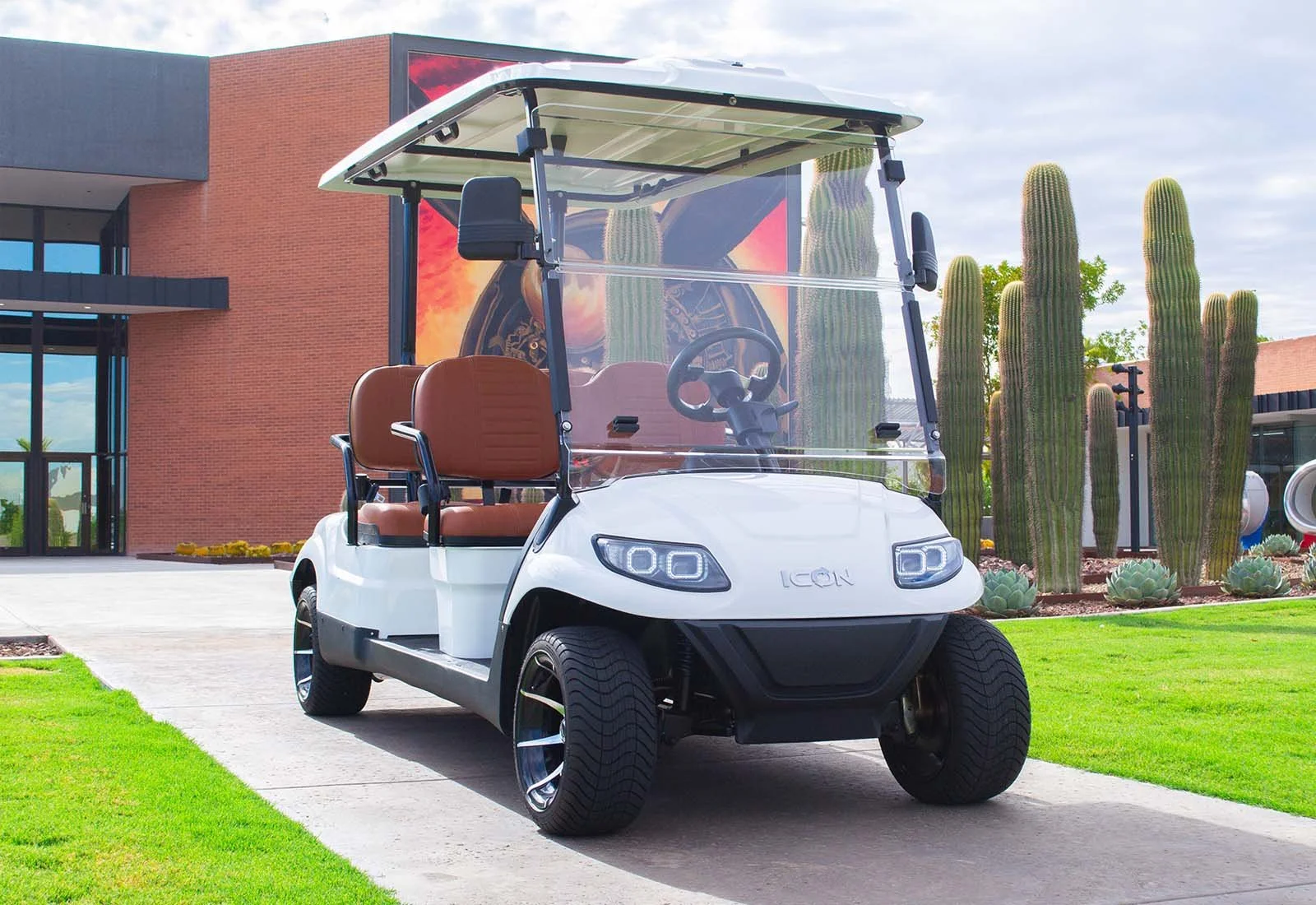
A sudden drop to a crawling, reduced speed on an ICON is rarely random. The controller deliberately cuts power, often called limp mode, when it detects a problem it needs to protect against: a bad throttle or speed signal, a low or unbalanced lithium pack, or an overheating motor or controller. The cart still drives, just slowly, which is the controller buying you time to get home and investigate. Finding the trigger restores full speed without parts-throwing. On ICON EV models from roughly the 2018 to 2026 build years (the i20, i40, i60 and lifted i40L family), the sealed under-seat controller and its wiring harness are the parts most often blamed, but the real trigger is usually upstream in the pack or a sensor.
Start By Reading the Dash Fault Code
Limp mode almost always comes with a warning icon or code. Read it before anything else, it usually names the subsystem the controller is protecting. Our ICON error codes guide maps the common categories to a fix. No code at all, but reduced speed, still narrows to the handful of triggers below.
A well-known ICON quirk is that the cluster on early 2018 to 2020 carts sometimes clears its stored fault the moment you cycle the key, so read the icon before you power down and note it exactly. If the dash uses the newer color display fitted from around 2021 onward, tap into the diagnostics menu and record the numeric code and the live pack voltage together, since a genuine cutback and a sensor fault look identical from the driver seat but the voltage reading tells them apart in seconds.
Check Pack Charge and the BMS Cutback
The most common limp trigger on a lithium ICON is a low or struggling pack. As the pack nears the bottom of its usable range, the BMS cuts available power to protect the cells, which feels exactly like limp mode. A weak or imbalanced pack does the same even at a moderate charge reading.
ICON standardized on a lithium (LiFePO4) pack across the lineup from about 2021, and those packs will hold a near-full 51 to 53 volt reading right up until the last few percent, then drop power sharply once the BMS sees an individual cell fall under roughly 2.5 volts. That is why an ICON can feel perfectly normal one lap and crawl the next with the gauge barely moved. If your cart still runs the older lead-acid pack found on some 2018 to 2020 units, watch instead for a resting voltage that sags below about 47 volts under throttle, which the controller reads as an undervoltage event and answers with the same reduced speed.
- Charge it: Put the cart on the charger. If full speed returns after charging, the cause was simply a low pack.
- Imbalance: A pack that limps even when charged may have a cell-balance or aging issue, see our ICON battery and BMS guide.
Rule Out a Thermal Cutback
An ICON that has been climbing hills, hauling a full load, or running hard in hot weather can hit a thermal limit. The controller cuts power to let the motor or controller cool, then restores speed once temperatures drop.
The ICON controller sits low and sealed for water resistance, which is great for creek crossings but means it dumps heat slowly. Owners of the lifted i40L and the heavier six and eight passenger i60 and i80 bodies see thermal limp most often, because the extra tire size and curb weight make the motor and controller work far harder on the same hill. A hall-effect temperature sensor drives the cutback, so if the cart limps after only a minute of easy driving on a cool day, suspect the sensor or its connector rather than a truly hot motor.
- Stop and let the cart sit for 15 to 30 minutes.
- If full speed returns after cooling, the cause was thermal, ease off on long climbs and heavy loads, and check that nothing is dragging or binding.
- Persistent overheating with light use points to a failing motor, a brake dragging, or a cooling problem worth a closer look.
Test the Throttle and Speed Sensors
If charge and temperature are fine, suspect the signals the controller relies on. A throttle (pedal) sensor that sends a weak or noisy signal, or a speed sensor at the motor that drops out, will make the controller default to a safe reduced speed.
- Throttle sensor: Watch for a smooth voltage sweep as the pedal travels; a flat or jumpy signal limits power.
- Speed sensor: A failing speed sensor at the motor commonly triggers cutback and a related code. Inspect its connector and wiring.
On ICON carts the throttle is a 3-wire hall pedal sensor, and a healthy unit sweeps smoothly from roughly 0.8 volts at rest to about 4.2 volts at full pedal on its signal wire. A flat spot or a reading that never climbs past mid-scale is the classic failing-sensor signature and the controller answers it with a fixed low speed. The speed sensor lives at the motor and is a frequent ICON weak point once mud or wash water works into its 3-pin connector, so unplug it, check for green corrosion on the pins, and reseat it with dielectric grease before condemning the motor. Use the troubleshooter for a guided path if you are unsure which sensor is at fault.
Reduced speed on an ICON is the controller protecting the cart. Read any code, then check pack charge and BMS balance, rule out overheating, and test the throttle and speed sensors. Clear the trigger and full speed returns. A code that comes back means the fault is still active.
Frequently Asked Questions
Why is my ICON golf cart suddenly slow?
The controller has dropped into a protective reduced-speed (limp) mode. The usual triggers are a low or unbalanced lithium pack with a BMS cutback, an overheated motor or controller, or a faulty throttle or speed sensor. Read any dash code, then check charge and temperature first.
How do I get my ICON out of limp mode?
Fix the trigger: charge a low pack, let an overheated cart cool for 15 to 30 minutes, or repair a failing throttle or speed sensor. Full speed returns once the protected condition clears. A code that returns means the fault is still active.
Can a low battery cause limp mode on an ICON?
Yes. As a lithium pack nears the bottom of its range, the BMS limits available power to protect the cells, which feels like limp mode. Charging the pack usually restores full speed if low charge was the cause.